
Charles R. Goulding and Preeti Sulibhavi showcase how, with faster GTF repairs and India’s rising role, Pratt Whitney is proving that 3D printing now drives engine design, not just prototypes.
In recent months, Pratt & Whitney—a core division of RTX (formerly Raytheon Technologies)—has made headlines with significant additive manufacturing (AM, or 3D printing) advances in both its U.S.-based operations and its growing international supply chain in India. These developments not only reinforce Pratt & Whitney’s leadership in aerospace manufacturing but also highlight how 3D printing is transforming engine design, repair (MRO), and global supply networks. Below, we examine the implications of these moves and detail a few concrete examples of companies using 3D printing in partnership with or around Pratt & Whitney.
U.S. Advances: From Rotating Hardware to Faster Repairs
1. Pratt & Whitney’s Rotating Turbomachinery Components
A major milestone came when Pratt & Whitney joined forces with Norsk Titanium, the Notre Dame Turbomachinery Laboratory (NDTL), and TURBOCAM International to test additively manufactured rotating engine parts. Specifically, they are exploring Norsk’s Rapid Plasma Deposition (RPD) process to produce an integrally bladed rotor (IBR) — a spinning component critical to turbomachinery.
RPD uses titanium wire melted by plasma torches, which can build large structural parts much faster than conventional powder-bed methods—Norsk claims speeds up to 50–100× faster than powder-based systems.
This collaboration dates back to at least 2018, but its continued evolution signals Pratt & Whitney’s long-term commitment to integrating additively manufactured rotating parts, not just static brackets or housings.
2. TJ150 Turbojet Engine – 3D Printed Turbine Wheel
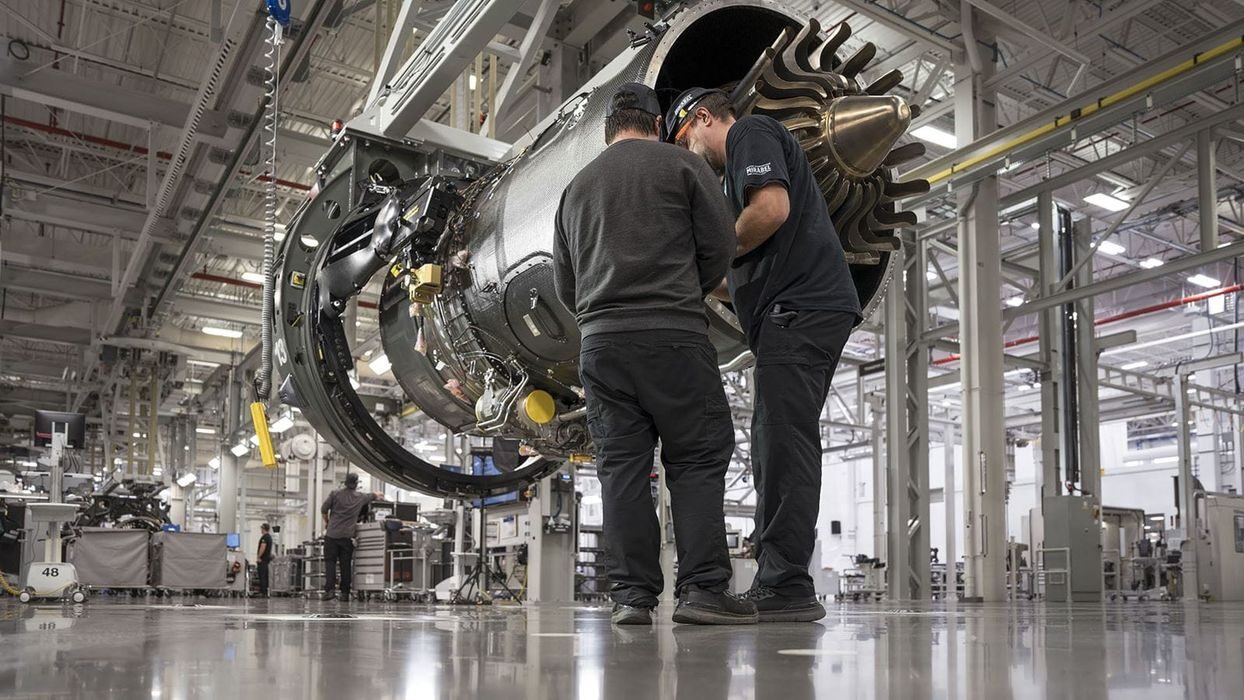
In perhaps the most high-profile recent development, Pratt & Whitney has successfully tested a 3D printed turbine wheel—one of the first rotating parts for their TJ150 turbojet engine.
This is a big shift: historically, aerospace AM was mostly limited to static or structural parts; a rotating part undergoes far more stress (centrifugal, thermal) and printing it is a far more demanding engineering feat. According to Chris Hugill, Executive Director of Pratt & Whitney GATORWORKS, the tests confirmed the wheel performed at full speed, temperature, and expected lifespan.
They also redesigned the core module of the engine: reducing more than 50 individual partsdown to just a handful using a process called “unitization.” That drastically accelerates design, production, and testing: the redesigned engine was designed and test-run in just eight months.
3. GTF Engine Repair Using Directed Energy Deposition
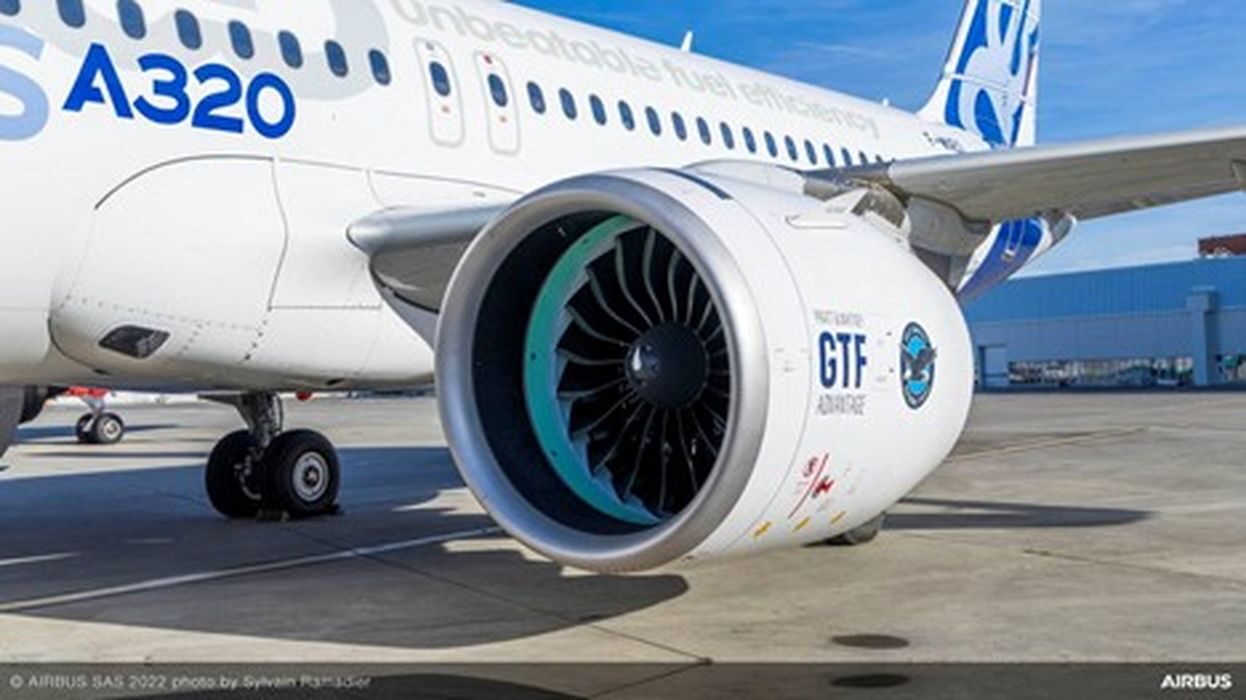
Maybe the most immediately practical application is in repair. In April 2025, Pratt & Whitney announced a novel additive repair process for its Geared Turbofan (GTF) engine family, leveraging Directed Energy Deposition (DED).
This technique lets them deposit metal (powder or wire) directly onto worn or damaged engine case features. According to the company, the new process cuts repair time by over 60%, thanks to reduced machine changeovers and fewer heat treatment cycles.
That’s not just a time saver: Pratt & Whitney expects to recover US$100 million worth of parts over five years by scaling this capability across its global MRO network.
India Tie-ins: Strengthening the Global AM Supply Chain
Azad Engineering and Pratt & Whitney Canada
On the international front, there’s a landmark deal: Azad Engineering, a Hyderabad, India–based precision engineering firm, has signed a long-term agreement with Pratt & Whitney Canada to manufacture engine components.
While the news doesn’t explicitly state that Azad will use 3D printing, the strategic importance is clear: India is scaling up its aerospace manufacturing capacity, and suppliers like Azad could become critical AM hubs for Pratt & Whitney’s future production. Given Pratt & Whitney’s strong push into additive repair and component production, it’s reasonable to anticipate that Azad Engineering may adopt or already plans to adopt 3D printing to meet the precision, complexity, and supply demands of modern engine manufacturing.
Other 3D Printing Partners Around Pratt & Whitney
Beyond its own in-house efforts and the Azad deal, Pratt & Whitney’s additive strategy is reinforced by other companies in its broader ecosystem. Here are two more concrete examples.
1. GKN Aerospace – Fan Case Mount Ring and Fan Spacer
GKN Aerospace (a long-time supplier) has expanded its additive partnership with Pratt & Whitney to produce major engine structural components via 3D printing.
Specifically, GKN is using laser metal deposition with wire feedstock (a form of DED) to manufacture the fabricated fan case mount ring and fan spacer for the PW1500G / PW1900G engines in the GTF family.
This is significant because these are substantial, load-bearing structural parts—not just prototypes—demonstrating that additive manufacturing can support real, certified aerospace production at scale.
2. ASTRO America – Standardizing Qualification for AM Suppliers
While not a parts manufacturer per se, ASTRO America, a U.S. research organization, is working closely with Pratt & Whitney (alongside GE and Honeywell) to develop a common AM qualification design template for smaller 3D printing suppliers.
One challenge in aerospace additive manufacturing is that every OEM has its own qualification process: machines, materials, and printed parts must meet very strict repeatability, reproducibility, predictability, and quality standards. By harmonizing these qualification paths, ASTRO’s work could enable smaller and more medium 3D printing firms to become certified suppliers for Pratt & Whitney (and others), strengthening the global additive ecosystem.
Implications for the 3D Printing Industry
The convergence of these developments—the U.S. rotating part tests, repair innovations, and India-based production deals—has several deep implications for the additive manufacturing landscape.
- Validation of Rotating AM Components
The successful testing of a 3D-printed turbine wheel for a jet engine marks a major milestone. Rotating hardware (rotors, blades) is where AM has historically lagged behind, due to the mechanical stresses and safety certification hurdles. Pratt & Whitney’s work with Norsk and its own GATORWORKS team could open the floodgates for more AM in critical, high-stress engine elements. - MRO Disruption via Additive Repair
By using DED for repairs, Pratt & Whitney is significantly cutting downtime and cost for engine maintenance. That’s not just transformative for its own business, but for MRO providers globally. As more repair centers adopt additive techniques, the economics of spare parts and overhauls will change, potentially lowering the cost of owning and operating modern engines. - Scaling AM Globally Through Supply Chains
The Azad Engineering deal underscores a strategic shift: additive manufacturing isn’t just for prototyping or niche components; it’s becoming integral to a global engine production network. Suppliers in lower-cost/high-skill regions like India will likely begin to embed AM into their capabilities, helping OEMs like Pratt & Whitney scale manufacturing while diversifying their risk. - Lower Barriers to Entry for 3D Printing Suppliers
ASTRO America’s qualification template could democratize access for small 3D printing firms. If they can meet a common standard accepted by major OEMs, it could stimulate innovation, competition, and capacity in the AM supply chain. - Sustainable, Leaner Aerospace Manufacturing
Faster production, repair, and fewer parts lead to lower waste, lower inventory, and potentially lower environmental footprint. AM, by design, is more material efficient, and when applied strategically (as Pratt & Whitney is doing), those sustainability gains could ripple across the aerospace sector.
We’ve covered Pratt & Whitney’s additive strategy before in our Fabbaloo piece, “Harnessing 3D Printing and AI: The Future of Jet-Engine Manufacturing.” Back then, we highlighted how Pratt & Whitney was investing in additive repair and advanced design, and how their North American Technology Accelerator was central to that mission. The new developments we’ve outlined here are a direct continuation—but now they represent tangible, tested hardware (like the TJ150 turbine wheel) and commercial-scale repair models being rolled out globally.
The Research and Development Tax Credit
The now permanent Research and Development (R&D) Tax Credit is available for companies developing new or improved products, processes, and/or software. 3D printing can help boost a company’s R&D Tax Credits. Wages for technical employees creating, testing, and revising 3D-printed prototypes can be included as a percentage of the eligible time spent on the R&D Tax Credit. Similarly, when used as a method of improving a process, time spent integrating 3D printing hardware and software counts as an eligible activity. Lastly, when used for modeling and preproduction, the costs of filaments consumed during the development process may also be recovered.
Whether it is used for creating and testing prototypes or for final production, 3D printing is a great indicator that R&D Credit-eligible activities are taking place. Companies implementing this technology at any point should consider taking advantage of R&D Tax Credits.
Conclusion
The recent Pratt & Whitney developments—both at home in the U.S. and through international partnerships—underscore how deeply 3D printing is now embedded in the future of aerospace. From pioneering rotating AM parts to making additive-enabled MRO a cornerstone of their operations, Pratt & Whitney is not just experimenting with 3D printing; it’s industrializing it.
Meanwhile, via its partnerships with firms like Azad Engineering and GKN Aerospace, and through enabling qualification templates via ASTRO America, the company is helping to build a global ecosystem around additive manufacturing. For the 3D printing industry, these developments aren’t just incremental—they could reshape how jet engines are built, maintained, and supplied in the decades to come.