Charles R. Goulding and Preeti Sulibhavi look at how Safran’s full-engine tech transfer to India and its deep investment in additive manufacturing signal a major shift in global aerospace power.
Europe is boosting defense spending, and that shift is giving serious momentum to companies with proven strength in propulsion, avionics, and next-generation manufacturing. Safran sits at the center of this movement. The French aerospace and defense group is large, diversified, and aggressive about adopting advanced technologies like additive manufacturing. It is also deepening ties with India in a way that could reshape both countries’ aerospace industries.
Safran at a Glance
Safran is one of Europe’s most important aerospace and defense contractors. The company is active in aircraft propulsion, engines and components, landing gear, interiors, avionics, defense electronics, and space. By the end of 2024, Safran employed 99,364 people worldwide and generated €27.3 billion in revenue. The group operates 276 sites across 27 countries, which positions it as a global supplier with real manufacturing breadth and significant MRO expertise.
Our earlier Fabbaloo work on MRO and Safran has already shown how the company uses maintenance as a strategic foothold. What is happening now goes a step further.
Safran’s Additive Manufacturing Strategy
Safran has embraced 3D printing as a core production technology, not a side project. The company has been building capacity for several years, and the results are now showing up across its engine and equipment divisions.
Here are five examples that illustrate how far Safran has taken additive manufacturing:
• Additive Manufacturing Campus. Safran built a 12,500-square-meter center of excellence near Bordeaux. More than 100 engineers and technicians there produce metallic printed parts for serial use across multiple product lines.
• The Add+ engine demonstrator. Safran produced an engine in which roughly 30 percent of the components were printed. This work helps pave the way for printed parts in future certified propulsion systems.
• Large titanium landing gear components. Using selective laser melting, Safran produced a printed titanium nose-landing-gear part for a business jet. It matched the performance of forged equivalents while cutting weight by about 15 percent.
• Printed components in helicopter and turbofan engines. Safran uses additive manufacturing to produce parts for LEAP turbofans and several helicopter engines, including the Arrano and Ardiden families.
• 3D printed ceramic cores for turbine blades. Safran has invested in ceramic 3D printing to make complex casting cores for high-temperature turbine blades, a critical step in advanced engine programs.
Across all these projects, the goal is consistent. Lighter parts. Faster production cycles. Consolidated assemblies. Stronger performance at high temperatures. Lower waste. Safran is not experimenting anymore. It is integrating additive manufacturing into major production workflows.
India Steps Into the Center of Safran’s Strategy
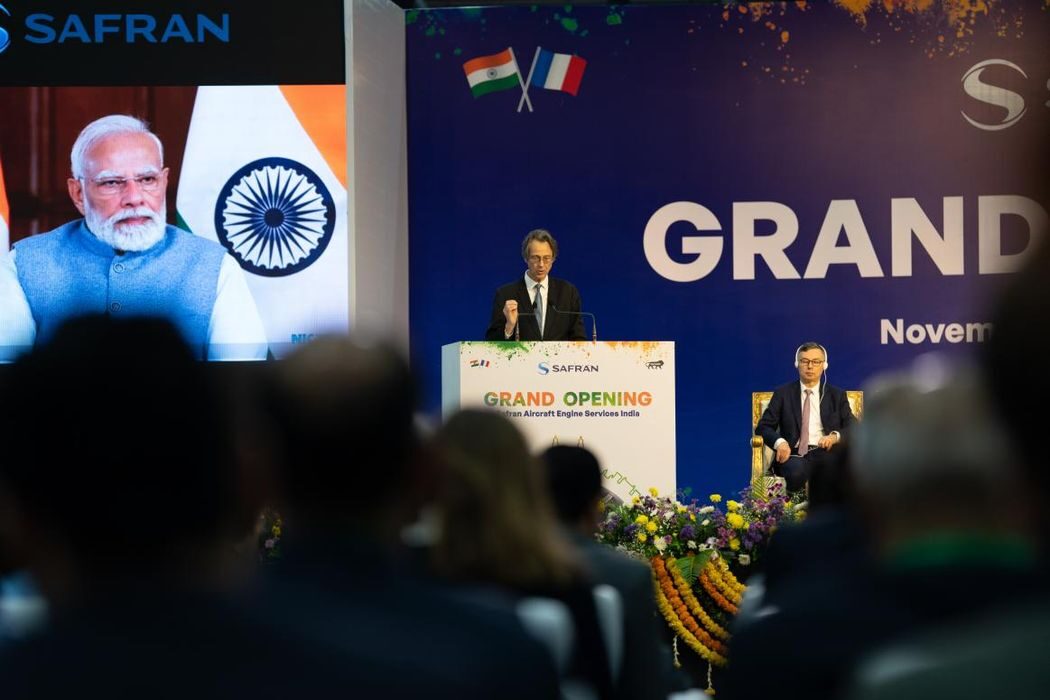
In late 2025, Safran announced a transformative expansion in India. This is not a routine outsourcing move. It is a long-term industrial partnership that includes tightly protected engine technology.
The agreement covers three major pillars.
1. M88 Engine MRO Facility
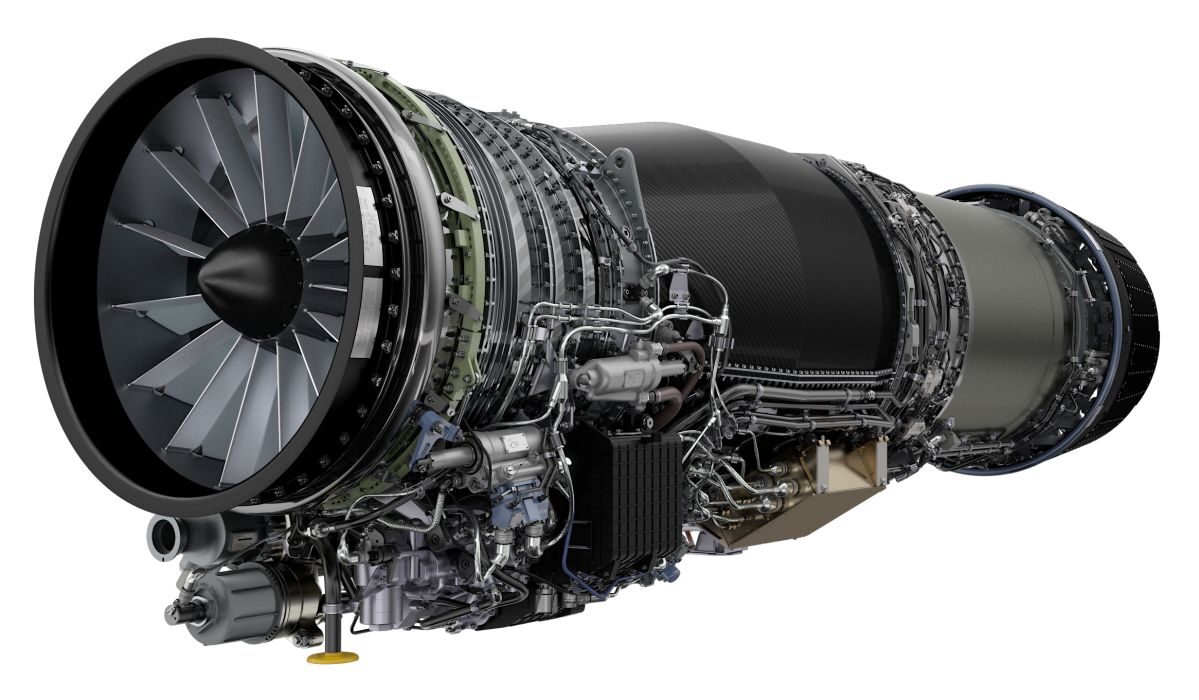
Safran will build its first full M88 maintenance, repair, and overhaul shop outside France. The M88 powers the Rafale fighter jet, which India operates in growing numbers. Locating MRO in-country shortens turnaround times and builds local capability, a trend we have covered in prior Fabbaloo MRO articles. It also supports Bharat’s “Make in India” pledge.
2. Full Fighter Engine Technology Transfer
The most striking part of the deal is Safran’s agreement to transfer complete technology for a new fighter engine. This includes the hot section, which contains the most sensitive high-temperature materials and turbine blade designs. Hot section know-how is the crown jewel of engine manufacturing. Safran’s willingness to share it signals a high-trust partnership and a major industrial shift.
3. Large Projected Revenue Growth
Safran expects its India revenue to more than triple by 2030. The growth assumes expanded manufacturing, broader defense cooperation, and growth in the country’s civil aviation sector.
For India, this deal brings its long-sought goal of engine independence within reach. For Safran, it locks in a long-term presence in one of the world’s most important defense growth markets.
India’s Additive Manufacturing Rise
Safran is entering India at a moment when the country is rapidly building its own additive manufacturing base. Three recent examples stand out.
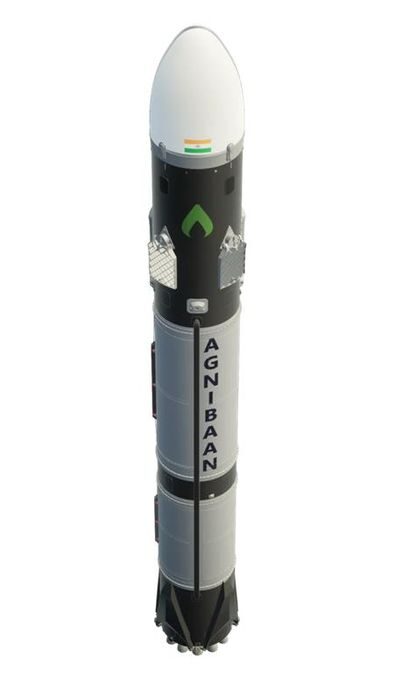
• Agnikul Cosmos has developed the world’s largest single-piece 3D printed Inconel rocket engine. The print eliminates all welds from entry to exhaust and shows that Indian private industry can produce mission-critical components using advanced alloys.
• Agnikul’s new large-format AM facility strengthens that point. The company now runs India’s first private large-scale metal 3D printing center, built specifically for rocket and aerospace parts.
• IIT Indore’s low-cost metal printing technology uses micro-plasma deposition to print titanium and superalloys. This opens a path to affordable production of materials used in turbines, blades, and structural aerospace components.
India is not yet a full-scale jet engine manufacturing nation. But it is investing in exactly the technologies that matter for high-temperature, lightweight, precision components. Safran’s transfer of advanced engine tech could intersect with India’s additive manufacturing ecosystem at the perfect moment. In fact, Safran’s CEO confirmed a complete technology transfer of DRDO’s 5th Gen AMCA stealth fighter jet to India’s Tata, L&T, and Adani manufacturers. This seals the deal on the alignment of both France and India’s strategic goals.
The Research and Development Tax Credit
The now permanent Research and Development (R&D) Tax Credit is available for companies developing new or improved products, processes, and/or software. 3D printing can help boost a company’s R&D Tax Credits. Wages for technical employees creating, testing, and revising 3D printed prototypes can be included as a percentage of the eligible time spent on the R&D Tax Credit. Similarly, when used as a method of improving a process, time spent integrating 3D printing hardware and software counts as an eligible activity. Lastly, when used for modeling and preproduction, the costs of filaments consumed during the development process may also be recovered.
Whether it is used for creating and testing prototypes or for final production, 3D printing is a great indicator that R&D Credit-eligible activities are taking place. Companies implementing this technology at any point should consider taking advantage of R&D Tax Credits.
“Make in India” – with Safran
Europe’s rising defense budgets create clear demand for advanced propulsion and defense systems. India’s pledge to “Make in India” seeks to transform India into a global design and manufacturing hub. The two strategies aligned just at the right moment. India’s push for aviation self-reliance and its investment in AM technologies give it the tools to absorb and advance the technology Safran is sharing.
The India transaction links both trajectories. Safran brings deep propulsion knowledge and proven AM integration. India brings ambition, growing manufacturing strength, and a fast-developing 3D printing sector.
This partnership has the potential to shape a new generation of engines and support systems. With this partnership, the sky’s the limit.