
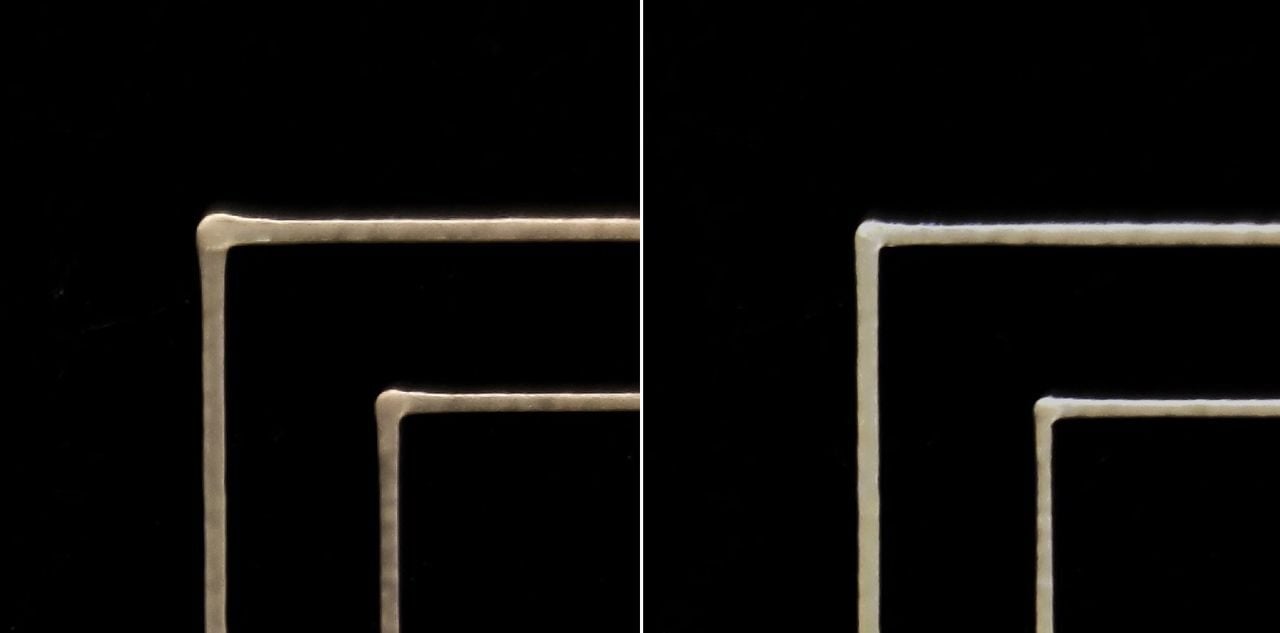
Researchers propose a one-shot, camera-based method to optimize extrusion for high-speed FFF, and that could streamline tuning for anyone pushing faster print profiles.
Why Extrusion Tuning Breaks At High Speed
As consumer and prosumer FFF systems accelerate — think input shaping, pressure advance and multi-hundred mm/s print moves — extrusion becomes the bottleneck. Melt capacity, back pressure and filament slip all conspire to make a flow setting that works at 60 mm/s fall apart at 300 mm/s. Many users fall back to calibration towers, line-width tests and multiple temperature sweeps, which cost hours of machine time and human attention.
Vendors have added more sensing to cope. Bambu Lab scans first layers with a toolhead LiDAR, and many Klipper setups auto-tune resonance with accelerometers. But extrusion is still typically open loop. Getting flow rate, temperature, pressure advance and sometimes nozzle backpressure compensation to align across speeds and geometries is the last mile for reliable high-speed printing.
How A Camera Could Close The Loop
The paper’s title suggests a “one-shot” approach: print a single calibration artifact, capture it with a camera, and infer optimal extrusion parameters from the image. Although details are not provided in the abstract links, a likely approach is computer vision measuring track width, overlap, infill porosity, and edge fidelity across sections intentionally varied by speed and flow. From that data, an optimizer could recommend flow multipliers, temperature setpoints, and pressure advance coefficients that hold up at higher accelerations.
If this is the mechanism, the ingenious part is not the camera itself — many shops already watch builds remotely — but using one image to collapse what would be a day of sequential tests into a single, data-rich snapshot. That would reduce human efforts and let operators re-profile new filaments on demand. For service bureaus or labs running mixed PLA, PETG, ABS and nylon, the time savings could be material. For users chasing high throughput on Bambu, Prusa, Voron or Creality speed-tuned rigs, it could stabilize dimensional accuracy without endless tweaking.
Practical Limits And Who Benefits
The authors did not publish hard numbers in the paper we reviewed — no accuracy deltas, throughput gains or failure-rate reductions — so claims remain to be proven. Lighting, lens distortion and camera placement matter; glossy black and translucent filaments are challenging for edge detection. Filament-lot variation, fiber-filled materials and larger nozzles change melt behavior, and a one-shot model may need per-material profiles to keep working.
Integration is also key. Does the method output directly to slicer parameters in Cura, PrusaSlicer or OrcaSlicer, or require a separate step? Likely not at this stage. Can it run on-device with a toolhead camera, or does it assume a fixed gantry webcam and controlled light? Would 3D printer manufacturers change their system designs to include overhead cameras? Workshops will ask about repeatability, especially under high flow conditions above twenty mm3/s where melt lag and under-extrusion often emerge. If the pipeline includes confidence metrics — for example, refusing to apply changes when image quality is poor — adoption will be easier.
What Proof Is Needed
To move from a clever demo to everyday tooling, we need comparative data: before and after dimensional error at multiple speeds, measured line-width variance, overhang integrity, and time-to-calibrate versus standard towers. It would help to see tests across at least three materials and two nozzle sizes, plus black and translucent variants to stress the vision system. Code availability and a straightforward calibration object would accelerate community validation.
If those pieces arrive, this approach could shift extrusion from “feel” to measurable, repeatable control — exactly what high-speed FFF has been missing. And if a camera can replace a weekend of calibration towers, that is a win for both throughput and sanity.
Via arXiv
