Charles Goulding and Anthony Palumbo examine how Venezuela’s long-declining oil and gas sector could accelerate infrastructure recovery by using industrial 3D printing to produce qualified spare parts, retrofit obsolete equipment, and reduce maintenance lead times, drawing on Chevron, ConocoPhillips, Baker Hughes, and SLB case examples.
Introduction
In the 1970s, Venezuela’s crude output peaked at around 3.8 million barrels per day, but by the mid-2020s production had fallen below 1 million barrels per day. The decline accelerated after 2007, when President Hugo Chávez nationalized foreign-owned oil assets. International majors such as ExxonMobil and ConocoPhillips refused Caracas’ requirement to convert their operations into state-controlled joint ventures, and their Venezuelan assets were expropriated; ConocoPhillips later won an $8.7 billion arbitration award related to the takeover. Chevron, by contrast, accepted the new terms and retained a smaller foothold as a minority partner in PDVSA projects, though its activity was later constrained by U.S. sanctions after 2019.
Rebuilding now spans the full system, including refineries, well production, power generation, and pipelines, wherein additive manufacturing (AM), or 3D printing, can materially change the pace of recovery. Facilities depend on continuously wearing pumps, compressors, turbines, valves, and tooling in harsh conditions, and custom or obsolete spares can take months when dependent on long-lead casting, machining, and global logistics. AM compresses that cycle, enabling critical components to be fabricated in days and delivered closer to the point of need.
3D Printing Applications in the Oil & Gas Industry
Chevron Corporation: Fast-Track Fabrication to Avoid Downtime
In 2022, supply delays put a scheduled maintenance restart at one of Chevron’s U.S. refineries at risk, prompting Chevron’s additive engineering team to partner with Lincoln Electric to 3D print large replacement parts that would have taken months to procure conventionally. Using Lincoln Electric’s proprietary wire-arc metal 3D printing technology, the team produced eight nickel-alloy components in 30 days, each about 3 feet (0.9 m) long and weighing over 500 lbs. Chevron engineer Robert Rettew noted the maintenance schedule was “in jeopardy” due to supply chain constraints, so the team pursued faster fabrication via AM. The printed parts, including large pressure-containing fittings, were fabricated in Ohio and shipped to the refinery, helping Chevron resume operations on time.
Chevron is also extending AM into upstream and midstream needs. In late 2022, Chevron’s Australian division ordered two high-strength, corrosion-resistant subsea pipeline fittings from Melbourne-based AML3D, produced using the company’s wire arc additive manufacturing (WAM®) process. These additively manufactured steel components are being built to ASME and API specifications and will undergo independent testing to validate quality, with the goal of reducing lead times versus traditional casting or forging cycles. In parallel, Sulzer, a global pump OEM, has partnered with Chevron on hybrid additive approaches that combine laser metal deposition and CNC machining to produce pump impellers on demand, reducing spare inventory requirements and compressing fabrication time from weeks to days.
ConocoPhillips
ConocoPhillips has pursued a series of AM pilots aimed at keeping mature operations running when conventional sourcing is slow or parts are no longer manufactured. In Alaska’s North Slope, the Alaska business unit identified obsolete and long-lead components limiting uptime and moved to print replacements as field demonstrations.
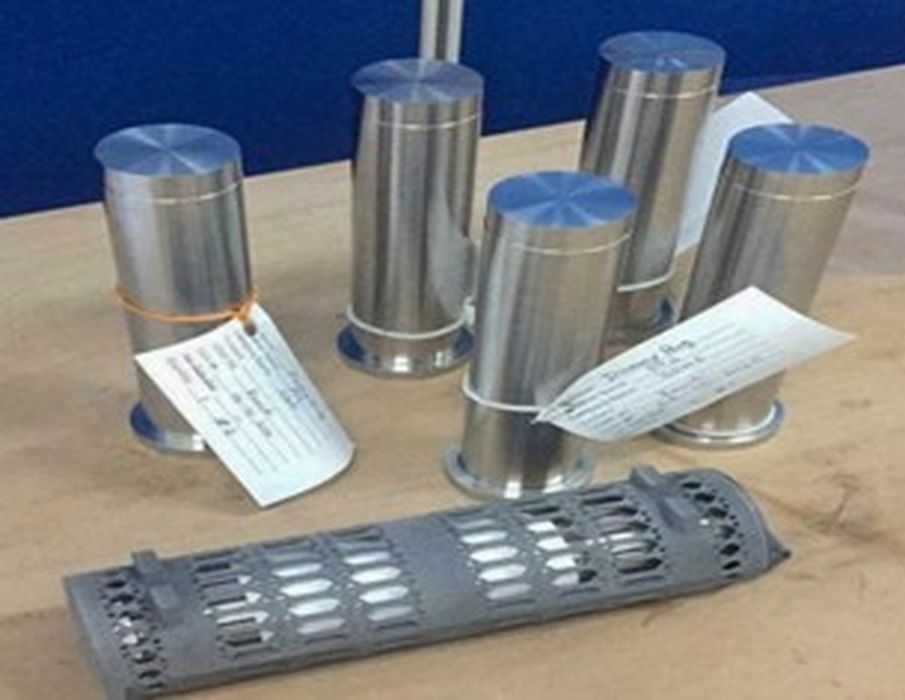
At the Kuparuk River oil field, ConocoPhillips depends on 40-year-old Ruston gas turbines for power generation, but certain consumable combustion components are obsolete. One critical item is the burner plug, a high-temperature combustor component that historically required 30–60 weeks to replace when sourcing followed conventional design, casting, machining, and Arctic delivery timelines. In 2021, ConocoPhillips instead 3D printed replacement burner plugs in Inconel 718, a heat-resistant nickel superalloy. The parts moved from drawings to finished hardware in about a week, were air-freighted to the North Slope, and installed within 2–3 weeks from project start, shrinking a roughly 30-week lead time to under three weeks. Engineering supervisor Curt Andersen reported the plugs were “working fantastic,” performing “as good, if not better, than our conventionally made plugs,” while restoring turbines and avoiding extended outages.
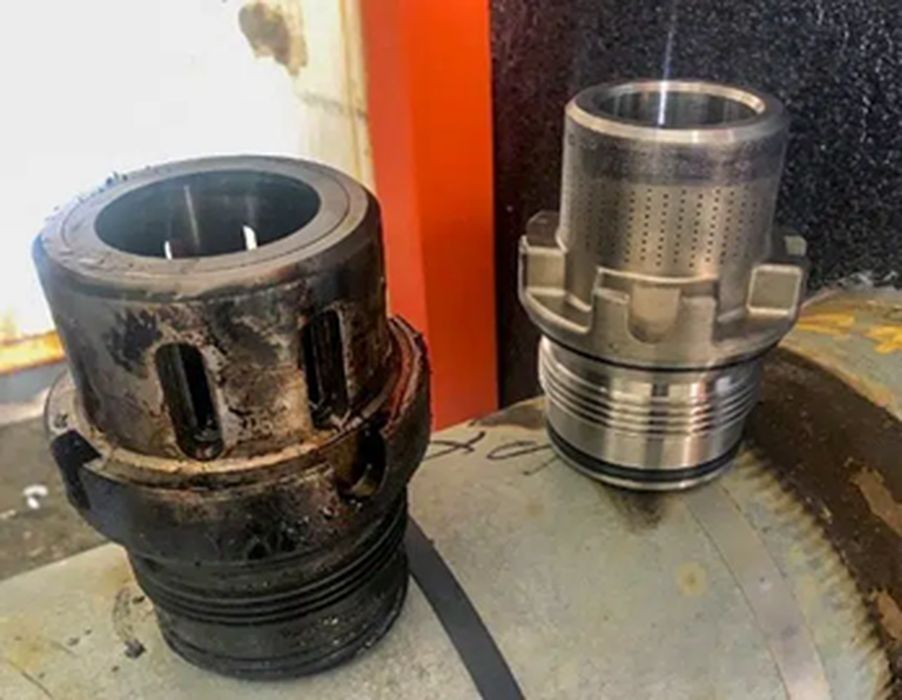
ConocoPhillips applied a similar approach to water injection choke valves, where the internal choke cage for many installed valves had been discontinued by the OEM, leaving no reliable spare-part pathway. Rather than replacing entire valve assemblies, the team worked with a contract manufacturer to 3D print replacement cages in Inconel 718 that fit the existing valve bodies, while also incorporating a revised design intended to improve flow behavior and durability. Andersen noted the maintenance advantage of AM in this context: instead of buying an entire new valve, “you replace only when we need [that part].” By printing only the cage inserts, ConocoPhillips reduced production time for these spares from roughly 45 weeks to 5 weeks.
The company’s AM work also includes polymers and water-handling systems. At ConocoPhillips Canada’s Montney operations in British Columbia, engineers faced chronic corrosion in an internal trim component of a 4-inch swing check valve used for produced-water recycling. Replacing the entire valve with an alloy version would have been costly and carried a procurement lead time exceeding 32 weeks, so the team redesigned the internal component and printed it in a high-performance polymer selected for corrosion resistance under the site’s water chemistry. The polymer insert was produced in days and installed for field trial; early results indicated the corrosion issue was addressed, and ConocoPhillips has indicated that, if trials remain successful, it plans to retrofit 20+ valves with the printed inserts, avoiding full valve replacements and enabling rapid reprints as needed. ConocoPhillips extended AM validation beyond facilities and into maritime operations through its wholly owned shipping subsidiary, Polar Tankers. In 2021, Polar Tankers partnered with American Bureau of Shipping (ABS), Sembcorp Marine, and 3D Metalforge to trial additively manufactured spares on the Polar Endeavour, a 140,000 DWT crude tanker. The vessel was fitted with multiple 3D printed mechanical components, including a gear set and shaft for a boiler fuel pump, a flexible coupling for a pump system, and an ejector nozzle for a freshwater generator, produced using metal or composite additive processes. After six months in operation, the parts were removed and inspected by the crew and ABS surveyors; each component remained in excellent condition and performed at or above conventional equivalents. ABS subsequently approved the use of these AM spare parts on vessels. The trial also reinforced the operational case for maritime MRO: AM can reduce lead times from months to days and reduce the need to stockpile rarely used parts.
Beyond individual pilots, ConocoPhillips treats AM as part of a broader supply-chain modernization strategy. The company’s Global Production group, referenced in connection with leaders such as Carlo De Bernardi and Enzo Savino, has supported development of standards including API 20S (metal AM components) and API 20T (polymer AM components) to qualify 3D-printed parts for oilfield service. Internally, engineers have explored designs enabled by AM, such as complex heat exchanger geometries and lattice structures intended to improve thermal performance or weight, along with flow components that reduce energy consumption; De Bernardi has noted that advanced AM geometries can reduce the fuel required to operate assets, cutting emissions while sustaining output. To scale the model, ConocoPhillips has piloted a digital inventory approach that prioritizes secure libraries of certified 3D models over stocking physical spares, and it has deployed industrial 3D printers on Alaska’s North Slope to produce certain parts on-site.
3D Printing by Oilfield Service Companies
Baker Hughes: Industrialized Additive Manufacturing
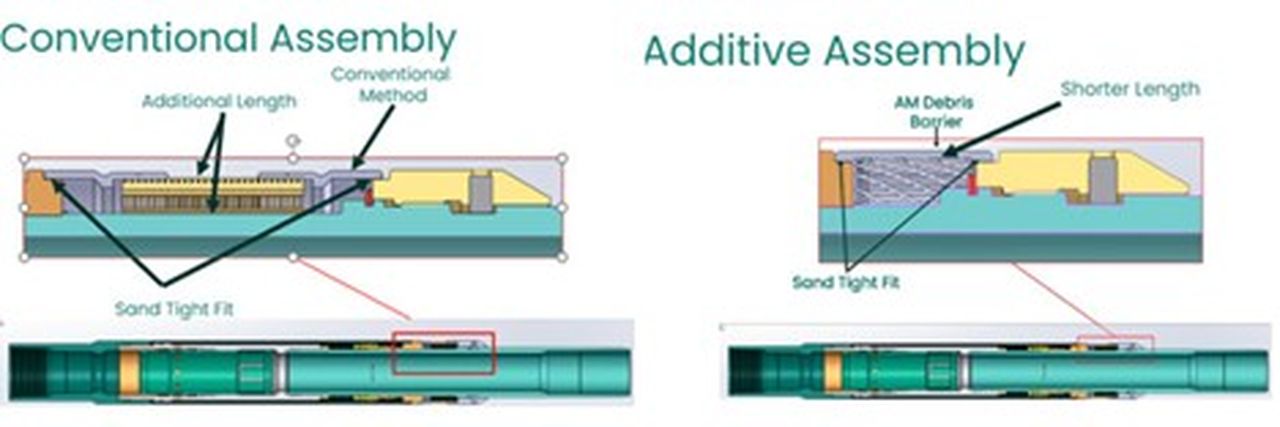
Baker Hughes has expanded 3D printing from a development tool into a production platform embedded in its digital workflows and quality systems. The company reports it has produced over 150,000 additively manufactured parts, spanning roughly 1,500 qualified designs from downhole tools to turbomachinery components. Using primarily metal powder bed fusion to print materials such as nickel alloys and steel, Baker Hughes manufactures complex parts with reduced lead times and design freedom beyond conventional fabrication. Baker Hughes’ Debris Barrier, a sand-control screen used in oilwell completions, was historically machined from solid nickel alloy with a lead time of over 15 weeks. Redesigned for AM in Inconel 718, it can now be produced in about 4 weeks, and the company notes that up to 16 units can be printed in a single batch in 42 hours, improving throughput for demand-driven supply. Another case is a Formulation-Testing Buffer Tube used in wireline reservoir evaluation tools, which previously required a 7-piece welded assembly; Baker Hughes re-engineered it as a single 3D-printed component with internal flow channels, eliminating welds and joints and yielding a part that is faster to produce, lighter, and more reliable due to fewer failure points. In valve applications, Baker Hughes’ Variable Resistance Trim (VRT) is used to control flow and reduce cavitation and can be printed as a single integrated unit to reduce leak paths associated with seals and gaskets. The Masoneilan™ 74000 Series Control Valve uses a generatively designed trim that combines an Inconel body with a tungsten-carbide-rich surface in one AM build to achieve high erosion resistance in refining environments.
Baker Hughes also positions AM as a supply-chain tool: digital part files and build data can be stored and printed on-demand, reducing reliance on large physical spare inventories and improving responsiveness to disruptions. Beyond oil and gas, Baker Hughes has extended AM into geothermal applications, including work involving a 3D-printed RockLock™ backup ring (a downhole packer component) that provides an expansion range not achievable through traditional manufacturing, supporting enhanced geothermal systems that require durable, high-performance well isolation.
SLB (Schlumberger): Digital Energy Meets Additive Innovation
A flagship example of SLB’s industrial AM work is Aegis™ drill bit armor, which applies an electron-beam melted (EBM) additively manufactured metal armor onto drill-bit blades to resist wear. SLB reports the result is a drill bit with 40% higher blade strength and 400% greater erosion resistance than conventional hard-facing methods, and field trials (including in the Anadarko Basin) recorded up to 36% faster drilling rates and 179 hours of rig time saved, driven by longer run life and fewer bit changes. Beyond drill bits, SLB prints components such as packer elements, pump impellers, valve trims, and other bespoke tools, using in-house prototyping and testing to accelerate iteration before deployment. The company has also deployed 3D printers closer to remote operations, including well sites and offshore rigs, to fabricate spares on-site, reducing waits that previously stretched weeks down to hours and reducing non-productive time when critical components fail far from supply hubs.
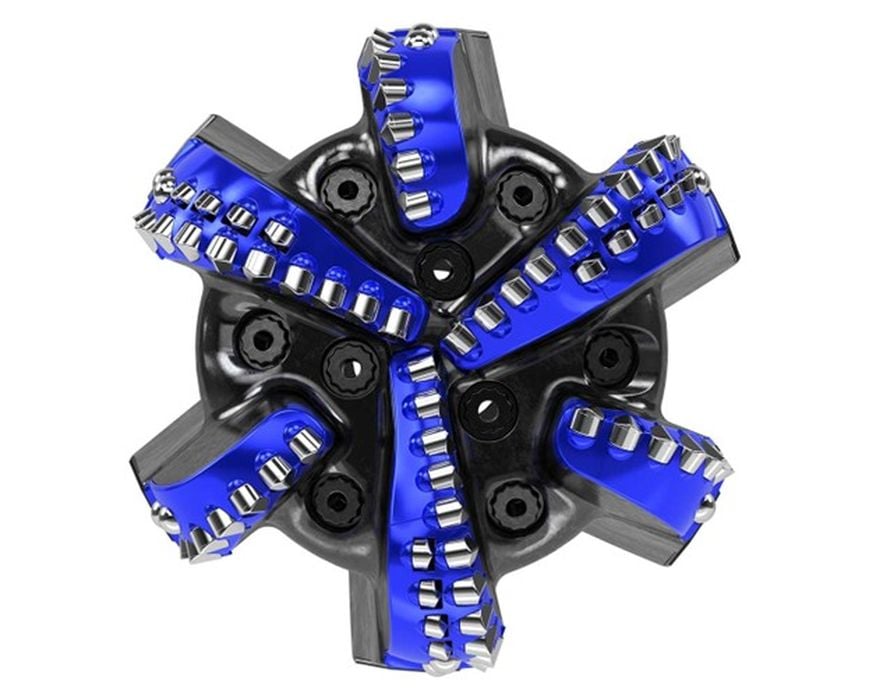
SLB also uses AM to enable complex geometries and materials tailored for extreme pressure, temperature, and corrosive fluid exposure across oilfield and geothermal conditions. The company has described printing turbulence-control devices for flow systems and re-engineering high-pressure valve internals with intricate lattice structures that improve flow behavior and erosion resistance in ways standard parts cannot. Materials used include advanced powders such as nickel superalloys, titanium, and engineered composites, selected to withstand harsh service and to extend equipment capability and lifespan. To expand these benefits, SLB has partnered for localized AM capacity, most notably working with Roboze in Saudi Arabia to establish on-site printing in support of Saudi Aramco’s Vision 2030 localization goals, reducing dependence on imported spares and long logistics chains. SLB has also worked with service hubs to integrate AM into repair and maintenance systems globally, which proved particularly valuable during pandemic-era disruptions.
The Research & Development Tax Credit
The now permanent Research and Development (R&D) Tax Credit is available for companies developing new or improved products, processes, and/or software. 3D printing can help boost a company’s R&D Tax Credits. Wages for technical employees creating, evaluating, and revising 3D printed prototypes are typically eligible expenses toward the R&D Tax Credit. Similarly, when used as a method of improving a process, time spent integrating 3D printing hardware and software can also be an eligible R&D expense. Lastly, when used for modeling and preproduction, the costs of filaments consumed during the development process may also be recovered.
Whether it is used for creating and testing prototypes or for final production, 3D printing is a great indicator that R&D Credit-eligible activities are taking place. Companies implementing this technology at any point should consider taking advantage of R&D Tax Credits.
Conclusion
Across operators and service firms, additive manufacturing is proving its value by compressing lead times for critical spares, enabling targeted retrofits that extend legacy asset life, and improving supply resilience when conventional procurement is slow or uncertain. This has been illustrated by Chevron’s large, code-oriented components, ConocoPhillips’ on-demand metal and polymer replacements (including ABS-accepted maritime spares), and Baker Hughes and SLB scaling qualified AM parts with advanced materials and part consolidation. Venezuela, which holds the world’s largest proven oil reserves and substantial natural gas resources, sits at the center of an intensifying geopolitical contest: recent U.S.-led actions, shifting sanctions/export arrangements, and competing claims over access and control of Venezuelan crude are already reshaping Western energy strategy. In that environment, 3D printing infrastructure can serve as a practical enabler, helping restart and sustain aging compressors, turbines, valves, and refinery systems by fabricating qualified components locally in days, while larger parts (e.g., impellers and pipeline connectors) can be produced through large-format AM networks to bypass casting/forging bottlenecks.