
Charles R. Goulding and Aaron Rofe highlight practical, real-world strategies that help organizations strengthen profitability while staying fully compliant.
The United States is on the cusp of a major industrial shift, and Oklahoma is poised to play a central role. Emirates Global Aluminum (EGA) and Century Aluminum announced that they have entered into a joint development agreement to construct a new primary aluminum smelter in Inola, Oklahoma – marking the first time since 1980 that a new greenfield aluminum production facility will be built in the country. Beyond its historical significance, the project represents a transformational step toward reshoring one of America’s most strategically important materials.
For decades, the US has overwhelmingly relied on foreign aluminum, importing roughly 85 percent of the metal required by its automotive, aerospace, construction, packaging, clean-energy, and defense sectors. Aluminum is used in everything from power lines, solar frames, electric vehicles, and fighter jets. It forms the bulkheads of military aircraft, the armor of tanks, components of missiles, and the infrastructure powering the national grid. The reliance on external supply chains leaves the US particularly vulnerable to disruptions. Century Aluminum CEO Jesse Gary emphasized this point when he warned that America’s aluminum network has become “so thin” that a fire at a single plant could have cascading implications throughout the economy. Charles Goulding and Aaron Rofe of R&D Tax Savers recently interviewed John Budd, CEO of the Oklahoma Department of Commerce, who offered firsthand insight into why Oklahoma is uniquely positioned to host the first new US aluminum smelter in nearly fifty years. Budd described his recent trip to Dubai and Abu Dhabi, where touring EGA’s two main smelting operations was “eye-opening” in understanding how industrial ecosystems develop around modern, energy-efficient smelters. He noted that the Tulsa port of Oklahoma offers similar advantages, including sufficient land for multiple businesses to co-locate and direct access to molten aluminum – a capability that dramatically improves efficiency for downstream manufacturers. Budd emphasized that next-generation smelting technology uses roughly one-third less electricity per ton than facilities built almost fifty years ago, and that Oklahoma’s low-cost, reliable energy makes the economics of the project far more competitive than other US sites. He also explained the logistical advantage of importing bauxite through the port of New Orleans, refining it into alumina, and transporting it by barge directly to Inola, all while sitting at the crossroads of three major interstate corridors. Together, these attributes will allow the new facility to more than double domestic aluminum production -currently only 15 percent of US consumption – while combining EGA’s technological capabilities with Century’s expertise in operating the US aluminum industry, a partnership we see compared to the recent US Steel-Nippon collaboration in terms of industrial synergy and long-term competitiveness.
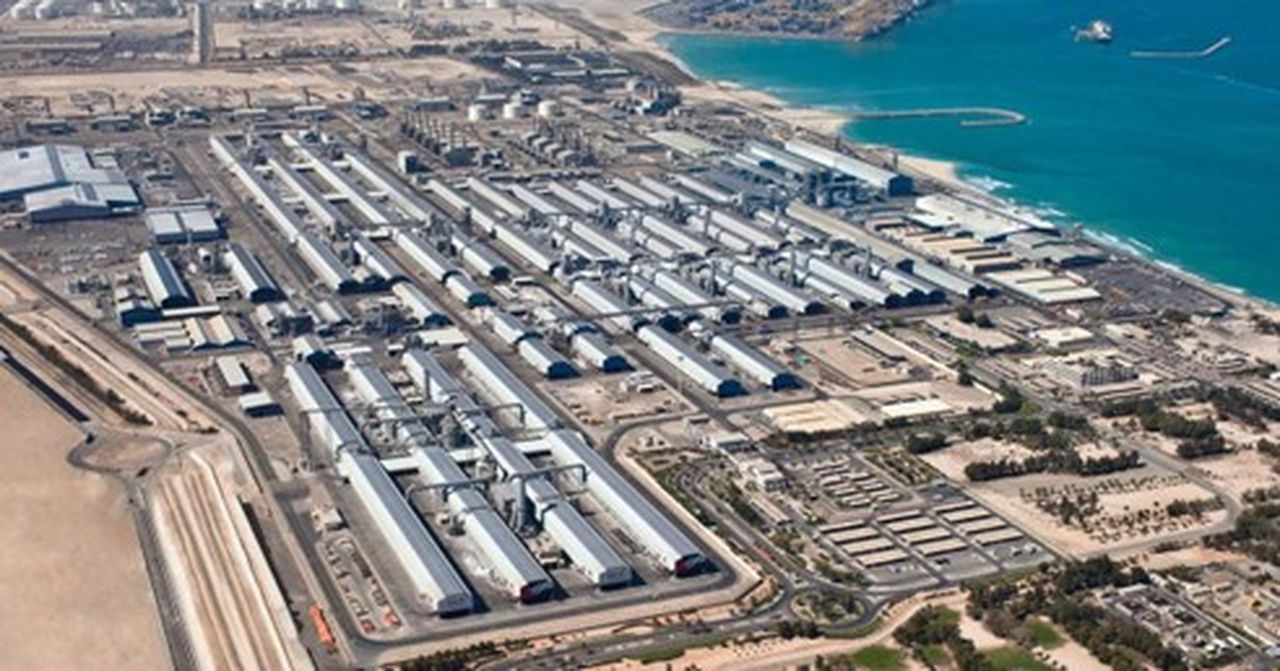
The new smelter in Oklahoma aims to fundamentally alter that landscape. The facility is expected to produced 750,000 tons of aluminum each year, a figure that would more than double current US primary production and establish the Inola site as the largest aluminum smelter ever built on American soil. The project is projected to create 1,000 permanent positions once operational and an additional 4,000 jobs during construction. Both companies expect the smelter to run for multiple generations, with Century’s CEO noting that large-scale aluminum operations often serve as anchors for industrial clusters that endure for fifty to one hundred years.
The joint venture combines EGA’s world-leading smelting technology with Century’s expertise operating US-based smelters and utilizing domestic supply chains. EGA will hold a 60 percent stake in the project, with Century owning the remaining 40 percent. The facility will use EGA’s latest EX-series smelting system, the most advanced technology of its kind to be deployed in the US. Construction is scheduled to begin in late 2026, with production expected before the end of the decade. Detailed engineering is already in progress, and negotiations are underway with Public Service Company of Oklahoma to secure a competitive long-term power contract.
The question of energy availability has been at the heat of the project for years. Century spent nearly two years evaluating locations across the Ohio and Mississippi river basins and previously favored Kentucky for a proposed US$5 billion smelter. But the scale of the Inola project, and the immense power requirements that come with it, prompted the two companies to merge their efforts. Smelters are among the most energy-intensive industrial facilities in the world. The new plant is expected to consume more than 11 terawatt-hours annually, an amount comparable to power an entire major US city such as Boston or Nashville. Oklahoma offers a rare mix of abundant wind generation, significant natural-gas capacity, and state support for large-scale industrial energy consumers. The state’s energy infrastructure, along with more than US$275 million in incentives, ultimately made Oklahoma the preferred site.
Location is also a strategic advantage. The smelter will be built at the Tulsa Port of Inola, an industrial site connected to the McClellan-Kerr Arkansas River Navigation System, which links to the Mississippi river. This inland port system allows efficient transport of raw materials and finished aluminum to manufacturers across the central United States. It is expected that the Inola plant will become the anchor for a broader regional aluminum manufacturing hub, attracting downstream processors, recyclers, fabricators, and advanced manufacturers.
Additive manufacturing (AM) represents one of the most important downstream opportunities tied to an expanded domestic aluminum supply. Metal AM, which produces parts layer by layer from digital designs, relies heavily on high-performance aluminum alloys prized for their combination of lightweight strength, corrosion resistance, and thermal conductivity. These characteristics make aluminum essential in aerospace structures, automotive components, robotics systems, and a growing range of defense and commercial applications.
However, the growth of aluminum-based metal AM in the United States has long been constrained by limited domestic availability of high-purity aluminum suitable for atomization into powder form. Power-bed fusion and other AM technologies depend on tightly controlled feedstocks where purity, microstructure, and consistency directly influence part performance. Many powder manufacturers today rely on imported ingots or recycled scrap, which can introduce variability and drive up both cost and lead time.
A large-scale US smelter capable of reliably producing high-grade aluminum could substantially strengthen this segment of the supply chain. If EGA’s Oklahoma facility provides material of consistent quality and purity, powder producers would gain shorter, more stable sourcing routes, while aerospace and defense firms operating under strict certification requirements would benefit from improved traceability and material security. The availability of domestically produced AM-grade aluminum could also reduce dependence on geographically sensitive suppliers and improve price stability for industrial users.
The Inola smelter further opens the door for potential vertical integration within the AM ecosystem. With reliable domestic aluminum production, powder atomization facilities may choose to co-locate near the smelter or form strategic partnerships, mirroring successful supply-chain models already seen in titanium and nickel-based AM. Such integration would allow companies to tailor alloys at the smelting stage for AM-specific needs, ensure full lifecycle traceability for regulated industries, and reduce transportation emissions associated with shipping material across continents. If additive producers such as Carpenter Additive, PyroGenesis, or EOS see value in proximity to the smelter, Oklahoma could emerge as a major hub for aluminum powder production serving both prototyping and end-use AM markets.
These developments also align with broader strategic trends. EGA’s recent memorandum of understanding with RTX Corporation and the UAE’s Tawazun Council to supply gallium – another critical material used in semiconductors and defense electronics – underscores the growing intersection between advanced materials, national security, and high-value manufacturing. Aluminum, gallium, and other lightweight metals are central to the future of aerospace and defense 3D printing, where additive manufacturing enables rapid prototyping, weight reduction, thermal optimization, and part consolidation for systems ranging from satellite housings to hypersonic vehicle components. A consistent domestic aluminum supply would therefore strengthen the defense industrial based and provide US contractors with greater control over critical feedstocks essential to next-generation AM applications.
Oklahoma officials have embraced the project as one of the most significant economic development opportunities in the state’s history. John Budd described the smelter as a transformational investment that will strengthen domestic supply chains and support onshoring efforts for critical minerals and rare-earth-dependent industries. He emphasized that the combination of EGA’s expertise and Century’s deep US operational history represents the idea blend of capability and long-term commitment.
The partnership also signals a broader shift in how the US approaches critical materials. The decline of the aluminum industry over the last four decades has been dramatic. The US operated 33 aluminum smelters in 1980; today, only four remain. Rising electricity prices, global competition, and low-cost overseas production – particularly from China – have hollowed out domestic capacity. Yet demand for aluminum is accelerating, driven by renewable energy infrastructure, electric vehicles, grid modernization, aerospace production, and construction growth. Some estimates predict US aluminum demand could increase by as much as 40 percent by 2035.
Against this backdrop, federal policymakers have increasingly emphasized domestic production of critical materials. Century previously secured a Department of Energy commitment of up to $500 million to support a green smelter project, and the company has said that the award will underlie part of the investment in the Oklahoma facility. Analysts note that competition for energy resources is intensifying as AI data centers, hydrogen facilities, and other large-scale industrial projects seek long-term power contracts. That pressure has made it increasingly challenging for energy-intensive industries to build new facilities. Many industry experts see the EGA-Century partnership as a pragmatic response to these realities and a move that significantly increases the likelihood that a major new US smelter will be completed.
While the project’s announcement was welcomed in Oklahoma, it arrived as a disappointment for some groups in Kentucky, where labor and environmental advocates had hoped the smelter would bring thousands of jobs and new investment. Their reaction underscores the broader competition among states for large industrial projects and the economic ripple effects such facilities generate.
The Research & Development Tax Credit
The now permanent Research & Development Tax Credit (R&D) Tax Credit is available for companies developing new or improved products, processes and/or software.
3D printing can help boost a company’s R&D Tax Credits. Wages for technical employees creating, testing and revising 3D printed prototypes can be included as a percentage of eligible time spent for the R&D Tax Credit. Similarly, when used as a method of improving a process, time spent integrating 3D printing hardware and software counts as an eligible activity. Lastly, when used for modeling and preproduction, the costs of filaments consumed during the development process may also be recovered.
Whether it is used for creating and testing prototypes or for final production, 3D printing is a strong indicator that R&D-eligible activities are taking place. Companies implementing this technology at any point should consider taking advantage of R&D Tax Credits.
Conclusion
For the United States as a whole, however, the implications are substantial. The Inola smelter promises to strengthen national security by ensuring a stable supply of aluminum used in critical defense systems. It supports domestic manufacturing resilience, reduces dependence on foreign suppliers, and positions Oklahoma as a key industrial hub for decades to come. As EGA CEO Abdulnasser Bin Kalban stated, the partnership represents an opportunity to rebuild American aluminum production for the 21st century and provide long-term economic value for communities across the country.
If completed on schedule, the Inola facility will mark a turning point in US industrial policy and set the foundation for a new era of domestic aluminum production. It is an investment in supply-chain security, advanced manufacturing, and regional economic growth – one that has potential to reshape the nation’s aluminum landscape for generations.