
We’ve been hearing about legislation in various regions that could disrupt 3D printing, but where are these bills now? We took a look.
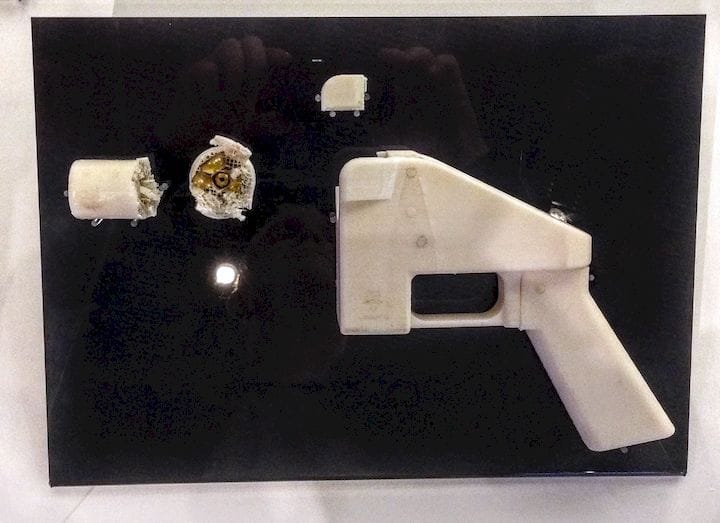
As background, there are concerns in many areas about the production of “ghost guns”, which are weapons produced from kits, but using a key 3D printable part. That part is the “licensable” component, so if you print it, you avoid the licensing.
Police forces have observed an increasing number of crimes committed with such weapons, so governments in various areas are considering laws to prevent or at least reduce the production of them. Some of these proposed rules are extraordinarily challenging for the 3D print industry.
In recent weeks, we’ve heard reports of new legislation proposed or in process in a number of governments. I thought it might be useful to compile the current state of these bills to see what’s happening.
Let’s go through them, one by one.
California
AB 2047 (2025–2026) — Firearms: 3-dimensional printing blocking technology
Status: Active bill, pending referral (introduced Feb 17, 2026).
AB 2047 would prohibit selling/transferring 3D printers in California unless they are equipped with “firearm blocking technology” and appear on a DOJ-maintained eligibility list (via manufacturer compliance certification). The “blocking technology” concept is defined as hardware/firmware/software measures that stop a print job unless the file is evaluated by a “firearms blueprint detection algorithm” and determined not to produce a firearm or illegal firearm parts; the bill also outlines approaches like firmware-level screening and restricting printers to approved slicer/preprint software.
Washington
HB 2321 (2025–26) — Requiring three-dimensional printers be equipped with certain blocking technologies
Status: In House committee
HB 2321 would require 3D printers sold (and certain transfers) to be “equipped with blocking features,” meaning a software-controlled process that prevents printing unless the underlying file is screened by a “firearms blueprint detection algorithm,” and the system must be resistant to circumvention. The bill defines how compliance could be implemented (e.g., firmware screening, integrated slicer screening, or a “handshake” authentication model). It requires the algorithm to use at minimum a database of disallowed firearms blueprint files, and directs the Attorney General to create and maintain a database of firearms/illegal-part blueprint files (with specified maintenance/update expectations).
HB 2320 (2025–26) — Regulation of firearm manufacturing (3D printing/CNC + “digital firearm manufacturing code”)
Status: Passed Senate 3rd reading
HB 2320 is broader than printer-blocking: it updates Washington’s “ghost gun” framework to more clearly cover firearms made via 3D printers or CNC milling machines, adds/clarifies restrictions around possession/distribution of digital firearm manufacturing code with unlawful intent, and targets the sale/transfer of certain machines when marketed as having the primary function of making/assembling firearms. The House Bill Report summarizes that it treats certain violations as per se consumer protection violations and defines digital firearm manufacturing code to include CAD/code/instructions that can program devices to produce firearms/frames/receivers/magazines/unlawful parts. Unlike the previous bills above, this one does not require a database check before printing.
Colorado
HB26-1144 (2026) — Prohibit Three-Dimensional Printing Firearms & Components
Status: Under consideration, House second reading passed with amendments
HB26-1144 defines “3-dimensional printing” to include additive and subtractive manufacturing, and would prohibit manufacturing or producing firearms (including unfinished frames/receivers), large-capacity magazines, or rapid-fire devices via such means unless federally licensed. It also criminalizes possessing (when circumstances indicate intent to unlawfully manufacture or distribute) and distributing digital instructions used to program a 3D printer or CNC machine to make prohibited items, with carve-outs aimed at federally licensed manufacturers. This bill does not require database file checking before printing.
New York
S9005A / A10005A (FY 2026–2027 Executive Budget bill) — includes firearm prevention technology requirements for 3D printers
Status: S9005A: Senate Finance Committee; A10005A: Assembly Ways & Means Committee.
New York would prohibit selling/delivering 3D printers in the state unless equipped with “blocking technology,” defined to ensure a printer won’t proceed with a print job unless the underlying 3D printing file has been evaluated by a firearms blueprint detection algorithm. The text also contemplates state involvement in supporting development/improvement of blocking tech/algorithms, including a safeguarded library (for authorized experts) and measures to prevent misuse or disclosure of its contents.
A2228 (2025) — Background checks for purchase of certain 3D printers
Status: Introduced, referred to committee.
A2228 would require a criminal history background check for purchase of a 3D printer deemed capable of creating firearms, and would prohibit sale to someone who would be disqualified (by criminal history) from being granted a firearm license.
European Union
European Commission proposal (Feb 26, 2026) — Directive to combat firearms trafficking and firearms-related offences (includes 3D-printing/blueprints provisions)
Status: Commission proposal released.
What it does: The Commission’s proposal is primarily criminal-law harmonization: it seeks EU-wide alignment on definitions and minimum penalties for firearms trafficking and related offences, and it explicitly addresses “new technologies” by proposing an offence related to illicit possession/creation/dissemination of blueprints used for 3D printing firearms/components. It also envisions improved cross-border cooperation, data collection/reporting (including to Europol), and national focal points for firearms. This is about criminalizing conduct and harmonizing enforcement, not mandating printer firmware behaviour.
Others
- United Kingdom: Firearms (3D Printing) Bill (Private Members’ Bill) would create offences around possessing blueprints for production of a firearm by 3D printing and possessing 3D printed firearm parts.
- Australia (ACT): Proposed Firearms Amendment Bill includes criminalizing possession of blueprints for 3D printed guns.
- Australia (South Australia): SA Police note that from Feb 19, 2026, it becomes an offence to possess (without authorization) blueprints enabling 3D printing/manufacture of a firearm or firearm part, with listed defences/exemptions.
- Canada: Public Safety Canada briefing material notes Bill C-21 would create offences for possession/distribution of blueprints and other computer data pertaining to firearms/prohibited devices for manufacturing/trafficking purposes.
Adding These Up
Overall, we see a patchwork of varying rules that may or may not become law in a variety of jurisdictions. Some are reasonable, where design files are targeted. However, others would be quite disruptive to the 3D print industry, including the requirement for background checks and especially database verifications.
The database verification requirement would effectively kill the use of third-party software of any kind on a desktop 3D printer, and pose significant issues for open-source tools. Open-source feature development has been the driving force behind today’s advanced slicers, and that force could be severely constrained by these proposed rules.
If you are a resident of any of these regions, you might want to have a discussion with your representatives.
