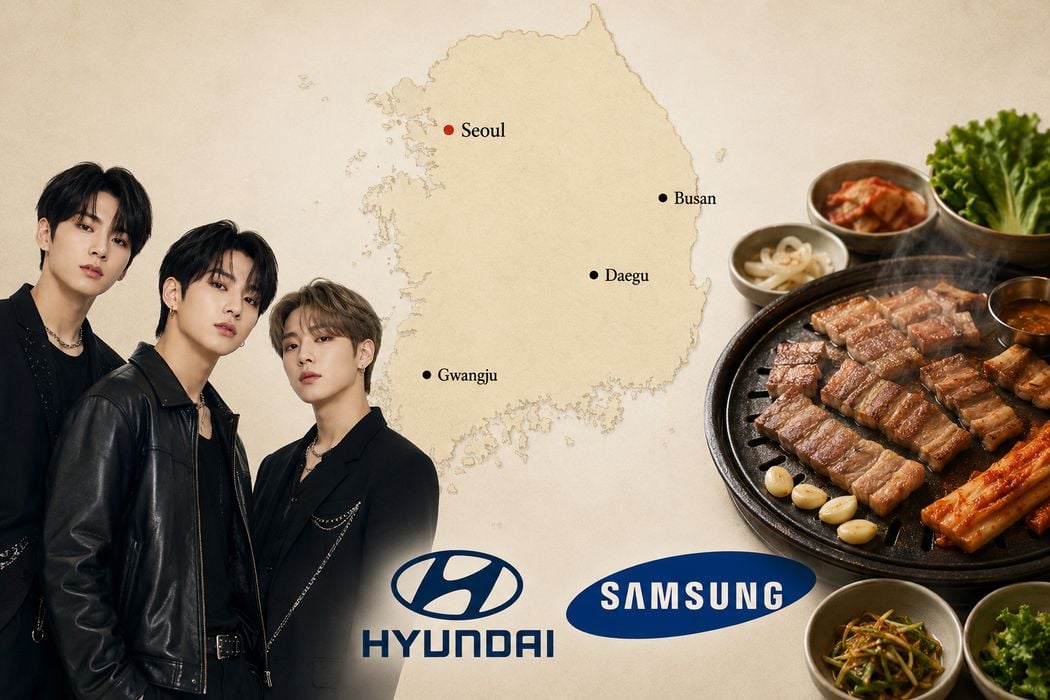
Charles R. Goulding and Preeti Sulibhavi discuss how South Korea’s fierce competitiveness and economic strength are fueling a new era of cultural prestige and industrial dominance worldwide.
For years, the world talked about the “Korean Wave” as a cultural phenomenon. K-pop exploded globally. Korean dramas dominated streaming platforms. Korean skincare reshaped beauty markets. Korean food moved from niche curiosity to mainstream dining.
Today, however, Korea’s influence goes far beyond entertainment. South Korea is now shaping industries, technology, manufacturing, robotics, shipbuilding, and even strategic alliances with the United States. What started as soft power has evolved into something much larger: a full-spectrum economic and industrial movement.
This is the new Korea-Kraze. Or as many call it, “K-Style.”
We have been chronicling South Korea’s 3D printing accomplishments and potential in numerous Fabbaloo articles.
K-Style
K-Style originally described Korea’s cultural impact. Music became K-pop. Fashion embraced Korean soft minimalism. Beauty routines became global standards. Food spread rapidly, from Korean barbecue to kimchi and kimbap. In New York City, Koreatown has transformed into one of Manhattan’s premier dining destinations, attracting locals and tourists alike.
But K-Style today also represents a broader mindset: competitiveness, discipline, innovation, and ambition.
I recently heard a prominent Korean commentator explain Korea’s rise this way: Koreans are intensely proud and deeply competitive people. That competitiveness now shows up not only in culture, but also in manufacturing, engineering, robotics, and global business leadership.
Background
South Korea, once devastated by war and poverty in the 1950s, is now one of the world’s most advanced industrial economies. Companies like Samsung, Hyundai Motor Company, and Kia have become global household names. Samsung recently crossed the threshold into the rare class of trillion-dollar annual sales corporations. Hyundai and Kia now compete directly with legacy American, German, and Japanese automakers, especially in electric vehicles.
Yet perhaps the clearest example of Korea’s industrial dominance is shipbuilding.
South Korea has quietly become the world’s master shipbuilder.
While China dominates in sheer production volume, Korean shipbuilders dominate the high-value, technically sophisticated end of the market. Korean yards build some of the world’s most advanced LNG carriers, naval vessels, offshore energy platforms, and specialized industrial ships. Their shipyards combine precision manufacturing with increasing levels of robotics and automation.
Now the United States is turning to Korea for help rebuilding its own maritime industrial base.
In May 2026, the United States and South Korea signed a major memorandum of understanding establishing the Korea-U.S. Shipbuilding Partnership Initiative, or KUSPI. The agreement focuses on commercial shipbuilding, workforce development, industrial modernization, and maritime manufacturing investment.
The agreement is significant because it reflects growing American recognition that Korea possesses world-leading expertise in modern shipbuilding systems.
Under the partnership, the two countries plan to establish a Korea-U.S. Shipbuilding Partnership Center in Washington, D.C. later this year. The center will coordinate collaboration between governments, universities, research institutions, and shipbuilders from both nations.
This is not just about ships. It is about rebuilding industrial capability.
For decades, the United States allowed much of its shipbuilding capacity to decline while Asian nations surged ahead. Korea’s rise was built through relentless investment, technical education, industrial policy, and manufacturing excellence. Today, America increasingly sees Korean expertise as strategically important in competing against China’s maritime dominance.
South Korea has reportedly committed up to US$150 billion toward U.S. shipbuilding cooperation as part of broader investment agreements between the two countries.
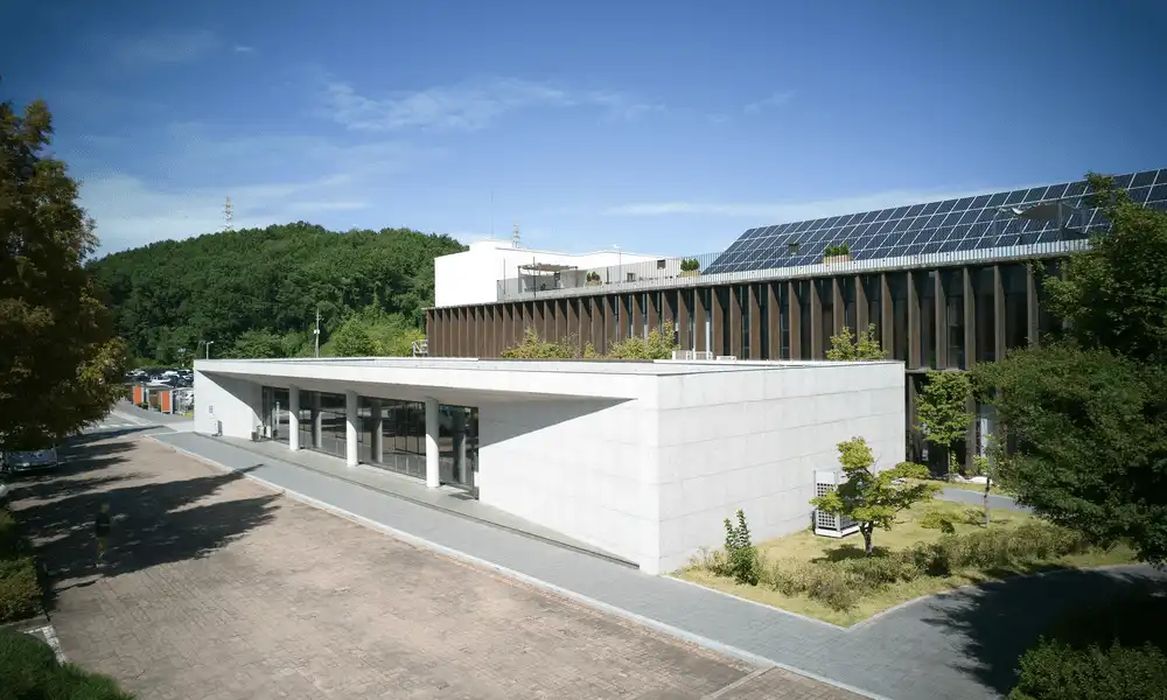
The Korean industrial ecosystem is already moving aggressively into the American market.
One major example is HD Hyundai Robotics, which recently secured its first robotic welding contract with a U.S. shipyard operator. The company will deploy its ArcLift GO robotic welding systems at multiple Chouest Group shipyards in North America.
This matters because shipbuilding increasingly depends on automation. Skilled welders are difficult to find globally, especially in the United States. Korean firms are stepping into this gap with advanced robotics systems that improve productivity, consistency, and worker safety.
Korea is not merely exporting ships anymore. It is exporting industrial intelligence.
The same pattern appears across Korean manufacturing.
Hyundai Motor Group is aggressively investing in robotics and AI-powered factories. Its subsidiary, Boston Dynamics, plans to deploy humanoid robots in Hyundai’s U.S. factories beginning later this decade.
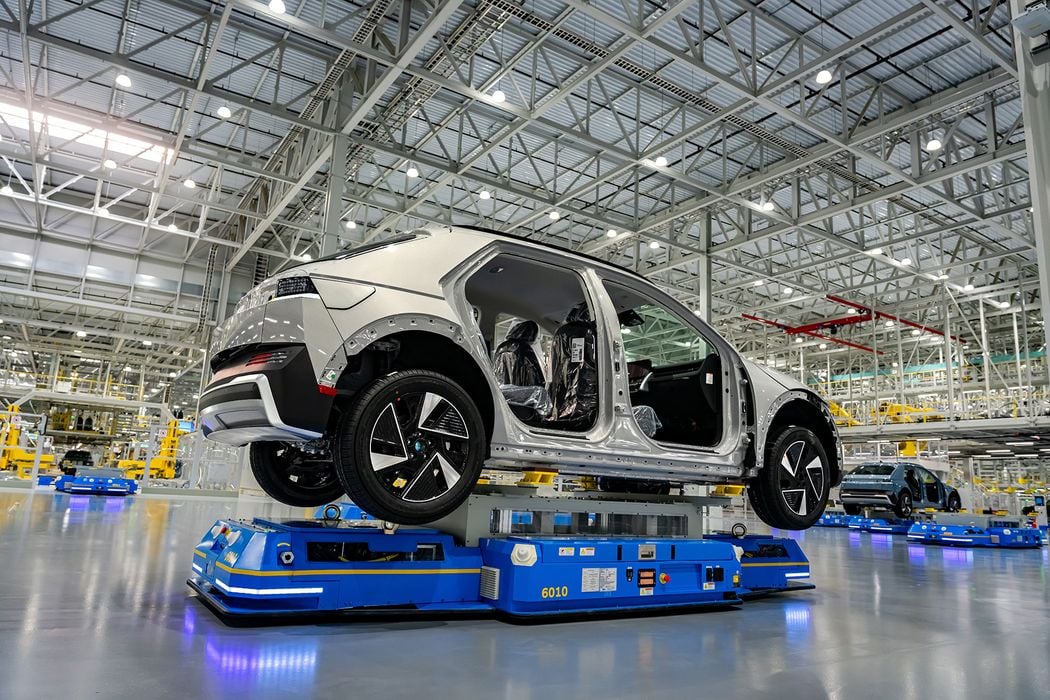
Meanwhile, Korean companies continue to dominate semiconductors, batteries, displays, consumer electronics, and advanced manufacturing systems.
What makes Korea especially interesting is the connection between cultural success and industrial success.
Many nations produce excellent engineering. Many nations produce influential culture. Few do both simultaneously at Korea’s scale.
Korean entertainment helped create a global fascination with Korean aesthetics and lifestyle. That cultural credibility then expanded into fashion, cosmetics, food, tourism, and consumer products. Korean brands became associated with modernity, quality, and sophistication.
How does South Korea’s “K-Style” ecosystem optimize industrial execution?
By fusing disciplined engineering culture with aggressive capital investments, South Korea has built a highly coordinated and robust industrial ecosystem:
- Smart Shipyard Integration: Heavy industries combine humanoid robotics and AI-assisted automation to execute highly complex assembly and heavy fabrication tasks.
- Strategic Industrial Alliances: The growing cooperation between the United States and South Korea establishes a resilient, high-tech manufacturing axis focused on shared technology transfer and defense readiness.
- Full-Spectrum Ecosystems: Coordinated networks linking elite academic institutions, manufacturing infrastructure, and flexible software architectures accelerate the transition from initial lab prototype to global marketplace deployment.
There is also another factor driving Korea’s momentum: urgency.
South Korea exists in one of the world’s toughest geopolitical neighborhoods. It competes economically against China and Japan while living under constant military threat from North Korea. That environment has produced an unusually focused and performance-oriented society.
Korean companies move fast.
They invest aggressively, they adapt quickly, and they compete globally with remarkable intensity.
That intensity is visible in shipbuilding today. Korean firms are not simply building ships using traditional methods. They experiment with robotic welders, humanoid automation, AI-assisted production, and digitally optimized shipyards.
How does industrial automation and additive integration qualify for R&D tax incentives?
Engineering and scaling advanced automation ecosystems requires overcoming significant system-level uncertainties, aligning perfectly with Section 41 R&D Tax Credit validation criteria.
The United States increasingly sees Korea not just as a trade partner, but as a strategic industrial ally.
That shift has broad implications.
One Final Note…
The future global economy may depend less on cheap labor and more on advanced industrial ecosystems. Korea has become exceptionally strong at building those ecosystems. It combines engineering talent, manufacturing infrastructure, education, robotics, software integration, and corporate scale into highly coordinated industrial systems.
For the additive manufacturing and industrial technology world, Korea’s rise offers important lessons.
Industrial leadership is no longer only about machines. It is about ecosystems, culture, talent, and long-term national ambition. Korea has built all four.
The country’s global influence now stretches from music charts to semiconductor fabs, from beauty products to autonomous shipyards. Korean-Kraze is no longer just cultural, it’s industrial.
And K-Style may be just the beginning.