
Charles R. Goulding and Preeti Sulibhavi study how the newly signed U.S.–Korea trade treaty unlocks major opportunities for Korean manufacturers like Hyundai, Hanwha, and Samsung to bypass import tariffs by leveraging their 3D printing capabilities in the U.S.
On July 30 and 31, 2025, the U.S. and South Korea unveiled a landmark trade agreement. Under the deal, U.S. tariffs on South Korean imports will be reduced from 25% to 15%, bringing them in line with tariffs on Japanese and EU imports. In return, South Korea commits to investing US$350 billion in U.S.-based projects and purchasing US$100 billion of American energy products over the coming 3.5 years.
Of the $350 billion package, US$150 billion is earmarked for a shipbuilding partnership dubbed “Make America Shipbuilding Great Again” (MASGA), led by Korean shipbuilding giants working in the U.S. The remaining US$200 billion is directed at sectors such as semiconductors, nuclear power, batteries, and biotechnology.
This trade deal holds significant potential for 3D‑printing-enabled Korean manufacturers—particularly Hyundai, Hanwha, and Samsung—by reducing the cost burden of importing finished components and enabling more on‑site, additive production in the U.S.
Why 3D Printing Matters Here
For years, Fabbaloo has chronicled Korea’s leadership in additive manufacturing, including our pieces on 3D printing in Korea by Charles R. Goulding. In that article, Goulding highlighted Korea’s rising deployment of AM in shipbuilding and industrial sectors for increased efficiency and part localization. We’ve also previously detailed Hanwha’s ventures and Hyundai’s automotive and heavy‑industry partnerships involving 3D printed jigs and components.
Under the new trade structure, these firms can mitigate import tariffs by expanding domestic U.S. production of parts using their 3D printing technology—passing raw digital files to U.S. printing facilities rather than shipping finished components and incurring duties.
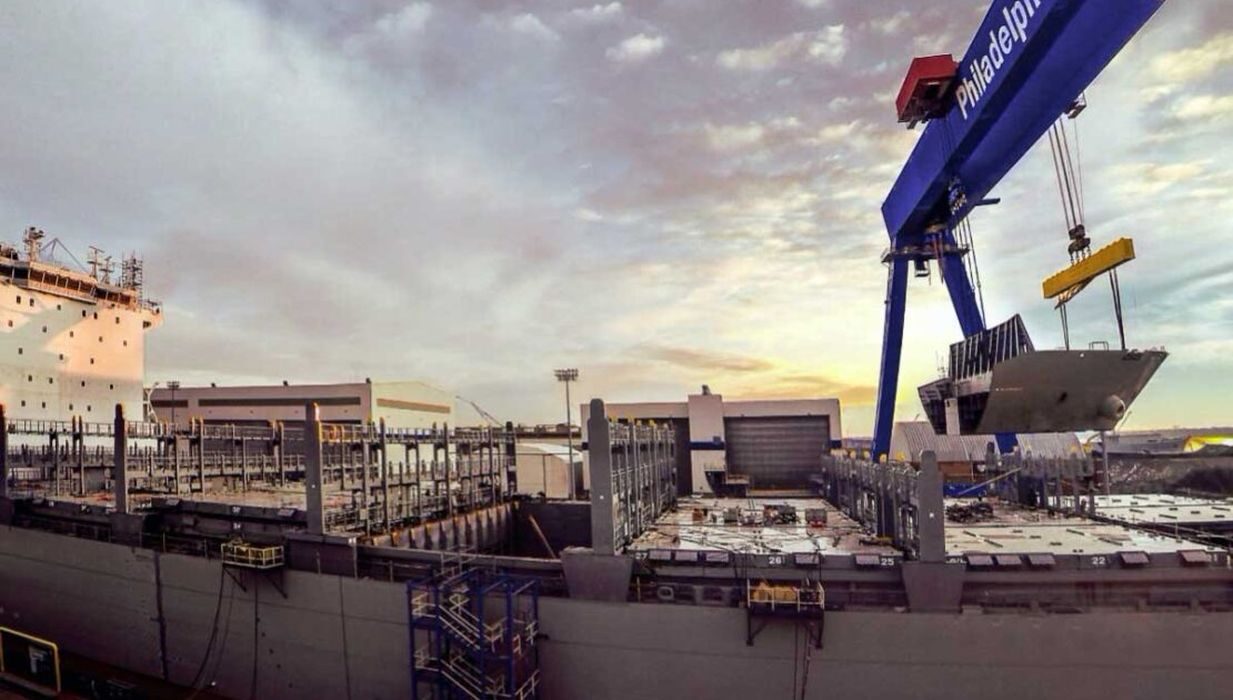
Hanwha’s U.S. Push: 3D Printing at Philadelphia Shipyard
In fresh developments, Hanwha Ocean and Hanwha Systems, which jointly acquired Philly Shipyard in Pennsylvania in 2023, have begun deploying metal additive manufacturing facilities on-site. They are printing complex ship components—like pipe fittings and engine parts—directly in the U.S. instead of sourcing from Korea.
This enables Hanwha to localize production, accelerate delivery, and reduce reliance on imports that would have been subject to higher tariffs. It also aligns with the MASGA plan, which targets US$150 billion in shipbuilding investments and emphasizes local construction, training, and maintenance in the U.S.
Hanwha has also introduced workforce training programs at Philly Shipyard in additive manufacturing design and operation, digitized parts catalogs, and AR‑based assembly tracking—demonstrating a full-stack commitment to 3D printed digital manufacturing
Hyundai’s Emerging Role in Additive Manufacturing
While our earlier articles focused on Hyundai Heavy’s innovation center in Ulsan and its collaboration with 3D printing startups, this tariff agreement opens avenues for Hyundai-linked operations to progressively establish or scale-up 3D printing hubs in the U.S. for ship, automotive, and industrial parts:
- HD Hyundai Heavy has already trial‑tested 3D printing of ship parts at sea, proving the durability and feasibility of metal AM in marine environments.
- Through the trade deal, Hyundai can now digitally ship part designs into U.S. shipyards and facilities—printing blades, brackets, jigs, and more domestically, and avoiding hefty import taxes.
As the MASGA initiative unfolds, Hyundai can collaborate across U.S. shipbuilding networks, employing its Korean-developed additive techniques to support U.S. Navy contracts and commercial vessel projects under localized manufacturing models.

Samsung & Semiconductor Implications
Though not directly 3D printing-related, Samsung Electronics and other Korean firms are key beneficiaries of reduced tariffs on exports to the U.S.—notably in chips and pharma sectors. Samsung’s recent US$16.5 billion chip supply deal with Tesla, and LG Energy Solution’s US$4.3 billion battery contract, were secured amidst these high-stakes negotiations.
While additive manufacturing isn’t central to those contracts, the overall environment of freer trade, investment, and domestic production capacity in the U.S. helps reinforce vertical integration—including the potential for 3D printed tooling and parts in EV and battery manufacturing lines.
In the “3D Printing in Korea” article, we covered Korea’s maturation in metal and engineering‑plastic AM, especially for shipbuilding and automotive industries, noting companies like 3D Solution supplying Hyundai Motors, and Ajin Industrial’s EOS-based efforts.
In subsequent articles, Fabbaloo detailed Hanwha’s additive manufacturing adoption and Hyundai’s innovation center in Ulsan, where startup collaborations were aimed at localizing production and sharing patent pools with Samsung Heavy and Daewoo.
We’ve also written about Hanwha’s naval and heavy-industrial ventures, but now remote and counter-re-country deployment allows more direct tariff avoidance under the new treaty—something our earlier pieces anticipated but we hadn’t tied to such a concrete policy shift.
What This Means in Practice
- Digitized Supply Chain
Korean firms can now send digital CAD files to U.S. AM centers and print parts domestically—eliminating tariffs that would have applied to importing completed parts. - Local Investment Growth
The treaty’s MASGA funding encourages building new additive hubs, training American workers in AM design and operations, and integrating digital manufacturing into U.S. shipyards. - Faster Turnaround & Flexibility
On-site printing of critical components (jigs, engine fittings, brackets) cuts lead times and enhances responsiveness—key in defense and energy projects. - Competitive Edge for Korean Brands
By leveraging their 3D-printing expertise, companies like Hanwha and Hyundai can compete more favorably against foreign producers constrained by tariffs or longer supply chains.
The Research & Development Tax Credit
The now permanent Research and Development (R&D) Tax Credit is available for companies developing new or improved products, processes and/or software.
3D printing can help boost a company’s R&D Tax Credits. Wages for technical employees creating, testing and revising 3D printed prototypes are typically eligible expenses toward the R&D Tax Credit. Similarly, when used as a method of improving a process, time spent integrating 3D printing hardware and software can also be an eligible R&D expense. Lastly, when used for modeling and preproduction, the costs of filaments consumed during the development process may also be recovered.
Whether it is used for creating and testing prototypes or for final production, 3D printing is a great indicator that R&D Credit-eligible activities are taking place. Companies implementing this technology at any point should consider taking advantage of R&D Tax Credits.
Final Thoughts
The newly minted U.S.–Korea trade treaty offers more than just tariff reduction—it sets the stage for transformational change via additive manufacturing. Instead of bulk-importing components from Korea at a 15 % tariff, companies can print capacity in-country, digitally transferring production. This shift supports supply chain resilience, enterprise localization, and cost efficiencies across shipbuilding, automotive, electronics, and more.
Fabbaloo’s previous coverage recognized the early power of Korean 3D printing innovation. Now, with this treaty, that innovation becomes not just competitive, it becomes strategic. Firms with mature additive workflows—like Hyundai and Hanwha—can turn digital part portfolios into printed parts on U.S. soil, avoiding tariffs while meeting growing domestic demand.
Expect more stories soon from our pages, as these companies ramp up U.S.-based AM operations—cases where 3D printing doesn’t just supplement production, but becomes the core route to market under this new trade framework.