
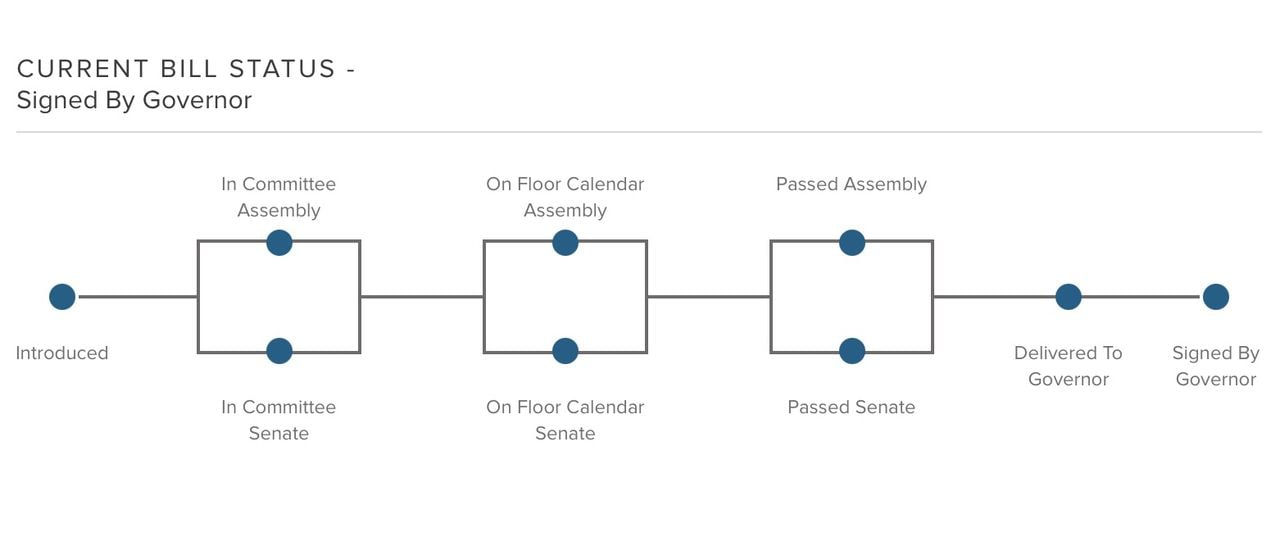
It happened last week: New York State actually passed their unbelievably infeasible 3D-printed weapon legislation.
A quick recap: law enforcement agencies are dealing with increasingly frequent “3D-printed guns”, which are in fact only partially 3D-printed: the critical component that normally carries the serial number is 3D-printed and substituted, creating an untracked weapon. They want to somehow slow down this practice.
The solution, developed by legislators in New York State, is simple: just make the 3D printers refuse to print weapons! That should be easy, they believe.
But it is not easy. It is essentially impossible to achieve because of the infinite variety of geometric shapes that can be a weapon component. To illustrate how ridiculous this is, imagine an elephant 3D model, where strapped to the side of the elephant is a weapon component. Print the entire item and then cut off the elephant, leaving the component alone. There are countless ways that anyone can easily get around any conceivable detection system.
The New York State law requires any 3D printer sold in that state to include “Blocking technology”, defined as hardware, software, firmware, or other integrated technological measures that prevent a print job from proceeding unless the file has been evaluated by a firearms blueprint detection algorithm and determined not to be a file that would produce a firearm or illegal firearm parts.
This would mean either:
- 3D printers would have to be standalone smart to somehow identify “bad” files on their own, or
- 3D printers would have to upload each and every 3D print job to a cloud service where some other smart system would validate or disqualify the job
The first approach would effectively eliminate any small player producing 3D printers because they could not afford to develop and deploy their own detection system. Even if they did, it would dramatically raise the cost of the system to include the power and capability to perform the detection due to processing and storage requirements. Open-source designs would not include these functions, so they may be unusable in New York State. No more hobby 3D printers.
The second approach might be doable by the larger players, but they would have to make a decision on whether it is worth the bother just to sell in New York. As a result, this could mean that some brands basically disappear in that state.
Another possibility is that a third party (or even one of the major 3D printer manufacturers) develops an API service to perform file validation. They could then sell it to other players that can’t do it on their own for a fee. This would again raise printing costs for everyone participating, and perhaps even lead to a per-job cost regime in New York State.
When is all this happening? That’s a more interesting story.
The law, signed into effect on May 27th, lays out a lengthy timeline with fuzzy edges. A working group must be convened within 90 days; the working group must recommend “minimum safety standards” by a year after that; official rules would be published nine months after that; finally, one year after that, the rules would be put into legal effect.
If you go through that list of steps, it’s pretty clear that none of this actually happens until maybe 2029.
But then it may not happen at all. The working group may determine that the proposed concept is not technologically feasible, and everything would then grind to a halt. There is also the possibility of legal challenges to this legislation due to freedom of speech principles or other approaches.
Meanwhile, the 3D printer operators and manufacturers are left with many questions, and there is no effect on the original problem.
Via New York Senate
