
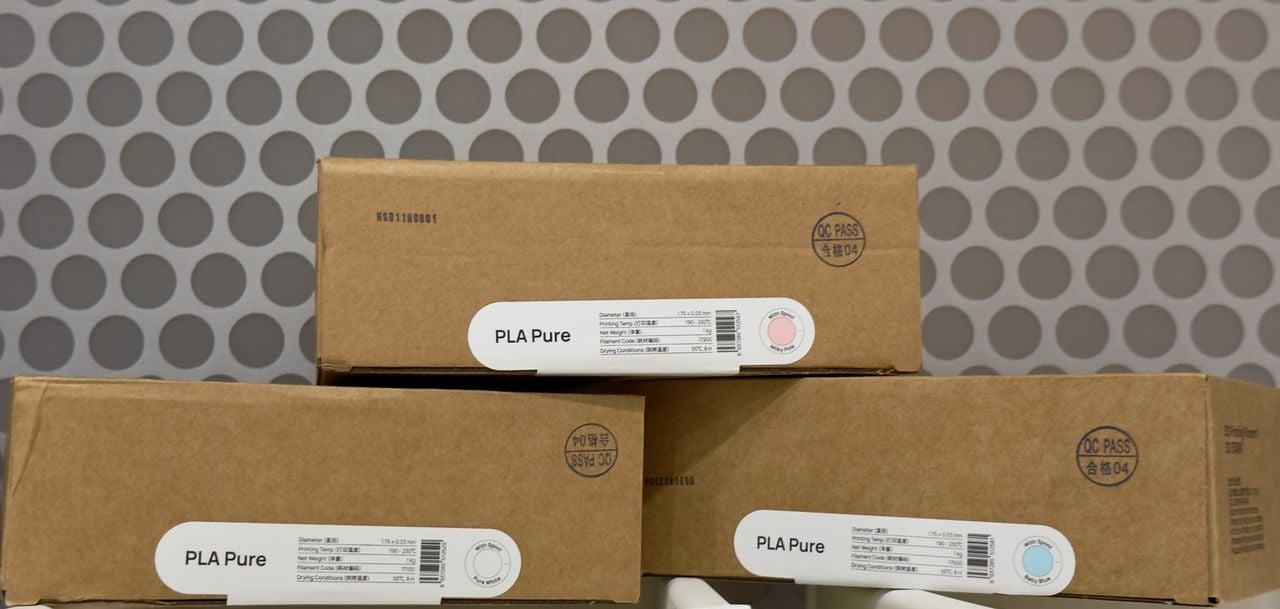
We’ve been quietly testing Bambu Lab’s new PLA Pure filament.
Bambu Lab is surely one of the biggest providers of filament on the planet, so why would they need a new filament product line? The answer is in one word: safety.
Filament Safety
Typical 3D printer filaments tend to release two types of emissions when the material is sufficiently heated: nanoparticles and VOCs.
Nanoparticles are simply very tiny chunks of the material, so small that they become airborne. From there, you can breathe them into your lungs, where they will be permanently lodged, slowly releasing whatever chemicals they contain into your body.
The other emission is VOCs, or Volatile Organic Compounds. This is really a category of chemicals, some of which might be toxic. They can also be breathed in, possibly causing harm.
The amount of emissions varies considerably by material type. Filaments requiring higher extrusion temperatures tend to generate more emissions due to the higher energy involved. The “champion” of emissions is ABS material, and you may already realize this because of the pungent odor that appears when printing that material.
Because of these emissions, it’s always recommended to have sufficient ventilation of your workspace and to not position people nearby the machines when operating. For that reason, it is a really bad idea to put an open gantry 3D printer in a bedroom.
Many modern 3D printers include enclosures, and some of those feature air filtration that can remove some, but not all, of the emissions. Another trick is to leave enclosed printers closed for an hour or so after the job completes. This allows time for the particles to settle down on the floor of the machine.
Pure PLA Composition
Bambu Lab evidently had concerns about these issues, although the majority of the 3D print community has been able to successfully handle them for many years. The new product, Pure PLA, attempts to resolve some of the issues through a new formulation.
They say that PLA Pure is made from only five ingredients, each of which is “EU food-contact certified”.
That’s quite a statement, because most filaments include a wide range of ingredients that are almost certainly not listed anywhere publicly. Ingredients are used to modify the material properties (e.g. make it stiffer or more rigid), colour the material, or simply as filler. It’s these additions that make the emissions more complex to deal with.
Bambu Lab further said that PLA Pure is certified to the UL GREENGUARD 2904 standard and EN-7, the EU toy safety standard.
PLA Pure Safety
Does this mean that PLA Pure is food safe? Absolutely not. It means that the material is certified to be in contact with food for a specified length of time. However, PLA Pure will be printed on 3D printers that are almost certainly NOT food safe. To be food safe, the material AND the printer must be both certified.
That’s because the material will pass by and touch various components in the filament path, possibly picking up chemicals along the way. Sure, it’s likely minor, but you legally cannot say the system as a whole is food safe, and Bambu Lab does not say this.
Nevertheless, Bambu Lab has taken a big step here by introducing a much safer filament. The only other 3D printer company that has done something like this is Formlabs, which introduced their Creator series resins that also have safer ingredients.
Testing PLA Pure
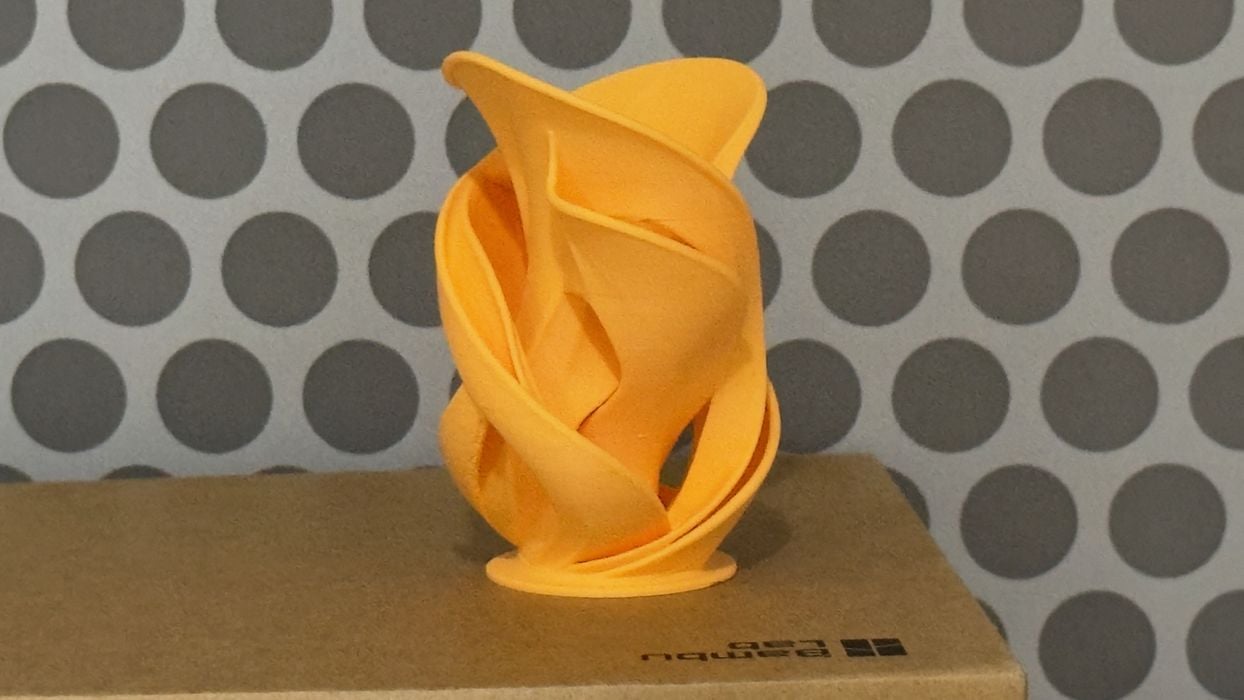
We tested some spools of PLA Pure recently and found that they are just as easy to use as regular filament.
The spools mount on any Bambu Lab AMS (or similarly sized systems) and include RFID detection.
One immediate concern I had was whether the machine and software would recognize the brand-new filament product. Would I have to update firmware and software?
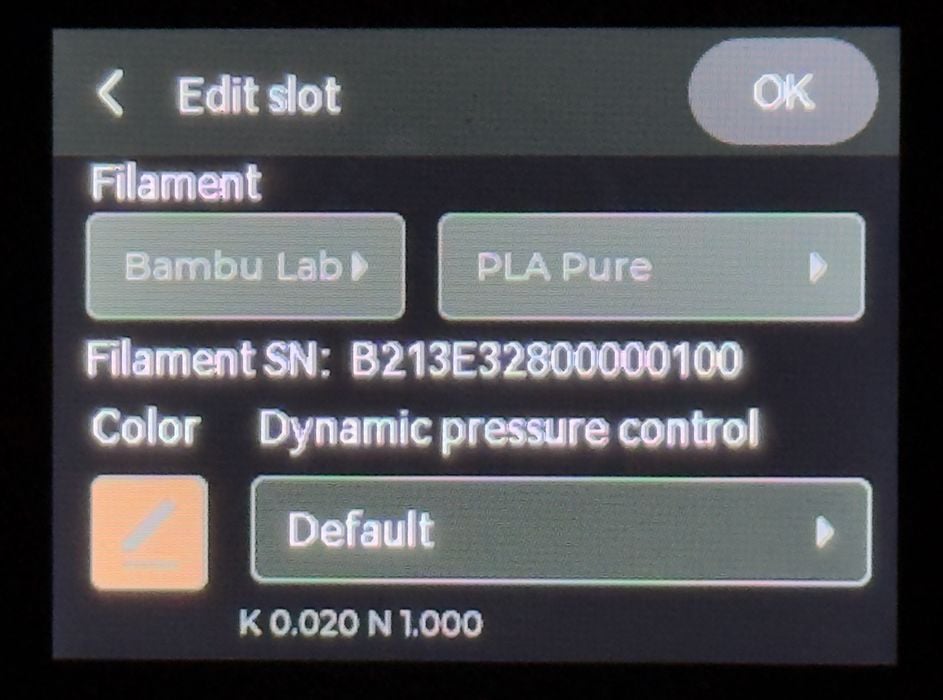
It turns out no, both the machine and Bambu Studio both seemed to know all about PLA Pure. I wonder what other future Bambu Lab products could be revealed by inspecting this software?
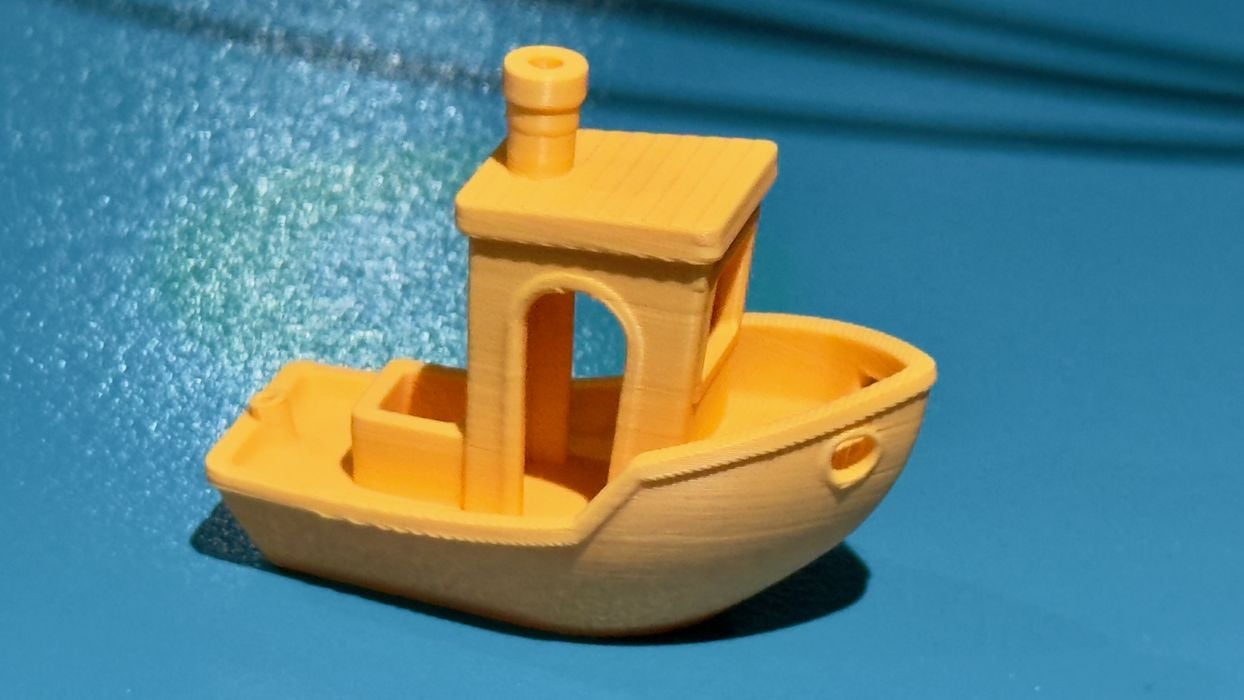
Prints made from PLA Pure are opaque and pastel-coloured, which should be ideal for many types of prints. Bambu Lab is focusing on the “print your own toys” market here, so the available colours seem appropriate.
I found the surfaces of PLA Pure prints to be “soft” to the touch. The prints are rigid, but there’s something a bit slippery about this material. That’s not to say this is a negative, but all I’m saying is that PLA Pure prints feel slightly different than typical PLA prints.
I tried printing multicolour objects with PLA Pure, and, of course, it works just as well as it would with normal PLA. Effectively, PLA Pure is functionally the same as regular PLA, at least on the Bambu Lab equipment I used for testing.
While I don’t have the sensitive equipment required to properly measure the emissions from PLA Pure, I do have my nose. During printing, there wasn’t even the slightest hint of any odour, suggesting that emissions are low for this material.
PLA Pure Availability
The product is now announced and available from the normal Bambu Lab distribution sources. One kg spools are available in five branded colours:
- Milky Pink
- Baby Blue
- Apricot
- Pure White
- Absolute Black
The colour names also hint at the toy market.
The pricing of the filament is quite interesting. While the web store lists an MSRP at US$25, it’s currently on sale for only US$13.74 per spool, a 45% discount. It’s likely Bambu Lab dropped the price at introduction to ensure operators try it out.
Even better, there are volume price discounts, which are easy to obtain because you might want to buy all five colours. Here’s how it works out:
| QTY | MSRP TOTAL | DISC. TOTAL | VOLUME DISC. | VOLUME TOTAL | PER 1KG |
| 1 | $24.99 | $13.74 | 0% | $13.74 | $13.74 |
| 5 | $124.95 | $68.70 | 25% | $51.53 | $10.31 |
| 6 | $149.94 | $82.44 | 30% | $57.71 | $9.62 |
| 10 | $249.90 | $137.40 | 45% | $75.57 | $7.56 |
The big play here is to buy ten spools, where you can obtain a per kg price of only US$7.56. That’s less than a third of the MSRP price: it’s like buying ten for the price of three.
Not only could PLA Pure be one of the safest filaments, it might also be the cheapest to buy — at least at the moment.
PLA Pure Final Thoughts
Bambu Lab has made a good move here with the new, safer PLA Pure material. It solves a future problem where the company might have been accused of food contact issues by 3D print operators who did not take proper precautions and select appropriate materials.
The material prints very easily with no operational changes required, and produces excellent quality results.
And at least for a little while, it’s available at rock-bottom prices.
Via Bambu Lab
