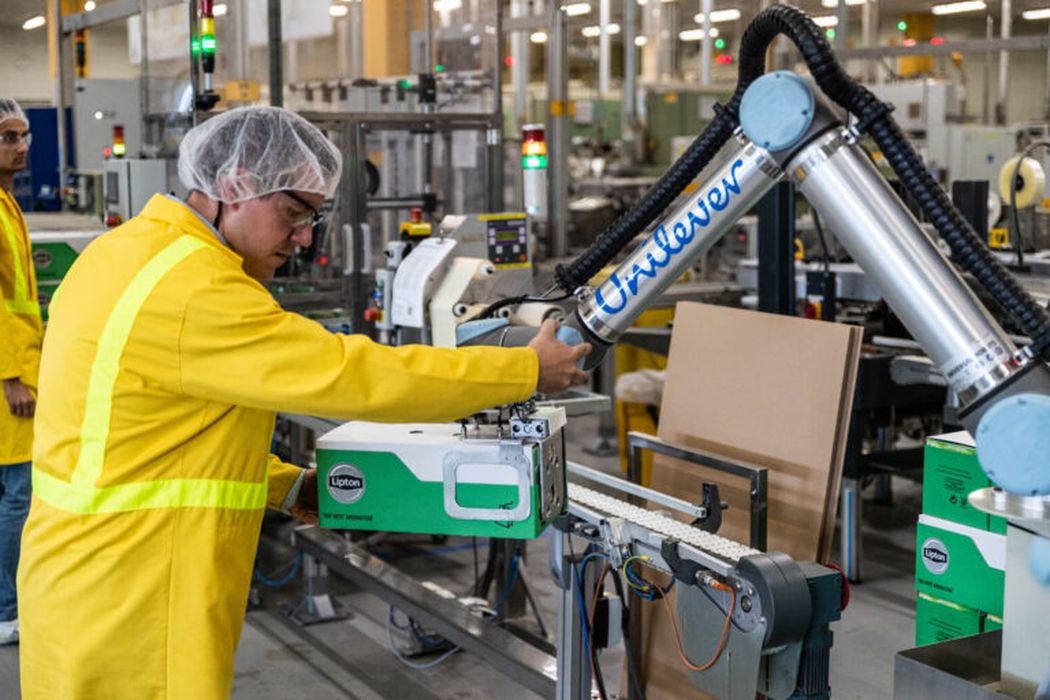
Charles R. Goulding and Preeti Sulibhavi describe how the convergence of collaborative robots, autonomous mobile systems, and Physical AI is creating new opportunities for smarter, more autonomous 3D printing operations.
For years, we have covered the progress of Universal Robots, the collaborative robot (cobot) pioneer that helped make advanced automation accessible to manufacturers of all sizes. Today, Universal Robots is part of a much larger robotics strategy at Teradyne, a company that may be uniquely positioned to capitalize on the emergence of Physical AI and its convergence with additive manufacturing.
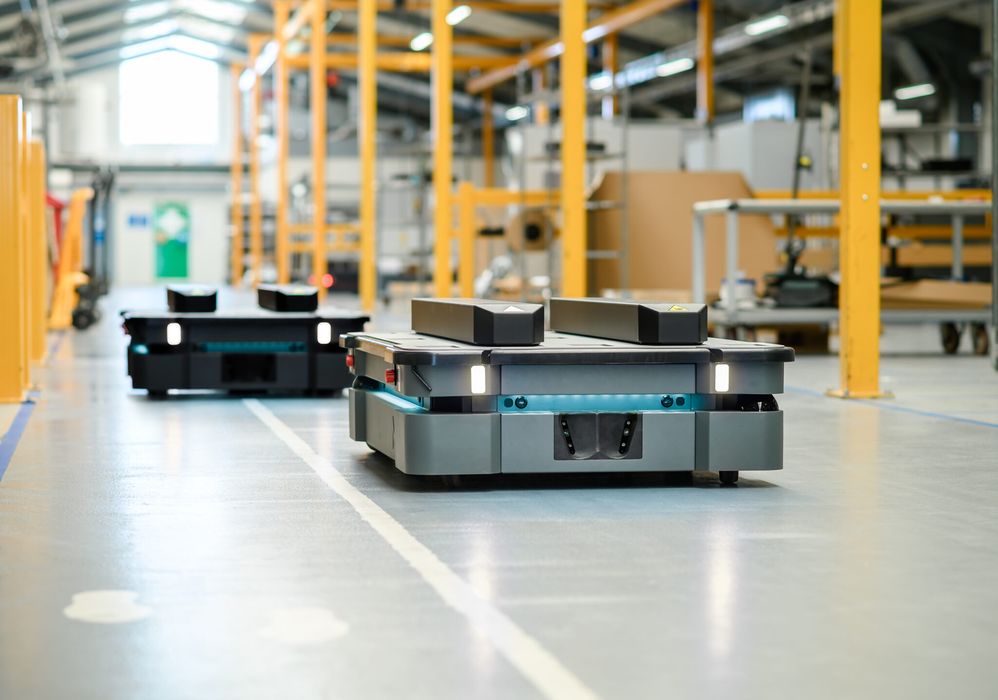
Teradyne, headquartered in North Reading, is best known as a leading supplier of automated test equipment for the semiconductor and electronics industries. Over the past decade, however, the company has expanded aggressively into robotics through the acquisition and development of two important automation businesses: Universal Robots (UR) and Mobile Industrial Robots (MiR).
In 2025, Teradyne, Inc. generated approximately US$3.19 billion in revenue during fiscal 2025. The company employed approximately 6,600 people at year-end 2025.
The combination of collaborative robots, autonomous mobile robots (AMRs), and increasing investment in artificial intelligence creates a powerful platform for what many technology companies are now calling “Physical AI” – AI systems capable of perceiving, understanding, and acting in the physical world.
Why Teradyne Is Well Positioned for Physical AI
Physical AI represents the next evolution of industrial automation. Traditional robots execute pre-programmed instructions. Physical AI-enabled robots can interpret sensor data, adapt to changing conditions, and make decisions in real time.
Teradyne Robotics has been actively embracing this transition. At NVIDIA GTC 2025, Teradyne Robotics demonstrated AI Accelerator-powered robotic solutions designed to enable collaborative robots to perceive and respond more intelligently to their environments. Teradyne’s Chief AI Officer described Physical AI as allowing robots to learn, adapt, and make decisions based on sensory input rather than merely following fixed programming.
The company’s structure is particularly attractive because it combines:
- Universal Robots’ collaborative robot arms
- Mobile Industrial Robots’ autonomous mobile platforms
- Teradyne’s deep expertise in sensors, testing, electronics, and industrial automation
This combination addresses one of the longstanding challenges in additive manufacturing: moving beyond isolated machines toward intelligent, autonomous production systems.
The Additive Manufacturing Opportunity
Most 3D printing operations today remain labor intensive. Human operators load materials, unload parts, transport components between workstations, perform inspections, and manage post-processing operations.
Physical AI can automate many of these activities.
A typical future workflow could include:
- A mobile MiR robot transports raw materials to a bank of additive manufacturing systems.
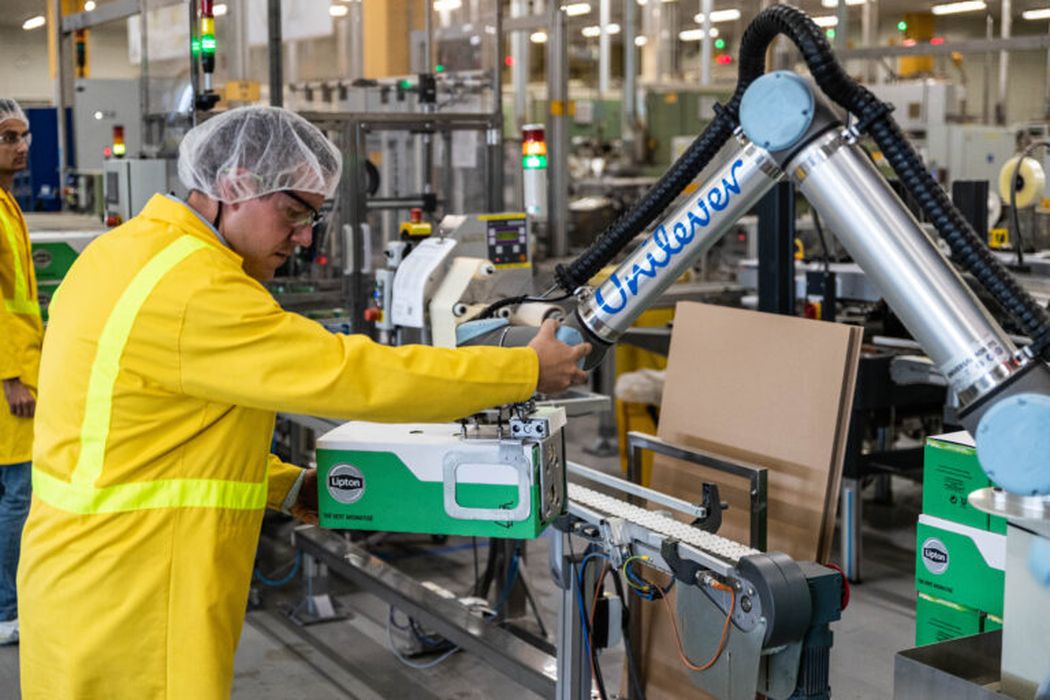
- Universal Robot cobots automatically load build plates or print jobs.
- AI-driven vision systems monitor print quality in real time.
- Finished parts are transferred autonomously to de-powdering, support removal, machining, or inspection stations.
- Data from every production step feeds back into optimization software.
Instead of individual machines operating independently, entire additive manufacturing cells become autonomous production ecosystems.
Research already demonstrates the potential of combining mobile robotics and additive manufacturing. A 2024 study on mobile additive manufacturing robots found that autonomous mobile printing systems can improve manufacturing throughput by combining transportation and production functions while reducing idle time.
Recent Examples Pointing Toward the Future
Several recent developments suggest this future may arrive sooner than expected.
At Automate 2025, Universal Robots and MiR jointly showcased AI-powered automation solutions spanning manufacturing and logistics workflows. The demonstration highlighted how collaborative robots and autonomous mobile systems can work together across integrated industrial processes.
For additive manufacturing operators, this integration is particularly significant because many 3D printing bottlenecks occur between production steps rather than during printing itself.
Another notable development came through partnerships involving Universal Robots and Physical AI software providers. In 2026, reports emerged that Skild AI was deploying generalized robotic intelligence on factory assembly lines while partnering with Universal Robots. These systems aim to move beyond single-task automation toward adaptable robotic behavior capable of handling changing manufacturing environments.
This capability could prove transformative for additive manufacturing service bureaus where product mixes frequently change and traditional automation often struggles to keep pace.
New Applications for 3D Printing & Advanced Engineering Optimization (AEO)
The convergence of Physical AI and robotics opens several new additive manufacturing opportunities that double as benchmarks for Advanced Engineering Optimization (AEO) –maximizing structural performance, material efficiencies, and throughput via intelligent design loops:
- Autonomous Print Farms: Large print farms frequently require operators to remove completed parts, restart machines, and move components between stations. AI-enabled cobots could perform these functions continuously, reducing labor requirements while increasing machine utilization.
- Distributed Manufacturing: MiR platforms could support decentralized additive manufacturing cells where mobile robots transport materials and finished components between multiple production areas. This approach aligns well with the increasing trend toward flexible manufacturing facilities.
- Construction-Scale Printing: Mobile robotic platforms combined with additive manufacturing systems could enable large-scale concrete and construction printing operations. Research already indicates that mobile additive manufacturing systems may be particularly useful in remote environments and large-scale structural applications.
- Adaptive Post-Processing: One of the most labor-intensive aspects of additive manufacturing remains post-processing. Physical AI could allow robots to identify support structures, optimize removal paths, and adapt to part-to-part variations without extensive reprogramming.
- Intelligent Inspection: Combining AI vision systems with collaborative robotics could automate quality assurance processes for printed components, especially in aerospace, medical, and industrial applications where inspection requirements are rigorous.
Capitalizing on the Research & Development Tax Credit
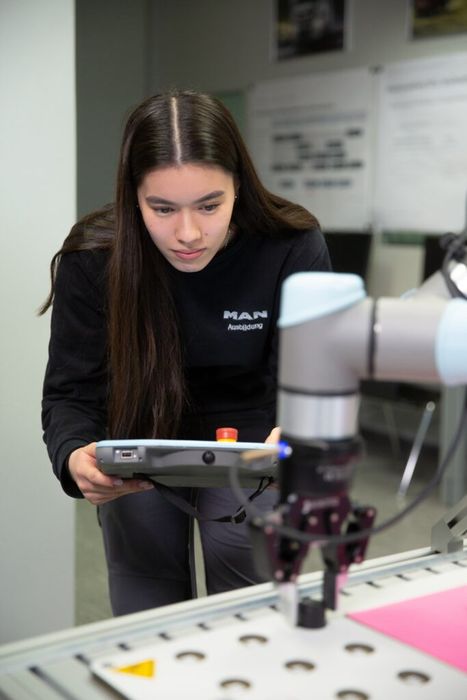
Teradyne’s growing investment in engineering and development underscores its commitment to advancing both robotics and AI-enabled automation. When companies push the boundaries of automated hardware and software integration, they create massive potential for federal and state incentives. Under the specialized guidance of firms like R&D Tax Savers, these multi-million-dollar investments can be optimized to yield significant tax credits.
The activities detailed in Teradyne’s roadmap represent primary indicators of R&D Tax Credit eligibility:
- Qualified Wages: The payroll hours dedicated by software engineers, roboticists, and materials scientists to develop generalized robotic intelligence (such as Skild AI partnerships) or adaptive thermal controls, qualify directly.
- Process Improvement Subsidies: Designing autonomous workflows—where cobots and AMRs coordinate to eliminate print farm idle times—falls squarely under eligible process improvements.
- Prototype and Algorithmic Testing: Developing and refining machine vision algorithms to detect part-to-part variations or optimize post-processing toolpaths require extensive iterative testing, a core pillar of the credit’s four-part test.
By systematically aligning engineering expenditures with tax guidelines, companies can capture substantial returns on their automation capital.
R&D Investment Supports the Strategy
The following table presents Teradyne’s research and development expenses in recent years as compared to employee count:
| Fiscal Year | Engineering & Development Expense (USD) | Employees |
| 2025 | $504,600,000 | 6,600 |
| 2024 | $460,900,000 | 6,500 |
| 2023 | $418,100,000 | 6,500 |
| 2022 | $441,000,000 | 6,500 |
| 2021 | $428,000,000 | 5,900* |
*2021 employee estimate based on publicly reported employee history. R&D figures are derived from Teradyne annual filings and financial disclosures.
The increase from approximately US$418 million in 2023 to more than US$504 million in 2025 reflects substantial investment in future technologies, including robotics and AI-driven automation.
Looking Ahead
The additive manufacturing industry has spent decades improving printers, materials, and software. The next major productivity leap may come not from the printers themselves, but from intelligent automation surrounding them.
Teradyne’s combination of Universal Robots, Mobile Industrial Robots, and emerging Physical AI technologies places the company in a strong position to help build the autonomous factories of the future. As additive manufacturing continues moving from prototyping toward full-scale production, manufacturers will increasingly need robotic systems capable of managing materials, transportation, inspection, and post-processing with minimal human intervention.
For 3D printing operations seeking to scale production efficiently, the convergence of Physical AI, collaborative robotics, and autonomous mobility may ultimately prove as important as advances in printing technology itself. Teradyne appears to have assembled many of the necessary building blocks already.