
3D printers are starting to fold into machine tools.
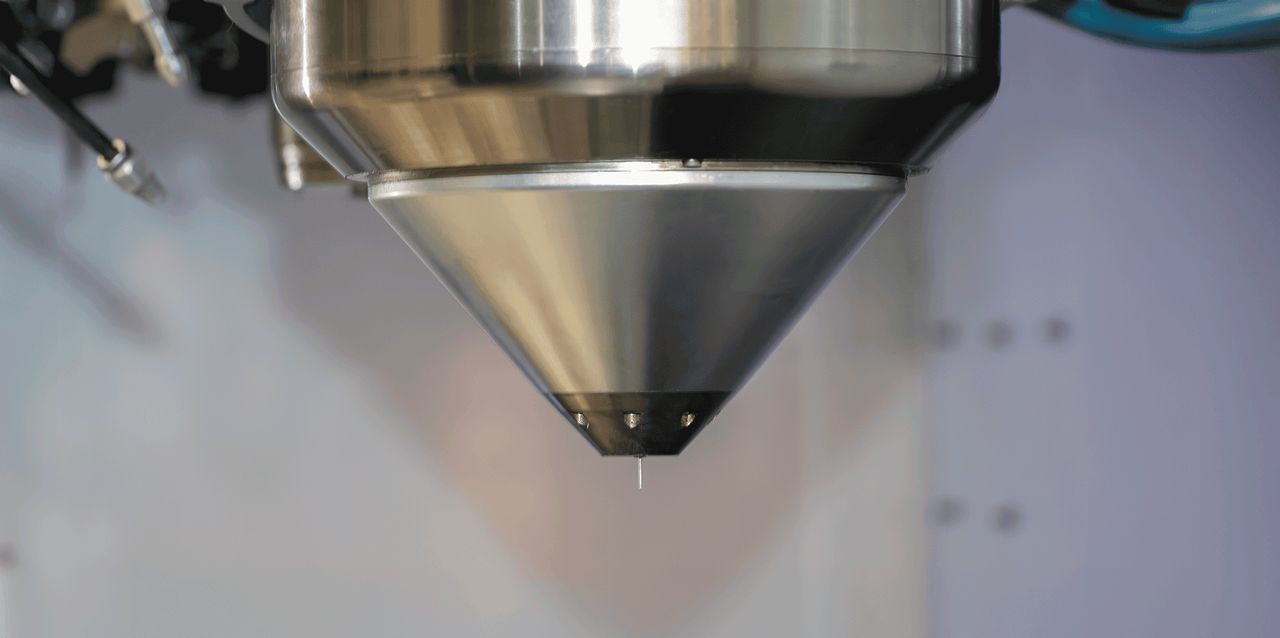
Japanese machine tool manufacturer HORKOS has partnered with Spain’s Meltio to create the NX70 DUO version AM, a machine that both deposits metal and mills it to the required shape. It is based on HORKOS’s NX70 1510B machining center, with Meltio providing the additive technology component.
Meltio’s process is wire-based directed energy deposition (DED). A laser melts welding wire as it is fed into the work area, building metal where required. The new machine can then switch to precision cutting, removing excess material and producing surfaces that deposition alone would not achieve. DED is notorious for producing rather rough surfaces.
The important thing here is that the part stays in the same machine. An operator could deposit material, machine the accessible surfaces, add more material and machine it again, without repeatedly moving and locating the part on separate equipment.
HORKOS suggests closed impellers as one application. These can have internal surfaces that become difficult or impossible to reach with a cutting tool once the surrounding geometry is complete. Switching between deposition and machining offers a way around that problem.
HORKOS’s proprietary Non Bed Structure is intended to keep the machine footprint compact, while its water-soluble iMQL system supports a cleaner machining environment. The partners say one machine has already been sold to an unnamed international industrial customer. They plan to demonstrate a dry run at JIMTOF in Tokyo later this month, although they haven’t published comparative production costs or throughput figures.
Hybrid additive and subtractive systems aren’t new. Mazak and DMG MORI were showing combinations of metal deposition and CNC machining more than a decade ago.
What interests me here instead is the business arrangement.
Meltio already offers standalone metal printers, but it also sells an Engine integration system designed for CNC machines and industrial robots. That allows someone else to build the surrounding machine, provide the controls and support the customer. Its website now presents a complete family of partner-integrated equipment.
For HORKOS, the deal adds a new manufacturing process to an established machining platform. For Meltio, it potentially puts its technology in front of machining customers who might never have approached a 3D printing supplier. HORKOS has its own products, customer relationships and understanding of factory requirements. Meltio doesn’t have to build all of that for themselves, they simply leverage HORKOS’ network.
There’s evidence this isn’t an isolated experiment. Meltio says Phillips Federal sold 12 Haas-based hybrid systems using its technology for training at a US Navy facility in Virginia.
I wonder how many other additive manufacturing companies are examining this opportunity.
Compact deposition heads are especially suitable for such partnerships. A metal deposition system might become one capability among many in a machining center. Add inspection capabilities, and the same setup could measure a worn part, build up the missing material and machine it back to specification. Fix the part before it’s even made!
Other technologies might fit into different stages of manufacturing, although not all are equally easy to integrate. A laser powder bed fusion system, with its powder handling, recoating and controlled atmosphere, can’t easily become “another toolhead” on a hybrid system.
There’s also a complication with making one machine do everything: each operation competes for time on the same equipment, and the controls, programming and process environments must work together. Meltio itself relies on specialist CAM partners for CNC hybrid programming.
This seems like an approach worth tracking. Manufacturing is not necessarily moving into physically tiny machines. It is moving toward fewer separate machines, fewer part transfers and more processes contained within one production system.
Via Meltio