
Seurat is patenting a very unusual method of speeding up metal 3D printing.
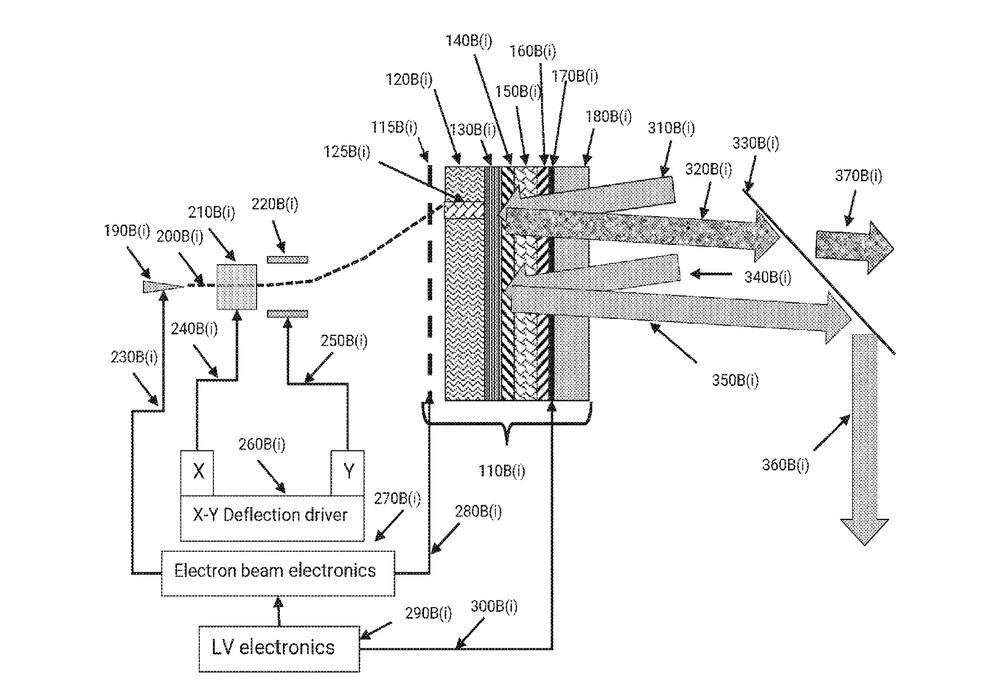
Seurat Technologies’ patent, US20260316385A1, is titled “High Speed Light Valve System.” The patent describes an additive manufacturing system in which a powerful, initially unpatterned laser beam is shaped into a two-dimensional image before it reaches a powder bed.
Why not simply use an ordinary digital micromirror device or another usual light valve? Because high-power metal printing needs a lot of optical energy, and the switching speed of conventional valves can be limiting. The patent says some existing light valves cannot operate at full speed for this reason.
Seurat’s proposed solution is an unusual combination: a self-emissive display drives a reflective light valve. The display could use OLED, LED or microLED elements. Its pixels emit a pattern of light onto a photoconductive element in the valve. That produces a voltage pattern across a linear electro-optic layer, changing the layer’s optical properties in selected areas.
The high-fluence laser beam then reflects from this electrically patterned structure. In other words, a relatively low-power display writes the image, while the reflective valve imposes that image onto the much more powerful laser beam. The patent describes the beam as being split afterward, with the wanted pattern sent toward the print bed and unwanted light directed to a beam dump or switchyard.
A display panel controls the optical response of the valve, while the intense beam travels through the optical stack. The design still needs careful management of reflected energy, alignment and heat, but the display itself is not doing the melting.
The patent application describes several versions of the valve, including electron-beam-addressed structures, dual photoconductors and fringe-field switching. One especially interesting configuration uses two patterned write beams to create an interference field in the electro-optic layer. The filing says that reducing the active layer thickness could increase switching speed by more than four times in that arrangement.
Later, the patent describes systems exceeding 1,000 frames per second, and claims that some material choices could support switching more than 1,000 times faster than conventional light valves. Those are descriptions of proposed architectures, and not performance results actually demonstrated.
Seurat is trying to make area-based laser exposure fast enough to keep up with very high laser power.
For a metal powder bed system, that could mean exposing more of a layer in each image instead of using only a scanning spot. The print bed could receive a complete two-dimensional pattern, a strip, overlapping images or several images relayed to multiple processing units. The patent even describes a switchyard that redirects patterned energy to several beds.
The switchyard idea may be the most commercially interesting feature. Light that would normally be rejected can be redirected, reshaped and used elsewhere, or converted into heat or electrical power. That adds a great deal of optical hardware, but wasting a high-power laser beam is expensive. If one source can serve several processing chambers, the economics of the whole machine could change for the better.
This is a really ingenious way to separate image writing from laser power handling. It also sounds suspiciously like what they have been doing, so this could be the patent that is behind their high volume metal production system.
Via Espacenet