Charles R. Goulding and Andressa Bonafe explain why companies are increasingly turning to engineering-driven additive manufacturing services to strengthen supply chains, accelerate production, and unlock valuable R&D tax incentives.
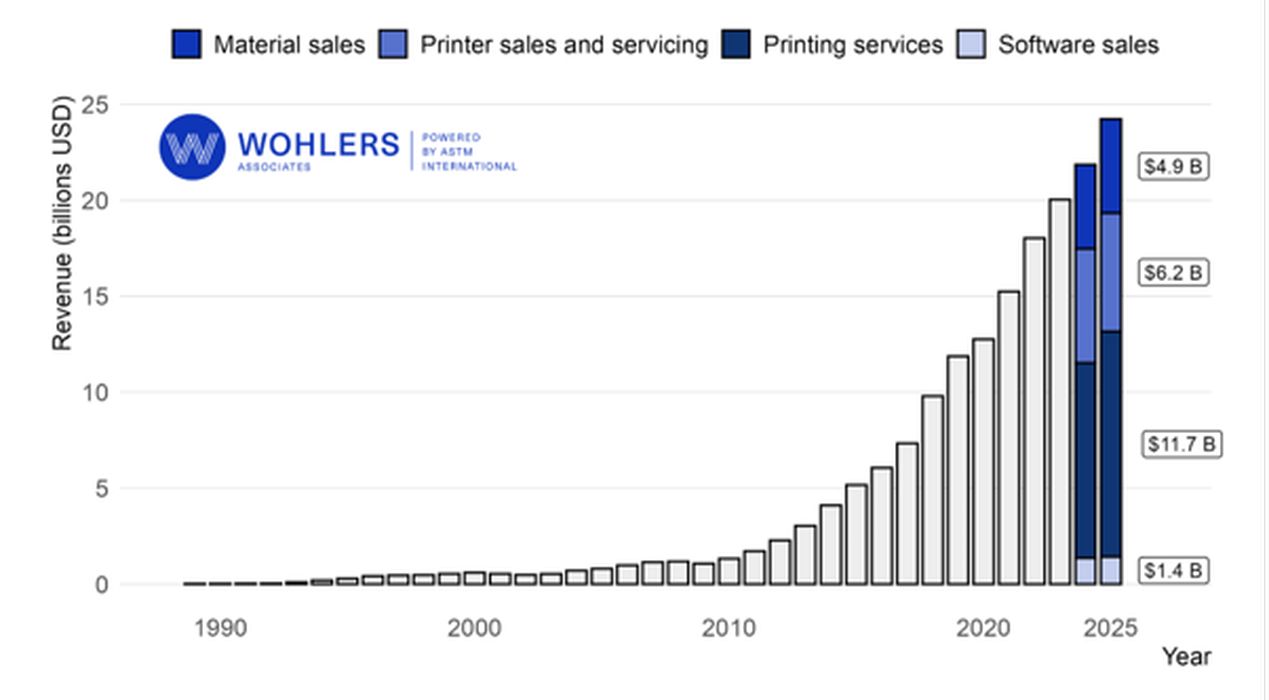
The latest Wohlers Report 2026 shows an additive manufacturing industry moving further into production. Of the industry’s US$24.2 billion in total revenue in 2025, manufacturing services accounted for 48% and grew 15.5%, far outpacing the 3.6% growth recorded for hardware sales. The authors describe this revenue mix as a sign of a maturing market, where value creation increasingly depends on production capability, application knowledge, and engineering execution rather than equipment sales alone.
That shift reflects how many companies are choosing to adopt additive manufacturing. Creating functional, production-grade parts requires wide-ranging expertise, from material selection, build orientation, and thermal behavior to post-processing, qualification, and tolerance management. Rather than purchasing equipment and developing these capabilities internally, companies are increasingly turning to specialized service providers that can supply both production capacity and the engineering knowledge needed to use it effectively. This growing reliance on external expertise helps explain why manufacturing services are expanding much faster than hardware sales.
A Different Kind of Service Provider
The additive manufacturing services market spans a wide range of operating models. Automated platforms such as Xometry and Protolabs prioritize speed and volume through instant quoting, standardized processes, and digital manufacturing networks. Engineering-first service bureaus operate on a different premise. Rather than receiving a file and producing a part, these providers evaluate design intent against process constraints, optimize geometries for the target additive technology, and validate output against application requirements before delivery. The outcome of a build depends as much on those decisions as on the machine itself, and engineering-first bureaus compete on exactly that expertise.
Design for Additive Manufacturing (DfAM) is the defining capability of this model. In a transactional service bureau, DfAM guidance may be automated or absent. In an engineering-first operation, it is embedded from the start: engineers review CAD files for build orientation, wall thickness, thermal mass distribution, and features that would trap support structures or cause dimensional drift. The goal is enabling fewer failed iterations, parts that perform in their intended application, and a tighter feedback loop between design and manufacturing.
Aerospace and Defense as the Proving Ground
Some of the clearest examples of engineering-first additive manufacturing delivery have emerged in aerospace and defense, where qualification requirements are particularly demanding. Sintavia, founded in 2012 and headquartered in Hollywood, Florida, focuses exclusively on metal additive manufacturing for aerospace, defense, and space applications, with products spanning heat exchangers, turbomachinery components, advanced fuel systems, and combustion chambers. In December 2024, Sintavia, together with Curtiss-Wright‘s Engineered Pump Division and Bechtel Plant Machinery Inc., announced the delivery of what the companies described as the first submarine component incorporating a qualified, metal additively manufactured impeller to be installed in a U.S. Navy vessel.
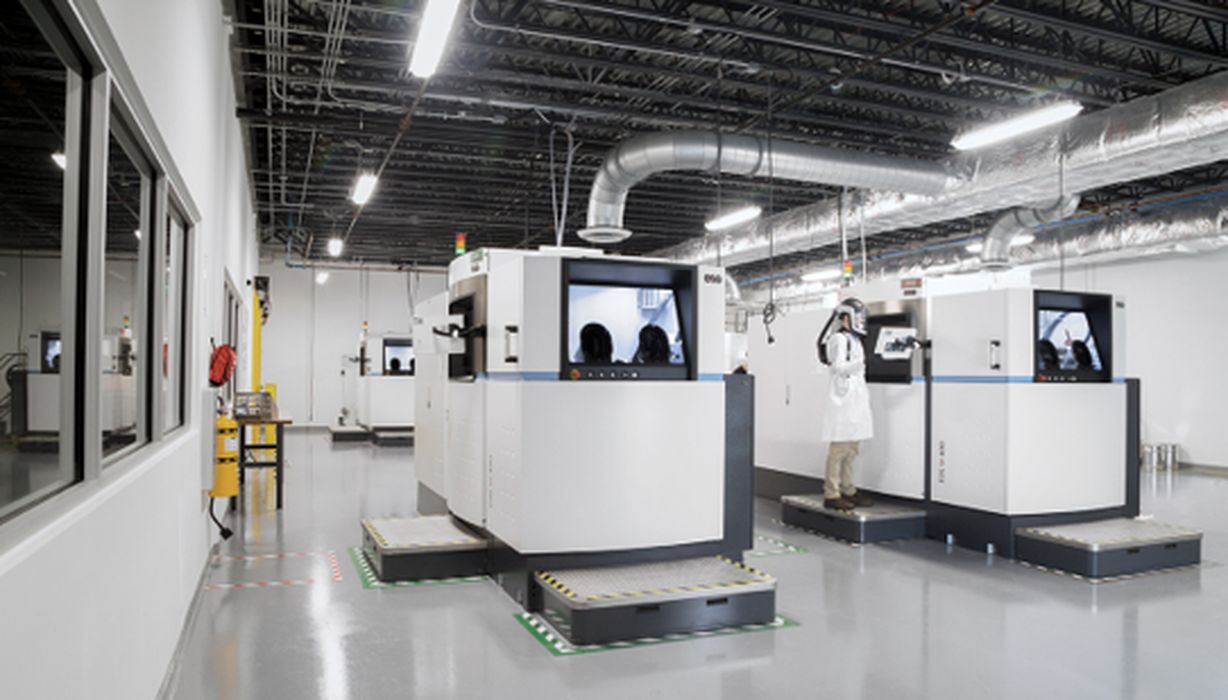
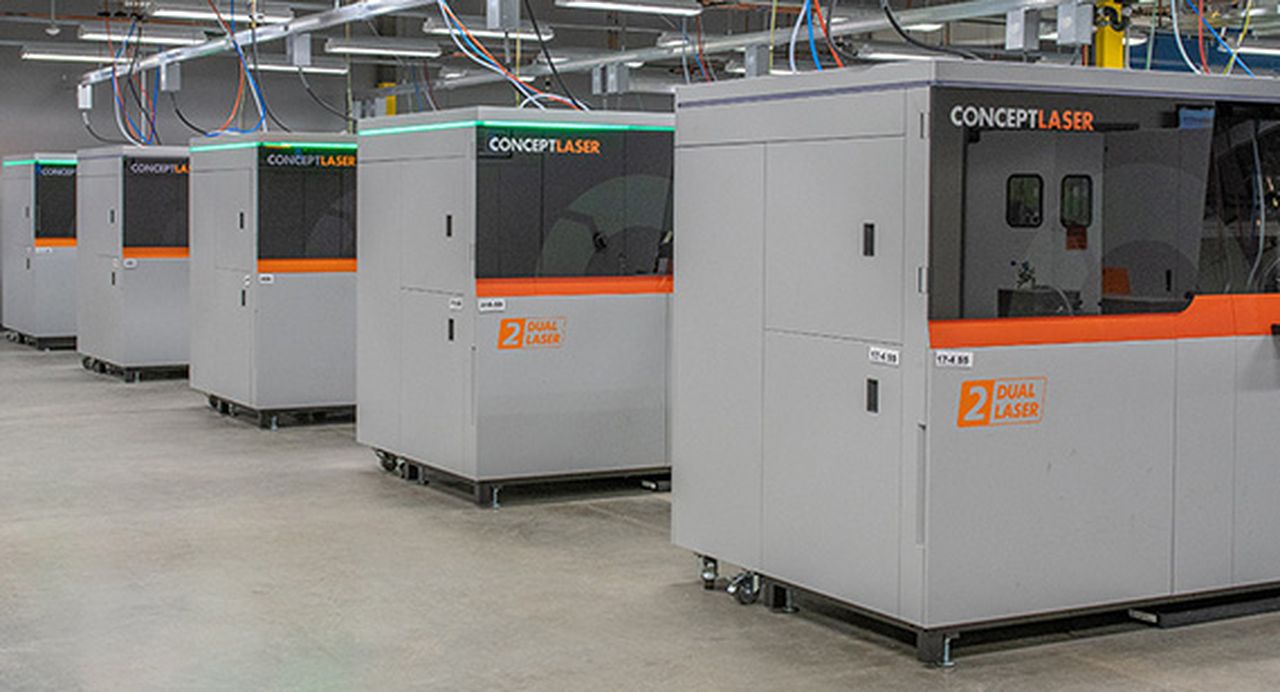
The depth of that qualification work is supported by Sintavia’s manufacturing infrastructure. The company operates 23 large-format industrial printers across an 87,000 sq ft facility built around lean production principles, printing with proprietary parameter sets across nickel, copper, titanium, aluminum, and refractory metals. The printer fleet includes eight EOS M400-4 quad-laser systems and two SLM NXG 600 twelve-laser machines, among others. In-house hot isostatic pressing (HIP), vacuum heat treatment, multi-axis machining, and surface finishing complete the production sequence on-site, eliminating the external handoffs that typically introduce variability in aerospace supply chains. Holding multiple Nadcap accreditations, Sintavia describes itself as a vertically integrated AM operation, from design through final conformance.
Expanding Across Industries
While aerospace has arguably served as the proving ground for engineering-first AM, the model is gaining traction across a wider range of industries. Energy, automotive, robotics, medical devices, and defense electronics each present a version of the same underlying challenge: functional, production-grade parts that require material knowledge, process discipline, and engineering judgment to produce reliably. Industries that once engaged 3D printing primarily for prototyping are increasingly relying on engineering-first service bureaus for qualified production components, driven by supply chain resilience, design freedom, and compressed development timelines.
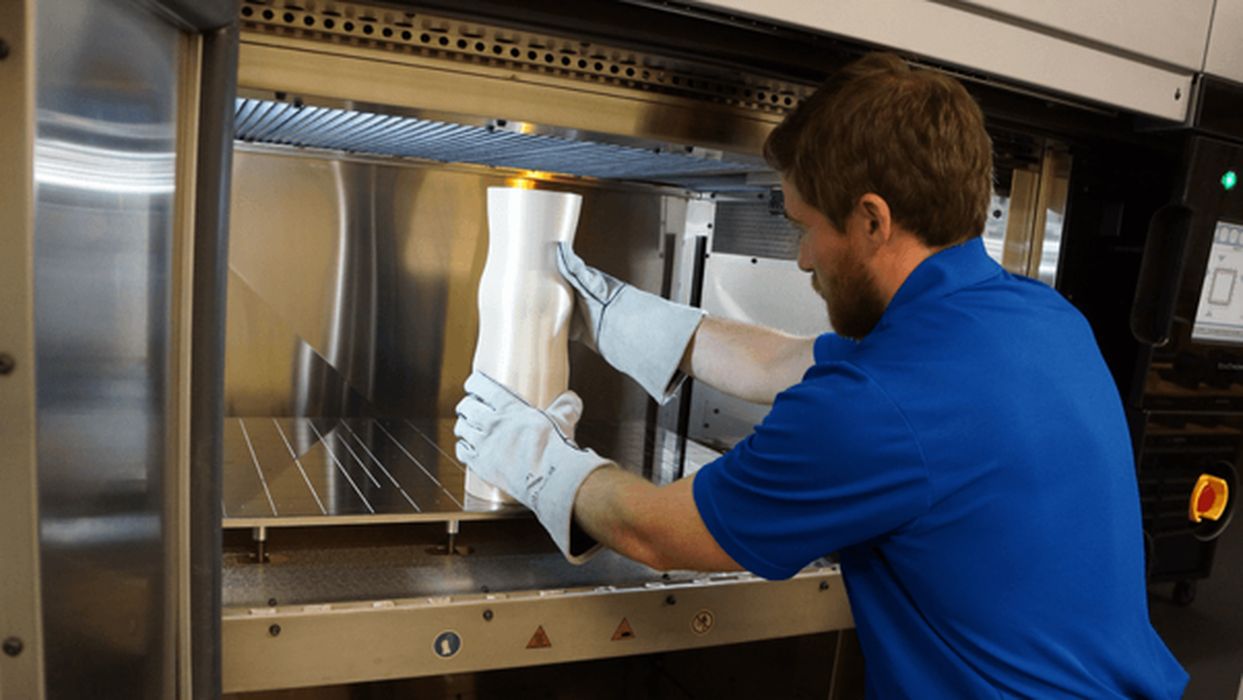
Pittsburgh-based Tronix3D, founded in 2017 and acquired in 2021 by engineers Mike Vindler and Jason Economou, both former customers, operates a multi-process facility covering HP Multi Jet Fusion, high-performance FDM (including ULTEM 9085 and PEEK), mSLA, large-format FDM, and Cold Metal Fusion for titanium. Its client base spans robotics, energy, automotive, medical, and defense sectors, with clients including Siemens Energy, Westinghouse, and Carnegie Robotics. The company holds a CAGE code and an SBA Non-Traditional Defense Contractor certification, and has produced ruggedized wearable computing platforms, secure enclosures for naval systems, and production runs of AI-driven robotics components.
Pennsylvania-based American Additive Manufacturing, certified to ISO 9001:2015, AS9100D, ITAR, and CMMC II, serves clients across aerospace, automotive, industrial, and robotics applications. Its client base includes BAE Systems, Lockheed, and Ford, spanning defense programs and high-volume automotive production. The company’s Design & Engineering team provides DfAM consultation to support customers transitioning from conventional to additive manufacturing, while its MRO capability produces on-demand replacement parts for legacy systems where original tooling is no longer available.
When the Material Is the Competitive Advantage
A key differentiator of engineering-first service bureaus is access to advanced materials paired with the process knowledge to deploy them correctly. This combination changes the economics of material selection for end-users.
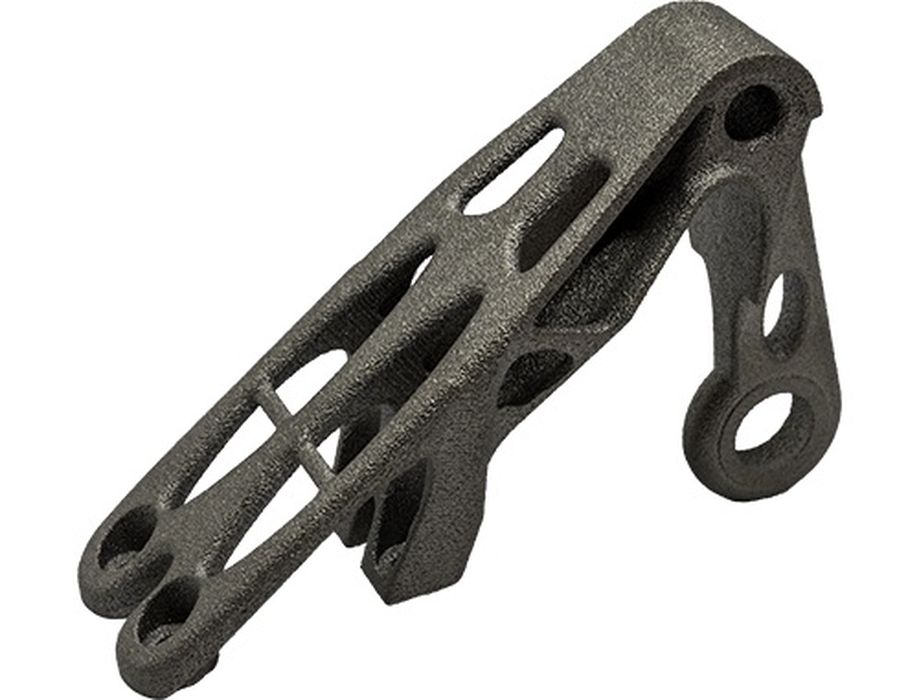
Tronix3D’s Cold Metal Fusion capability for titanium is a great example. CMF uses Ti6Al4V powder bound in a polymer matrix, printed on industrial sintering equipment and then debound and vacuum-sintered to produce fully dense titanium components. Traditional titanium AM via laser powder bed fusion (LPBF) requires specialized gas environments, safety infrastructure, and capital investment historically associated with large aerospace programs. By separating the printing step from the metallurgy, CMF reduces equipment requirements and cost per part to levels accessible for low-to-mid volume production. Engineering teams that previously could not justify a titanium specification can now access the material without program-scale budgets.
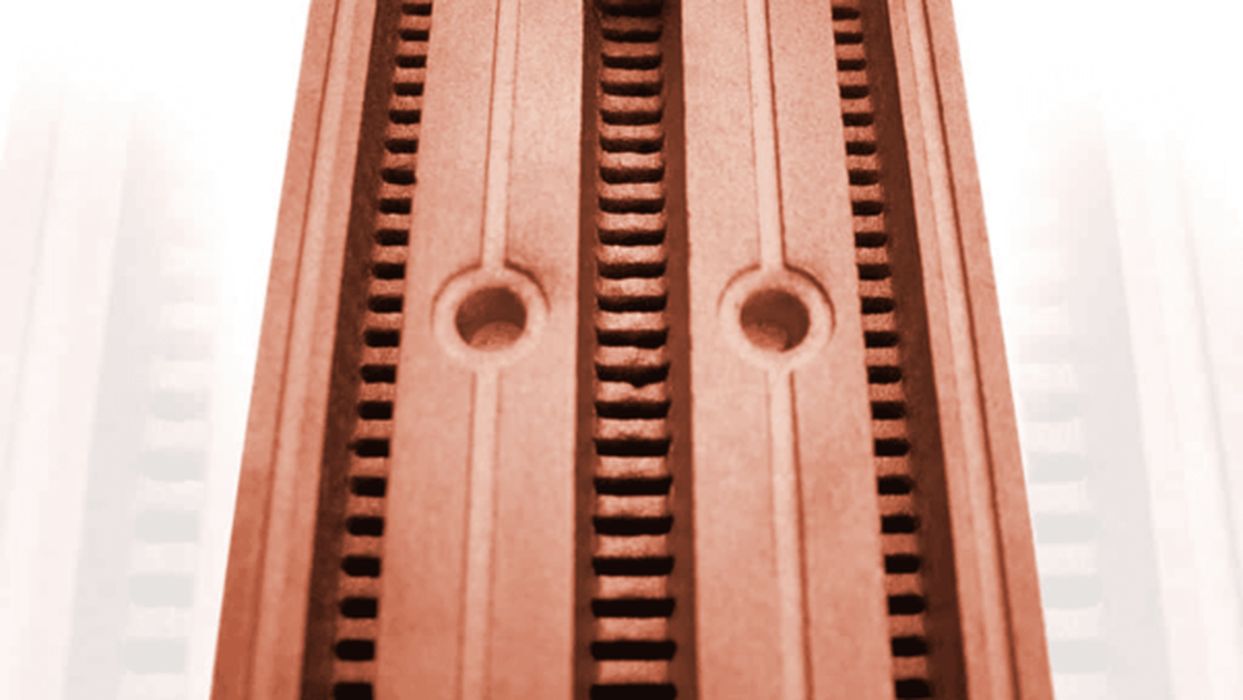
A similar logic applies to copper. 3DEO, a Torrance, California-based metal AM company founded in 2016, produces pure copper, 17-4PH, and 316L stainless steel components at volume using its proprietary Intelligent Layering® process. Pure copper is notoriously difficult to process with conventional laser powder bed fusion due to its high reflectivity, making it a material that has historically required specialized equipment or workarounds. By developing its own printing platform optimized for these materials, 3DEO has made high-volume copper production accessible for applications in semiconductors, medical devices, and electronics, industries where thermal conductivity and biocompatibility requirements have traditionally constrained material choice.
Supply Chain Resilience and the Digital Part Library
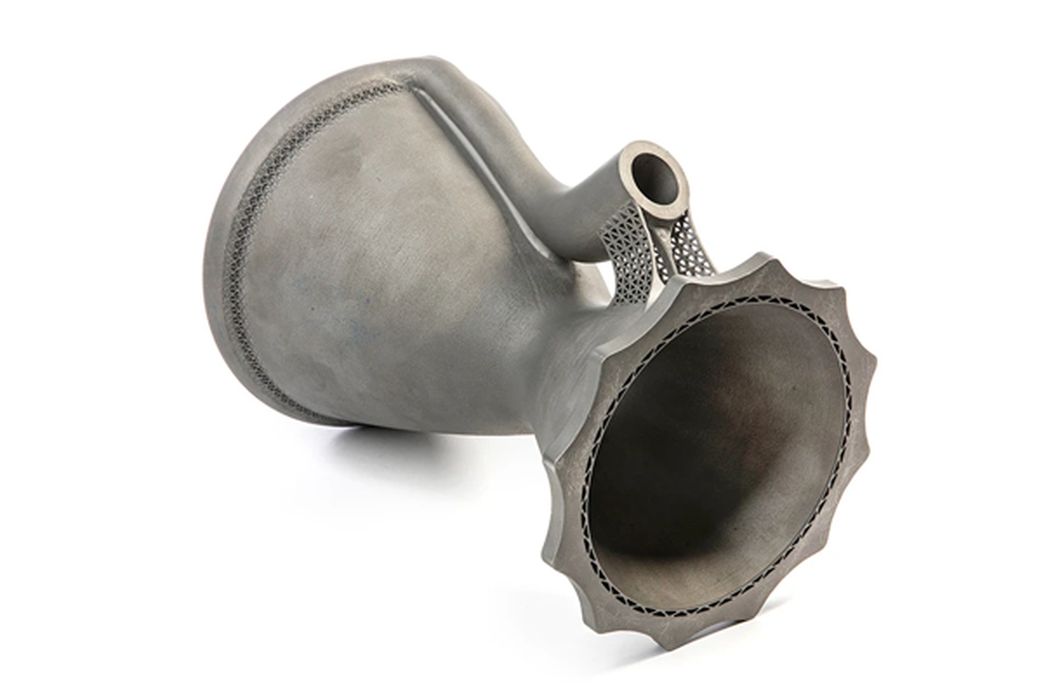
Engineering-first service bureaus also address a supply chain challenge that has grown more acute since 2020. Long lead times, minimum order quantities that force companies to hold physical inventory, and the risk of supplier disruption have pushed manufacturers toward distributed, on-demand production. Several providers in this segment have built digital part library capabilities in which validated, DfAM-optimized files are stored and executed on demand, eliminating the need to hold physical stock.
Materialise, founded in 1990 and operating manufacturing centers across Europe and North America, offers one of the more developed examples of digital inventory as a formal service offering. The company has produced more than 500,000 flying parts for aircraft OEMs, suppliers, and maintenance organizations, and has built its spare parts services around the supply chain profile that aerospace presents: low quantities, long service lives, and the need for rapid availability when a system requires repair. In February 2025, Materialise received EN9100 certification for its metal AM processes, expanding existing certification that had covered polymer AM and opening qualified on-demand metal production to clients managing supply chain risk across the aerospace sector. With no minimum production run for additively manufactured parts and no warehouse carrying costs for parts held in digital rather than physical inventory, the model allows customers to retire obsolescence risk without pre-manufacturing and storing parts that may not be needed for years.
Tronix3D applies this digital inventory approach alongside a just-in-time manufacturing model, enabling faster response when demand changes and reducing carrying costs for clients managing multi-SKU part portfolios. For legacy equipment maintenance, where original tooling has been lost and the original supplier has exited the market, Tronix3D pairs reverse engineering with additive production to keep systems operational. American Additive Manufacturing applies the same on-demand model to address obsolescence and parts unavailability across aerospace, automotive, industrial, and robotics applications, producing replacement components for legacy assets where OEM supply has been disrupted or discontinued.
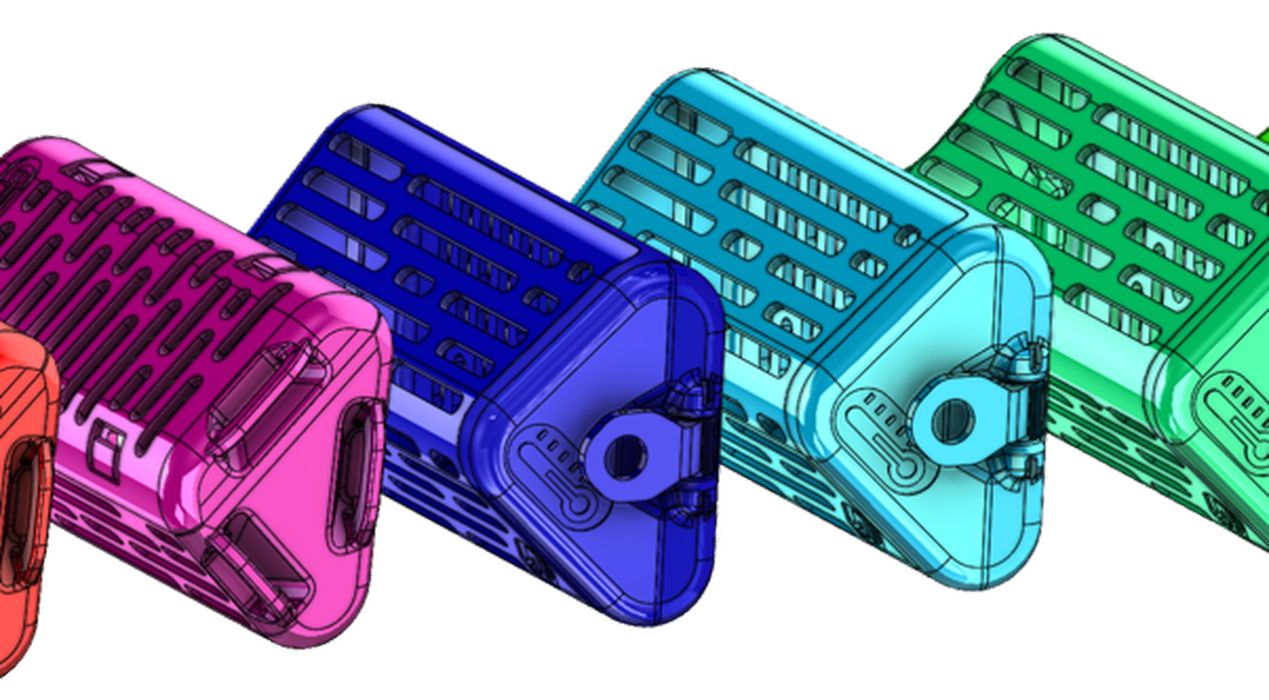
Across all of these providers, the investment in digital inventory infrastructure, reverse engineering capability, and on-demand production workflows represents exactly the kind of systematic technical development that qualifies for R&D tax treatment.
The Research & Development Tax Credit
The federal Research and Development (R&D) Tax Credit may be available to companies developing new or improved products, manufacturing processes, or software through technical experimentation.
For additive manufacturing service providers, potentially qualifying activities may include testing materials, geometries, build orientations, process parameters, heat-treatment methods, and post-processing strategies. Work related to DfAM, process qualification, reverse engineering, digital part libraries, and the transition from prototype to production may also qualify when it involves resolving technical uncertainty.
The opportunity may extend to customers working with these providers, even when they do not own the printing equipment. Wages, supplies consumed during experimental builds, and certain contract research expenses may be eligible, making careful documentation of design revisions, failed builds, test results, and process changes especially important.
Conclusion
The rapid growth of additive manufacturing services reflects a broader change in how companies are accessing the technology. Engineering-first providers combine production capacity with DfAM, materials expertise, process development, qualification, post-processing, and digital inventory capabilities that many customers cannot justify building internally. Across aerospace, energy, robotics, automotive, medical, and defense applications, this model is bringing advanced materials and production-grade components within reach while reducing lead times and strengthening supply chain resilience. As services continue to grow faster than hardware sales, providers that can translate technical uncertainty into reliable and repeatable manufacturing outcomes will play a central role in the next stage of additive manufacturing adoption, with R&D Tax Credits potentially helping support the experimentation required along the way.