
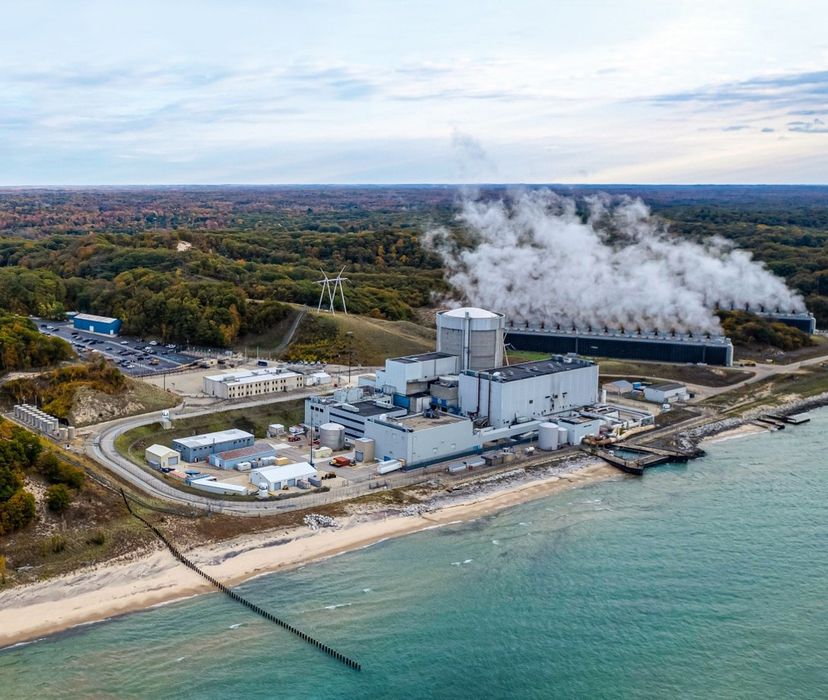
Charles Goulding and Ari Willick discuss how Holtec’s Palisades restart is exposing nuclear supply chain gaps that 3D printing may be able to fill.
Last year, we examined Holtec International’s attempt to restart Michigan’s Palisades Nuclear Plant and the potential role that additive manufacturing could play in bringing an aging nuclear facility back into service. At the time, much of that opportunity was prospective. Today, the picture is becoming clearer.
Palisades is still not producing electricity, and the restart has proven substantially more complicated than originally anticipated. At the same time, Holtec has filed for an initial public offering and is positioning itself not simply as a company that handles the back end of the nuclear lifecycle, but increasingly as a reactor developer and nuclear plant operator.
That creates an interesting question for the additive manufacturing industry. Could the expertise Holtec developed while taking old nuclear plants apart help it manufacture the difficult, obsolete components required to put one back together?
Washington Has Changed Its Nuclear Calculus
The environment surrounding Palisades is very different from the one Holtec faced when it acquired the facility for decommissioning in 2022.
Support for nuclear power has broadened across two presidential administrations. The Biden administration finalized a US$1.52 billion federal loan for the Palisades restart, while Michigan provided another US$300 million. More recently, the Trump administration has pushed further on nuclear construction and supply-chain expansion. In June 2026, the Department of Energy announced US$17.5 billion in conditional financing intended to support purchases of long-lead components for as many as ten new AP1000 reactors.
This continues a policy shift that we examined in our article on the 2025 nuclear executive orders and again in our recent look at the nuclear supply chain and AI-driven power demand.
Importantly for additive manufacturing, the federal government is not only concerned with reactors. It is concerned with the components needed to build and maintain them. DOE’s latest financing program specifically targets long-lead nuclear equipment, while reporting on the program has highlighted steam generators, coolant pumps and reactor vessels. Some large components can take several years to manufacture, and the United States no longer has domestic capacity to produce certain items.
Palisades Shows Why Old Nuclear Parts Are Difficult
The Palisades project illustrates the problem particularly well.
Holtec originally expected the restart to take roughly two years. Instead, inspections revealed deteriorated equipment and created a much larger restoration project. The plant’s steam generators proved more degraded than expected, requiring the repair or plugging of thousands of tubes. Other problems included a leaking underground water line and valves requiring replacement.
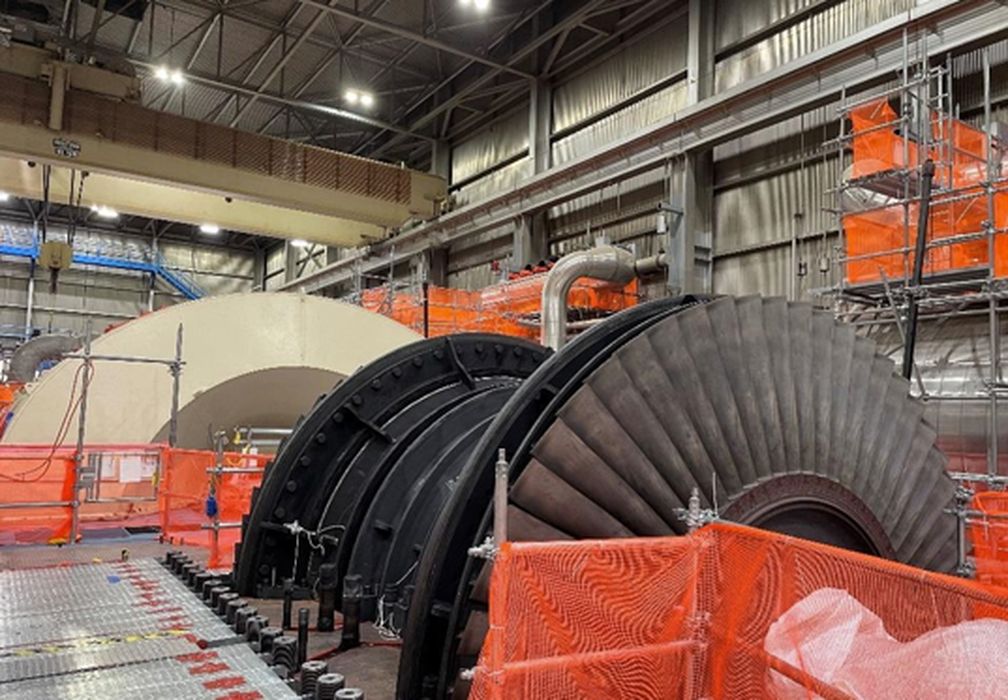
Holtec has since completed many of the largest Palisades refurbishment projects. These have included extensive work on the turbine generator, replacement of reactor head penetrations, steam-generator tube refurbishment, reactor vessel inspections and installation of a new fuel-handling machine. More than 5,000 smaller work activities still remained as of July 2026, and Holtec had not announced a firm restart date.
For a plant that began operating more than half a century ago, sourcing a replacement part can be very different from ordering one for a new facility. An original supplier may have disappeared. Tooling may no longer exist. Drawings may have to be recreated or updated. A component might be required in a quantity of one rather than thousands.
This is where specialized metal 3D printing becomes particularly interesting.
The Components That Make Sense for 3D Printing
Not every Palisades problem requires a major additive manufacturing solution. The strongest opportunities are smaller, specialized components for which conventional production is expensive or the original supply chain has vanished.
Pump impellers are perhaps the clearest example. In 2017, Siemens produced a 3D printed metal impeller for a fire-protection pump at Slovenia’s Krško nuclear power plant. The original pump had operated since 1981, but its manufacturer was no longer in business. Siemens reverse-engineered the component, created a digital model and additively manufactured the replacement. After extensive testing, the part was placed into service.
The Siemens solution is similar to the type of supply-chain problem a facility like Palisades could encounter.
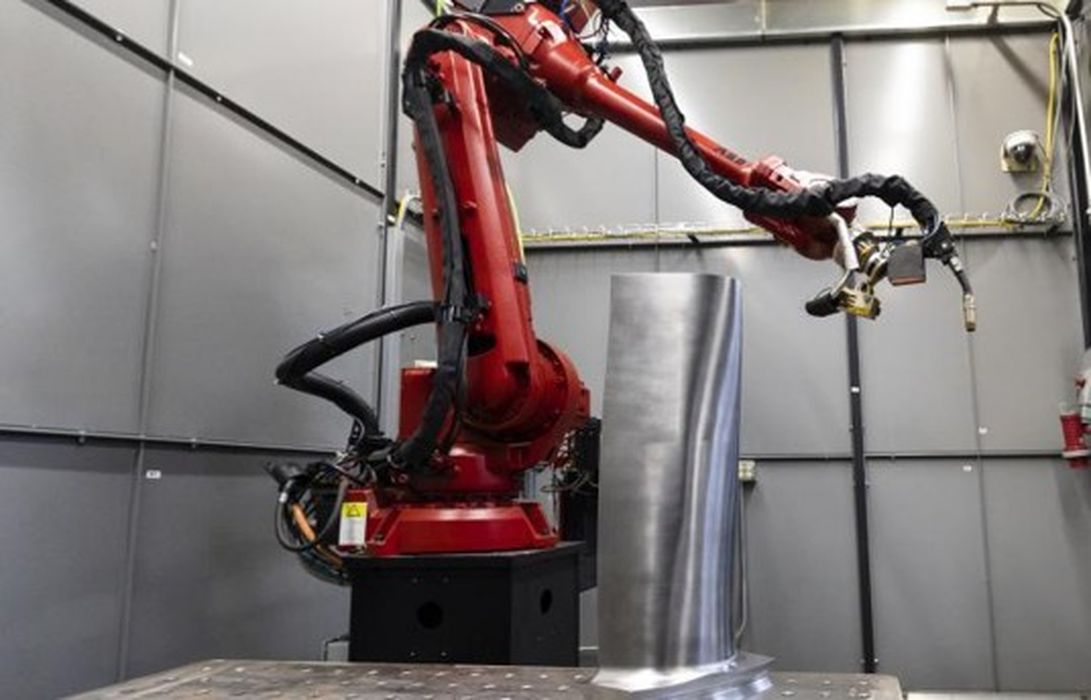
Steam turbine components are another promising category. Palisades’ turbine generator required extensive inspection and refurbishment during the restart. Separately, Oak Ridge National Laboratory and Siemens Technology demonstrated wire-arc additive manufacturing of a full-scale steel steam turbine blade. ORNL reported that conventional replacement castings had at one point faced waits of up to two years, while the experimental blade itself was printed in 12 hours and could be completed with machining in roughly two weeks. The project was specifically aimed at aging power-generation equipment for which traditional casting and forging capacity has declined.
Valves are especially relevant because Palisades has actually encountered valves requiring replacement. The Center for Advanced Nuclear Manufacturing has studied nuclear parts obsolescence using components including a high-pressure globe valve and a badly eroded bronze valve assembly. Researchers demonstrated techniques including laser powder bed fusion of valve bodies and 3D-printed molds for replacement castings, specifically to avoid the high tooling costs associated with producing very small quantities of legacy parts.
Finally, there are smaller brackets, fasteners and specialty structural components. ORNL, Tennessee Valley Authority and Framatome installed four additively manufactured stainless-steel channel fasteners inside the Browns Ferry nuclear plant. The project is important because the components entered an operating reactor environment and demonstrated that additive manufacturing and nuclear qualification are not inherently incompatible.
Turning Decommissioning Knowledge Into Digital Inventory
Holtec may have an unusual advantage here.
Decommissioning exposes engineers to exactly the equipment that future restart and life-extension projects may struggle to replace.
A potentially valuable strategy would be to identify obsolete components during dismantlement, scan and characterize them, preserve their engineering information and create qualified digital replacement models. Instead of discovering years later that an OEM and its tooling have vanished, the nuclear operator would already possess the information needed to evaluate a replacement manufacturing method.
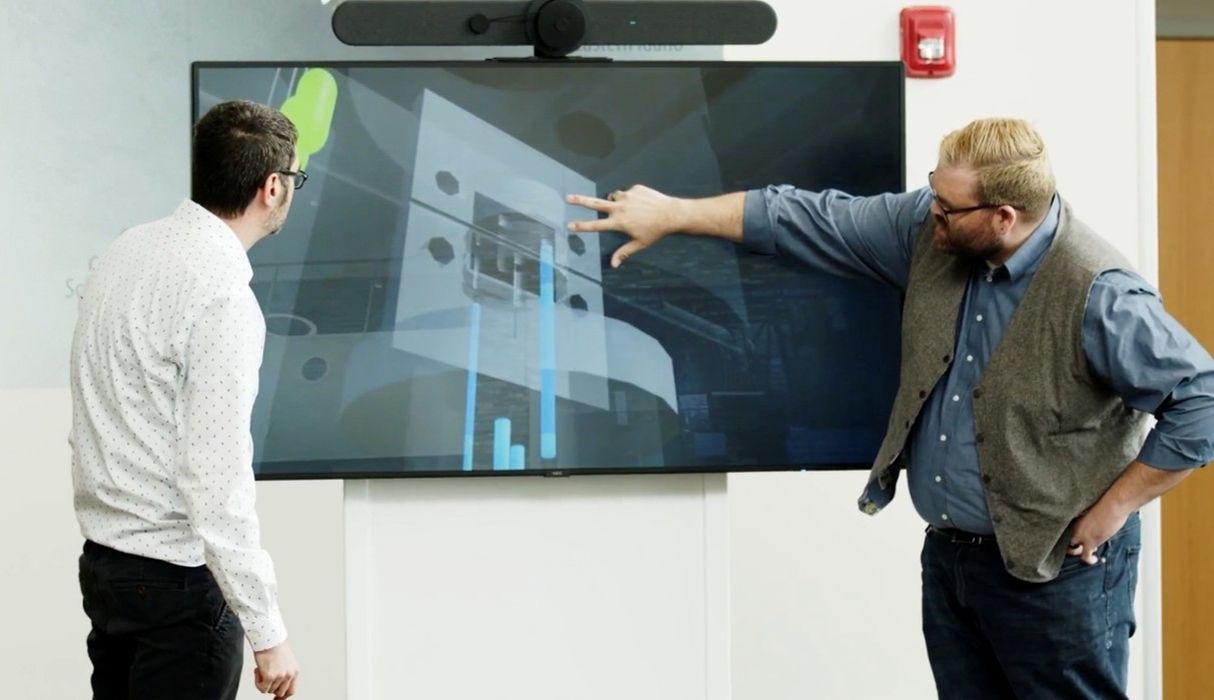
The Siemens impeller example demonstrates how that process can work. An unavailable physical part becomes a reverse-engineered digital model, which can then support localized production when another replacement is needed.
Holtec’s IPO Raises the Stakes
This engineering challenge now overlaps directly with Holtec’s financial ambitions.
On July 10, 2026, Holtec Nuclear Corporation publicly filed its Form S-1 for an IPO. The company intends to trade on Nasdaq and Nasdaq Texas under the ticker HNUC, although the number of shares and expected pricing had not yet been determined when the registration statement was filed. Holtec says proceeds may support SMR-300 licensing, deployment and manufacturing capacity, among other corporate purposes.
The Financial Times has described Holtec founder Kris Singh’s broader strategy as a roughly US$10 billion plan to move Holtec further from being primarily a supplier of nuclear components and services toward designing reactors and operating nuclear plants.
Palisades therefore matters well beyond one 800 MW reactor. It is becoming a real-world demonstration of whether Holtec can take the expertise accumulated from manufacturing nuclear equipment and dismantling old facilities and apply it in reverse.
3D printing will not solve every problem encountered along that path. But when the obstacle is a 50-year-old valve, impeller, turbine component or specialty part whose original manufacturer disappeared decades ago, additive manufacturing may be exactly the tool that allows yesterday’s nuclear equipment to keep operating tomorrow.
The R&D Tax Credit
The additive manufacturing work described above may also create opportunities under the federal Research and Development Tax Credit. Holtec’s work to restore the Palisades Nuclear Plant presents potential applications of IRC Section 41 Qualified Research Expenses (QREs), particularly where engineers must develop or reproduce components that are no longer readily available through conventional nuclear supply chains.
For Holtec and nuclear suppliers using additive manufacturing to address component obsolescence, potential qualifying activities could include technically uncertain aspects of reproducing or redesigning legacy parts, developing new additive manufacturing processes, evaluating alternative materials, and experimentally testing printed components.
To qualify under Section 41, these additive manufacturing projects would need to satisfy the IRS Four-Part Test:
- Permitted Purpose: Developing new or improved replacement components or manufacturing processes for aging nuclear facilities, including specialized valves, pump components, turbine components, and other difficult-to-source parts.
- Elimination of Uncertainty: Resolving technical uncertainties regarding whether legacy components can be successfully reproduced, which materials and additive manufacturing methods are appropriate, and whether printed components can achieve the required geometry, material properties, and performance.
- Process of Experimentation: Evaluating alternative component designs, printing parameters, materials, heat treatments, and manufacturing methods, while producing prototypes and conducting iterative dimensional, mechanical, and performance testing.
- Technological in Nature: Relying on principles of mechanical engineering, materials science, metallurgy, additive manufacturing, and nuclear engineering to develop and evaluate replacement components.
Nuclear manufacturers pursuing this work may generate substantial qualified research expenses. Engineering and technical employee wages, materials consumed in experimental prints and prototypes, and certain contract research expenses may constitute QREs when the underlying activities satisfy Section 41 requirements.
As Holtec and other nuclear companies confront aging plants whose original suppliers, tooling, and manufacturing capabilities may no longer exist, additive manufacturing can require considerable experimentation before a replacement component is ready for service. By identifying and documenting these developments, nuclear manufacturers may be able to offset federal tax liabilities while preserving capital for continued component development and plant restoration.
Conclusion
Palisades is showing both sides of the nuclear restart equation. Bringing an old reactor back online can expose decades of deterioration, obsolete equipment, and supply chains that no longer exist, but Holtec’s background in decommissioning also gives it firsthand knowledge of many of those same components. As reactor restarts and life extensions become more common, specialized 3D printing could turn that knowledge into a practical manufacturing advantage, helping return hard-to-find legacy components to production and, in turn, aging nuclear plants to service.