
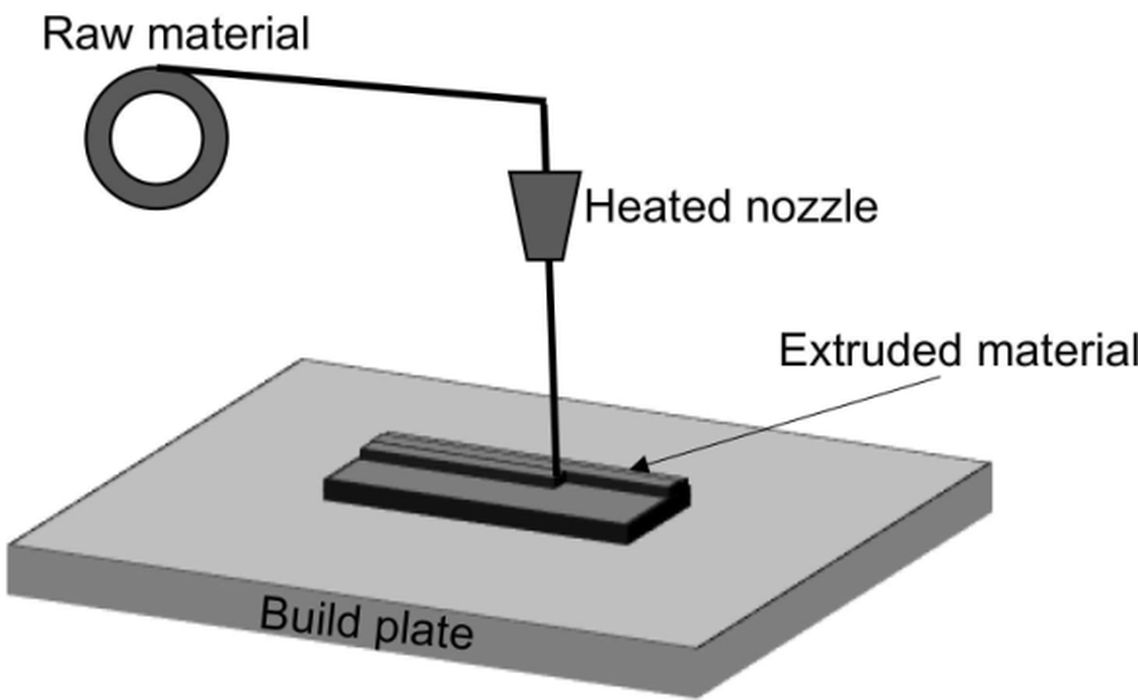
A new approach to tuning FFF print parameters could help manufacturers find settings that work reliably, rather than settings that simply look best in one test.
Anyone who has spent time tuning an FFF 3D printer knows the problem: raise the nozzle temperature and layer bonding may improve, but dimensional accuracy could suffer. Increase speed and production improves, but perhaps not part quality. Change layer height and yet another set of compromises appears.
There is rarely one setting that is simply “best”. There are always compromises and side effects. It’s a delicate balance.
Researchers Berkcan Kapusuzoglu, Paromita Nath, Matthew Sato, Sankaran Mahadevan and Paul Witherell have been looking at this problem from a different angle. Instead of trying to identify a perfect set of parameters, they developed a method that also considers how uncertain those parameters and predictions really are.
The Printer Doesn’t Always Do Exactly What You Tell It
Most parameter studies assume that if you set a nozzle temperature of, say, 220C, then 220C is what happened. Of course, that’s not what actually goes on.
Filament properties vary. Temperatures drift. Motion systems aren’t perfect. Ambient conditions change. Even two apparently identical machines may behave slightly differently.
The researchers used actual FFF experiments to train Bayesian neural network models that predict two outcomes: geometric accuracy and filament bond quality. Inputs included nozzle temperature, print speed and layer thickness.
The “Bayesian” part is what makes this interesting.
A conventional neural network could provide an answer: these settings should produce this result. A Bayesian neural network can also provide some idea of how confident it is in that answer.
The researchers actually consider two different sources of uncertainty.
One comes from the model itself. Maybe it hasn’t seen enough examples in a particular part of the parameter space. More data could improve that. The other comes from the printing process, where there will always be some natural variation.
Put those together and you get something much closer to what happens on a real production floor.
There Isn’t One Best Profile
The next step was to use the models to generate what are called Pareto surfaces. If you don’t know what those are, the idea is pretty straightforward.
Suppose you want excellent dimensional accuracy and very strong layer bonding. You may not be able to maximize both at the same time. The Pareto surface shows the useful combinations and, importantly, the compromises between them.
This makes a lot more sense than declaring one collection of print parameters to be the “optimal profile”.
Imagine two manufacturers using exactly the same material and printer. One is making a dimensional fixture where fit is everything. The other is producing a functional component where interlayer strength matters far more.
Why should they use the same profile? They probably shouldn’t. They have different goals for their print jobs.
The researchers also printed actual parts to validate the approach. That’s worth mentioning because there’s no shortage of additive manufacturing research where an AI model performs nicely in theory but never actually appears on a real machine.
Here, at least, they made it back to the printer.
I can easily imagine something like this eventually appearing inside industrial slicing or process qualification software. Instead of telling the software, “give me the highest quality profile,” an operator might specify acceptable dimensional error, required bonding performance and perhaps production speed.
The software could then suggest a process window where those requirements are most likely to be met consistently. That could be rather useful.
This feels like the right way to think about serious FFF production.
The objective shouldn’t necessarily be to find the single print that scores highest in a test. It should be to find settings that keep producing acceptable parts when the inconsistencies of the real world inevitably get in the way.
Via arXiv
