
Additive Industries seems to want to make its LPBF print beds into a collection of smaller machines.
That is the interesting concept in Additive Industries’ US20260273850A1, titled “Apparatus For Producing An Object By Means Of Additive Manufacturing.” The application describes a process chamber containing material, a build platform, and several solidifying devices. Each device is assigned to a different part of the object working area.
At first glance, this sounds like a traditional multi-laser powder bed fusion machine. More lasers can expose more of the powder bed, so the machine should be able to process larger areas or finish parts sooner. But the filing is trying to keep those energy sources independently responsible for separate zones.
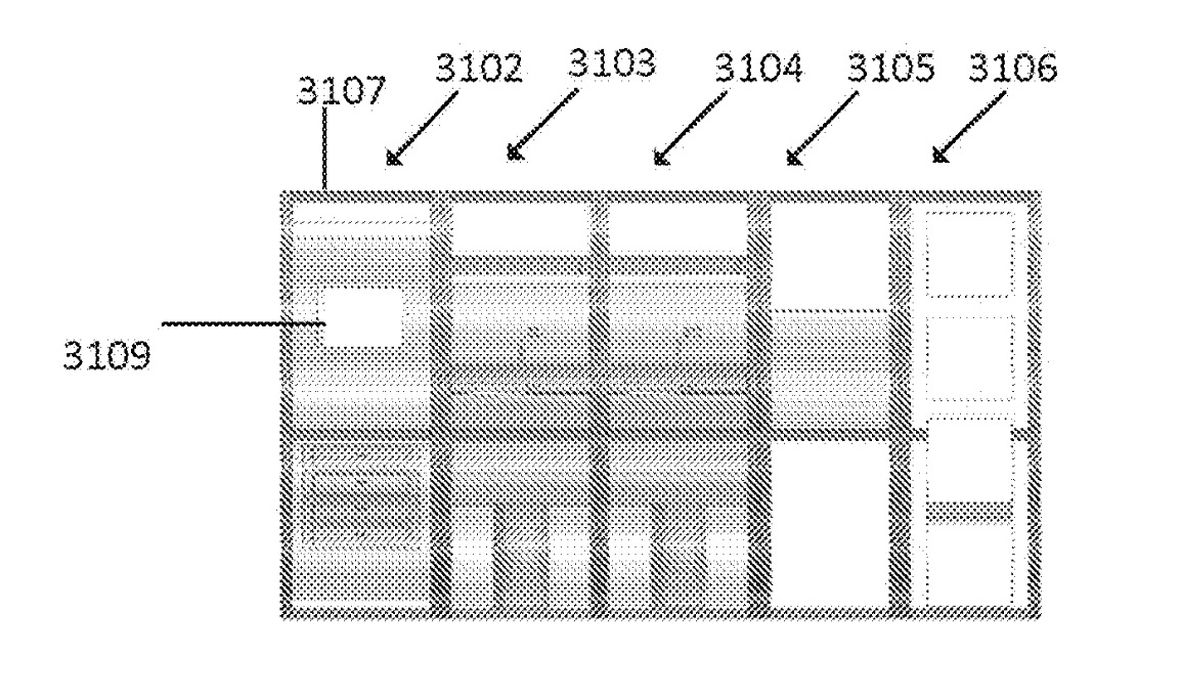
Imagine dividing the rectangular build surface into several regions. Each region has its own solidifying device, optical path, or combination of sources. A controller can operate the devices individually, with each one working mainly in its own section. The drawings show several ways of arranging these devices, including elongated modules positioned across the chamber and systems that appear to move or steer the energy beam into the powder bed.
Why bother dividing the machine this way? A single optical system covering the entire build area becomes increasingly awkward as the area grows. Beam paths get longer, scanning hardware has to cover more distance, and keeping exposure consistent across the whole bed becomes a calibration problem because the angle of the laser beam changes the geometry of the laser spot.
Independent zones provide a more modular route. The machine can send scan data to the relevant solidifying device instead of asking one system to handle everything. If the zones are arranged without gaps, several devices could work at the same time on separate portions of one layer.
There is another detail I find more revealing. The patent does not limit the concept to one fixed arrangement. Its figures show different numbers and shapes of devices, including modules that can be placed beside one another or combined into a larger assembly. That suggests Additive Industries is thinking about a scalable machine architecture, not merely adding one extra laser to an existing frame.
The potential benefit for a 3D printer operator is straightforward: more of the powder bed could be processed in parallel, while each optical unit remains responsible for a manageable area. Maintenance could also become more local. A problem in one zone might not automatically disable every other zone.
My reading is that the basic idea here is not “more lasers”, as has been the industry practice for years. Instead it is a powder bed platform built from independently controlled processing cells. That could make very large machines easier to expand, but only if the software and calibration system can make the cells behave like one continuous build surface.
Via Espacenet
