
Charles R. Goulding and Kate Esposito take readers inside the rapidly evolving eVTOL industry, where Boeing, Archer, Wisk, and Joby are using additive manufacturing to overcome the challenges of electric aviation and push air taxis closer to reality.
Introduction
On August 10th, 2026, Boeing announced it would take a minority stake in Archer Aviation, an aerospace and transportation company that builds electric vertical take-off and landing (eVTOL) aircraft. In exchange for 19.75% of its Class A shares, Archer will acquire three of Boeing’s subsidiaries: Wisk Aero, Insitu, and SkyGrid. As part of the agreement, Boeing will gain a seat on Archer’s board of directors and will invest up to $55 million in stock during Archer’s next funding round.
Archer is a leader in the eVTOL industry, with projects ranging from specialized air taxi transportation to diversified aerospace and defense platforms. The company’s acquisition of Wisk, another key developer of eVTOLs, suggests great strides will be made toward progressing eVTOL aircraft technology. The deal between Boeing and Archer has the potential to revolutionize the aviation industry.
Both Archer Aviation and Wisk Aero utilize additive manufacturing as a core part of their development and production strategies. Archer’s manufacturing process relies heavily on using cutting edge 3D-printing technologies to create high-quality, lightweight components and specialized tooling. Wisk utilizes 3D printing throughout development and production, largely to rapidly prototype and test designs.
Following Archer’s acquisition of Wisk, these two programs will be integrated into a diversified platform, combining Wisk’s autonomy capabilities with Archer’s manufacturing infrastructure. This deal brings together two lead creators of eVTOL vehicles, providing great hope for the future of the eVTOL industry and additive manufacturing as a production technology.
Archer Aviation’s eVTOL Operations
Founded in 2018, California-based Archer Aviation is focused on transforming urban travel by replacing long car commutes with short electric air taxi flights. Archer’s key aircraft and infrastructure projects include the all-electric Midnight air taxi, the hybrid-electric Halo/Thunder platforms, early technology demonstrators like Maker, and regional commercial and government integration initiatives. The company relies heavily on external industrial alliances, partnering with major automotive manufacturer Stellantis to scale high-volume production and working with United Airlines for future flight operations.
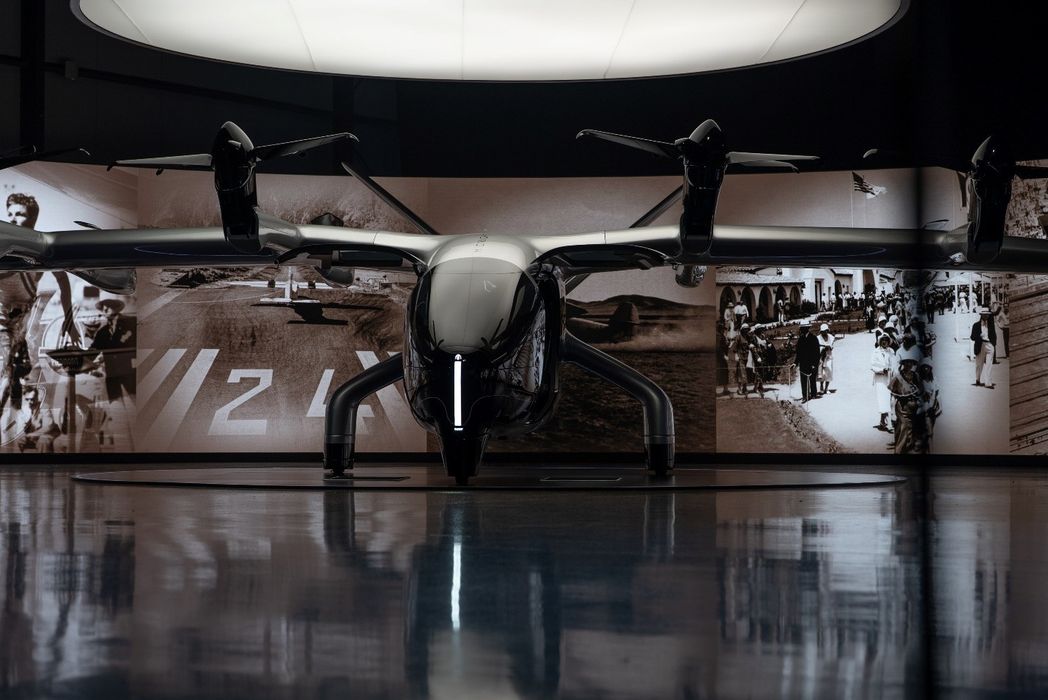
Midnight, Archer’s flagship eVTOL, is a piloted, five-seat all-electric aircraft designed for urban taxi operations. It has a range of up to 100 miles, a top cruising speed of 150 mph, and optimized rapid-recharge capabilities for short urban flights. Since its 2022 announcement, Archer has made significant progress in readying Midnight for commercial use. In June 2024, Midnight successfully completed a critical unmanned transition flight, moving from vertical takeoff to horizontal flight.
This July, Midnight completed a piloted round trip between Salinas Municipal Airport and Monterey Regional Airport. Each leg of the trip was completed in nine minutes, compared to over 35 minutes by car. Archer is the first air taxi company to officially close out Phase 3 of the Federal Aviation Administration’s (FAA) four-phase certification process, a critical step toward Archer launching Midnight operations later this year.
Recently, Archer has strategically expanded its business operations to become a diversified platform for both aerospace and defense. Archer is developing and testing several aircraft specifically aimed at military applications, including eVTOL vehicles. The company delivered its first Midnight aircraft to the U.S. Air Force (USAF) in August 2024 as part of an AFWERX Agility Prime contract. USAF personnel have used the aircraft to execute simulated missions involving intelligence, surveillance, and reconnaissance.
Archer also developed Thunder, an autonomous attack drone, and Halo, an autonomous hybrid-propulsion VTOL. A major part of Archer’s defense strategy involves acquiring established companies and intellectual property to provide immediate revenue and technical depth. Insitu and Wisk, both of which Archer gained from its deal with Boeing, have advanced equipment that can be used to further Archer’s development of military technologies.
Archer Aviation is part of the eVTOL Integration Pilot Program (eIPP), a U.S. Department of Transportation and FAA initiative designed to accelerate the safe testing, validation, and real-world deployment of eVTOL aircraft. The FAA selected eight pilot projects across 26 states, creating partnerships between state and local governments and private industry partners. Of the eight projects, Archer Aviation is involved in three. It has partnered with the Port Authority of New York and New Jersey, the Texas Department of Transportation, and the Florida Department of Transportation.
Archer aims to use its Midnight aircraft as a flagship platform to move operations from conceptual planning and isolated test flights to supervised activity within real-world environments. The company intends to commence meaningful flight operations under the eIPP framework later in 2026.
Additive Manufacturing Helps Archer Take Flight
Archer Aviation utilizes additive manufacturing as a core pillar of its manufacturing strategy, moving beyond simple prototyping and integrating the technology into its production lines. The company describes its engineering team as “printing all the time,” using AM to compress design cycles and move rapidly from digital concepts to physical flight hardware. Archer uses industrial 3D printing with a focus on Stereolithography (SLA) and Fused Deposition Modeling (FDM). Applications of AM for prototyping include printing cabin and lighting models, brackets, fixtures, and heat-resistant test parts.
Beyond prototypes, Archer uses AM for flight-related and specialized defense-oriented parts to reduce weight and withstand complex loads. The company 3D prints non-primary hardware such as ducts, cowlings, interior clips, and covers, as well as sensor mounts and topology-optimized housings for military applications. In December 2024, Archer Aviation opened a state-of-the-art, high-volume production facility located at the Covington Municipal Airport in Georgia.
Developed in a strategic partnership with Stellantis, it serves as a primary hub for Archer’s goal of mass-producing its Midnight eVTOL aircraft. The site spans approximately 100 acres and features a 350,000 square foot factory, making it one of the largest manufacturing facilities in the entire aircraft industry. The facility’s production model relies heavily on additive manufacturing and composite technology.
Through the Stellantis partnership, it utilizes 3D-printed wire harnesses that weigh 75% less than traditional architectures and require 95% fewer conductors. Within the facility, 3D printing is also utilized to fabricate high-quality, lightweight flight parts and specialized tooling. The Covington site is a key component of Archer’s “stack” advantage, which integrates in-house printing, a dedicated composites plant, and a high-volume manufacturing blueprint to ensure production resilience and shorter iteration loops, helping Archer stay ahead of its competitors and rapidly produce new technologies.
Wisk Aero is Going Wheels Up
Wisk Aero is an aerospace company dedicated to making autonomous, everyday flight a reality. Founded in 2019 as a joint venture between Boeing and Kitty Hawk, Wisk was acquired by Archer Aviation as part of its broader deal to create a diversified aerospace and defense platform. Wisk has flown six generations of electric aircraft, amassing over 1,750 flight tests in the past decade. It is the only American eVTOL developer planning to integrate full autonomy at commercial launch.
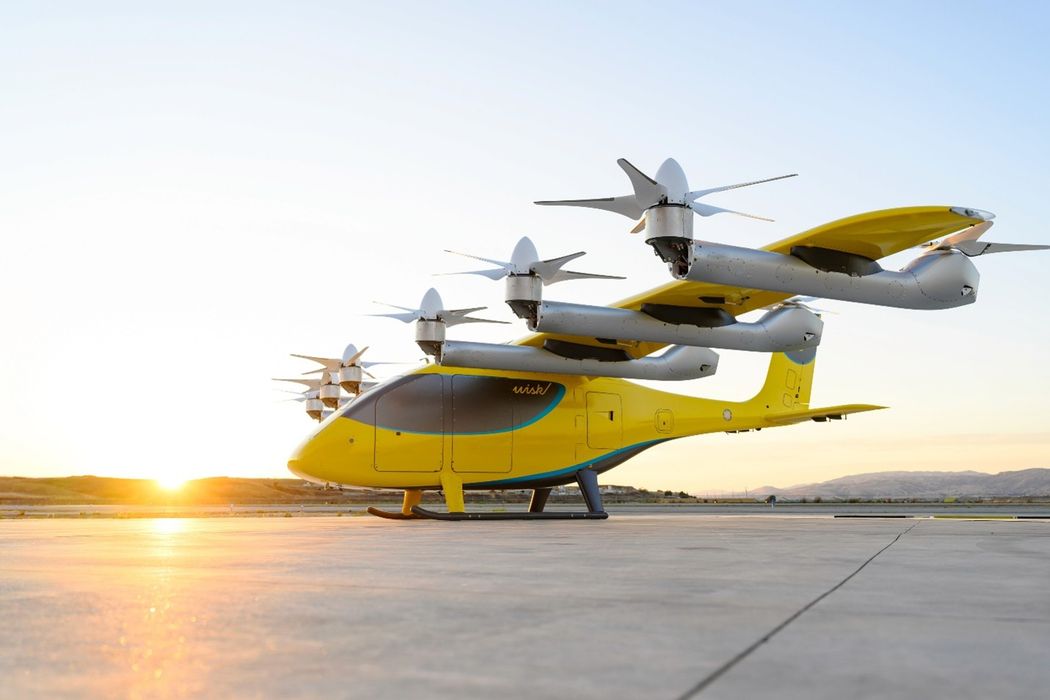
The Generation 6, Wisk’s current flagship, is a five-seat “self-flying taxi” that cruises between 2,500 and 4,000 feet with a 90-mile range and 15-minute recharge time. The first full-scale Generation 6 prototype was flight tested in December 2025, and a second prototype was flown in May 2026. Wisk is a lead participant in the eIPP, partnering with the Texas Department of Transportation to work toward high-frequency Gen 6 flights.
Wisk is deeply involved in establishing the regulatory and physical infrastructure needed for autonomous flight. The company has entered strategic partnerships with NASA and the FAA, proposing new operational guidelines to determine what standards its autonomous eVTOLs must meet.
Because current FAA regulations prohibit operators from flying multiple uncrewed aircraft at once, Wisk is focused on gathering the data needed to prove autonomous systems can safely integrate into the National Airspace System. A cornerstone of Wisk’s regulatory work is a five-year Non-Reimbursable Space Act Agreement with NASA, signed in May 2025.
This collaboration focuses on defining industry standards for airspace and route design, ground-based safety requirements, and Air Traffic Control communication protocols. In July 2026, Wisk and NASA achieved a major breakthrough by successfully simulating a 1:3 supervisor-to-aircraft ratio. Proving this ratio is safe is critical for making commercial autonomous air taxi operations affordable and scalable. This achievement shows Wisk is making great strides towards developing safety standards for autonomous flight.
Additive Manufacturing Helps Wisk Aero Win Big
Wisk Aero utilizes additive manufacturing as a key technology for the development and production of its autonomous eVTOL aircraft. The company relies on additive manufacturing to significantly speed up its research and development cycles, including using rapid prototyping to test designs for vertical lift rotors and forward-flight wings. Specific parts such as rotor mounts, winglets, and wing spars are 3D printed to enable much faster design changes than traditional manufacturing methods allow.
Furthermore, 3D printing provides design freedom that is essential for the unique requirements of autonomous eVTOLs. The technology allows Wisk to create and test innovative airframe shapes that are optimized for autonomous flight capabilities. Wisk also uses AM to overcome the weight and geometric limitations inherent to electric aviation, creating lightweight flight-rated components for future commercial use.
As Wisk moves toward commercialization and high-frequency operations, it plans to expand its use of additive manufacturing. The company intends to use 3D printing to enhance its ability to deliver custom components and spare parts on demand. For instance, Wisk aims to use additive manufacturing to create customized interiors for its eVTOLs tailored to the specific desires of different airline customers.
The ability to produce spare and customized parts when needed would reduce warehousing and logistical costs while ensuring that grounded aircraft can be returned to service quickly. Based on its recent successes with NASA and its participation in the eIPP, it is highly likely that Wisk will soon need to scale its operations, which can be easily done through the use of additive manufacturing.
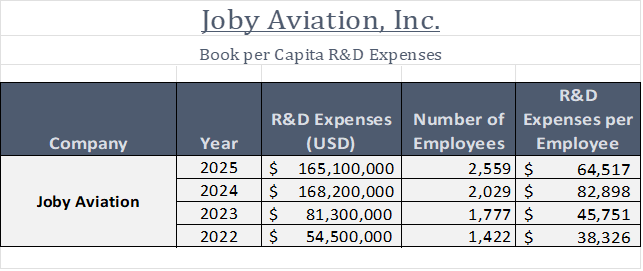
Joby Aviation: Nowhere to Go But Up
Joby Aviation, founded in 2009, is a pioneer in the eVTOL industry and one of Archer Aviation’s main competitors. Focused on developing an all-electric air taxi for commercial use, the company is currently transitioning from a research and development startup into a vertically integrated aerospace leader. Joby’s flagship is the S4 aircraft platform, a piloted five-seat aircraft designed for urban and regional air mobility. Powered by six electric motors, the S4 can travel up to 200 mph with a range of approximately 100 miles.
The aircraft is designed for rapid consecutive flights with minimal charge time, aiming to turn hour-long car commutes into flights lasting less than 10 minutes. In April 2026, Joby completed the first-ever point-to-point eVTOL demonstration flights in New York City, flying from JFK Airport to downtown heliports in record time. Joby plans to launch commercial operations by the end of 2026, with initial targets including Dubai and the United States.
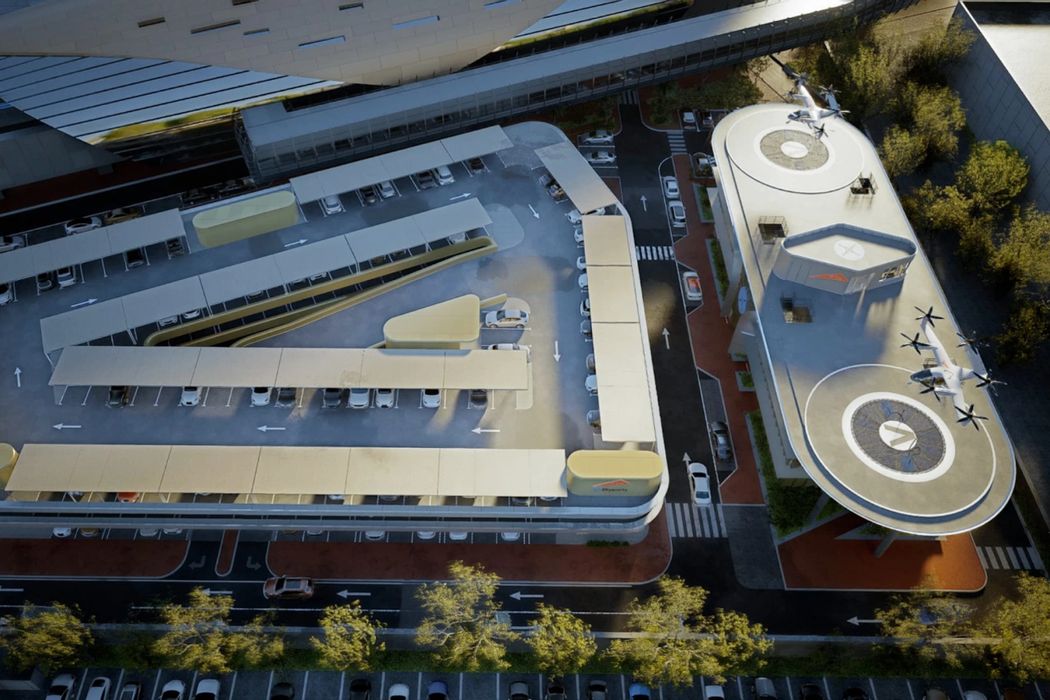
In 2024, Joby signed an exclusive six-year deal to supply and manage the flying taxi fleet for Dubai’s markets. Today, that decision is paying off as Dubai’s VDX has received regulatory certification to operate eVTOLs and will become the world’s first vertiport, an airport for eVTOL aircraft. The certification, issued by the United Arab Emirates’ General Civil Aviation Authority, clears VDX for eVTOL operations. The facility is being developed by Skyports Infrastructure in collaboration with Dubai’s Roads and Transport authority.
Operating beside the Dubai International Airport, VDX will serve as the main hub of Dubai’s air taxi network, with plans for three more vertiports to be built around the city. Once operations are fully operational, Skyports reports VDX will be able to handle up to 170,000 passengers per year.
The VDX facility is a four-story building featuring two dedicated take-off and landing areas, passenger-handling facilities, and rapid-charging infrastructure for electric aircraft. The certification of VDX and development of the wider Dubai Air Taxi Network brings Joby much closer to launching commercial eVTOL operations.
Similar to Archer Aviation, Joby has expanded its focus to include military and autonomous operations. The company delivered its first aircraft to the U.S. Air Force as part of its AFWERX Agility Prime contract. In August 2026, it acquired Resonant Sciences, a Dayton-based defense firm, to scale its military electronics and systems integration capabilities. Joby is also partnering with L3Harris Technologies to develop hybrid and autonomous VTOL platforms for military logistics and surveillance. This shift allows the company to leverage its dual-use technology for both commercial air mobility and national security applications.
Joby Uses Additive Manufacturing for Future Commutes Through the Clouds
Joby Aviation has established a distributed manufacturing strategy that combines specialized innovation hubs in California with large-scale production facilities in Ohio to support its goal of commercializing electric air taxis. The company utilizes a 140-acre site at Dayton International Airport as the center of its high-volume manufacturing. This facility has the potential to support two million square feet of manufacturing space and produce up to 500 aircraft annually.
The location was strategically chosen for its proximity to Wright-Patterson Air Force Base, facilitating defense-orientated collaboration and testing. Joby also conducts much of its manufacturing out of its Marina, California facility. This location houses additive and subtractive manufacturing, machining, aircraft assembly, and flight test facilities. It also serves as the headquarters for Joby Toyota Aero Manufacturing Preparation Co. (JTAMPC), a joint venture with Toyota Motor Corp. focused on high-volume production systems.
Joby utilizes additive manufacturing as a key technology to overcome the weight and complexity challenges inherent to electric aviation. The company currently uses 3D printing to create lightweight parts for flight prototypes and ground testing hardware, allowing for rapid prototyping and quicker design iterations. The technology is also employed for highly complex eVTOL components, such as integrated propulsion systems, lightweight structures, and custom avionics.
As Joby moves into mass production, it plans to use 3D printing to enable mass customization of components. Additionally, it aims to produce on-demand spare parts via additive manufacturing to reduce warehousing and logistical costs. Joby’s strategy blends traditional aerospace precision with rapid scalability, a paradigm that heavily relies on digital production tools and advanced fabrication techniques.
The Research and Development Tax Credit
IRC § 41 generally requires companies to involve domestic research or experimental expenditures, technological uncertainty, development of a new or improved business component, and a process of experimentation. The qualifying purpose must relate to function, performance, reliability, or quality instead of style, taste, cosmetic, or seasonal design factors.
The activities described above could help companies build a strong IRC § 41 research credit narrative because they aim to solve technical design and performance problems. The advanced engineering activities described in the article provide aerospace entities like Archer Aviation, Wisk Aero, and Joby Aviation with a robust portfolio to substantiate R&D tax credit claims. These development efforts address complex mechanical, electrical, and aerodynamic design uncertainties rather than aesthetic modifications.
For example, flight-test-informed engineering, such as utilizing unmanned transition flight data from Midnight, simulated Air Traffic Control (ATC) supervisor-to-aircraft ratios, and sensor feedback, directly establishes technological uncertainty regarding aeromechanical capability, structural support, power consumption, and autonomous flight safety. Platform engineering specific to eVTOLs, including Midnight’s rapid-recharge power systems, autonomous hybrid-propulsion VTOLs (Halo), and custom flight-rated architectures, satisfies the “new or improved business component” requirement, where the objective is superior flight range, payload efficiency, or operational safety.
Testing methods such as Archer Aviation’s rapid prototyping of rotor mounts, winglets, wing spars, and 3D-printed wire harnesses via Stereolithography and Fused Deposition Modeling directly demonstrate a systematic trial-and-error methodology. Coupled with simulated stress modeling and FAA eIPP validation testing, these digital manufacturing workflows provide clear evidence of an iterative process meant to eliminate technical design uncertainties.
Companies must rigorously segregate qualifying research from non-qualifying or statutorily excluded activities under IRC § 41. Activities occurring after a business component reaches commercial production (e.g., standard production runs at the Covington facility once Midnight meets basic functional and economic specifications), routine customer adaptation (e.g., modifying interior cabin trim for commercial airline partners), direct duplication of competitor components, third-party funded research without retained intellectual property rights or financial risk, and purely cosmetic exterior livery alterations do not qualify for the R&D credit. The strongest credit position would come from documentation of technical challenges, alternatives tested, prototypes, design iterations, test results, and the U.S.-based supplies, wages, or contract research tied to the experimentation.
R&D Tax Savers has been helping companies navigate the complexity of the R&D tax credit since it was introduced into tax law in 1981.
Conclusion: Looking to the Skies for the Future of eVTOL Technology
Archer Aviation, Wisk Aero, and Joby Aviation – three of the leading names in eVTOL technology – all utilize additive manufacturing as a production method. Using AM technology allows these companies to overcome the weight, thermal, and geometric limitations inherent to electric flight while accelerating development cycles. The widespread use of additive manufacturing across eVTOL development facilities highlights its ability to revolutionize production methods and far transcend the limits of traditional manufacturing. Additive manufacturing is providing eVTOL companies such as Archer, Wisk, and Boeing with the tools needed to fly toward success.
The deal between Boeing and Archer Aviation marks a major milestone in the development of eVTOL aircraft. Access to technology from Wisk Aero, SkyGrid, and Insitu will help Archer further advance its machinery and eventually launch commercial and military eVTOL operations. The merger of Archer and Wisk, two leaders in the eVTOL industry, provides great hope for the future of air taxi operations. Thanks to Boeing and Archer’s negotiations, travelers may soon be able to fly over ground traffic and reach their destinations in record time.