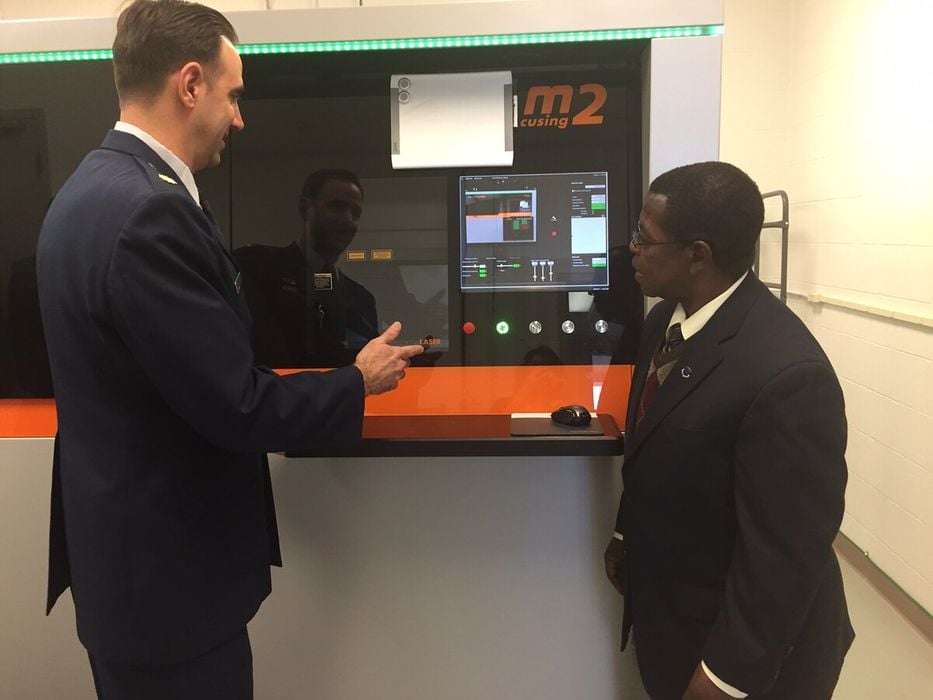
Charles R. Goulding and Preeti Sulibhavi report on how Wright-Patterson Air Force Base is pushing additive manufacturing from the lab to the flight line with real, deployable 3D printed parts.
Wright-Patterson Air Force Base (often called Wright-Patt or WPAFB) is more than just a sprawling military installation northeast of Dayton, Ohio. Covering roughly 8,000 acres – about 12.5 square miles – it is one of the U.S. Air Force’s most strategically important research, development, and acquisition hubs. The base includes two historic airfields (Wright and Patterson Fields), employs tens of thousands of personnel, and serves as the headquarters for several major Air Force commands.
Today, WPAFB isn’t just a workplace; it’s Ohio’s largest single-site employer. Estimates of the base’s workforce range around 38,000 military, civilian, and contract employees, a figure that has roughly doubled since the early 2000s as research and sustainment missions expanded. Of those, a significant chunk are civilian scientists and engineers, with active-duty and reserve military personnel making up the remainder. The base’s footprint reaches well beyond its fences, supporting tens of thousands of additional regional jobs and driving billions in economic impact.
Inside its gates are world-class institutions such as the Air Force Life Cycle Management Center (AFLCMC), the Air Force Research Laboratory (AFRL), and the Air Force Institute of Technology (AFIT). These units work across the lifecycle of weapons systems – from early concept to sustainment – and are central to the Air Force’s modernization and readiness strategies.
3D Printing at Wright-Patt: A Crucial Defense Tool
Wright-Patterson has emerged as a fitting epicenter for additive manufacturing – more commonly known as 3D printing – within the U.S. Air Force. Far from being a niche technology, 3D printing at Wright-Patt has become part of broader efforts to reduce costs, shorten repair timelines, enhance performance, and solve parts shortages across aging fleets.
At the heart of this work is the Air Force’s Rapid Sustainment Office (RSO), part of the AFLCMC. The RSO focuses on accelerating solutions that keep aircraft flying – and 3D printing is one such solution. In a recent contract awarded to Cornerstone Research Group, the Air Force agreed to develop a new prototype fused filament fabrication printer capable of producing aerospace-grade components nearly nine feet tall. This contract, valued at roughly US$2.5 million, underscores the Air Force’s confidence in large-format additive manufacturing (AM).
From Prototypes to Aircraft Parts: How 3D Printing Is Used
The utility of 3D printing at Wright-Patt and its associated programs spans from quick-turn prototypes to actual aircraft components:
- Large-format additive systems: The Cornerstone Research Group project aims to extend the scale of Air Force additive manufacturing. By scaling up printers to handle larger parts and incorporating high-temperature materials, the goal is to move beyond test pieces toward fully certifiable components usable in aircraft or ground systems.
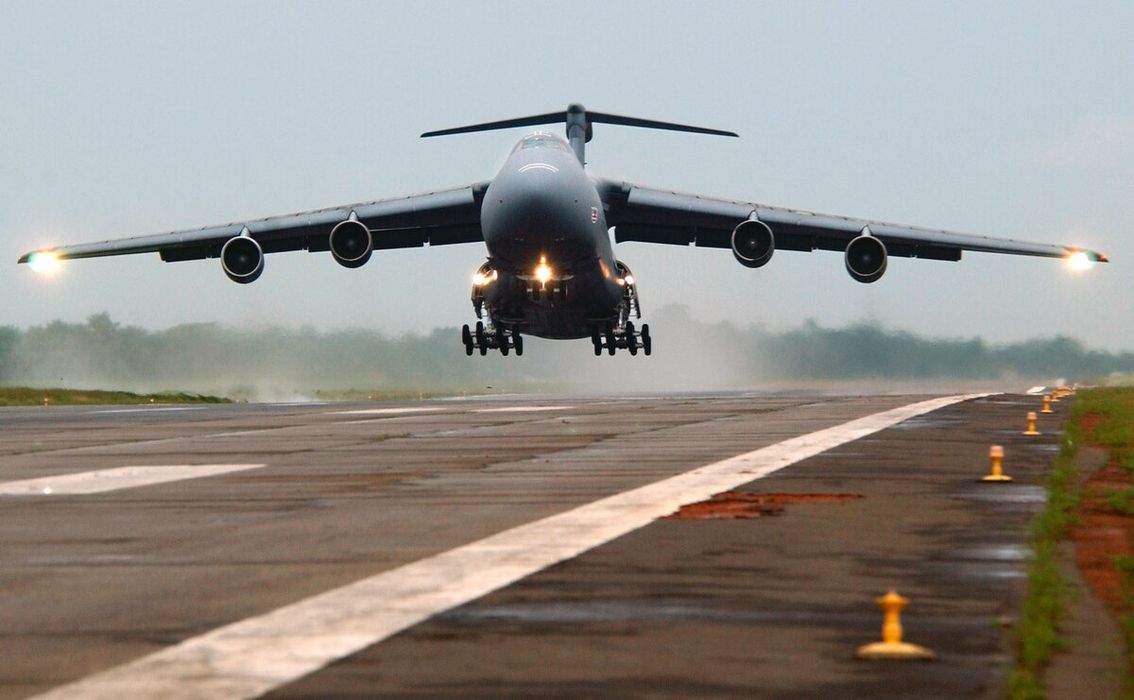
- Printed parts installed on aircraft: The Rapid Sustainment Office has leveraged 3D parts on real Air Force hardware. In one project, RSO engineers printed polymer and metal components that were installed aboard a C-5 Super Galaxy transport aircraft in a matter of days. These parts included crew-area panels and redesigned aluminum handles that were lighter, ergonomically improved, and more robust than their traditionally manufactured counterparts.
- Maintenance and availability gains: The same RSO team has a growing library of printed components, which can drastically cut lead times for parts that are hard to source or have long procurement cycles. Rather than waiting months for a replacement item, engineers can print parts in days and install them swiftly, keeping aircraft mission-ready.
- Advanced research and material development: Beyond part production, Wright-Patt’s AFIT and the Air Force Research Laboratory have invested in metal additive manufacturing systems that can produce complex internal geometries, lighter, structurally efficient parts, and advanced lattice structures that were once impossible with conventional machining.
3D Printing in the Bigger Picture: Recognizing Leadership and Real Aerospace Milestones
Additive manufacturing at Wright-Patterson Air Force Base isn’t just about parts on planes — it’s also fueling breakthroughs that extend into space systems and broader aerospace innovation. A striking example comes from the Air Force Research Laboratory (AFRL), headquartered at Wright-Patt, where Dr. Mark Benedict, the lead for additive manufacturing, was honored with the 2023 Military Additive Manufacturing (MILAM) Lifetime Achievement Award. The recognition highlights his decades of work in moving 3D printing from experimental curiosity to a competitive advantage for U.S. warfighters and defense systems.
Benedict’s story illustrates how additive manufacturing has matured under AFRL’s guidance. Early use of 3D printing focused on plastics for mock-ups or tooling. But as metal additive processes improved in speed, reliability, and cost, AFRL began aggressively validating them for real aerospace applications. According to Benedict, there’s now no rocket that flies today without a significant number of additive-manufactured parts aboard.
One recent example he highlighted is a launch vehicle flown in the past year, where 85 percent of the hardware by weight was produced with printed components. That includes not only the engines, which have become a common application for metal additive manufacturing, but also pressure tanks, parts once thought too complex or critical for 3D printing. This kind of achievement reflects a broader aerospace trend where additive manufacturing is used to reduce part count, optimize performance, and drastically shorten supply chains — especially for systems that lack readily available replacements.
AFRL’s ongoing work also includes programs like Pacer Edge, focused on bringing 3D printing into Air Force depot operations so that maintenance facilities can produce hard-to-find parts on demand, and efforts like Acceleration of Large-Scale Additive Manufacturing (ALSAM), which developed fully open additive machine systems to push scientific understanding of the printing process itself.
Together, these initiatives underscore how Wright-Patterson isn’t just adopting 3D printing for sustainment — it’s helping drive the technology forward across defense and aerospace. As Benedict and his colleagues continue to refine processes, materials, and certification pathways for printed components, the boundaries of what’s possible with additive manufacturing — from flight-critical fighter parts to near-launch-ready rocket hardware — keep expanding.
Real Defense Outcomes from Additive Manufacturing
The Air Force’s use of 3D printing at Wright-Patt and beyond is already yielding tangible defense benefits:
Rapid turnaround for sustainment: Parts produced through additive manufacturing have dramatically shortened the time from design to flight. Traditional procurement often involves tooling and supply chains that can take weeks or longer. 3D printing bypasses much of that, allowing maintainers to produce necessary parts on demand – especially critical for aging aircraft whose original components are no longer in production.
Performance enhancements: In addition to speed, the parts produced often boast weight and strength benefits. For example, redesigns for weight reduction and stiffness have been realized through printed metal components, offering performance advantages in aerospace environments.
Cost reductions: The ability to redesign and print parts locally reduces reliance on complex supply chains and expensive tooling, lowering sustainment costs while enhancing aircraft readiness.
Expanded material and part capabilities: Ongoing research through AFRL and partnerships with industry and academia is pushing the boundaries of additive manufacturing. Projects funded through cooperative agreements are exploring faster part replacement methods and broader applications of additive processes that could reshape Air Force logistics and sustainment practices in the years to come.
The Research & Development Tax Credit
The now permanent Research & Development Tax Credit (R&D) Tax Credit is available for companies developing new or improved products, processes and/or software.
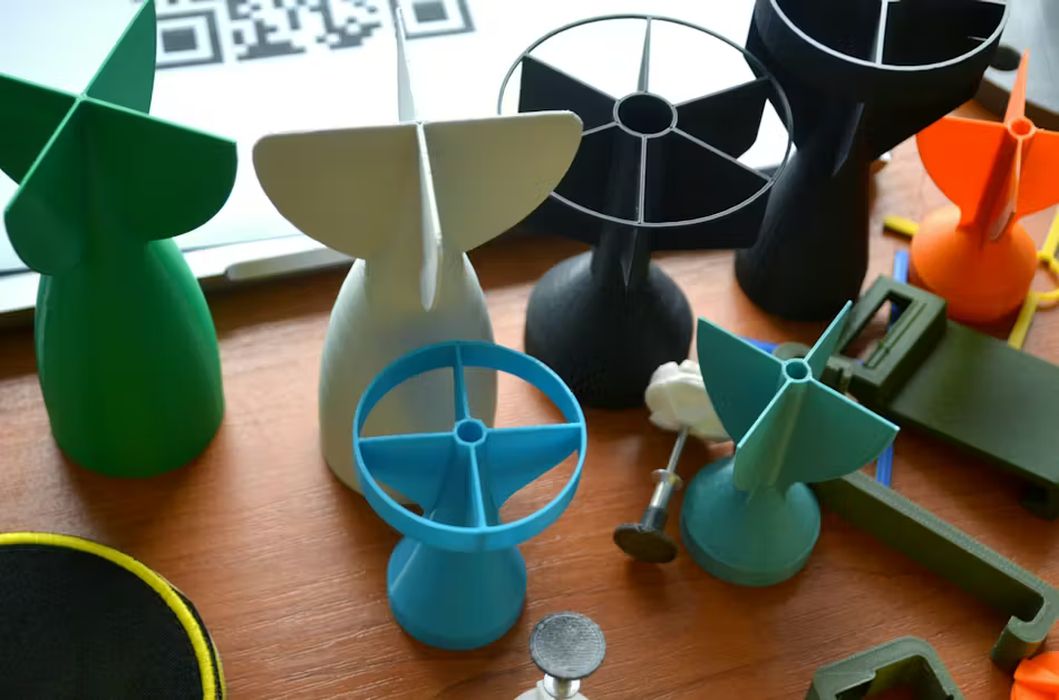
3D printing can help boost a company’s R&D Tax Credits. Wages for technical employees creating, testing and revising 3D printed prototypes can be included as a percentage of eligible time spent for the R&D Tax Credit. Similarly, when used as a method of improving a process, time spent integrating 3D printing hardware and software counts as an eligible activity. Lastly, when used for modeling and preproduction, the costs of filaments consumed during the development process may also be recovered.
Whether it is used for creating and testing prototypes or for final production, 3D printing is a strong indicator that R&D-eligible activities are taking place. Companies implementing this technology at any point should consider taking advantage of R&D Tax Credits.
Looking Ahead: Wright-Patt’s Role in the Future of 3D Printing
3D printing at Wright-Patterson Air Force Base is not a static technology. It continues to evolve through:
- Collaborative research initiatives between the Air Force, industry partners, and research institutions to improve additive manufacturing’s reliability and expand its use to flight-critical components.
- Qualification and certification efforts to ensure 3D printed parts meet stringent airworthiness standards, opening the door for broader adoption across aircraft fleets.
- Innovations in materials science, such as research into high-strength alloys and new polymers, promise lighter, more durable parts that could redefine military aircraft maintenance and performance.
With its position as a research and development heartland of the Air Force and its ever-expanding workforce and technical capabilities, Wright-Patt is likely to remain at the forefront of additive manufacturing not just for defense sustainment, but as a driver of innovation that could ripple across the broader aerospace industry.
In this intersection of military necessity and manufacturing innovation, Wright-Patterson Air Force Base stands not just as a workplace, but as a crucible where tomorrow’s aerospace technologies are being forged today.