
Volumetric 3D printing can be fast, but the light itself can leave fingerprints on the part.
A new patent application from xolo GmbH describes a rather interesting way to reduce those artifacts. Instead of trying to improve the resin or add some post processing step, xolo changes the geometry of the light used to create the build.
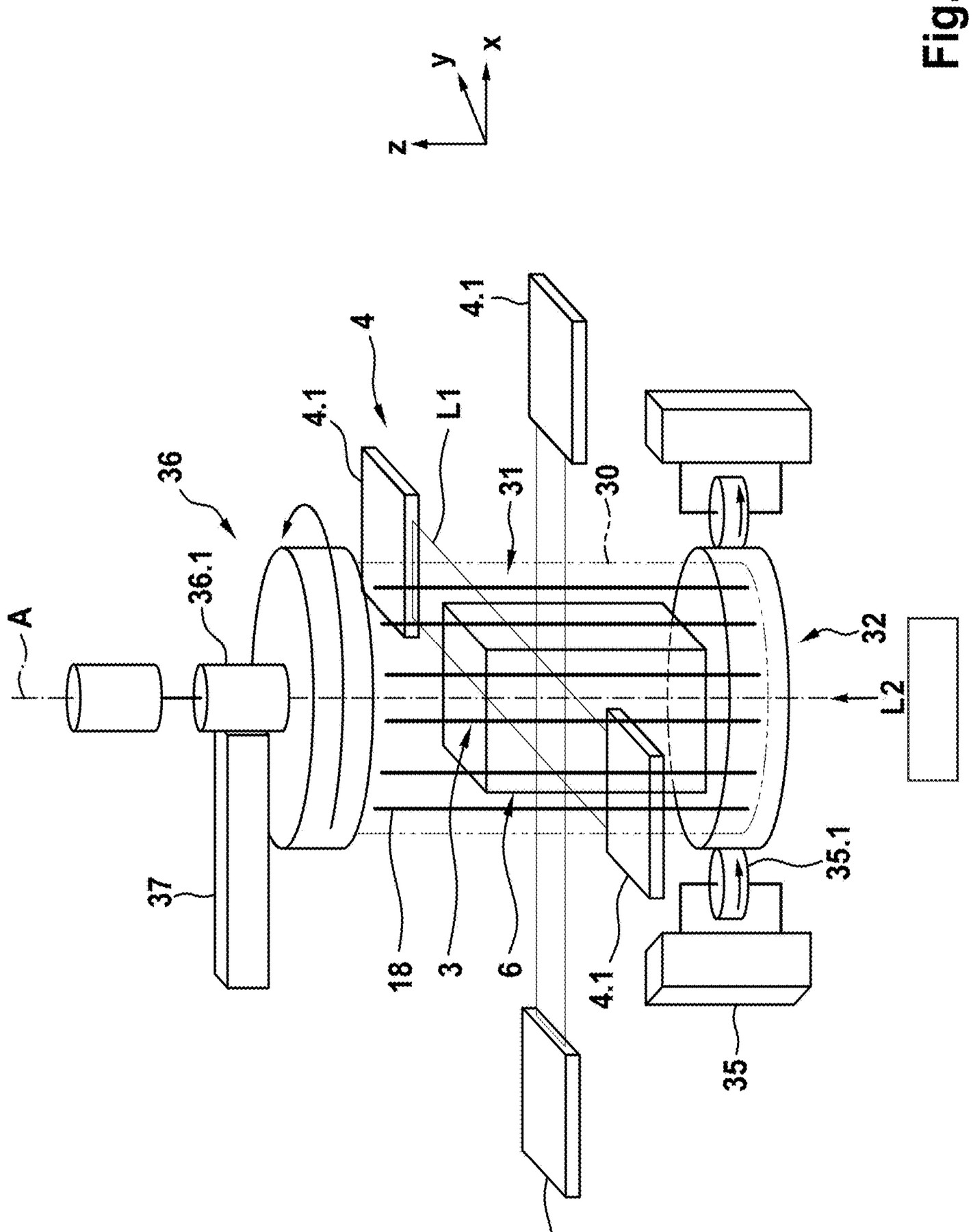
The patent concerns xolo’s dual wavelength volumetric process. One wavelength forms a thin illuminated plane through a vat of photopolymer resin, while another projects cross sectional images into that plane. Polymerization occurs where the optical conditions overlap appropriately, allowing the object to form continuously inside the resin rather than through conventional deposited layers. This process is extremely fast, far faster than any normal resin 3D printing process.
There’s a problem inside that first light plane.
A conventional light sheet can be made from an array of parallel, collimated beams. That sounds ideal, but coherent light beams can interfere with each other. Instead of producing perfectly uniform illumination, the system can generate variations in intensity across the plane.
Those variations apparently show up in the finished object as stripes and other surface irregularities.
Xolo’s proposed solution is almost counterintuitive: make the beams less orderly.
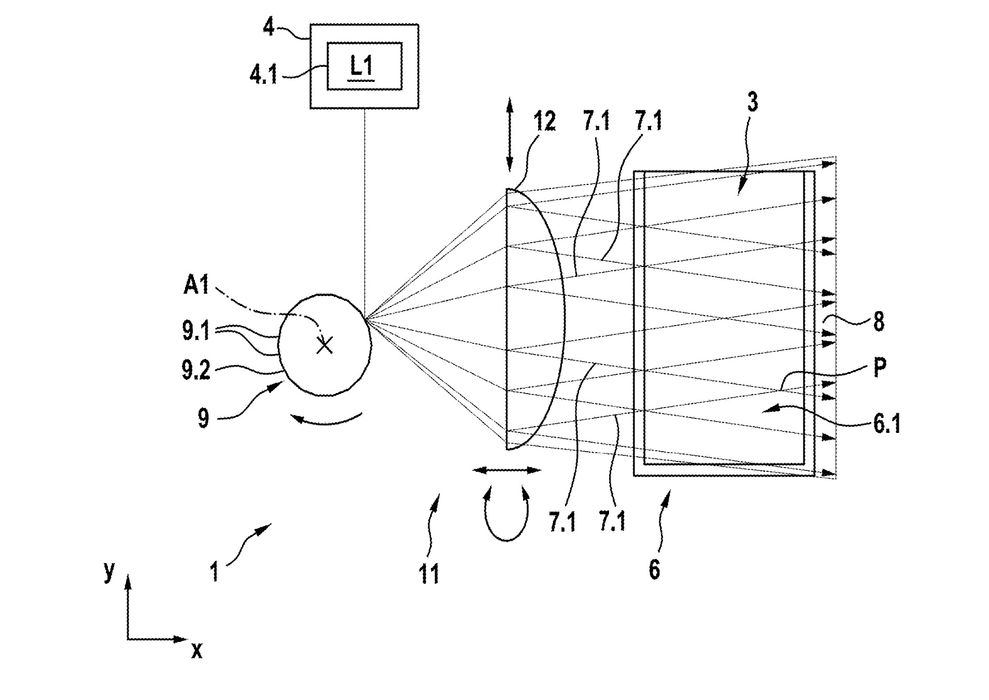
The patent describes optical modulation devices that deliberately alter the directions of individual beams so that at least some of them are no longer parallel. The beams cross at different points within the light plane, reducing their optical coherence and smoothing out the illumination pattern.
Several optical arrangements are proposed. Mirrors can rotate around an axis to steer beams. Lens arrays, microlenses, prisms and other optical elements are also described. Another embodiment generates several light sheets entering the resin from different angles, which together produce the required illuminated region.
The important part is that the illumination still behaves like the required light sheet, but no longer consists of a tidy stack of mutually parallel beams.
And xolo actually tested this.
The patent describes two rectangular test objects measuring 7 x 14 x 1mm. Both were produced from a resin containing 70% urethane methacrylate oligomer, 25% acryloyl morpholine and 5% N-methyldiethanolamine, along with a small quantity of dual color photoinitiator.
One object was printed using a reference optical arrangement. The other used the new light modulation device.
The difference was plainly visible. The reference sample showed dense parallel lines across its surface and inside the cured material. The modified system produced what the patent describes as a smooth, optically clear and homogeneous object without visible striping.
Surface measurements backed that up.
Average Ra roughness dropped from 1.037 microns to 0.088 microns. Rz fell from 6.332 to 0.457 microns. In both cases, the improvement was greater than a factor of ten.
That’s a pretty substantial difference for what is essentially an optical change upstream of the printing process.
The experiment points to something important about volumetric 3D printing. Once layers disappear, some surface problems disappear with them — but entirely new ones can emerge from the optical system itself.
In this case, making the light a little messier seems to make the part much cleaner.
Via Espacenet
