
GE Avio wants to make metal AM be a little more like forging.
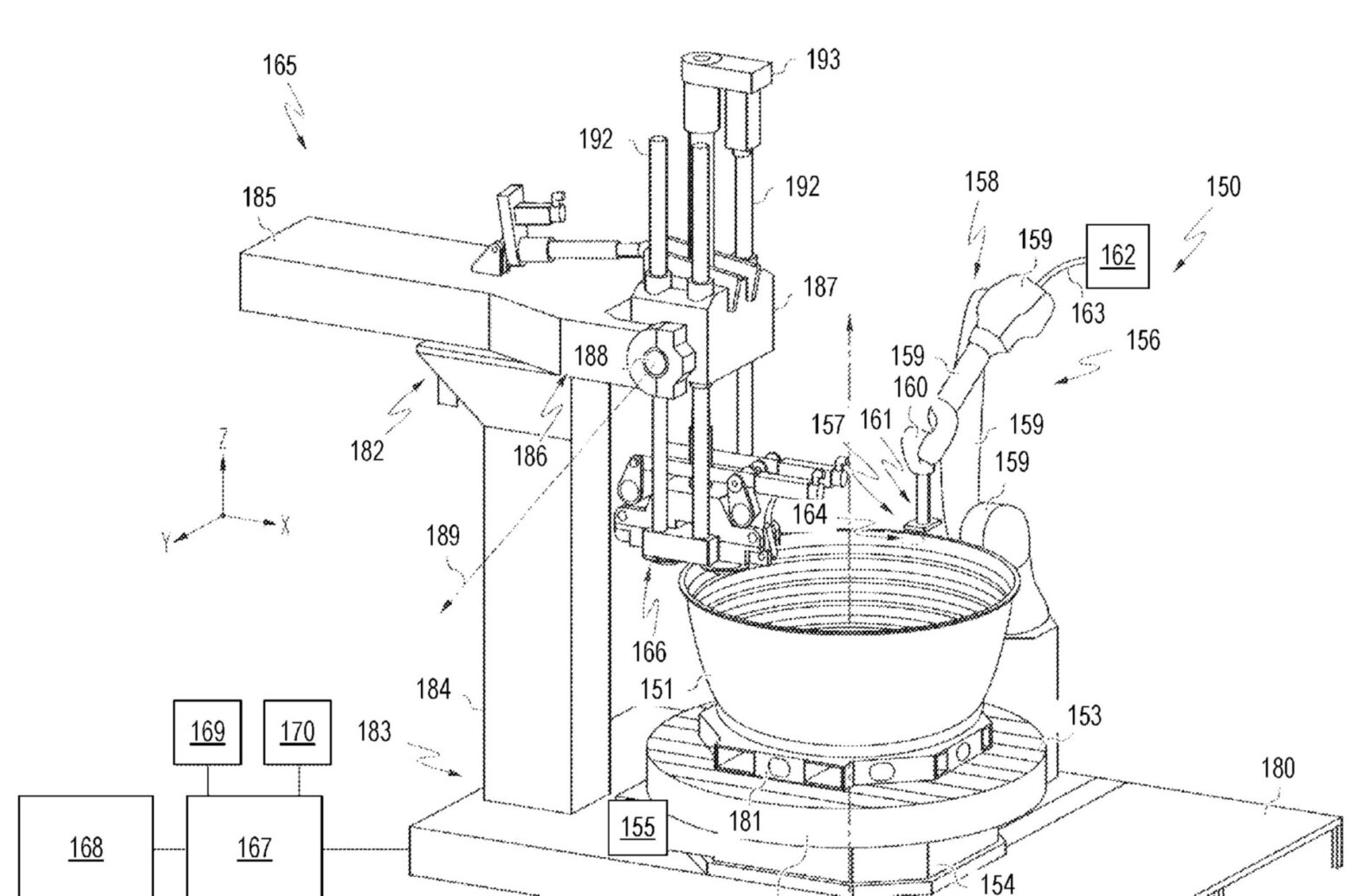
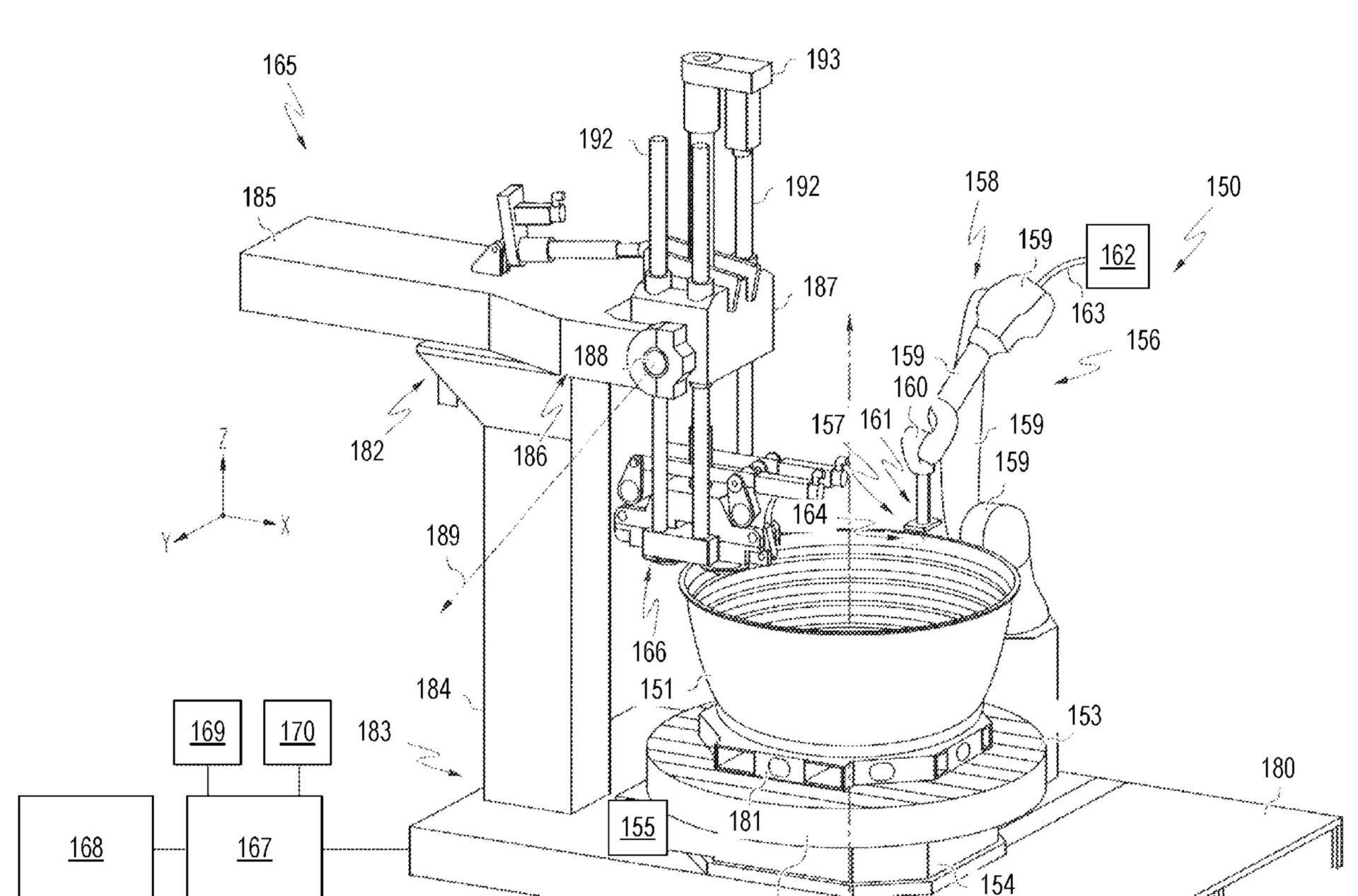
A patent application, US20260346542, from the company describes a directed energy deposition (DED) 3D printing system that deposits metal and then immediately compresses the layer with rollers. The purpose is to control metal grain size inside the part, hopefully producing fine grains where strength and fatigue resistance are most important and coarser grains where high-temperature creep performance is required.
In metal parts the microscopic grain structure is often as important as the geometry. However, today’s metal 3D printing processes usually end up with one single grain across the entire part, even when different regions could, after printing, experience very different loads and thermal situations.
The system described in the GE Avion patent uses a deposition head to melt wire or powder with a laser or plasma arc. A force application device is engaged after the deposition head, and presses on the newly deposited material while it is still hot.
A top roller applies downward force to the freshly printed layer. The patent also describes side rollers that push inward or outward. Those provide more forces, intended to control deformation along the width of the layer, not just compress it from above. You don’t squish the layer out the sides.
The deposition head lays down a hot trail of metal. A roller presses the material, introducing some strain. That deformation tends to encourage recrystallization: existing grains are replaced, at least partly, by new grains. More force generally produces more deformation and a finer resulting grain structure.
The patent’s example data shows the relationship using nickel-based material. Test specimens rolled at 50, 100, 150 and 200 Kilonewtons showed increasing recrystallization as the applied force rose. The reported ASTM grain ratings were 8.5, 10.4, 11.1 and 11.3, respectively. In this rating system, a higher number indicates finer grains.
For a casing, the hotter inner regions might benefit from coarser grains that better tolerate creep, while cooler regions could use finer grains for strength and fatigue performance. The result would be a component whose microstructure changes from location to location, rather than a part designed around one compromise grain size.
The control system for all this is supposed to determine those zones from simulations. It could vary roller force, heat input, deposition speed and the number of rollers used. Sensors may monitor temperature, geometry and residual stress, allowing the machine to adjust the treatment as the build progresses. This suggests that part orientation might become more important to ensure that the compression applications best match the regions of the part.
This makes a complicated build job even more complicated. DED already involves coordinating material feed, heat input and motion; adding a moving roller introduces another integrated process. The roller must contact the material at the right temperature and position, while applying the right kind of pressure to the part and not crashing into the deposition head.
Instead of accepting whatever grain structure the print parameters produce, the metal 3D printer would actively build the a specific microstructure into the part.
Via Espacenet