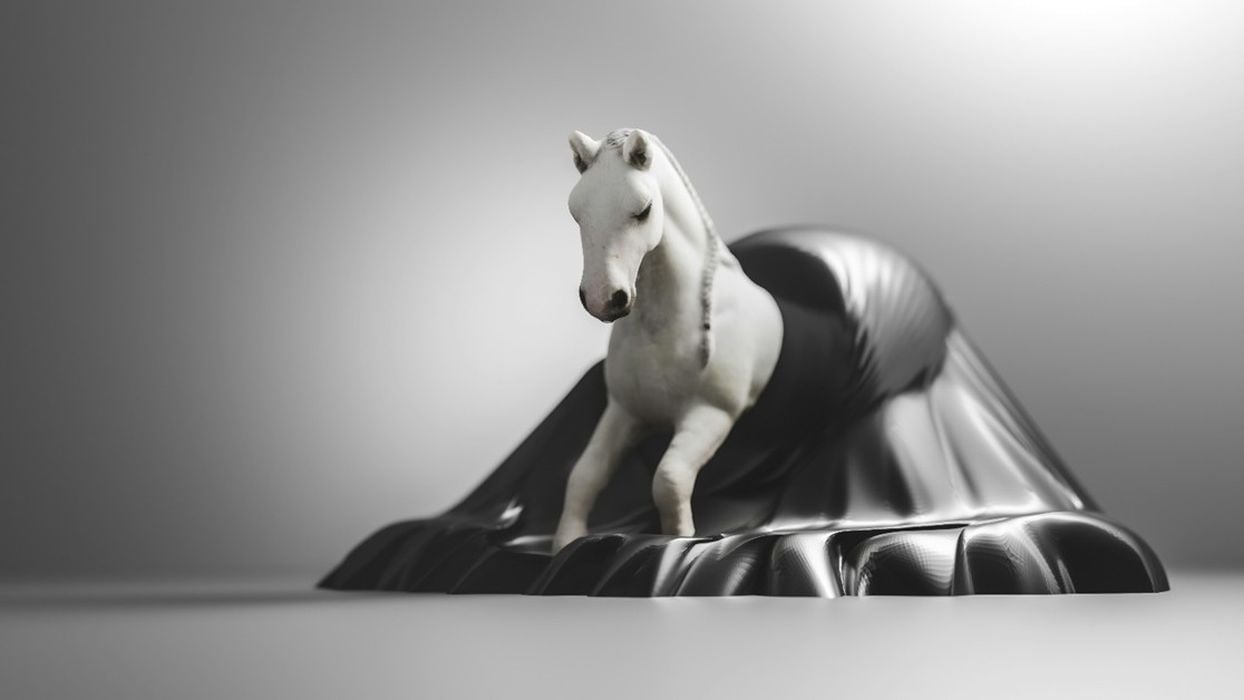
Charles Goulding and Lia Palumbo explore how 3D printing, scanning, and digital design are advancing equestrian equipment and equine care through customized tack, hoofwear, veterinary models, and safety-focused components.
Introduction
The equestrian industry is deeply rooted in traditional, craft-driven practices, with disciplines such as saddlery and horseshoeing forming the foundation of equine care. Saddlery involves the creation of riding equipment, including saddles designed to fit the horse and rider, while horseshoeing is the farriery craft focused on hoof care, hoof protection, and shoe application.
The intersection of digital fabrication and equine product design is creating new opportunities for horse care, equipment development, and veterinary support. By combining additive manufacturing with computer-aided design, 3D scanning, and digital analysis tools, designers and veterinarians can develop products and models that better account for individual horse anatomy. These applications include custom-fitted tack, 3D printed hoofwear and pads, pressure-relief bridle accessories, selected trailer components, and anatomical models used for veterinary education and planning.
Current Industry Trends in Equestrian Product Design
Anatomical equipment is in high demand among stakeholders because of the growing understanding of equine biomechanics and the importance of improving horse welfare by addressing poorly fitted or poorly designed equipment. Anatomical bridles, saddles, and girths have become increasingly popular because they are intended to reduce pressure around sensitive areas of the horse’s head, back, and body.
Saddle fitting and hoof care are also transitioning toward more data-driven approaches through the use of sensor technology and digital measurement tools. Medilogic applies this concept with a saddle pressure mat that captures pressure distribution on a horse’s back under static and dynamic loads. In horseshoeing, software such as Metron-Hoof supports image-based hoof analysis by using photographs and radiographs to track hoof structure, calibrate images, take measurements, and generate reports.
These technologies are important because even minor issues in tack or horseshoes can contribute to soreness, uneven loading, reduced performance, or lameness risk. Poorly fitted equipment can also increase the likelihood of discomfort and behavior changes. An ill-fitting saddle, for example, can restrict natural movement through the shoulder and back, create uneven pressure distribution, and contribute to soreness, muscle changes, or reluctance to work. Conversely, a properly fitted saddle distributes rider weight more evenly while allowing the horse’s back and shoulders to move during exercise.
Why does traditional equestrian equipment fabrication compromise horse health?
Legacy equestrian manufacturing relies on standardized sizing and manual adjustments that often fail to accommodate dynamic equine biomechanics:
- Inadequate Weight Distribution: Conventional saddle trees frequently create concentrated pressure points, causing muscle atrophy, spinal soreness, and long-term gait abnormalities.
- Rigid Farriery Constraints: Traditional iron horseshoes lack flexibility, restricting natural hoof expansion and failing to absorb high-impact forces adequately.
- Limited Veterinary Customization: Off-the-shelf orthotics and protective pads cannot be precisely modified to treat specific orthopedic pathologies, slowing clinical recovery.
Integration of Digital Technologies
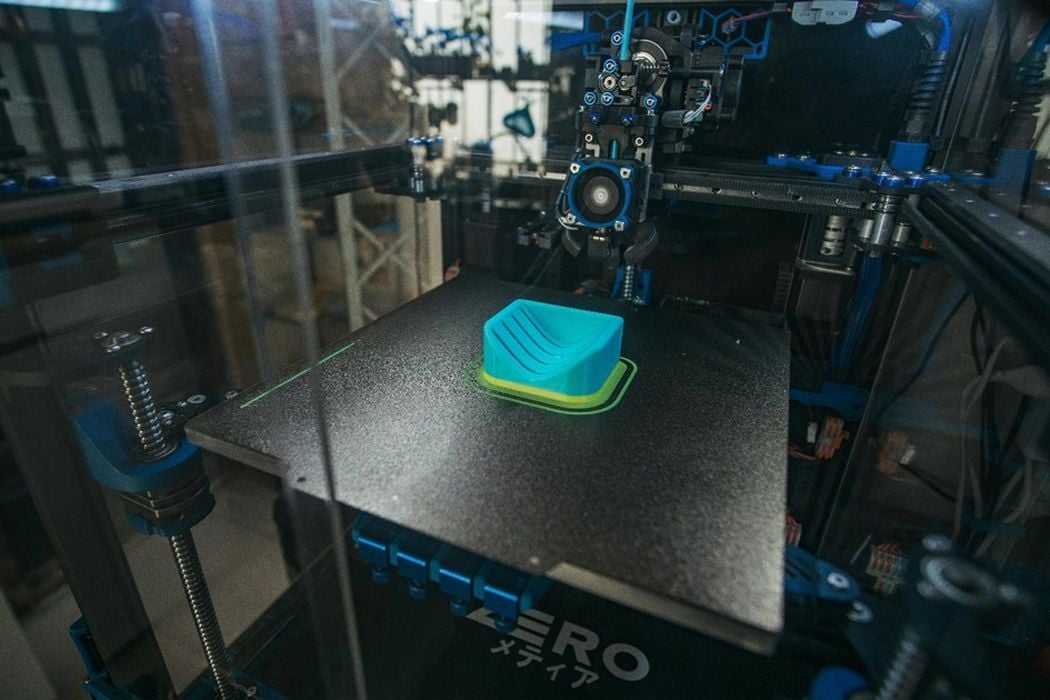
3D scanning of horse anatomy can assist in the creation of customized 3D printed equipment and support more accurate fit assessment. Digital modeling can reduce reliance on manual templating by producing a measurable digital record of a horse’s back, hoof, or other anatomical features. This can improve the consistency of fit data and reduce some manual measurement steps, although the overall cost depends on the scanning system, design workflow, materials, manufacturing method, and post-processing requirements.
Parametric and generative design are computer-assisted approaches that can help designers evaluate geometry, fit, weight, flexibility, and material distribution. These tools are especially relevant in equestrian applications because many products must balance durability, comfort, adjustability, and horse-specific anatomy. When paired with additive manufacturing, these design methods can support complex lattice structures, customized padding, and lightweight components that are difficult to produce using conventional manufacturing alone.
Saddle and Horseshoe Design
The use of 3D scanning technology allows designers to capture detailed models of a horse’s back or hoof structure to improve the fit of customized saddles, pads, and hoofwear. Since every horse has different anatomy and movement patterns, premade tack rarely fits every horse perfectly.
Recent research involving Dr. David Marlin demonstrated how 3D light scanning can be used to compare the back profiles of different types of horses. In a study comparing endurance horses and dressage horses, researchers found measurable differences in thoracolumbar back angles, including narrower front saddle-area back profiles in the endurance horse sample. This type of data can help saddle fitters, designers, and owners better understand how saddle design must account for breed, discipline, and individual anatomy.
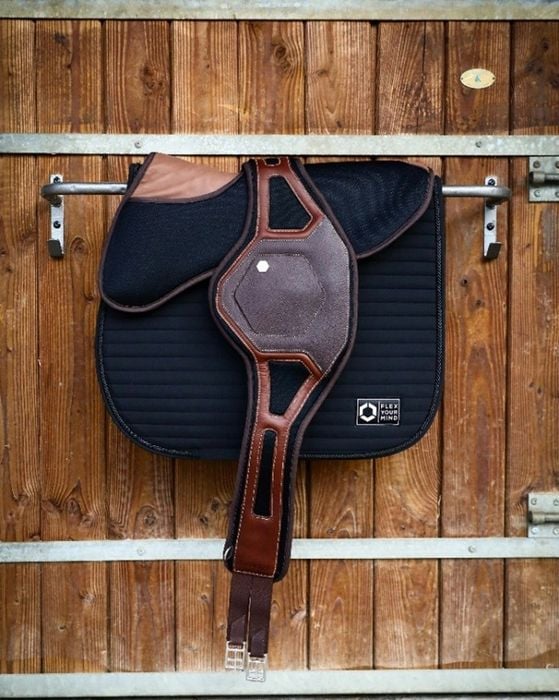
A notable 3D printed saddle example comes from Trentino, where the “Polly” saddle was developed as a fully 3D printed riding saddle. The saddle includes six pads connected to three arches in the section that contacts the horse’s back, along with a customizable rider seat and a reticular cushion structure intended to support comfort and breathability. This example illustrates how additive manufacturing can be used to rethink saddle architecture through flexible, modular, and anatomy-responsive design features.
Additive manufacturing has also been applied to hoof care. 3D HoofCare Pads are an example of additively manufactured hoof-support products. The company describes its pads as designed to emulate barefoot hoof mechanics with a shoe applied, support the frog, and help distribute weight across the hoof wall and frog.
A stronger example of scan-based equine footwear comes from CSIRO, where researchers scanned a racehorse’s hooves with a handheld 3D scanner and used the scan data to design custom titanium horseshoes. CSIRO reported that four customized shoes were printed within a few hours, demonstrating how scanning, digital modeling, and metal additive manufacturing can be combined to create made-to-measure equine footwear.
Additive manufacturing could also improve the horseshoeing process by making some custom hoofwear and support products more accessible to farriers, veterinarians, and specialized equine-care providers. One potential application could involve scan-based hoof measurement linked to digital design software and a printing workflow in a farrier shop or specialized production facility. Rather than replacing farrier expertise, this approach would give farriers another tool for evaluating hoof geometry, creating individualized support products, and reducing the risk of pressure being applied to inappropriate areas of the hoof.
Medical Applications
Several technologies already assist veterinarians, trainers, and owners in assessing horses medically. StrideSAFE, for example, developed a GPS and accelerometer-based sensor system that identifies irregularities in a racehorse’s stride. The company states that its 3-ounce sensor is placed in a pocket of the saddle cloth before a race and can analyze stride data at racing speeds of up to 40 mph.
While this type of technology provides valuable diagnostic information, 3D printing can further support veterinary medicine through the creation of physical anatomical models. In equine applications, researchers have shown that scanned and 3D printed horse thoracic limb bones can reproduce anatomical characteristics closely enough to serve as practical veterinary teaching tools.
This concept could be expanded in equine hospitals and veterinary schools through patient-specific or condition-specific models of bones, teeth, hooves, or other anatomical structures. Surgeons could use models to better visualize complex anatomy before procedures, while veterinary students could use them to study anatomical variation and practice planning around realistic structures. These applications are especially valuable when a physical model provides spatial understanding that is difficult to achieve from two-dimensional imaging alone.
3D printed Bridle Components and Pressure-Relief Accessories
As mentioned previously, anatomical bridles are becoming increasingly popular because they are designed to reduce pressure around sensitive areas such as the nose, chin, and poll. Reducing unnecessary pressure can improve horse comfort and support clearer communication between horse and rider.
3D printing can contribute to this area through lightweight noseband, headpiece, browband, chin, and throatlatch accessories. Many anatomical bridles rely heavily on padding, but additive manufacturing can introduce more advanced internal geometries, including lattice and grid structures that distribute pressure while reducing unnecessary material.

Revoband has developed 3D printed pressure-relief pads for areas such as the nose, chin, and neck. The company describes the pads as using a bionic grid structure to distribute force more evenly and reduce pressure at sensitive contact points. Although these claims should be treated as company-reported product information unless independently tested, the product demonstrates how additive manufacturing can be used to create lightweight, flexible, pressure-distribution accessories for equestrian equipment.
Trailers and Custom Components
Horse trailers are commonly constructed from aluminum and steel because these materials provide strength, durability, and corrosion-management advantages when properly selected and finished. Metal powder bed fusion is unlikely to replace conventional trailer fabrication for large structural members in the near term, but it could be useful for smaller, high-value components such as custom brackets, latch mechanisms, emergency-release components, sensor housings, or prototype parts.
Powder bed fusion can produce functional metal parts by melting and fusing layers of powdered material with a laser or electron beam. However, any safety-critical trailer component would require appropriate material selection, testing, inspection, and post-processing before practical use. This is especially important because metal additively manufactured parts may require qualification, quality assurance, and finishing processes before they are suitable for structural or safety-related applications.
Benefits of Additive Manufacturing for the Industry
3D printing, or additive manufacturing, is a digital manufacturing process that creates physical objects from digital designs by successively adding material. Depending on the process and material, additive manufacturing can reduce tooling needs, support complex geometries, and enable customized production for applications where fit, weight, geometry, or rapid design iteration are important.
Additive manufacturing offers several potential benefits to the equestrian industry, including faster prototyping, greater design flexibility, reduced tooling dependence, and improved customization for horse-specific anatomy. These advantages are most defensible in applications such as scan-based hoofwear, pressure-relief accessories, veterinary anatomical models, and selected custom components.
For equipment manufacturers, additive manufacturing can support faster testing of new geometries, lightweight structures, and customized fit features. For farriers, saddle fitters, and veterinarians, scan-based additive workflows may provide new ways to translate anatomical data into physical products or models. For horses and riders, the most meaningful benefit is the potential for equipment that better reflects individual anatomy, movement, comfort, and safety needs.
How does 3D printing transform equine care and equipment performance?
Integrating digital fabrication into equestrian design solves complex physiological and manufacturing challenges simultaneously:
- Anatomical Optimization: 3D scanning maps a horse’s exact physical contours, allowing designers to print saddle panels and bridle interfaces with optimized pressure-distribution lattices.
- Advanced Material Engineering: Leveraging flexible polyurethane composites and multi-material configurations allows for the creation of lightweight, shock-absorbing hoof shoes and customized therapeutic pads.
- Pre-Surgical Veterinary Modeling: Multi-layered 3D printing replicates fragile bone structures from CT or MRI scans, enabling veterinary surgeons to perform tactile pre-operative planning and evaluate complex fractures.
Challenges and Limitations
Resistance from stakeholders is one expected challenge, as some individuals may view these technologies as a replacement for traditional craftsmanship. However, additive manufacturing is more appropriately understood as a complementary tool that can support, rather than replace, the expertise of farriers, saddle makers, veterinarians, and equine product designers.
There are also significant cost barriers associated with advanced additive manufacturing technologies, particularly metal printing, high-resolution scanning, software processing, post-processing, and quality inspection. These costs may limit near-term adoption to specialized products, premium equipment, veterinary applications, and prototype development.
Additionally, additive manufacturing still faces limitations related to production speed, defect control, material qualification, energy consumption, post-processing, and cost. These challenges are especially important when printed parts are used in applications involving repeated loading, animal welfare, rider safety, or transportation. As a result, equestrian applications must be evaluated carefully and tested under realistic use conditions before broader adoption.
How can additive manufacturing in equestrian design optimize horse welfare and qualify for R&D tax credits?
Additive manufacturing (3D printing) and 3D scanning optimize equestrian equipment design by replacing traditional, rigid mass-production tack with custom, anatomically mapped components that maximize horse welfare and rider safety. By utilizing computer-aided design (CAD) and 3D scanning to capture precise individual equine geometry, manufacturers can fabricate tailor-made saddles, custom hoofwear, and pressure-relief bridle accessories. Overcoming the technical uncertainties of multi-material printing, polymer density variations, and rigorous stress testing establishes an iterative process of experimentation that directly qualifies for substantial Section 41 R&D Tax Credits.
Developing, prototyping, and validating advanced 3D printed equestrian products involves systematic technological iterations that align directly with Section 41 R&D Tax Credit eligibility guidelines.
| Core R&D Technical Activity | IRS Four-Part Test Alignment | Financial Recovery Impact |
| Material Formulation & Tuning | Resolves technological uncertainty regarding shock-absorption limits and structural fatigue under high mechanical stress. | Captures qualified engineering hours spent experimenting with novel polymer blends and specialized filaments. |
| Iterative Prototype Testing | Conducts a systematic process of experimentation using CAD software modifications and destructive physical verification. | Recovers internal labor costs of product designers and the direct material costs of filaments consumed during preproduction. |
| Hardware-Software Integration | Solves technical challenges regarding the precision matching of 3D scan point-clouds to automated slice toolpaths. | Offsets the internal labor expenditures of computational and systems engineers designing automated workflows. |
Conclusion
Ultimately, these innovations represent the beginning of what 3D printing can contribute to equestrian design. Additive manufacturing is not replacing traditional craftsmanship, farriery, saddlery, or veterinary expertise. Instead, it is expanding the tools available to support horse welfare, rider safety, product customization, and equipment performance.
The most promising applications are those where additive manufacturing directly addresses a clear equestrian need, such as improved anatomical fit, better pressure distribution, lightweight design, veterinary visualization, or custom hoof support. With careful testing, responsible implementation, and collaboration between technologists and equine professionals, 3D printing can become a valuable part of the future of horse equipment and equine care.