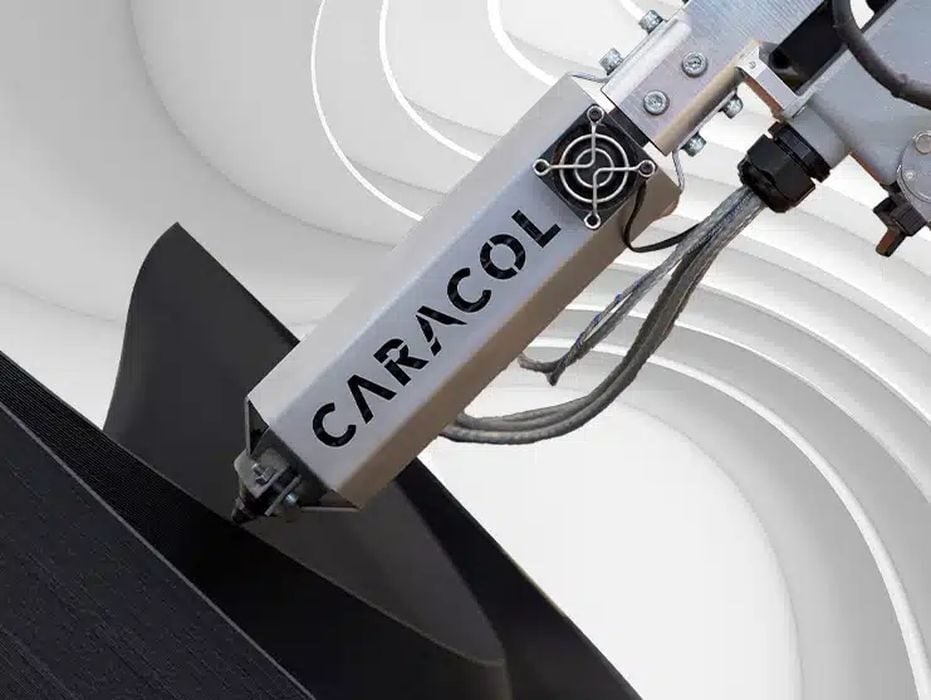
Charles R. Goulding and Preeti Sulibhavi report on Caracol’s move to acquire Weber and its implications for the future of large-scale 3D printing.
In September 2025, Caracol — an up-and-coming force in large-format additive manufacturing (LFAM) announced that it has acquired the intellectual property and robotic machine configuration assets of Hans Weber Maschinenfabrik GmbH’s additive division. While financial terms were not disclosed, the move signals a concerted push by Caracol to deepen its technology stack, expand its footprint in Europe (especially the DACH region), and accelerate its ambitions in industrial robotics + extrusion. This article first steps back to sketch Caracol’s trajectory, then explores Weber’s legacy and what the combination may unlock, culminating in a closer look at LFAM, extrusion, and robotic integration.
Caracol: Origins, Scale, and Strategy
Roots and technology positioning
Caracol (officially Caracol AM/Caracol Advanced Additive Manufacturing Solutions) traced its formal founding to 2017 in Milan, Italy, though its lineage is tied to a design/innovation studio that preceded it. From early on, Caracol has aimed at robotic, large-format extrusion systems: high-end, turnkey LFAM for composites, polymers, and more recently metal deposition (via wire/arc). Its flagship system, Heron AM, pairs robot arms, extruder heads, and Caracol’s Eidos Manufacturing control software. More recently, it has marketed Vipra AM for large-scale metal additive applications.
Caracol has invested heavily in R&D: it reports dedicating roughly 40% of revenues to R&D in recent years. In 2023, it closed a €10.6 million Series A to back its internationalization and scaling plans. At the time of that round, the company anticipated tripling staff over two years to approximately 120 employees by 2024. As of recent public estimates, Caracol’s revenue is roughly USD 10.6 million/year (a rough back-of-envelope figure drawn from Growjo) with an implied per-employee revenue of about US$100,000. (Note: private companies’ financials are approximate.)
Operationally, Caracol claims to run the largest LFAM production center in Europe and has a global service/support network spanning over 55 countries. In 2025, it expanded in North America, opening a facility in Austin, Texas, along with a commercial office in Dubai. In announcing the Weber acquisition, Caracol explicitly cited the Texas hub as part of its North American push.
Weber: Legacy, Assets, and Additive Pivot
Industrial heritage and extrusion mastery
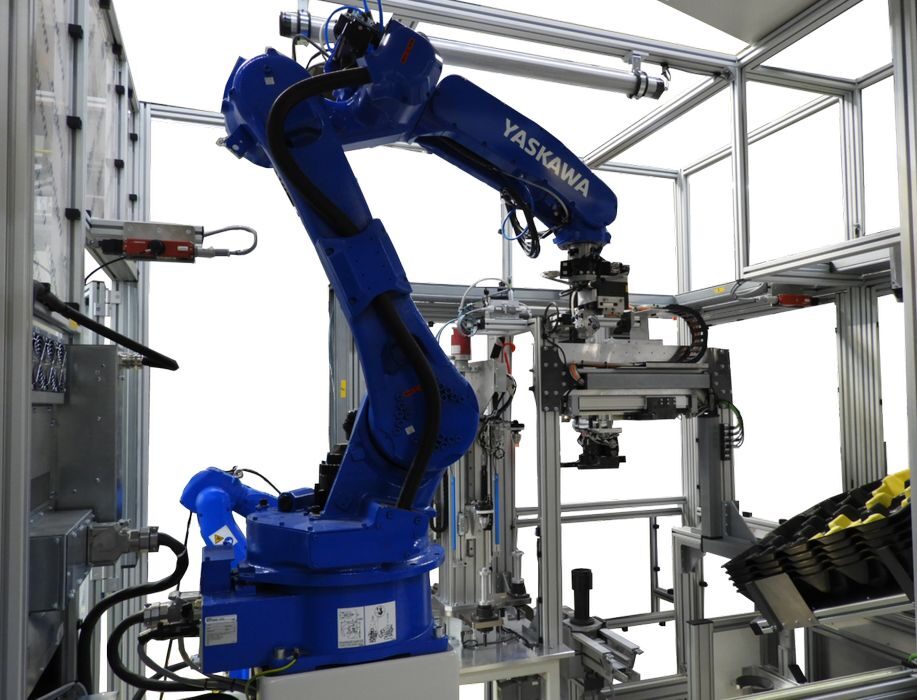
Hans Weber Maschinenfabrik is a historically established German family firm, headquartered in Kronach, Bavaria/Upper Franconia. Its roots go back to 1922 (though its founder developed grinding machines earlier). Over the decades, Weber expanded into sanding/grinding machinery (for wood and metal), control systems, gearboxes, and — notably — extrusion and automated systems. In 1958, Weber built its first extruders, scaling into plastic profile & pipe extrusion, twin-screw extruders, WPC (wood-polymer composite) profiles, and compounders.
Weber emphasizes “Made in Germany” production of extruder screws and barrels, and historically has maintained strong spare parts support. Its extrusion business spans lines for pipes, profiles, compounds, downstream finishing (e.g. sanding, calibration) and system integration. According to a company-published document, it employs about 470 people at Kronach (and related operations) across extrusion, sanding, automation, and additive.
In 2019, Weber formalized an “Additive/Robotics & Automation” division, developing extrusion-based 3D printing systems. That technology branch focused on FGF / granule-based extrusion additive (versus filament) for large-volume polymer components. More descriptively, Weber additive systems allow Fused Granular Fabrication (FGF) – direct extrusion of granules (pellets) rather than processed filament – enabling greater flexibility in feedstock (including recycled or compound materials).
While precise 2025 YTD figures for Weber’s additive arm are not publicly disclosed, Weber’s broader business has substantial legacy revenue and capabilities in extrusion that bring engineering heft. In Weber’s public announcement of the acquisition, they indicated the additive division was a subset and that Weber would remain involved in extrusion development under Caracol’s umbrella.
Why This Acquisition, Why Now?
From the outside, the Caracol-Weber tie-up makes strategic sense across multiple axes:
- Vertical deepening of core technology. Caracol has built robotic extrusion + motion systems; Weber brings deep and mature extrusion machinery know-how, control systems, materials experience, and mechanical robustness. Integrating Weber’s IP allows Caracol to internalize key building blocks rather than rely on external extrusion suppliers.
- European / DACH presence & credibility. Weber is well established in Germany and the DACH region. By acquiring its additive assets, Caracol can bolster its European footprint, leveraging Weber’s client relationships and reputation. It helps Caracol localize manufacturing and reinforce supply chain resilience especially in the EU.
- Broader customization & automation configurations. The announcement emphasizes that customers will gain more configuration flexibility — e.g. using Siemens control systems, ABB robotics, or hybrid setups — by combining Caracol’s platforms with Weber’s machine configurations. That flexibility can be a differentiator in industrial clients that have entrenched control and automation preferences.
- Securing talent, IP, and roadmap synergy. In a competitive landscape for AM and robotics, acquiring established teams, patents, and processes can accelerate product roadmaps. Weber’s legacy in extrusion gives Caracol a stronger footing to innovate in composite + polymer extrusion AM.
- Timing in market maturity and demand. The AM industry is continuing its shift from prototyping to production. Demand for LFAM solutions is rising across aerospace, marine, energy, and infrastructure. Caracol likely sees the moment to expand its technological breadth to capture scale contracts.
Given Caracol’s Texas expansion, this deal helps balance its US/EU positioning and sets up a transatlantic production and sales strategy.
In short: Caracol secures upstream extrusion know-how, gains local European trust, and accelerates its modular AM portfolio — and it does so just as LFAM is poised to move beyond prototyping.
What Weber Offers Caracol, and Vice Versa
By bringing Weber’s additive capabilities into its fold, Caracol stands to gain:
- Mature extrusion hardware and machine design: Weber’s extruder and machine engineering heritage can raise the robustness, throughput, and control of Caracol’s platforms.
- Materials and compounding know-how: Weber’s experience in twin-screw extruders, WPC, and compounding is valuable in diversifying Caracol’s material capabilities.
- Control and automation modules: Weber’s machine control systems and automation integrations (robotics, sensors, PLCs) can be more deeply adapted into Caracol’s ecosystem.
- Customer continuity & installed base access: Existing Weber additive customers can now tap Caracol’s support network and expanded solutions, giving Caracol a pipeline of users to convert or upgrade.
- Acceleration of Caracol’s roadmap: By inheriting Weber’s IP, Caracol can potentially compress development cycles and bring advanced capabilities (e.g. hybrid machine configurations) to market faster.
Conversely, Weber gains:
- Access to Caracol’s global support network (55+ countries) for after-sales and scaling.
- Integration into a more comprehensive LFAM product portfolio, making its additive tech more viable commercially.
- Investment and engineering bandwidth to continue extrusion development within a broader AM organization.
The synergies are not just “additive,” but multiplicative when combining hardware, robotics, software, and materials.
LFAM, Robotic Integration, and Extrusion-Based Strategies
What is LFAM, and why does it matter?
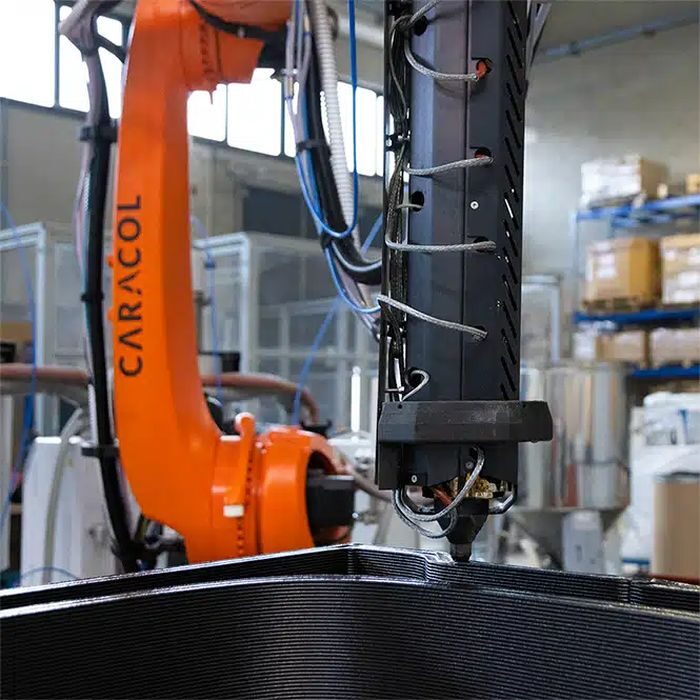
LFAM (Large Format Additive Manufacturing) refers to additive processes capable of printing large-scale components (e.g., several meters) beyond what desktop or mid-scale machines can manage. In many cases, LFAM systems use robotic arms (6-axis or more) to move an extrusion head along toolpaths in 3D space, depositing material layer by layer. This allows for freeform geometries, sandwich or lattice infill, and scalable build sizes.
LFAM is increasingly used for tooling, molds/dies, jigs/fixtures, composite structures (e.g., boat hulls or aerospace fairings), and even direct functional parts. Because of scale, throughput and automation are critical to making LFAM viable in industry.
How Weber’s robotics and Caracol’s systems can integrate
Weber’s additive assets include robotic machine configuration designs that Caracol is now acquiring. Caracol has already designed Heron and Vipra with robot-mounted extrusion heads; integrating Weber configuration modules means Caracol can offer more customized machine layouts (e.g., alternative kinematics, robot brands, control stacks).
In practice, Caracol may embed Weber’s control/interface modules, even options (e.g. Siemens PLC, ABB robotics) to allow customers to integrate into existing automation environments. Robots enhance repeatability, repositioning, multi-axis deposition, and complex paths (e.g. nonplanar layers) and integrating robust extrusion heads and feedback from Weber will improve process stability.
Optimizing production via combined techniques
By combining advanced extrusion (from Weber) with Caracol’s motion, path planning, software, and control, the merged entity can:
- Increase deposition speeds and throughput by optimizing extruder kinetics and robot motion coordination.
- Improve process stability: with tighter integration of control loops (extruder pressure, temperature, flow) synchronized with robot motion.
- Offer modular customization: for given customer needs, Caracol can mix and match robot brands, extrusion heads (from Weber), and configuration options.
- Enable hybrid or multi-material printing: leveraging Weber’s compounding experience, Caracol might extend into co-extrusion, multi-material transitions, or reinforcement embedding.
- More seamless automation: integrating post-processing, inspection, and handling systems in a unified control architecture.
Extrusion-based AM (FGF / pellet extrusion)
Extrusion-based additive processes deposit molten or semi-molten thermoplastic (or composite) material continuously. FGF (Fused Granular Fabrication) is a form of that, where raw granulate or pellet feedstock is used rather than filament. Advantages include:
- Lower feedstock cost (pellets are cheaper than filament)
- Ability to incorporate recycled or compounded materials
- High throughput (higher mass deposition)
- Flexibility in material mix (e.g. fillers, reinforcements)
Weber’s strength in extrusion, screw design, melt flow, mixing, venting, and wear-resistant barrels is directly relevant to pushing extrusion AM performance. Caracol, with robotic motion, path optimization, and system software, can leverage that to produce large, complex, high-quality parts at scale.
One important advantage: Weber’s extrusion IP gives Caracol more control over the melt/pressure dynamics, allowing better scaling from lab to production machine.
Access to Heron AM / Vipra AM platforms and benefits to Weber-based techniques
With the deal, Weber’s additive systems effectively gain access to Caracol’s established platforms (Heron and Vipra) and ecosystem. That means:
- Weber clients can be upgraded to Caracol’s infrastructure (robotic systems, pathing, control, service network).
- Caracol can absorb Weber’s extrusion heads or subsystems into its platform options — e.g. customers wanting Weber’s granule extrusion in a Heron robot arm system.
- It broadens Caracol’s material compatibility and performance envelope by using Weber’s extrusion modules.
- Combined branding and synergies may give better market access in Europe, especially in industries more comfortable with German engineering heritage.
As noted in public statements, Caracol intends to integrate Weber’s additive extrusion into its Heron and Vipra LFAM offerings, offering expanded customization and automation options for industrial users.
An example scenario: a client in Germany wants a large composite structure with specialized compound materials processed in a particular way. Caracol could supply a robot + pathing solution, coupled with a Weber-derived extruder tuned to that compound. The customer would benefit from both Caracol’s global support and Weber’s extrusion pedigree.
Texas, US Strategy, and Outlook
While Caracol’s public communications do not deeply detail Texas operations beyond the new Austin facility, it is clear the Texas move is part of a North American push. Having a U.S. base helps Caracol compete for aerospace, defense, and industrial contracts in North America, reduce logistics friction, and localize support.
By combining its Texas hub with Weber-derived extrusion modules and European know-how, Caracol can position itself as a transatlantic additive manufacturer that bridges U.S. demand and European technology strength.
Going forward, Caracol might deploy hybrid machine manufacturing: building robot + extrusion systems in Texas for U.S. customers, while sourcing advanced extrusion modules (initially from Weber-origin designs) to populate those machines. The acquisition thus helps de-risk supply chains and ensure consistency of performance across geographies.
Challenges & Risks to Watch
No merger is without challenges. In this case:
- Integration complexity: Merging machine designs, control architectures, supply chains, and R&D cultures takes time and care.
- Legacy product support: Caracol must ensure continuity for existing Weber additive customers, maintaining trust.
- Market competition: Other LFAM players may respond aggressively, especially in extrusion or hybrid processes.
- Scale-up risk: Caracol must grow operational capacity and service infrastructure to match the ambitions.
- Intellectual alignment: Ensuring that Weber’s engineering culture and Caracol’s innovation ethos align will be critical.
The Research and Development Tax Credit
The now permanent Research and Development (R&D) Tax Credit is available for companies developing new or improved products, processes, and/or software. 3D printing can help boost a company’s R&D Tax Credits. Wages for technical employees creating, testing, and revising 3D-printed prototypes can be included as a percentage of the eligible time spent on the R&D Tax Credit. Similarly, when used as a method of improving a process, time spent integrating 3D printing hardware and software counts as an eligible activity. Lastly, when used for modeling and preproduction, the costs of filaments consumed during the development process may also be recovered.
Whether it is used for creating and testing prototypes or for final production, 3D printing is a great indicator that R&D Credit-eligible activities are taking place. Companies implementing this technology at any point should consider taking advantage of R&D Tax Credits.
In addition to the federal R&D tax credit, Texas has its own R&D tax credit.
Final Thoughts
Caracol’s acquisition of Weber’s additive manufacturing assets is a strategic leap into deeper technological ownership, better European presence, and stronger platform modularity. For Weber, it offers scale, integration, and a future path for its additive division.
If Caracol can integrate the extrusion excellence of Weber with its own robotic, software, and systems strengths, and deploy those in its U.S. and European operations, it may well accelerate the transition of LFAM from a boutique, novelty technology to an industrial backbone of manufacturing.