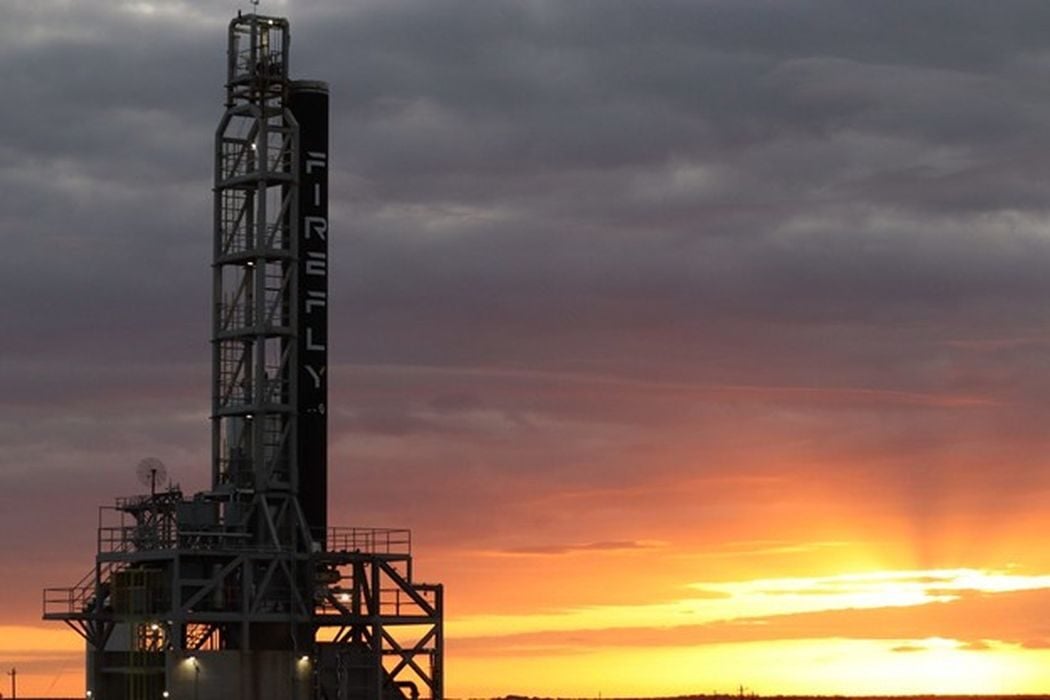
Anthony Palumbo and Charles Goulding examine how Firefly Aerospace is using additive manufacturing, from 3D printed Blue Ghost thrusters to AFP-built composite structures and Miranda engine development, to scale its launch and lunar ambitions in the wake of its August 7, 2025 IPO.
A Public Debut with Manufacturing at the Core
On August 7, 2025, Firefly Aerospace made its Nasdaq debut under the ticker FLY, pricing its upsized offering at US$45 per share and raising roughly US$868 million. Investor enthusiasm pushed shares into the low US$60s on opening day, valuing the company at about US$6.3 billion.
The IPO proceeds are earmarked not just for debt reduction and scaling headcount but for expanding manufacturing capacity. For Firefly, the capital raise underscores a broader truth: its future rests on how quickly and effectively it can industrialize launch vehicles and lunar landers. Additive manufacturing is at the center of that effort.
Printing for the Moon: Blue Ghost Mission 1
Firefly’s Blue Ghost Mission 1 launched on January 15, 2025 and touched down successfully on March 2, 2025 near Mons Latreille, completing about 14 Earth days of surface operations. It was the first time a fully commercial U.S. mission delivered NASA payloads and operated autonomously on the lunar surface.
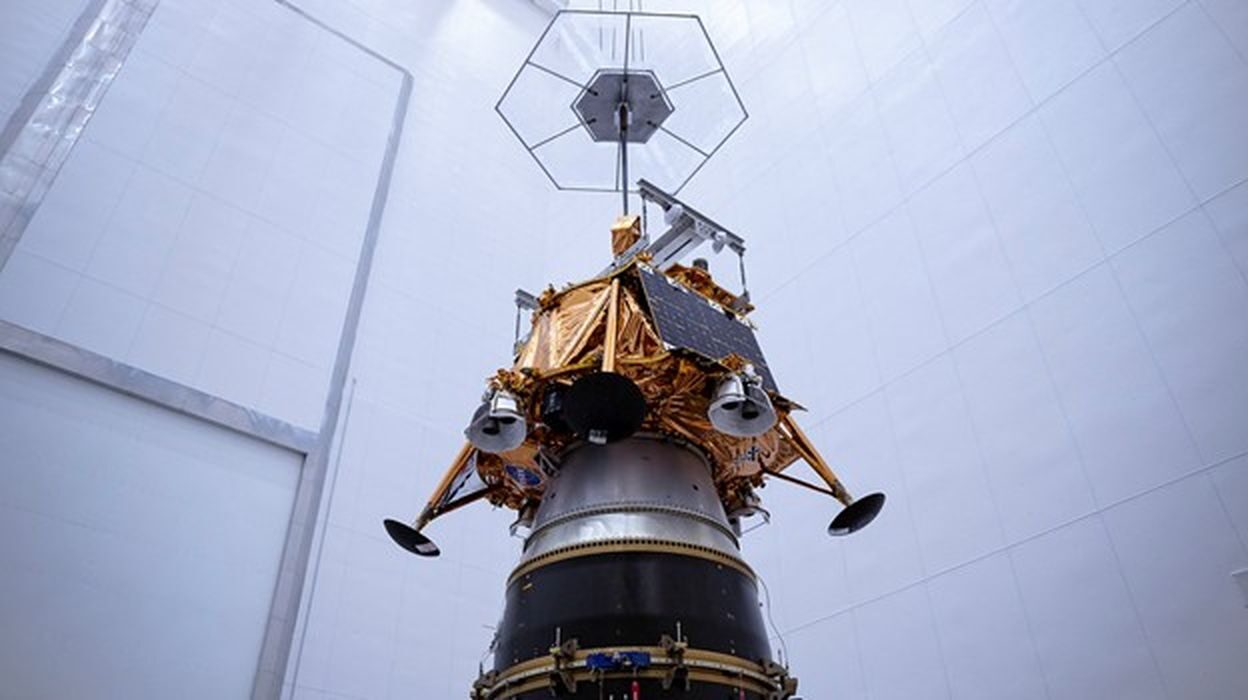
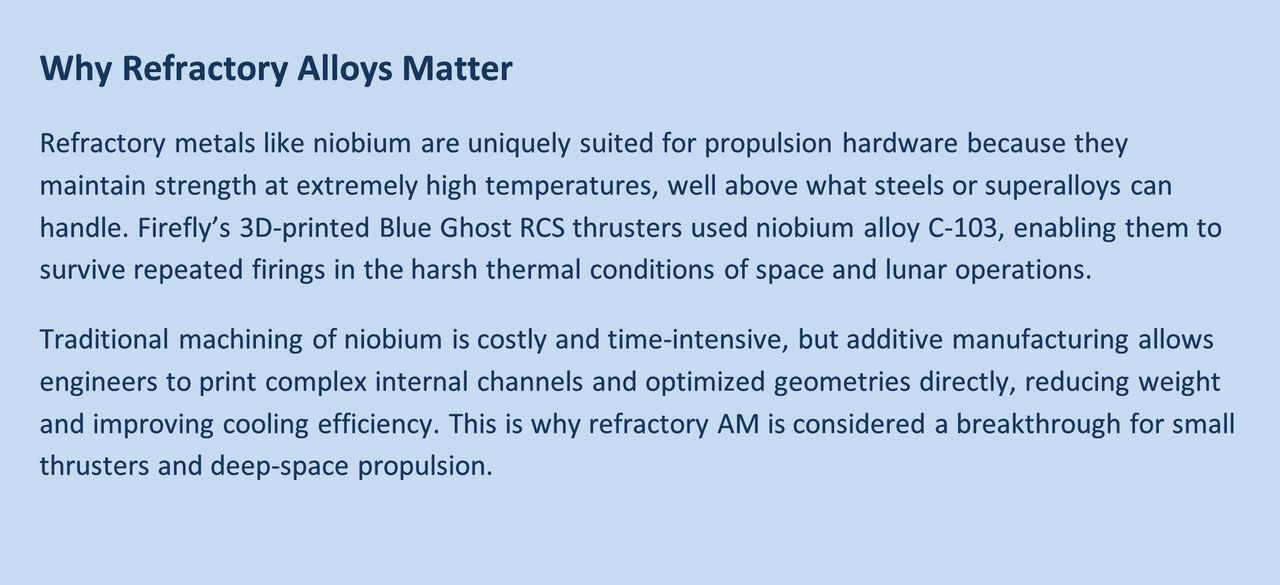
A critical element of that success came from additive manufacturing (AM). Firefly partnered with ADDMAN’s Castheon division to produce 3D printed reaction control system (RCS) thrusters for the lander. These thrusters were built from refractory niobium alloys (C-103 class), materials capable of withstanding extreme thermal stress. AM allowed Firefly to fabricate complex geometries in high-temperature alloys that would have been prohibitively difficult with conventional machining.
This achievement demonstrates how AM can enable durable propulsion hardware for deep-space environments, a milestone that would have been far slower or costlier with traditional methods.
Proving Responsiveness: VICTUS NOX
Before the Moon landing, Firefly had already proven its agility on orbit-class timelines. In 2023, under the U.S. Space Force’s VICTUS NOX mission, the company went from activation to liftoff in just 27 hours, setting a U.S. record for responsive launch. That kind of turnaround depends as much on manufacturing readiness, AM-enabled workflows, and late payload integration as on launch operations. It demonstrated how Firefly’s production approach could translate into rapid, real-world responsiveness.
Engines in Transition: From Reaver to Miranda
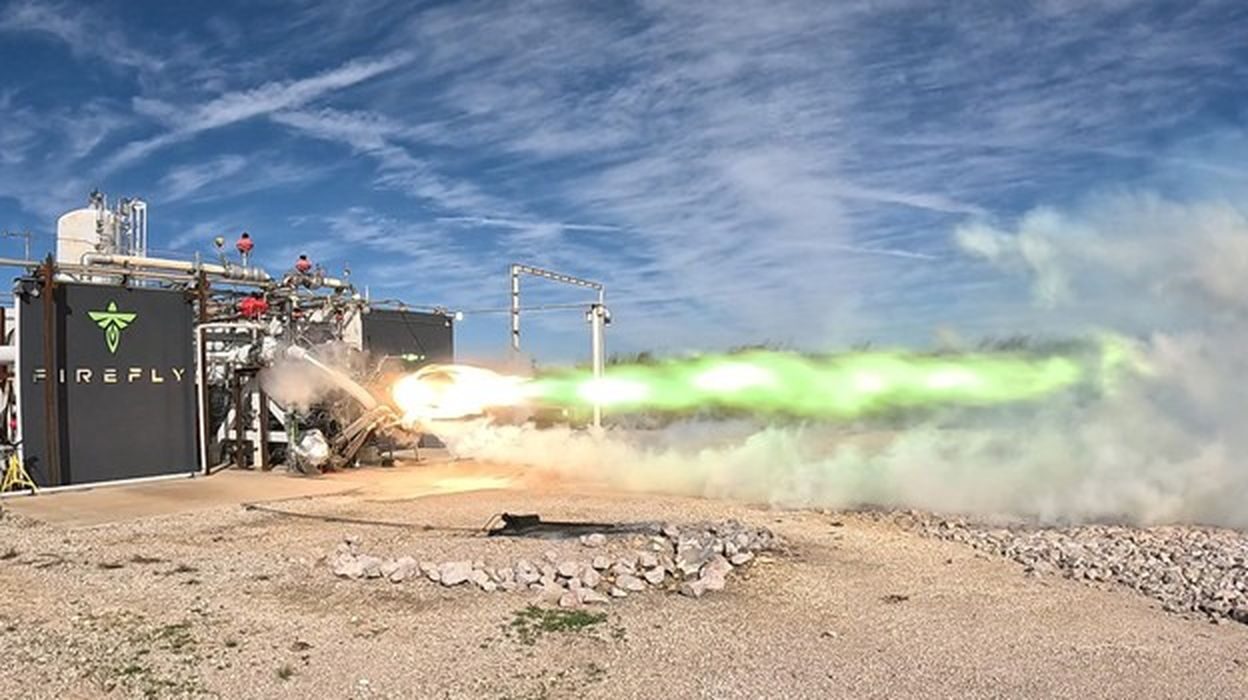
Firefly’s propulsion strategy also leans on AM. The Reaver engine, which powers the Alpha rocket, established the company’s credibility with multiple successful flights. But Firefly is now scaling to the Miranda engine for its Medium Launch Vehicle (MLV) and Northrop Grumman’s Antares 330.
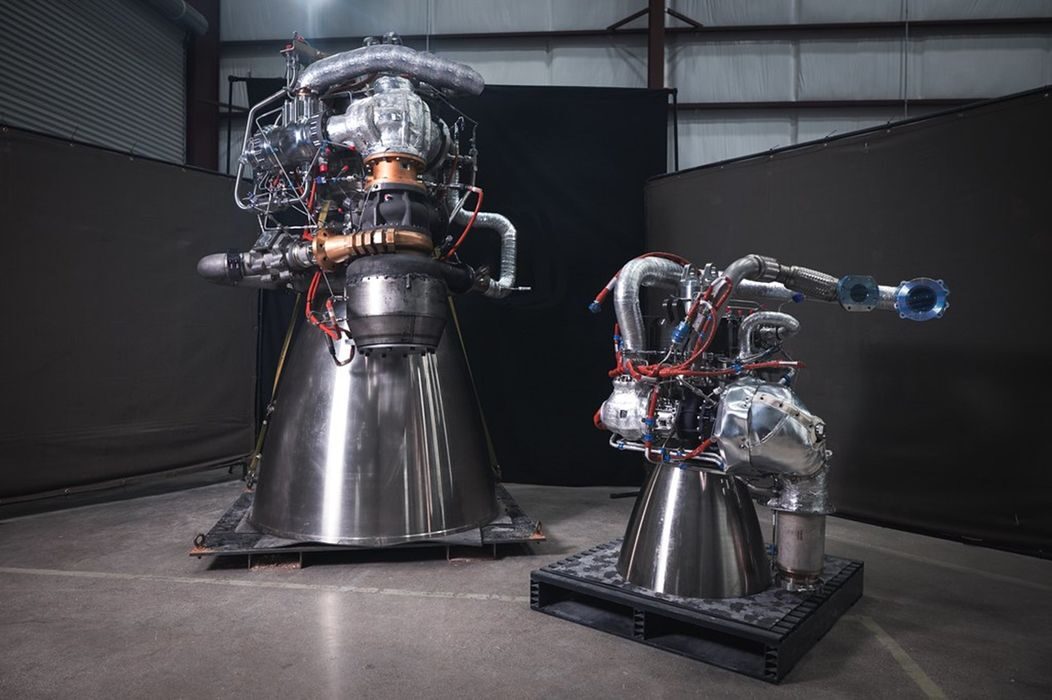
Miranda development has been marked by risk-reduction builds, hot-fire campaigns, and iterative component testing. Firefly completed its first hot-fire of the Miranda engine in November 2023, marking a critical propulsion milestone for both Antares 330 and its medium-lift MLV. Notably, Firefly partnered with Aerojet Rocketdyne as far back as 2019 to incorporate additive manufacturing expertise into Reaver’s development.
In addition to AM itself, Firefly employs Abrasive Flow Machining (AFM) from partners like Extrude Hone to polish internal passages of printed parts. This combination improves flow efficiency, fatigue life, and repeatability, a finishing step that is now standard in aerospace for manifolds, injector elements, and turbomachinery passages.
Across the industry, copper alloys like GRCop-42/84 are commonly additively manufactured for combustion chambers and liners, while refractory alloys like niobium are used for thrusters. Firefly’s use of these techniques keeps them aligned with broader propulsion trends, even as it pushes toward higher thrust classes.
“3D Printing” Composite Structures at Scale
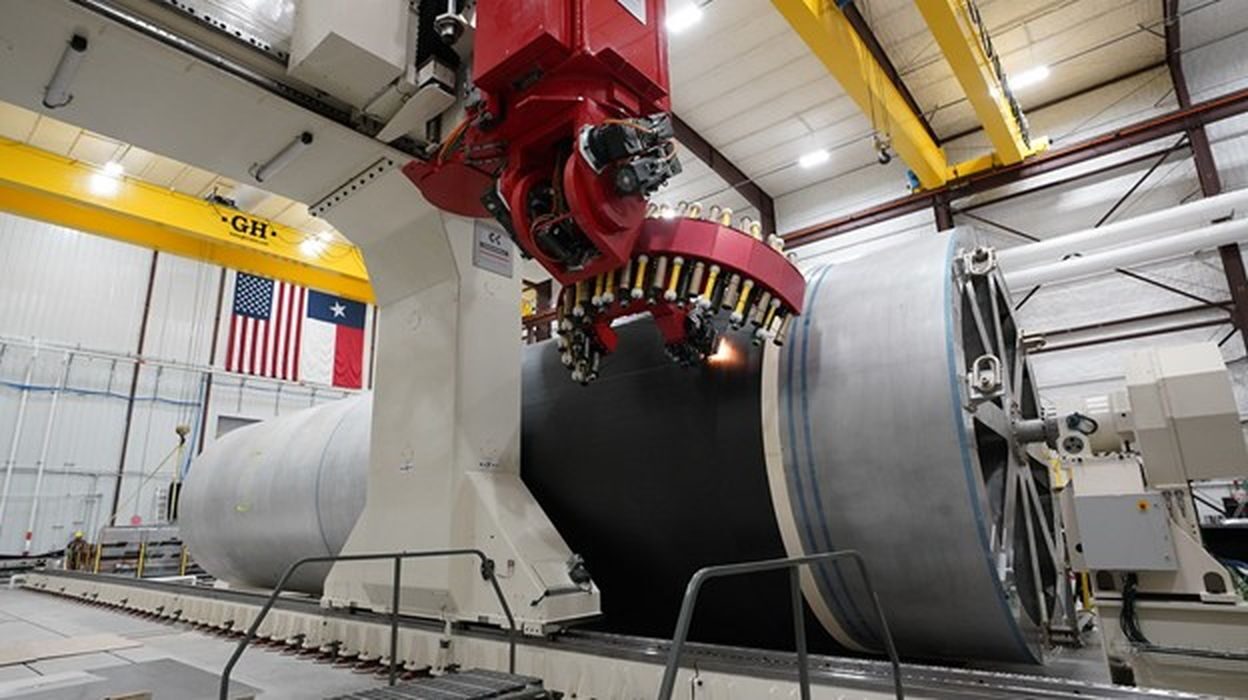
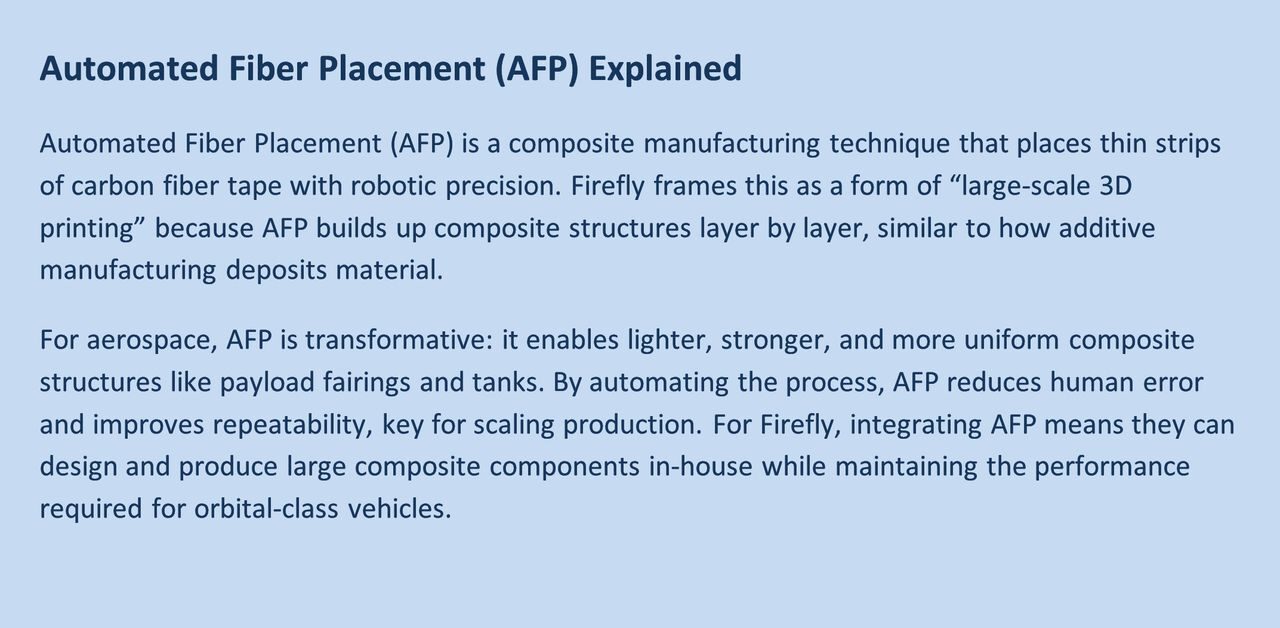
Additive isn’t limited to metals. Firefly has also pursued automated fiber placement (AFP) through a collaboration with Ingersoll Machine Tools. In Firefly’s own words, AFP “essentially allows you to 3D print composite structures” at large scale.
By early 2024, the AFP cell at Firefly’s Briggs facility had already produced the first MLV development barrel. Reported rates show AFP can lay up ~200 pounds per hour, compressing production to about 7 days for Alpha structures and ~30 days for MLV, while reducing waste and touch labor. For readers, this translates to real factory throughput, not just a lab demonstration.
Scaling Up Manufacturing
With new IPO funding, Firefly is expanding its Texas footprint. The Briggs, TX site has seen major upgrades, including engine test stands to support Miranda and other propulsion development. These expansions, coupled with increased automation and additive processes, are designed to reduce lead times and increase production cadence for both launch vehicles and lunar system.
This integration of AM with automated composites and expanded test capacity positions Firefly to compete directly with the emerging generation of medium-lift providers.
Additive Manufacturing and Firefly’s Path Forward
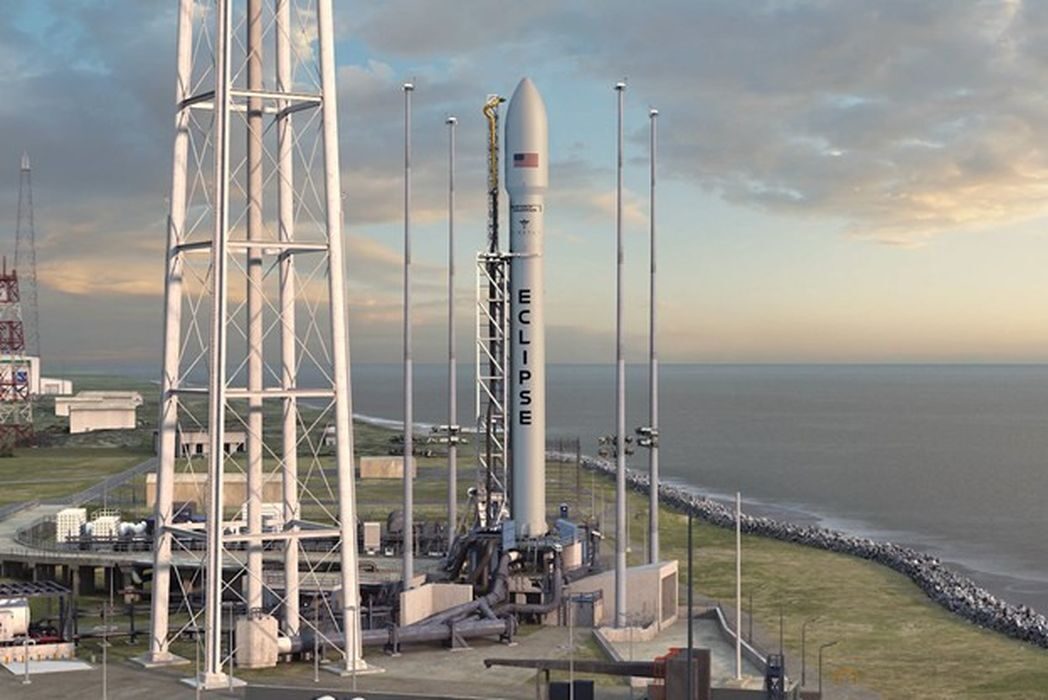
Firefly’s next phase is about proving that additive manufacturing can support cadence, scalability, and mission diversity. The Medium Launch Vehicle (MLV), officially renamed Eclipse in May 2025 after a US$50 million investment from Northrop Grumman, will be capable of carrying over 16,000 kg to LEO, with first flights planned from Wallops/MARS. With Miranda engines at its core, Eclipse increases the payoff of AFP and AM: larger composite structures, higher-thrust engines, and expanded test infrastructure, now underpinned by public-market capital.
Beyond launch, Firefly is positioning additive manufacturing as an enabler for cislunar logistics. The Blue Ghost program is already validated by its first successful lunar landing, but future missions will need to scale payload capacity and reliability. Here, AM offers the ability to rapidly redesign thrusters, brackets, tanks, and thermal management systems between missions, iterating faster than conventional aerospace supply chains would allow.
There is also a broader supply chain dimension. By investing in refractory alloy printing through Castheon, copper alloy development for engines, and automated composite layups for structures, Firefly is reducing dependency on legacy suppliers. This strategy mirrors moves across the aerospace sector, where additive is increasingly viewed as a way to localize production, hedge against material shortages, and build a more resilient manufacturing base.
Execution Risks
While Firefly’s trajectory is promising, several risks remain:
- AFP throughput bottlenecks: curing, trimming, and non-destructive inspection (NDI) rates may limit cycle-time reductions.
- AM repeatability: powder quality, heat-treatment control, and hot-section durability remain gating factors for long-duration Miranda runs.
- Capital deployment: post-IPO spending on AFP cells, test stands, and Eclipse staffing will be the clearest signal that funds are converting into production velocity.
For investors and engineers alike, Firefly represents a test case: can additive manufacturing shift from being a niche production method to the backbone of a vertically integrated space company? With new capital, expanding facilities, and multiple high-profile missions on the horizon, Firefly is now in a position to demonstrate whether AM can carry not just one mission, but an entire business model.
The Research & Development Tax Credit
The now permanent Research and Development (R&D) Tax Credit is available for companies developing new or improved products, processes, and/or software. 3D printing can help boost a company’s R&D Tax Credits. Wages for technical employees creating, evaluating, and revising 3D printed prototypes are typically eligible expenses toward the R&D Tax Credit. Similarly, when used as a method of improving a process, time spent integrating 3D printing hardware and software can also be an eligible R&D expense. Lastly, when used for modeling and preproduction, the costs of filaments consumed during the development process may also be recovered.
Whether it is used for creating and testing prototypes or for final production, 3D printing is a great indicator that R&D Credit-eligible activities are taking place. Companies implementing this technology at any point should consider taking advantage of R&D Tax Credits.
Conclusion
Firefly’s IPO was a market event, but its long-term story ia industrial. The company’s ability to deliver repeatable, scalable vehicles and landers will hinge on additive manufacturing, from refractory-alloy thrusters already on the moon to future composite fairings and high-thrust engines. For the aerospace community, Firefly is proving that AM is no longer experimental hardware but a foundational tool for building the next generation of space infrastructure.