
I’ve noticed an interesting difference between two of the biggest 3D model repositories.
Prusa Research’s Printables allows users to exclude AI generated models from search results, or hide them altogether. That’s understandable, given the number of makers who object to AI generated designs, particularly those that have never been successfully printed. That’s the “AI Slop” problem in 3D form.
Meanwhile, Bambu Lab seems to be heading in quite a different direction with MakerWorld. It has been steadily adding AI creation tools and working with several companies developing increasingly capable 3D model generators.
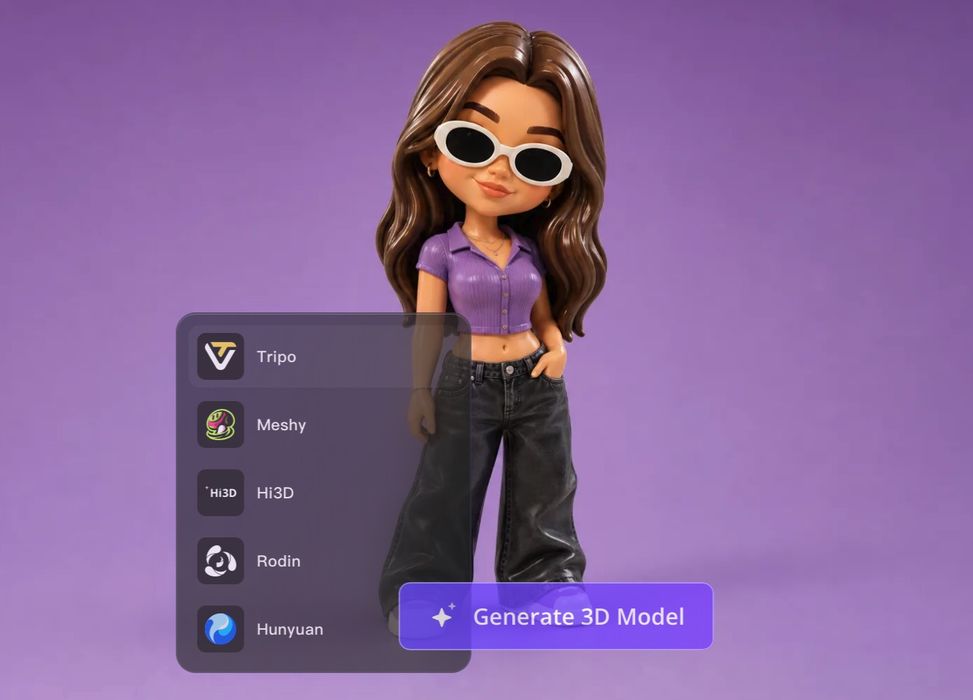
Recently Bambu Lab revealed “Aimia”, their all-in-one AI modeling environment, which appears in MakerWorld’s MakerLab.
Aimia is designed to take someone from an initial idea to a printable 3D model. A user enters a text description or supplies an image, receives a concept image that can be revised, and then generates a 3D model. The system brings together five different AI 3D model generators, including Meshy, Tripo, Hi3D, Rodin and Hunyuan, so users can compare their results.
There are also tools for splitting models, adding connectors and modifying color regions. Aimia is supposed to produce closed geometry and translate full-color textures into printable color assignments. That last step is particularly important, because of growing interest in multicolor printing and new low-waste toolchanging systems.
Aimia is not yet available to the public, since MakerWorld currently collecting names for a waitlist. Whether it can consistently create models that actually print remains to be seen, however.
But I’m more interested in the strategy behind it.
Years ago, I wondered why we needed enormous repositories containing countless variations of essentially the same objects. Search for a flowerpot, phone stand or decorative figure, and you may find dozens of designs that are almost what you want. I used to do the “vase test”, by searching for “vase” and counting the number of results. I gave up when the number exceeded six digits on several platforms. That shows how ridiculous it can be to search for a pre-made 3D model.
But what if you could simply describe the precise version you wanted and have it generated immediately?
For experienced makers, searching repositories is a normal thing to do. But the consumer market that Bambu Lab would like to capture is very different. These people would have no CAD skills, and probably no interest in learning them. They might not even want to spend twenty minutes browsing through search results, especially if looking for a vase.
They just want the object they need. And have it right now.
A mature 3D model generator could eliminate a lot of that work. Describe the item, specify the size, choose its colors, and slice the result for printing. The increasing ability to print several colors makes that process even more interesting for decorative and personalized objects that would be easily created in such a system.
There are some limitations to this approach, at least right now. An AI generated shelf bracket is probably the wrong dimensions, is not strong enough, and is not properly designed for FFF printing. I don’t see engineered or safety-critical parts being made by casual prompts anytime soon. But that is only one type of object, and there are plenty others that would work just fine.
There are also legitimate concerns about copyright, low-quality uploads and the flood of near-duplicate AI models already appearing in repositories. Printables is responding to a real problem by giving users control. That doesn’t necessarily mean Prusa is opposed to AI. But it also shows that the idea of a large repository isn’t quite as solid as it once was. When model creation is near-free, repositories will be flooded.
I suspect Bambu Lab has recognized something that will become very important in the near future: the easiest model to find may be the one that you asked for.
And if that’s where consumer 3D printing is going, repositories may increasingly become libraries of proven engineering-ready designs and possibly reusable templates, while generators handle the endless variations.
Companies that concentrate only on protecting today’s browsing experience may miss an entirely new way for customers to use their machines.
Could the future of 3D model repositories be a dead end?
Via MakerWorld and Printables