
A metal 3D printer might one day be able to correct its own mistakes. Or should it?
This is an interesting possibility because defects in metal additive manufacturing can be extraordinarily expensive. Imagine spending several days building a large metal component, only to discover during inspection that an internal flaw has rendered the entire part unusable.
There have been many attempts to detect such defects during printing, but detecting something and actually doing something about it are quite different challenges.
Researchers Yaswanth Reddy Vada and Ardhala Bala Krishna examined this problem in a review of AI-assisted process monitoring and control methods for additive manufacturing.
Their focus was primarily on Laser Powder Bed Fusion (LPBF) and directed energy deposition (DED), two processes where metal is melted using a concentrated energy source.
During these operations, a small region of molten metal, called the melt pool, moves across the material. Its behavior depends on factors including laser power, travel speed, material properties and temperature.
If conditions aren’t quite right, defects such as porosity, cracking or incomplete fusion can develop. These problems may not become apparent until the completed part undergoes inspection.
But what if the machine could recognize the conditions that produce these defects before they actually occur?
That’s the idea behind AI-assisted process control.
Data Collection and Analysis
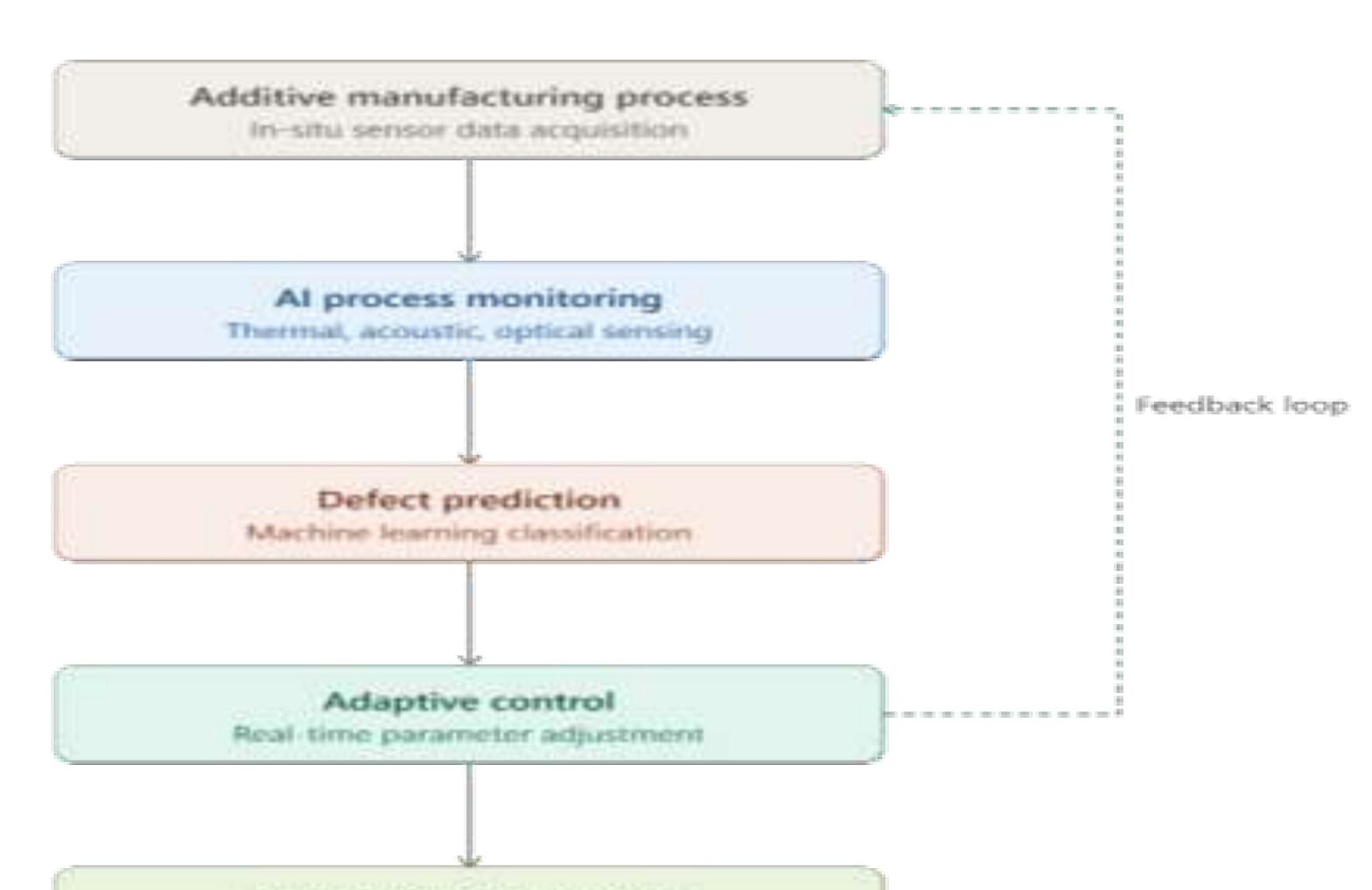
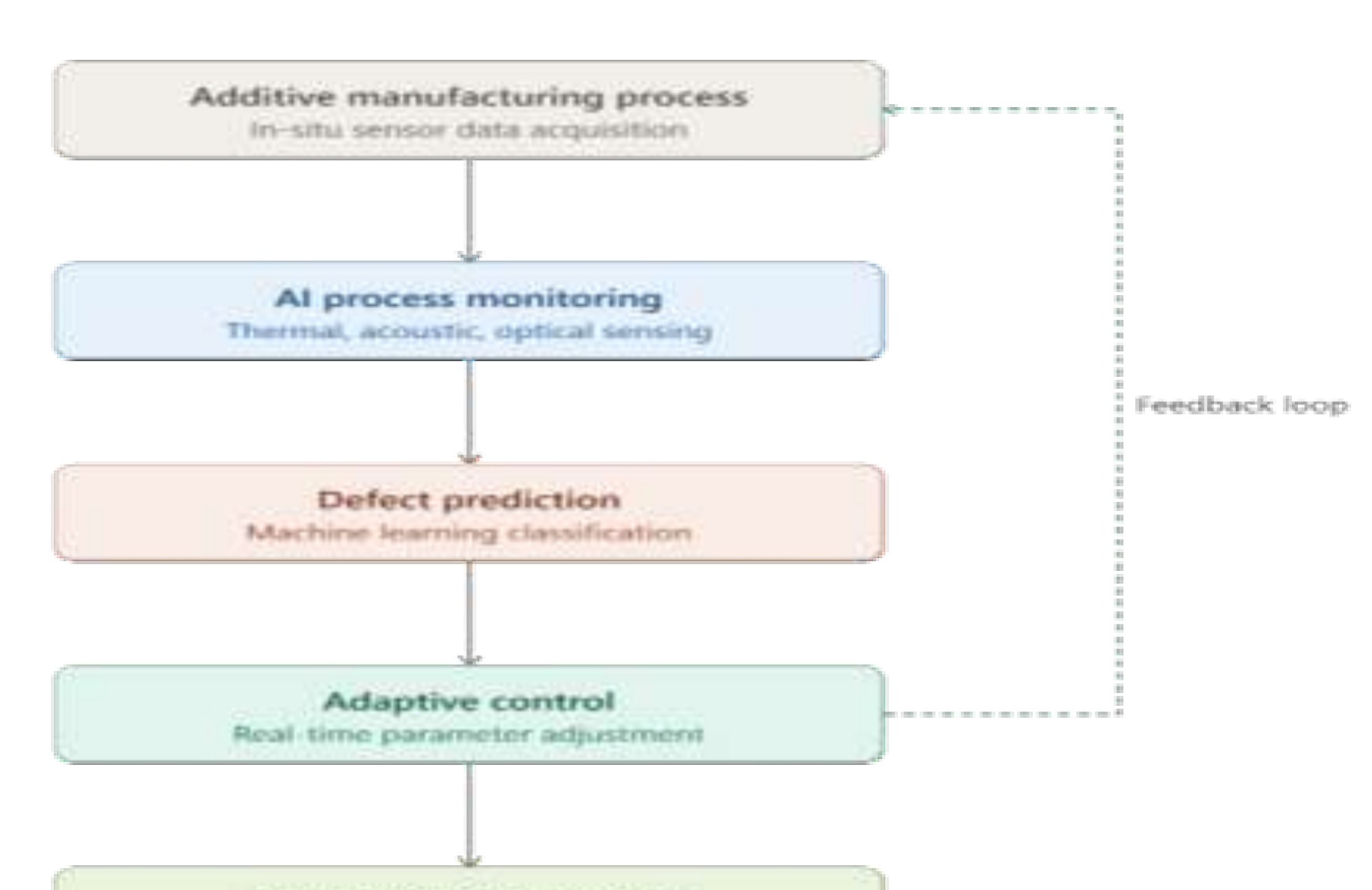
Modern metal 3D printers can collect enormous quantities of information during operation. Cameras observe the melt pool, thermal sensors measure temperatures, photodiodes detect changes in emitted light, and acoustic sensors listen for unusual activity.
The big challenge is figuring out what all these signals mean.
Machine learning systems can be trained to recognize patterns associated with defective printing conditions. For example, a neural network might identify unusual spatter or melt pool behavior from camera images.
Other systems could recognize abnormal conditions even when they haven’t previously encountered that particular defect.
The researchers describe how these capabilities might eventually become part of a closed loop control system.
Imagine the printer detecting that melt pool conditions are drifting outside an acceptable range. Instead of continuing with potentially defective printing, the control system might adjust laser power or travel speed to restore stable conditions.
The correction would occur automatically, potentially preventing a defect from developing.
That’s quite a step beyond today’s common approach of monitoring a build and examining the collected data afterward.
The Training Problem
However, there’s a problem with training these AI systems.
Most metal part manufacturers work very hard to avoid producing defective parts. That means their job histories contain plenty of successful printing data but relatively few examples of serious defects.
An AI system trained on such information might become extremely good at recognizing normal printing conditions while becoming not so good at identifying those rare failures.
The reseasrch cites F-scores exceeding 97% for certain hybrid neural network approaches. These sound impressive, but results obtained under specific experimental conditions don’t necessarily translate to other machines.
Different metal powders, optics, sensors and machine settings can produce different signals. A model that works well on one printer might perform poorly on another.
The researchers also discuss combining AI with physical models of the printing process. This might help systems interpret unfamiliar conditions without requiring enormous collections of labeled defect data.
Then there’s another concern: should we actually allow a 3D printer to change its own process parameters? On the fly?
In industries producing safety critical components, printing parameters are often carefully qualified. An automated adjustment might prevent one defect while inadvertently introducing another.
Manufacturers would need a heck of a lot of evidence before trusting such a system with expensive production builds.
There’s also a sustainability angle here. Preventing failed builds would certainly save metal powder, machine time and energy. However, AI systems themselves consume computational resources, so the net environmental benefit would have to be measured.
I suspect the most valuable thing in developing these systems could turn out to be the process data itself. A manufacturer with many years of carefully recorded and labeled builds could have an enormous advantage when training reliable control systems.
And that could make historical printing data considerably more valuable than many of today’s manufacturers realize. Don’t delete those job histories!