
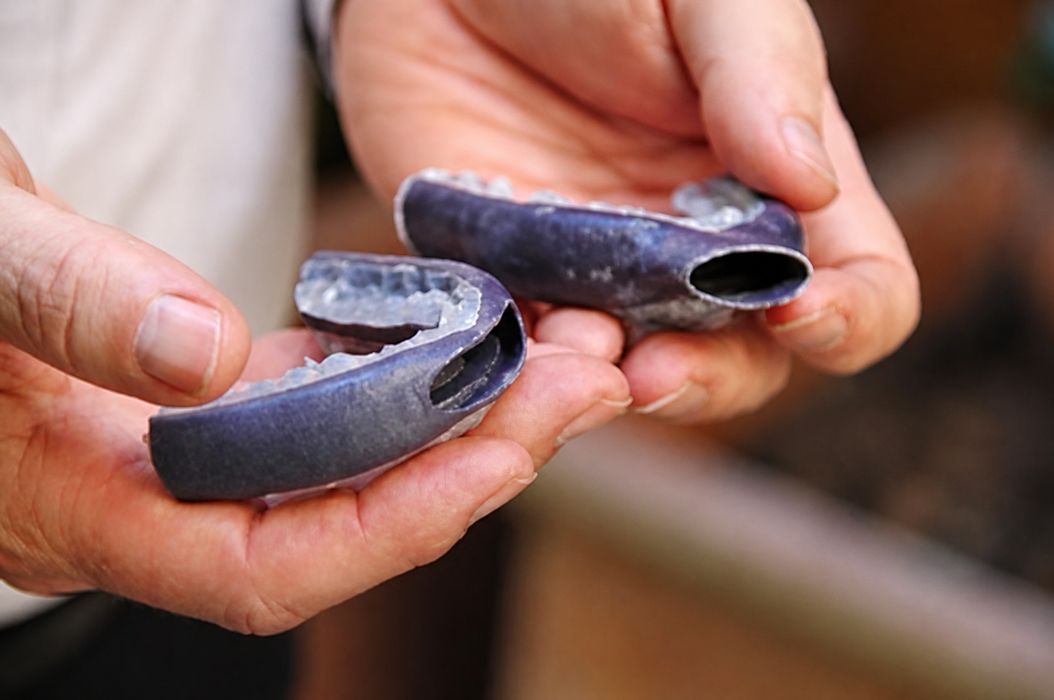
This week’s selection is the Sleep Apnea Mouthguard by OVENTUS and CSIRO.
OVENTUS is an Australian dental service, and CSIRO is an Australian government agency that coordinates scientific research and subsequent applications.
This is certainly that scenario.
Sleep apnea is a very common disorder that affects something near a billion people worldwide. The main effect is an unscheduled interruption in breathing while sleeping. The condition can easily lead to other complications that are far more disruptive and, in some cases, fatal. Strangely, many of those who suffer from the disorder don’t even know it — because they are asleep when it happens.
There are a number of treatments to alleviate the condition, but the most common seems to be the use of a CPAP device, which provides pressurized air to the patient while sleeping.
Unfortunately, a CPAP device is expensive, and not everyone can afford one.
That’s where this design comes in. It’s a specialized mouthguard that is worn while sleeping. The internal geometry of the mouthguard ensures the air flows properly — without a CPAP device.
CSIRO explains:
“The world-first device has a ‘duckbill’ which extends from the mouth like a whistle and divides into two separate airways. It allows air to flow through to the back of the throat, avoiding obstructions from the nose, the back of the mouth, and tongue.
The device is effective as a standalone technology or can be combined with a continuous positive airway pressure machine for more advanced treatment.”
CSIRO partnered with OVENTUS to produce the mouthguard, which is called the “OVENTUS O2 Vent”. CSIRO reports that the 3D-printed mouthguard reduces sleep apnea symptoms by 50-90 percent, which is significant.
OVENTUS produces the mouthguard by first 3D scanning the patient’s mouth. Software then generates a 3D model of the mouthguard, which is then 3D printed in titanium. It’s then coated with a medical-grade plastic to make it ready for patient use.
This simple apparatus shows how 3D printing can solve a widespread problem.
Via CSIRO
