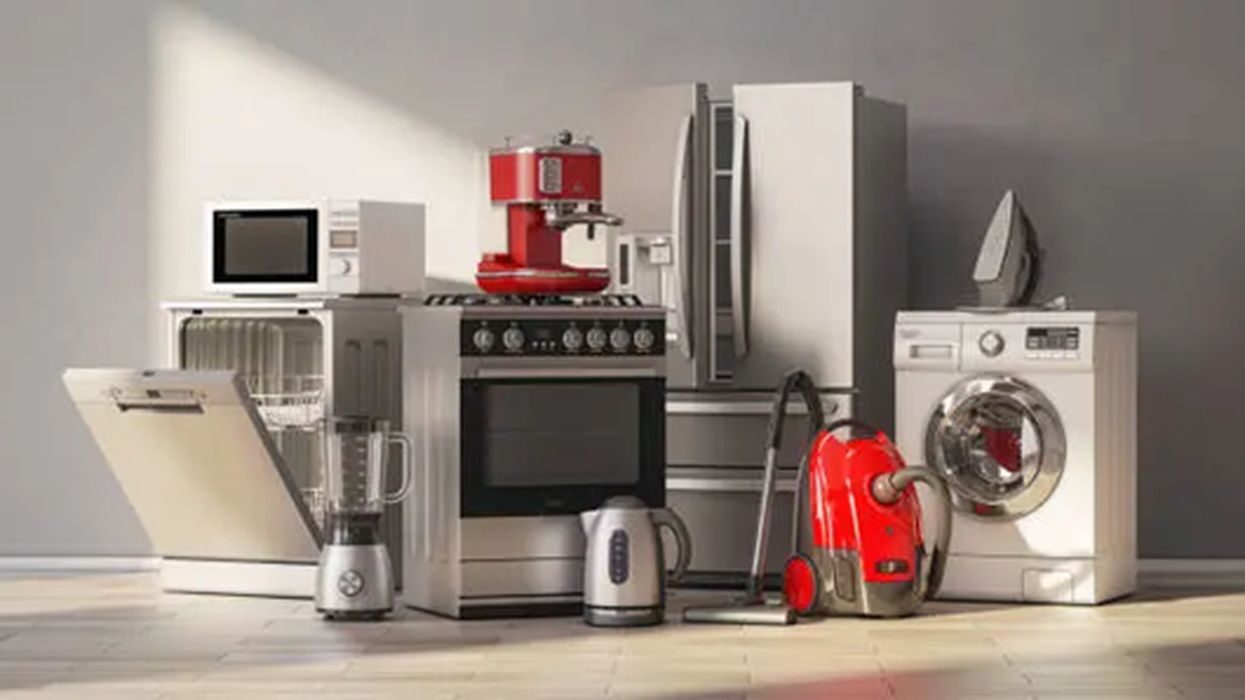
In this article, Charles Goulding and Anthony Palumbo examine the Trump administration’s 2025 steel tariffs on imported appliance components, their effect on manufacturers and retailers, and how housing market trends are reshaping appliance demand, all while emphasizing additive manufacturing as a key to domestic supply resilience.
Introduction: A 50% Tariff Shake-Up
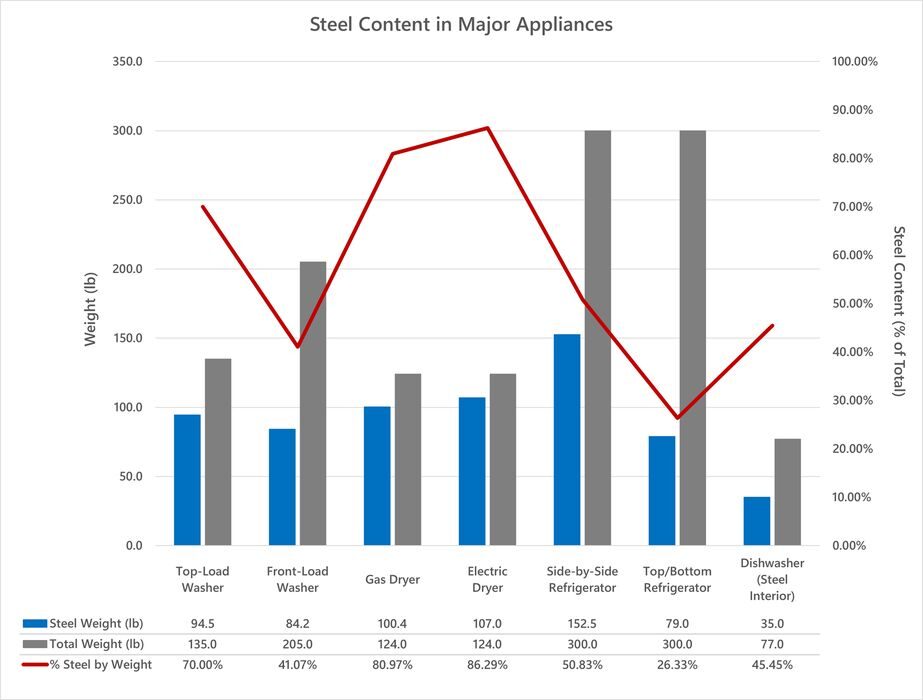
On June 4, 2025, President Donald J. Trump announced an increase in Section 232 tariffs, doubling duties from 25% to 50% on steel and aluminum imports, including the metal content of household appliances such as washers, dryers, refrigerators, and dishwashers. These expanded tariffs are applied specifically to the steel and aluminum portions of finished goods, not their full retail price.
The administration justified the move as essential to address ongoing unfair trade practices, global overcapacity, and to revitalize the U.S. steel and aluminum industries. The White House cited a decline in domestic metal production and emphasized that additional duties are intended to “more effectively counter surging imports” and secure long-term national economic security. This builds upon prior actions under Section 232, including duties targeting copper, semiconductors, and lumber.
Manufacturers Under Pressure: Whirlpool, GE Appliances, and Electrolux
Whirlpool: Positioned to Benefit
- Tariff Tailwind
In June 2025, CEO Marc Bitzer indicated the expanded tariffs could add approximately US$50–US$70 per imported unit on the steel portion, potentially boosting demand toward Whirlpool’s U.S.-built appliances as competitors’ prices rise.
- Domestic Strength
Whirlpool manufactures over 80% of is U.S.-sold appliances domestically, sources 96% of its steel from U.S. mills, and operates 10 North American plants, positioning it as a clear beneficiary under the new tariff regime.
- Financial Resiliance
Despite a 19.4% year-over-year sales decline in Q1 2025, Whirlpool achieved a 160-basis-point margin improvement and reaffirmed its annual guidance of US$15.8 billion in revenue and US$10 earnings per share, citing strategic pricing actions and cost controls tactics to counteract tariff pressures.
GE Appliances / Haier: Leaning on U.S. Production and Selective Pricing
- Major U.S. Investments
GE Applianceshas invested US$3.5 billion into its U.S. manufacturing since 2016 and maintains 11 U.S. manufacturing plants and micro-factories, bolstering its domestic footprint and insulating operations from tariff exposure.
- Georgia Expansion
In June 2025, GE Appliances completed a US$180 million expansion at its Lafayette, GA facility, adding capacity for ranges and automated lines to further reduce reliance on imports
- Tariff Protection Strategy
Approximately 5% of GE Appliances’ U.S-sold units are imported from China. The company stated that tariffs will be handled with product-specific pricing adjustments, rather than across-the-board increases.
Electrolux: Strategic Price Adjustments in North America
- North American Outlook Cut
On April 29, 2025, Electrolux downgraded its North America outlook from “Neutral” to “Neutral to Negative”, citing rising uncertainty tied to U.S. trade policies.
- Offsetting Tarrif Costs
CEO Yannick Fierling confirmed Electrolux has implemented targeted price increases in North America to offset raw-material and tariff-driven cost pressures, while also pursuing cost efficiencies in production.
- Global Sourcing Balance
Electrolux supports the U.S. market through both domestic production, such as its major refrigerator plant in South Carolina, and operations in Mexico. However, around 20% of the components used in its North American appliances are still sourced from Asia, leaving the company partially vulnerable to import-related tariffs.
Retailers React: Home Depot and Lowe’s Navigate the Impact
Home Depot and Lowe’s, America’s two leading home improvement retailers, are central to the U.S. appliance market and are actively responding to recent metal-content tariffs. Here’s how each is adapting, based on verified statements and reliable reporting:
Home Depot: Fortified by Supply Chain Agility
- No Passing Tariff Costs to Customers
During Q1 2025 earnings, EVP Billy Bastek confirmed that Home Depot will not implement broad-based price hikes in response to the 50% steel-content tariffs. He emphasized that over 50% of its inventory is sourced domestically, and the company has diversified its global supply chain so that no single country outside the U.S. will represent more than 10% of purchase volume within a year.
- Portfolio-Based Pricing Tactic
Analysts highlighted Home Depot’s measured approach, maintaining stable overall pricing across its product mix, even if selective items shift. This “portfolio approach” positions the retailer well to manage cost pressures and possibly capture market share from less agile competitors.
Lowe’s: Guarding Market Shares with Flexible Pricing
- Protecting Market Share
In the Q1 2025 earnings call, CEO Marvin Ellison emphasized that Lowe’s will not “donate share” by prematurely passing tariff costs to consumers. He made clear that maintaining competitive pricing is a top priority.
- Selective Price Adjustments
CFO Brandon Sink noted that any price increases due to tariffs would be targeted and timed, likely in the second half of 2025, as existing inventory (bought before the tariff hikes) is sold.
- Diversified Sourcing Approach
Lowe’s sources approximately 60% of its goods from U.S. suppliers and 20% from China, with the remainder from other countries. Leadership emphasized ongoing efforts to further diversify supply chains to reduce future tariff exposure.
Housing Market Trends and Appliance Demands
The ongoing slowdown in the U.S. housing market is compounding the challenges already facing appliance manufacturers and retailers as they navigate rising material costs and shifting consumer priorities.
3D Printing: A Strategic Response to Tariff Pressures
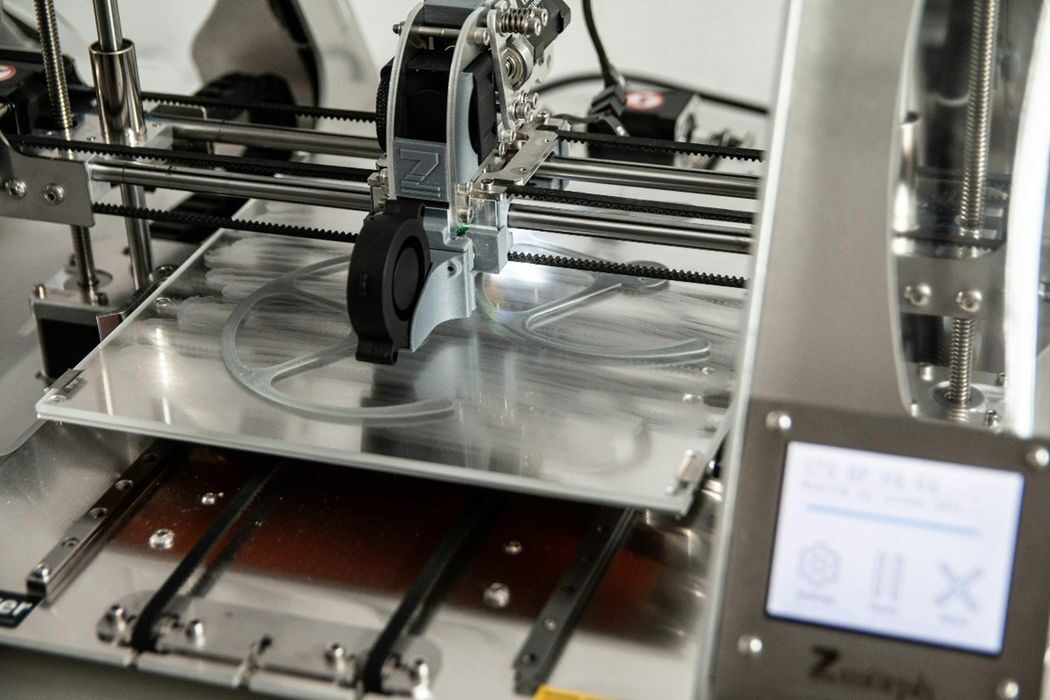
With U.S. steel-content tariffs increasing costs and disrupting global supply chains, additive manufacturing (AM) has moved from niche experimentation to a vital strategic tool. Both Whirlpool and GE Appliances/Haier now effectively leverage 3D printing to enhance agility and reduce exposure to tariff-driven disruptions, using fully verified, real-world applications documented by respected sources.
Whirlpool: On-Demand Spare Parts and Agile Prototyping
- Spare Parts 3D Program
In a pilot launched in late 2017, Whirlpool partnered with Singapore-based Spare Parts 3D to evaluate 150 components across its after-sales catalog. They reviewed 11,000 SKUs and determined that 7% were financially viable for 3D printing using MJF, FDM, and SLA technologies in materials like PA‑12, ABS, rubber-like, and PP‑like resins.
- First AM Delivery: Nylon Push-Button
The first validated AM part, a Nylon push-button, was produced using HP’s Multi Jet Fusion and delivered in early trials. This marked a fundamental shift toward on-demand spare-part production designed to reduce warehouse inventory and combat obsolescence.
- Prototyping Acceleration
Whirlpool supplements its in-service parts program with internal prototyping of brackets, pump housings, and housing shells using AM, slashing development cycle times and reducing tooling dependency by up to 80%, per internal case reviews.
GE Appliances / Haier: Rapid Innovation at Appliance Park and FirstBuild
- Appliance Park Rapid Prototyping Center
GE Appliances’ Appliance Park in Kentucky houses a 3D printing and rapid prototyping center, equipped with FDM, SLA, and PolyJet printers. Since operational, this center has reduced parts development lead times by up to 80%, enabling same-day iterations on components like grates and dispenser valves.
- FirstBuild Community Prototypes
The FirstBuild micro-factory, GE’s maker-style innovation hub, has produced over 100 consumer-validated prototypes, including the Opal Nugget Ice Maker, Smart Indoor Smoker, and pizza-oven models. Using FDM and PolyJet, FirstBuild shrank traditional R&D timelines from months or years to weeks, with the Opal project alone generating US$2.7 million through crowdfunding and early sales.
Why This Matters
| Feature | Whirlpool | GE Appliances / Haier |
| AM Applications | Spare parts, prototyping | Rapid-functional R&D in labs and community |
| Technology Used | MJF, FDM, SLA (PA12, ABS, rubber, PP resins) | FDM, SLA, PolyJet |
| Impact | Reduced inventory costs, JIT production, faster design cycles | Slashed innovation timelines, faster product cycles |
These implementations are not pilot experiments, but fully functional systems that allow both companies to:
- Reduce dependency on imported components
- Respond nimbly to design and supply chain disruptions
- Maintain margins in a high-tariff environment through local, on-demand production
The Research & Development Tax Credit
The now permanent Research and Development (R&D) Tax Credit is available for companies developing new or improved products, processes, and/or software. 3D printing can help boost a company’s R&D Tax Credits. Wages for technical employees creating, evaluating, and revising 3D printed prototypes are typically eligible expenses toward the R&D Tax Credit. Similarly, when used as a method of improving a process, time spent integrating 3D printing hardware and software can also be an eligible R&D expense. Lastly, when used for modeling and preproduction, the costs of filaments consumed during the development process may also be recovered.
Whether it is used for creating and testing prototypes or for final production, 3D printing is a great indicator that R&D Credit-eligible activities are taking place. Companies implementing this technology at any point should consider taking advantage of R&D Tax Credits.
Conclusion: Additive Manufacturing’s Preemptive Role in a Tariff-Shaped Landscape
The 2025 steel and aluminum tariff expansion has reshaped the U.S. appliance market, favoring manufacturers like Whirlpool with strong domestic production while pressuring others to adjust pricing and sourcing strategies. Retailers such as Home Depot and Lowe’s are working to shield consumers from cost increases through diversified supply chains, all as a cooling housing market threatens to dampen appliance demand even further.
In this evolving environment, additive manufacturing is proving to be more than a niche technology, it’s a strategic tool. From localized spare part production to agile prototyping, 3D printing offers companies a way to reduce import dependencies, improve lead times, and build resilient supply chains. As global trade tensions and material costs remain unpredictable, AM is becoming a key advantage for companies seeking long-term flexibility and competitiveness.