
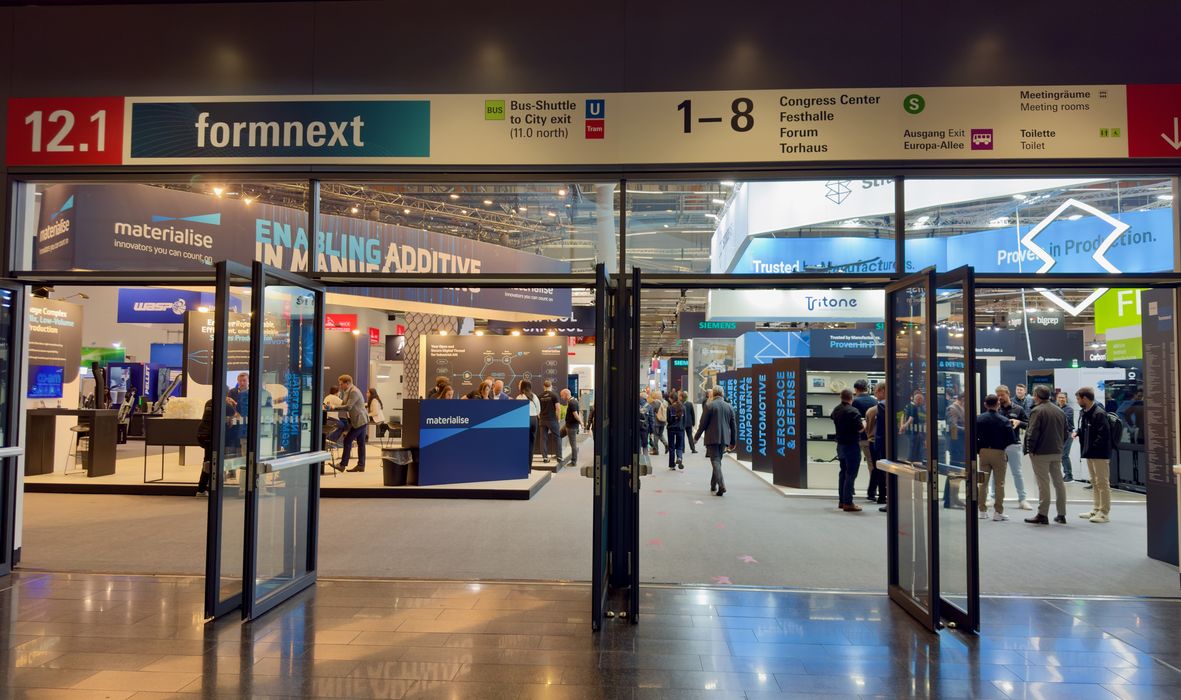
We’ve just completed our annual tour of Formnext, and it was quite an experience.
It is, of course, the world’s largest tradeshow dedicated to 3D print technology. How large is “large”? According to event organizers, actually Sascha Wenzler, Formnext VP, there were 765 companies presenting at the event. That’s very slightly down from last year, but still is much larger than other events.

We spoke with countless people and companies over the four day event, and collected material for several dozen stories. These we will write up over the next few weeks, so watch for them.
But I thought it appropriate to provide an overall impression of this huge event.
In my opinion, it was a very solid event. There were more than enough exhibitors and attendees, plenty of actual, many practical announcements, a few amusing incidents, hundreds of interesting printed samples, and several technologies that certainly set the stage for the next level of advancement of 3D printing.
Was Formnext Smaller?
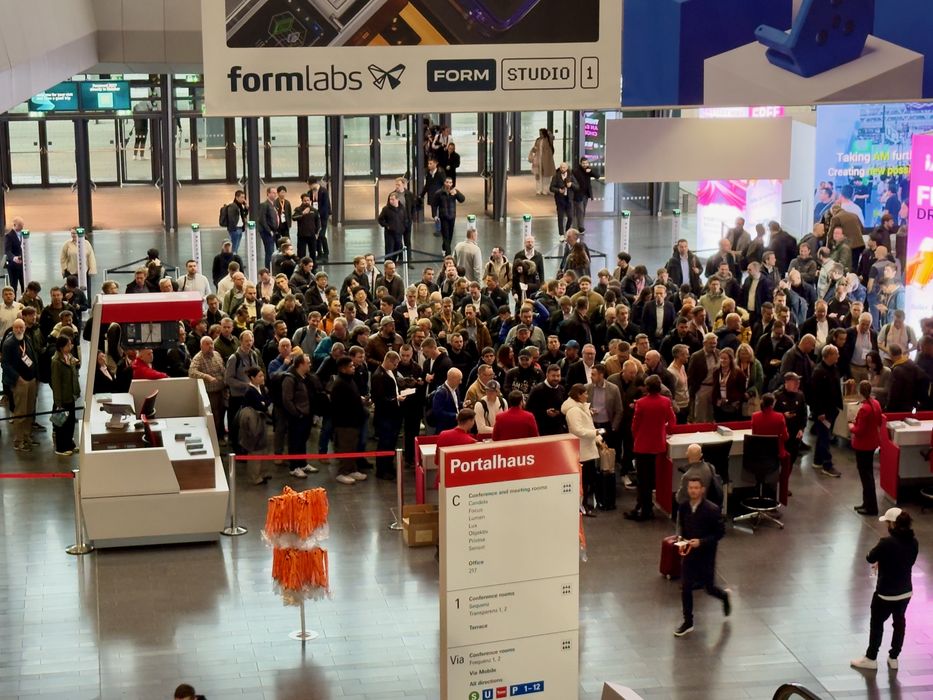
The biggest question for me was the layout of the event. In several past events Formnext occupied four massive halls at the Frankfurt Messe. But this year only three were utilized. Did this mean the event was smaller?
Certainly it was physically smaller, but it turned out very well anyway. Essentially things were just a bit denser: aisles were narrower, stands were (usually) a bit smaller, spaces were fully used. However, several companies did have truly massive stands, occupying giant chunks of the floor in spite of most stands being smaller.
It worked: it was easy to walk around, and in fact we frequently ran into other people we knew just from this increased density.
However, there were quite a few companies that had previously appeared annually, but this time were absent. They appeared to have been replaced by others, and many of those were Chinese-based.
In any case, the slight reduction in exhibitors didn’t enable us to visit all stands. We tried our best, but it’s literally impossible to see everything.
Chuck Hull Appearance
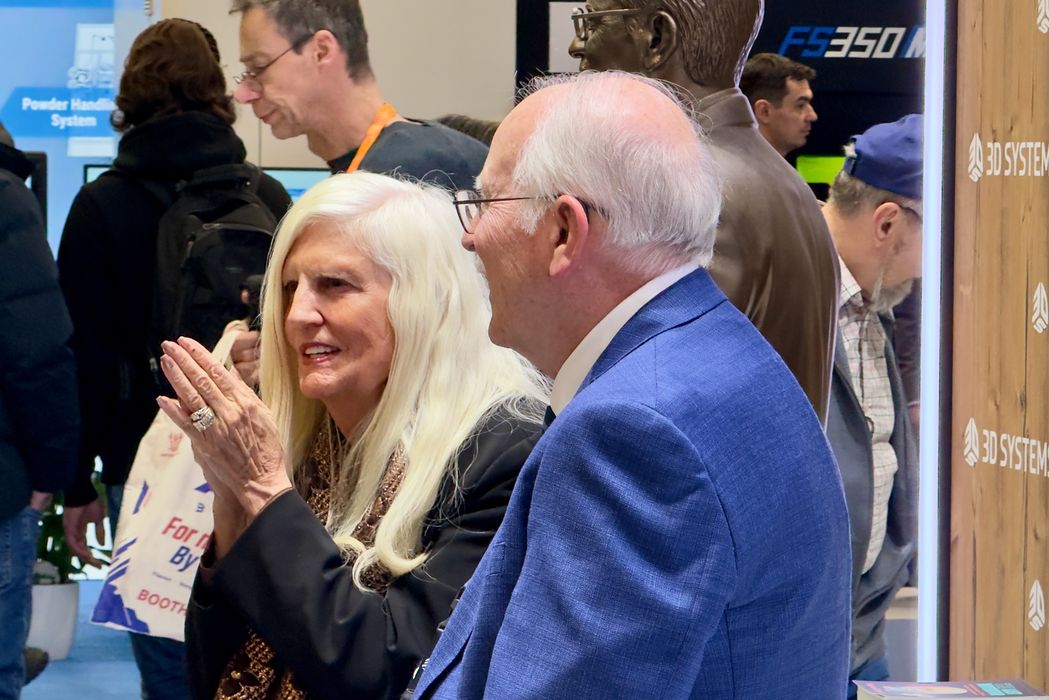
3D Systems founder, Chuck Hull, made an appearance at the event. Hull was the first person to invent and truly commercialize a 3D printing process, resulting in 3D Systems itself.
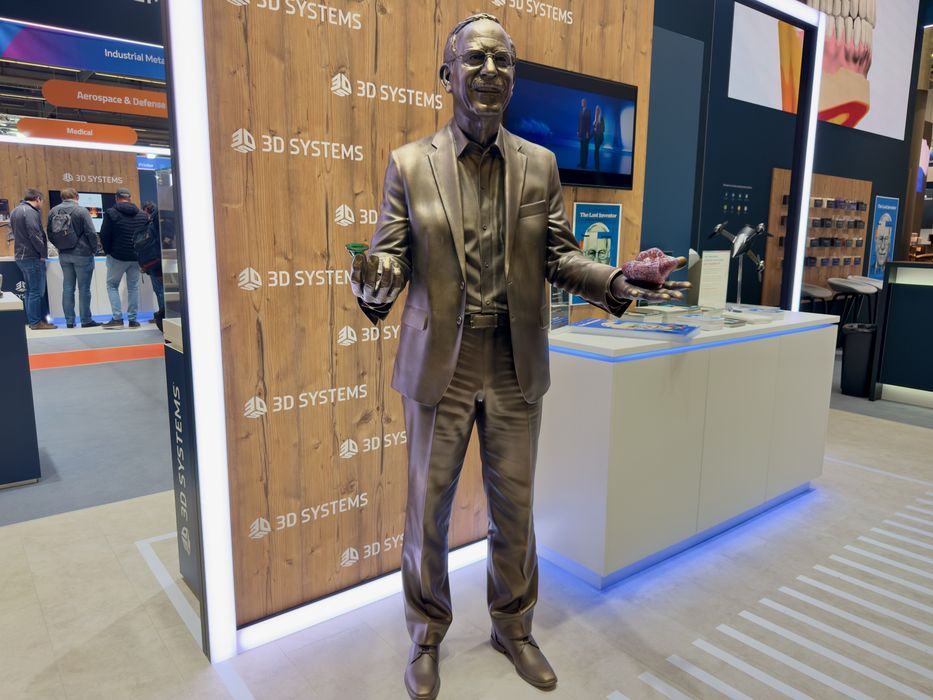
The company has produced a documentary on his career, and they even built (printed) this life size statue of him. What’s interesting is that in his right hand is a replica of the very first 3D printed object, and in the left is a modern 3D print of (I think) a medical 3D model.
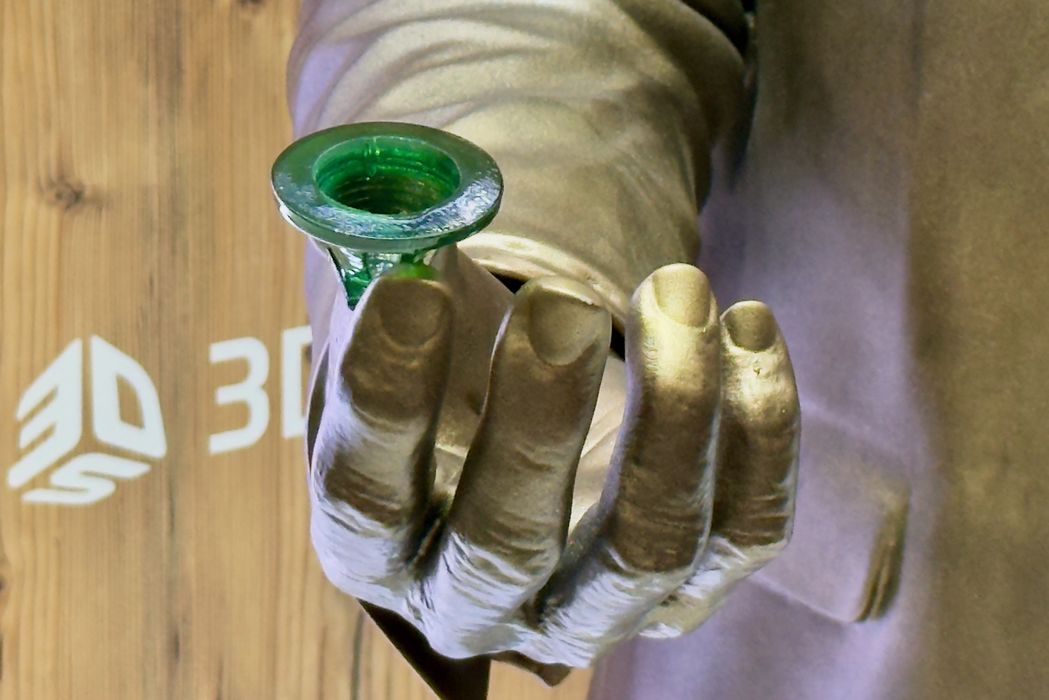
The first 3D printed object actually still exists, and is kept very securely in a special box. I’ve had the privilege of holding it once, years ago, and apparently it was somewhere at the show.
Attendee Overreach
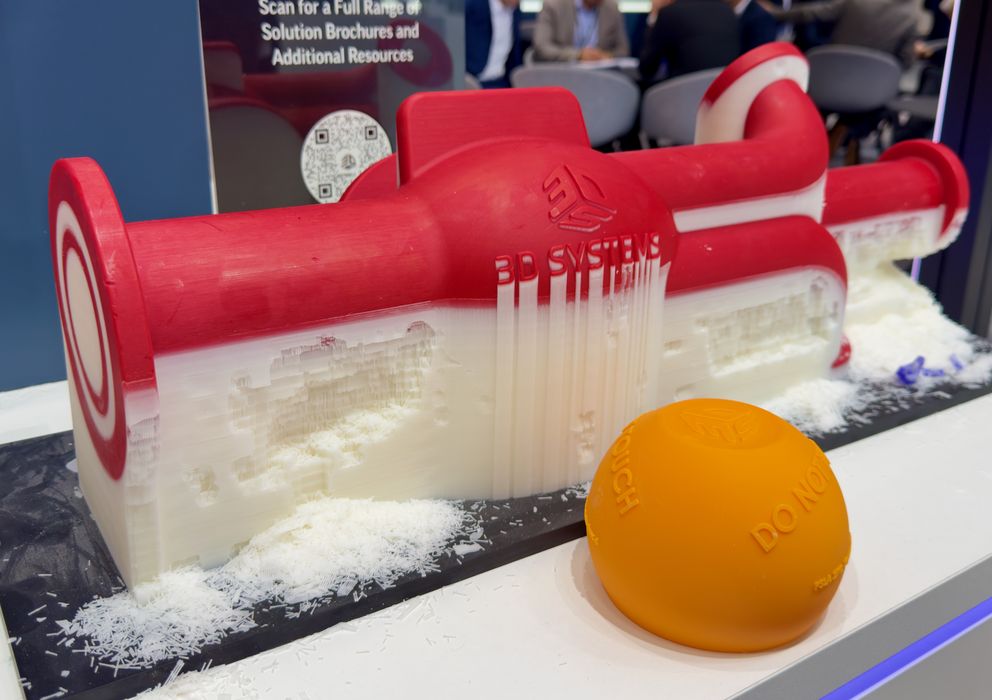
Multiple exhibitors showed their technology through the use of printed samples. As the tech is now quite advanced, many of these samples were delicate or unusual in some way. As a result I saw quite a few “Do Not Touch” signs.
They didn’t work. Multiple exhibitors complained to me that attendees were grabbing things they should not have. One vendor had their prototype 3D printer damaged by someone who handled the device.
Another exhibitor reported that their entire stock of precious metal samples had been pinched from their stand. Gone!
Attendee Quality
In spite of the pathological behaviour of some attendees, I heard several exhibitors describe the overall quality as quite high. Many attendees attended for specific business reasons, and sales were made. The event also, for the first time, simultaneously held a Defense conference, and organizers hoped these folks would dribble over and visit the exhibitors. Some did, as we saw several folks in unidentifiable military uniforms. Did they buy anything? I don’t think it works quite like that, but it’s a start.
China Wave
There’s always a number of Chinese companies at Formnext, but this year there seemed to be far more than I’d seen in the past. Most were seemingly well-funded vendors of LPBF metal 3D printers, SLS systems or production SLA systems.
And most I had never heard of. As far as I can tell, none of them had anything particularly innovative, and they all simply offered the same old stuff in a new brand. It’s a bit puzzling why they would spend so much to appear at the show, especially when they seem generally without any competitive edge.
UV, AI Enter
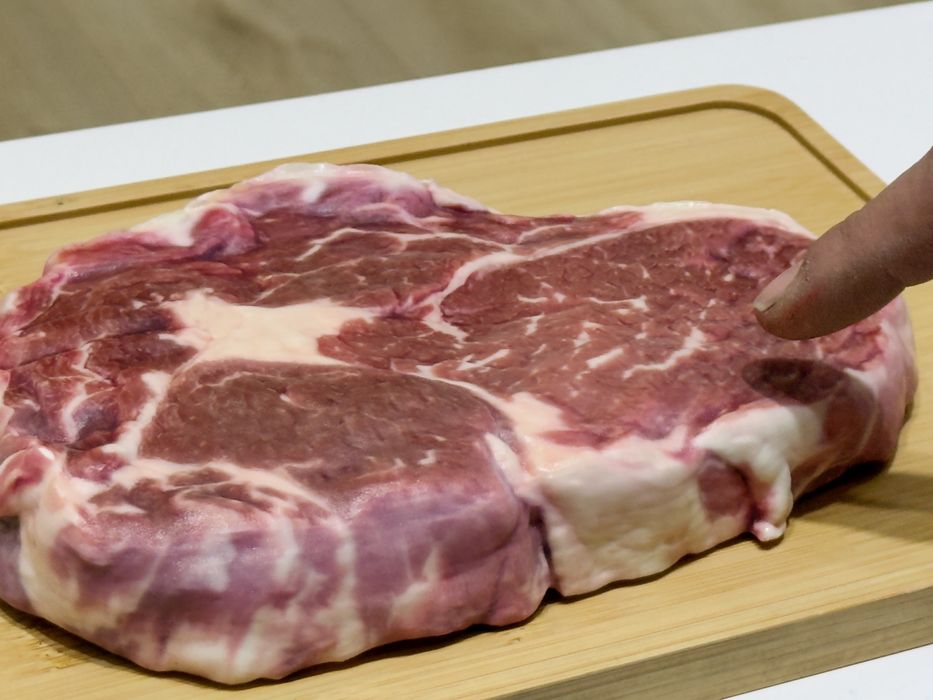
Two new categories of technology appeared en masse: UV printers and AI generation. Both of these were known before, but here we saw a wave of companies based on those technologies.
UV printers, which are able to 3D print full color textured objects, appeared at several exhibitor stands. These were priced vastly lower than the current leaders, Mimaki and Stratasys, but were of varying quality. One in particular, the HeyGears G1X, looks to replicate Stratasys’ PolyJet technology in a much more affordable package. That would enable everyone to 3D print full color, highly realistic objects like that one above. Nevertheless, the days of hobbyists painting 3D printing monocolored 3D prints seems to be numbered.
AI 3D model generation is also new. Advances in AI have enabled several companies to train their AI engines on 3D modeling. It’s now possible to automatically generate truly 3D printable objects that were created from a mere text prompt or 2D image. Several companies offer services to do this, but with twists to integrate into some 3D print workflows.
The Data Center
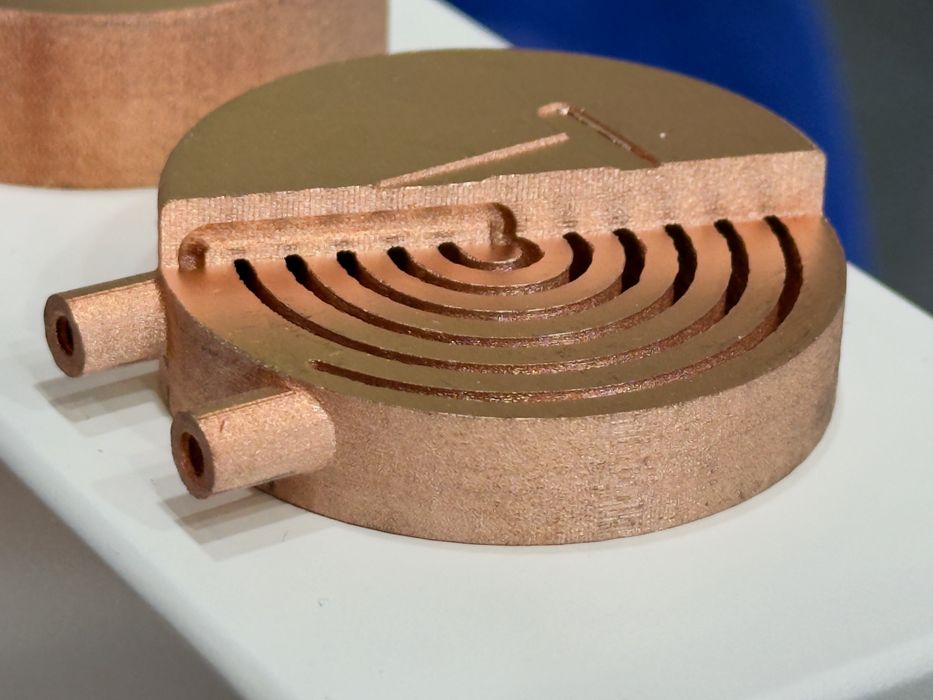
For a great many years, exhibitors would say that “Aerospace, Automotive, or Dental” are the main buyers of their systems. But this year we heard a new one: Data Centers.
There is a massive boom in data center construction, with apparently 175 being built in the US alone. These will require plenty of resources, including energy management and cooling, both of which can be helped with 3D printing. An example would be a highly efficient heat exchanger 3D printed in copper.
Strangely, while several companies were capitalizing on the data center boom, some other companies appeared entirely unaware that something was happening. They will miss out.
Aerospace is still a big market, but we’re told by some companies that automotive isn’t quite as big as it was before.
Multi Tool 3D Printers
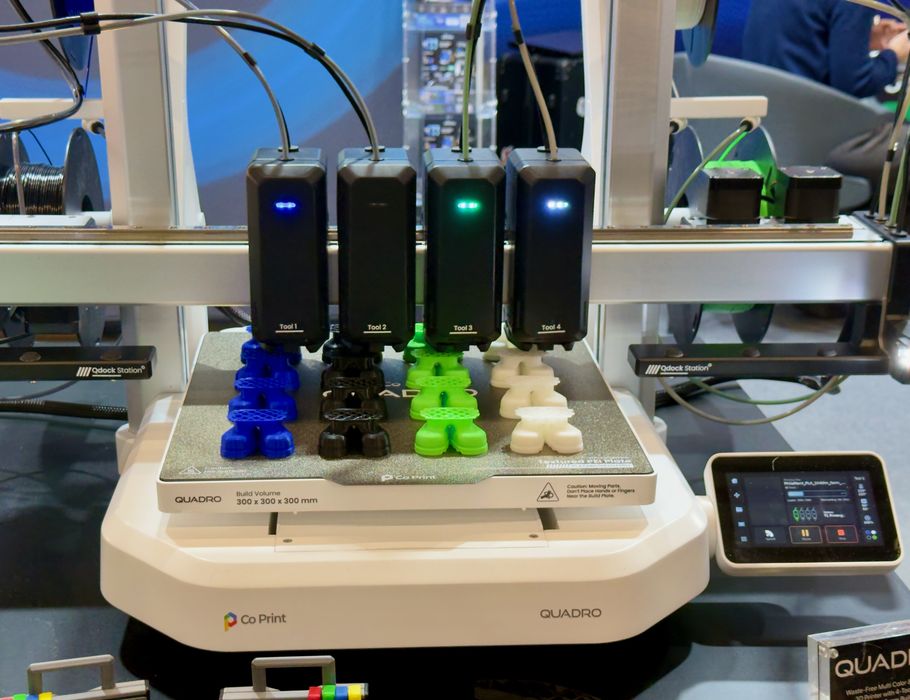
Prusa and Bambu Lab previously madę a splash with their individual tool FFF systems, which avoid wasting material during purges. That concept seems to have taken off, as we saw many similar systems offering four to eight tools within a frame. There were more than just a few of these systems, and it appears that several new Chinese companies have appeared and are using this approach as their first technology — skipping filament swapping entirely. It seems that the days of filament swapping are rapidly coming to an end. There would be no reason to buy a filament swapper when multi tool systems are available at similar prices.
An Applications Focus
Smart companies continue to focus on the customer usage of their systems, rather than making the spec sheet better. As they say, sell the application, not the system. That approach most definitely works, but this year I noticed a slight twist to that method.
A number of companies were specifically focusing on more advanced materials, as usual, but here they had very specific customer applications in mind. In fact, quite a few would work directly with customers to develop materials for their specific applications, and once done, would add them to their materials portfolio for anyone else to use, too.
Footwear Applications
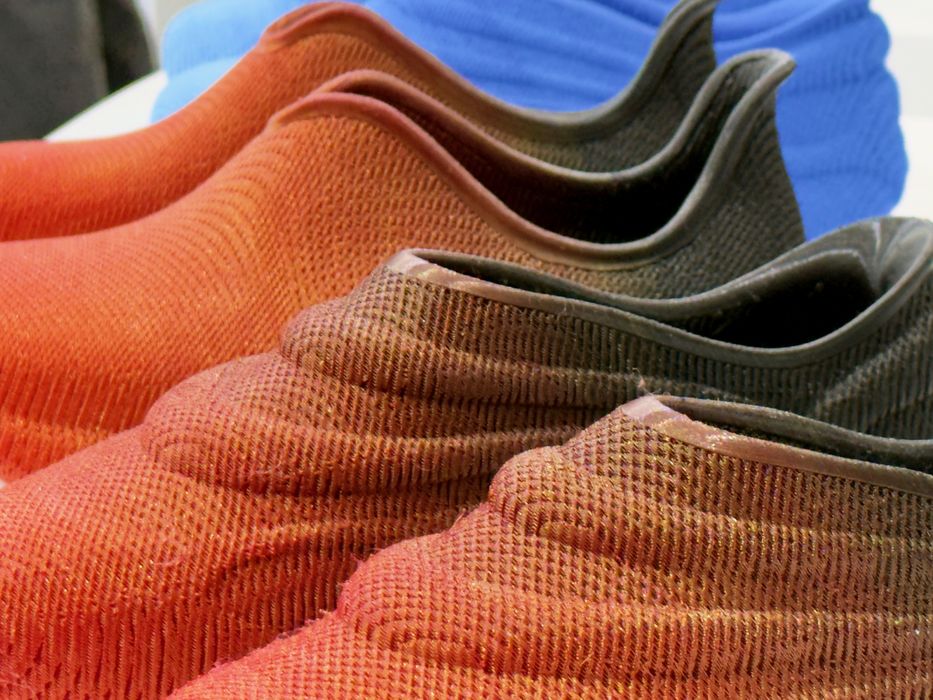
Unlike any 3D print show I’ve ever attended, this one was overflowing with footwear and related applications. It seems that new materials, combined with new multitool FFF systems, allows printing of truly wearable footwear. We saw countless examples of this, even being worn by attendees.
And it wasn’t just print demonstrations. There were multiple vendors showing off materials specifically designed for 3D printing footwear. These are typically very soft or foaming TPUs that offer flexibility and durability.
Networking
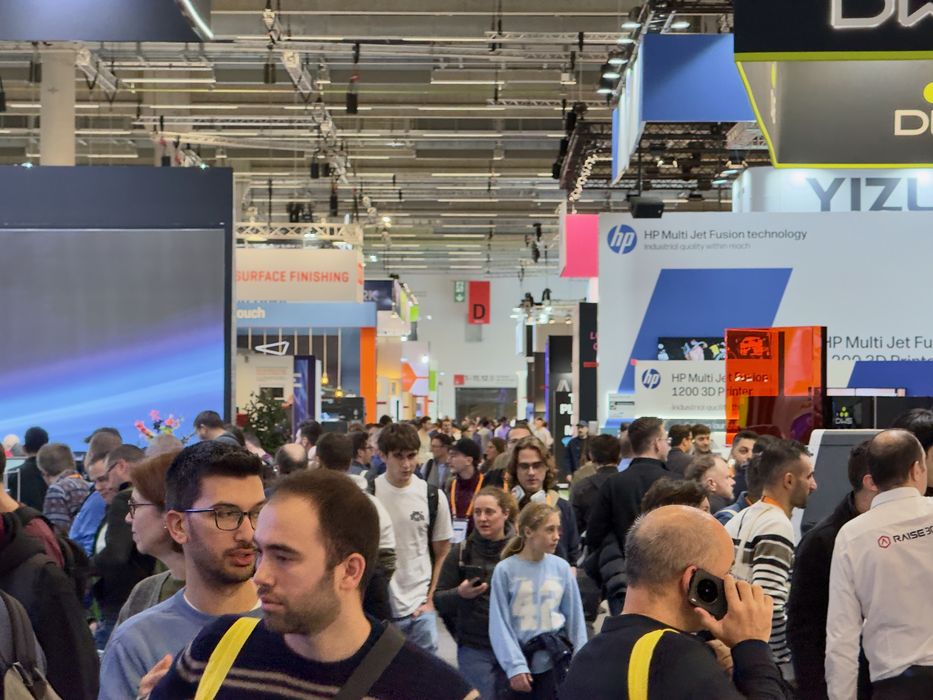
Finally, Formnext allows for a considerable amount of networking. People from around the world, including using users and providers, along with media, shared countless ideas and news in ways that cannot be done elsewhere.
That’s the most important thing that you can find at Formnext that isn’t on display.