
Charles R. Goulding and Nimra Shakoor highlight how a single soldier’s 3D printed fix at Fort Liberty turned a supply chain problem into a low-cost, high-impact solution.
Fort Liberty, the U.S. Army base formerly known as Fort Bragg, houses 52,000 soldiers and is one of the largest military bases in the world.
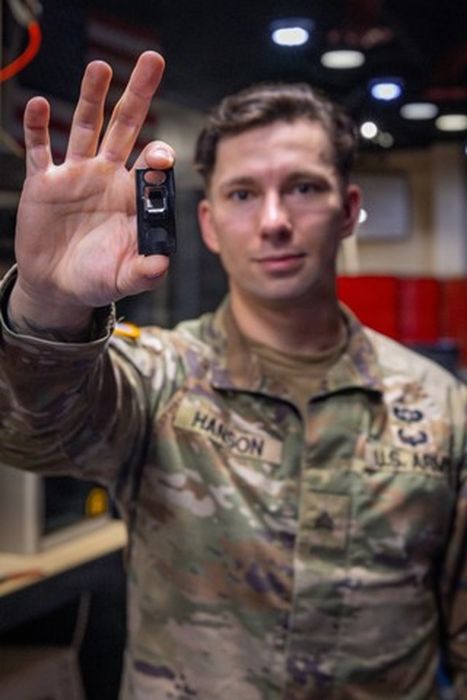
That many soldiers generate a significant amount of laundry, and one resourceful service member noticed that many washing machines were inoperable due to a defective door latch that was not replaceable because of supply chain issues. The soldier 3D-printed the latch, getting the machines back in operation.
The Army recognized the soldier’s accomplishment and publicized it. This is an important development because it highlights the value of 3D printing for support operations within Army procurement and adds to the appliance industry’s growing knowledge base. The cost savings are substantial: the commercial vendor price of the latch is $10, while the soldier’s 3D-printed solution cost approximately $0.80. Scaled across thousands of similar maintenance issues, small fixes like this could translate into significant cost savings and improved equipment uptime. The Navy can also benefit from similar process improvements, particularly given the extended deployments currently taking place.
The appliance industry has increasingly adopted 3D printing as a strategy for inventory management, and the soldier’s ingenuity contributes another practical, field-tested component to the industry’s toolkit. It also highlights how 3D printing can reduce downtime, lower costs, and bypass supply chain constraints by enabling parts to be produced on demand at the point of use.
We have covered appliance 3D printing applications in multiple Fabbaloo articles, including examples from Whirlpool Corporation, GE Haier, and Midea Group.
The Research & Development Tax Credit
The now-permanent Research & Development Tax Credit (R&D) is available for companies developing new or improved products, processes, and/or software.
3D printing can help boost a company’s R&D Tax Credits. Wages for technical employees who create, test, and revise 3D printed prototypes can be included as a percentage of eligible time spent for the R&D Tax Credit. Similarly, when used as a method of improving a process, time spent integrating 3D printing hardware and software counts as an eligible activity. Lastly, when used for modeling and preproduction, the costs of filaments consumed during the development process may also be recovered.
Whether it is used for creating and testing prototypes or for final production, 3D printing is a strong indicator that R&D-eligible activities are taking place. Companies implementing this technology at any point should consider claiming R&D tax Credits.
Conclusion
The soldier’s ingenuity demonstrates that a single individual with 3D printing expertise can drive meaningful, real-world impact. As all branches of the armed forces continue to expand their use of 3D printing, this example underscores how much potential still remains to be realized.