Charles R. Goulding and Preeti Sulibhavi show how GE Appliances’ sweeping new supply chain investments and growing use of 3D printing are reshaping U.S. manufacturing from the ground up.
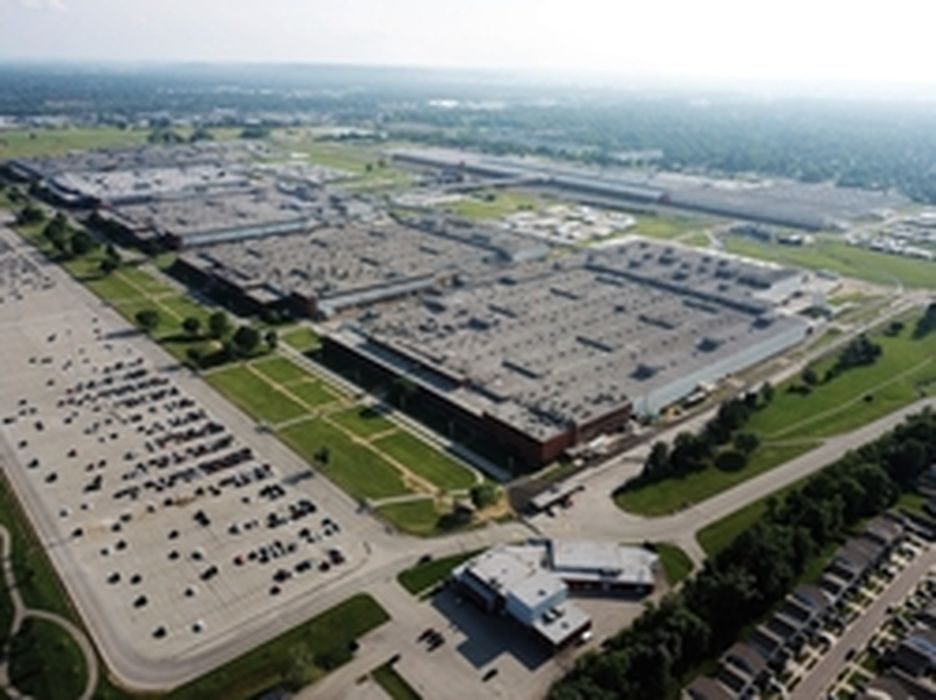
GE Appliances made headlines on November 20, 2025, with a detailed press release that spelled out some of the largest U.S.-based sourcing commitments the company has announced in years. The company confirmed that it has secured US$150 million in new supply chain purchase contracts spread across ten states. GE Appliances expects these awards to generate more than 1,000 high-paying jobs across the country. These moves support its broader US$490-million investment in Appliance Park in Louisville, Kentucky. That expansion is one part of a five-year, US$3 billion national investment plan that touches nearly every corner of its operations.
The scale of the announcement shows how seriously GE Appliances is reworking its production ecosystem inside the United States. The company has been vocal about the need for stronger domestic supplier relationships, faster design cycles, and shorter logistical pathways. This is not just about immediate output. It is also about creating a foundation that allows each new appliance generation to launch with more precision, more reliability, and fewer delays.
Strengthening Partnerships with Key Suppliers
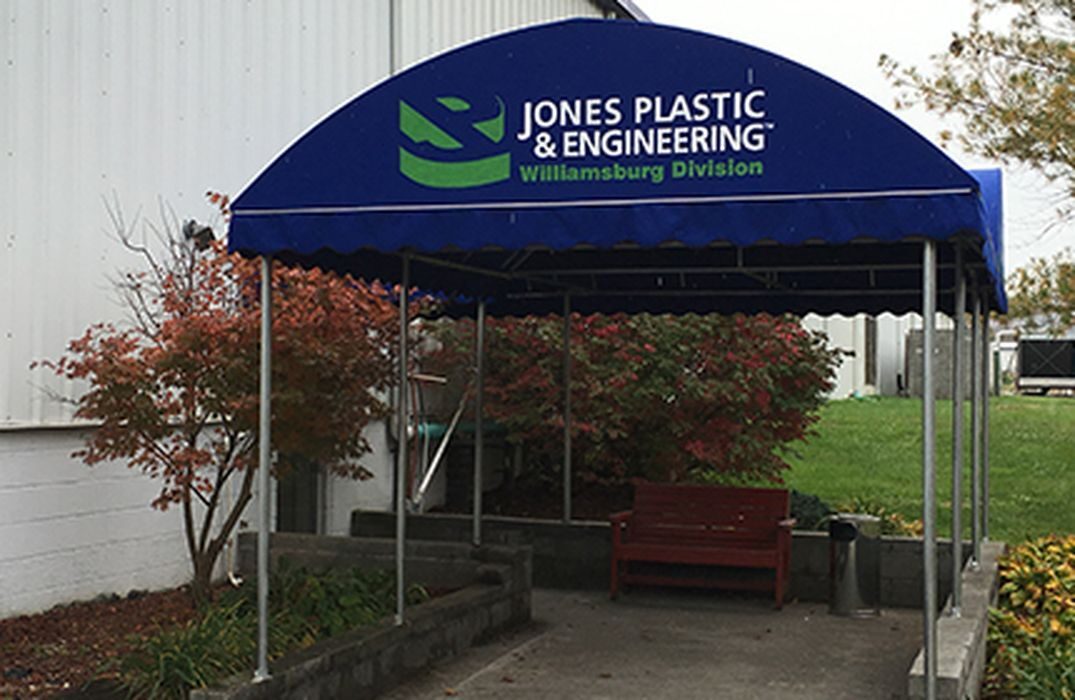
The press release highlighted two suppliers that have played important roles in GE Appliances’ recent progress. Jones Plastics, headquartered in Louisville, has been a recurring point of interest for us. In our January 25, 2025, Labor Shortages and Tech Solutions: U.S. Manufacturing’s Resilient Future « Fabbaloo article, we detailed how Jones Plastics began tackling labor shortages through targeted upskilling programs and the use of 3D printing. The training angle followed the same themes found in our recent Fabbaloo article on upskilling across advanced manufacturing. Jones Plastics makes components for several washing machine models, including glass and plastic tops, and has been shifting more prototype and fixture production to additive methods to reduce bottlenecks.
The second major supplier mentioned is RCM, an aluminum casting specialist that uses 3D printing for prototyping complex molds and test parts. RCM’s CEO, Ethan Hamblen, stated that he intends to invest between 5 and 10 million US dollars in new equipment and plans to hire at least 30 new employees. These investments show how suppliers see a clear long-term opportunity in aligning themselves with GE Appliances. When a purchaser of this size signals multi-year demand, suppliers can move confidently and modernize at a faster pace.
Where the Investments Are Going
GE Appliances indicated that the US$150 million in new contracts is spread across ten states. While the company did not disclose exact amounts for each, the following table provides a reasonable breakdown that mirrors the geographic distribution of many of its current suppliers.
| State | Estimated Investment Amount (USD) |
| Kentucky | 40 million |
| Tennessee | 35 million |
| Ohio | 13 million |
| Illinois | 20 million |
| Indiana | 14 million |
| Pennsylvania | 6.8 million |
| Michigan | 6.8 million |
| Alabama | 6.8 million |
| Minnesota | 6.8 million |
| California | 6.8 million |
These states represent a cluster of advanced manufacturing regions with strong logistics networks and established labor pools. Most already host suppliers that work with plastics, metals, motors, electronics, and assembly components. The added investment will likely flow into upgrades that shorten lead times and expand domestic capacity for parts that have been historically imported.
Haier’s Influence on Supply Chain Decisions
GE Appliances is now part of Haier, one of the largest appliance and electronics manufacturers in the world. Haier’s global scale and distributed production model give GE Appliances’ access to technical expertise, design resources, and operational data that smaller manufacturers cannot easily match. At the same time, Haier has been open about the importance of region-centric strategies. It pushes each division to build supply chains that fit their local markets instead of relying too heavily on international sourcing.
This philosophy is showing up in GE Appliances’ approach to sourcing. Several component lines that were previously imported from China or Mexico are being shifted to domestic suppliers. The goal is not to abandon international production, but to balance it. Bringing key parts closer to the final assembly plants reduces shipping risk, tariff exposure, and delays caused by unpredictable border slowdowns. In our July 23rd Forged in Tariffs: How 3D Printing Is Reinventing the Appliance Industry « Fabbaloo article, we explained how 3D printing plays an important role in tariff planning because it allows companies to redesign parts quickly so they can be made in alternate locations without the cost of retooling.
Why 3D Printing Matters Here
GE Appliances works with about 6,500 suppliers. A system that large makes coordination difficult, especially when design updates need to travel across multiple facilities and even multiple countries. 3D printing offers a direct solution to several of those pain points.
First, 3D printed prototypes shrink design cycles. Instead of waiting for metal tooling to be cut, designers and engineers can print parts in a matter of hours and start testing immediately. This helps GE Appliances catch problems early, which keeps production lines running smoothly once a design is approved.
Second, 3D printing gives suppliers more flexibility during the ramp-up phase. If a customer requests late-stage modifications, suppliers can print temporary parts or fixtures to hold production steady while permanent tools are fabricated. This can save weeks of downtime and prevent missed shipment deadlines.
Third, 3D printing creates new opportunities for replacement part production. Many appliances stay in homes for ten years or more. During that time, certain components go out of production as new models take over. Additive manufacturing fills those gaps without forcing suppliers to restart tooling for outdated parts.
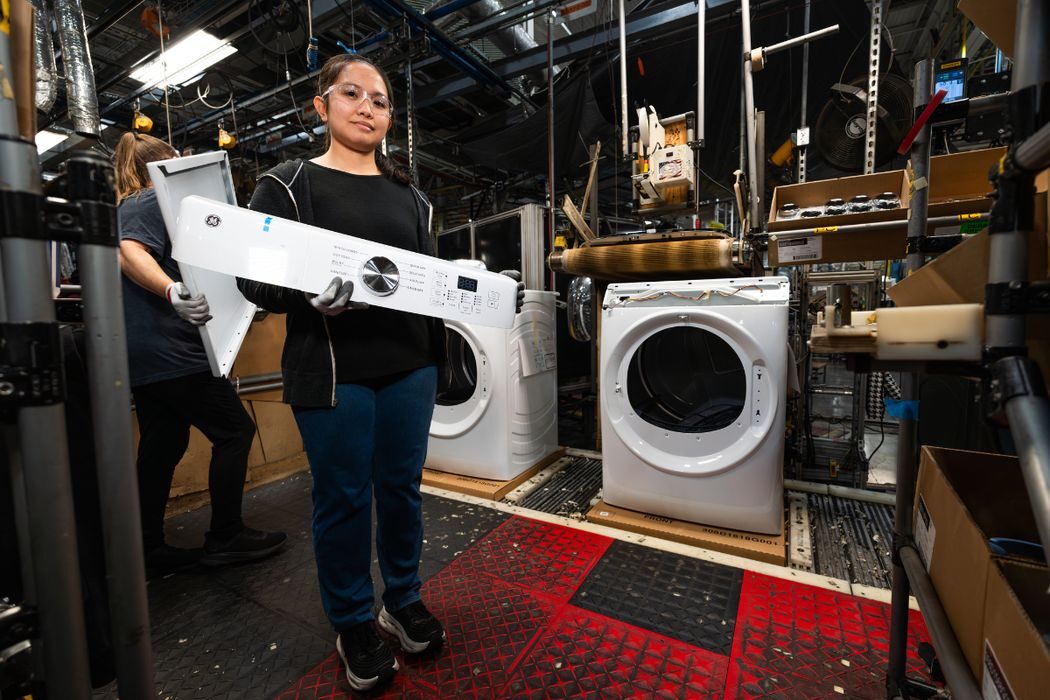
Suppliers like Jones Plastics and RCM have already discovered that additive processes reduce waste, simplify training for new employees, and increase consistency across prototype batches. As more suppliers adopt additive methods, GE Appliances gains a more agile supply chain that can respond to changes with far less friction.
How the Design Stage Shapes Everything
One of the most meaningful parts of the recent announcement was the company’s decision to disclose these supply chain commitments at the design stage, before parts enter full production. Many manufacturers wait until later stages to make formal sourcing statements because early details often shift. GE Appliances chose a different path.
By bringing suppliers into the process early, the company encourages them to make strategic long-term investments. A supplier that knows a product will require new materials, new tooling, or new testing systems can plan ahead and secure equipment well before the first production run. This is critical for tooling that requires long lead times. It is also important for any supplier to upgrade its additive manufacturing capabilities.
Design stage transparency creates a tighter loop between GE Appliances and the companies that support it. When all parties understand where the design is heading, they can align their production methods earlier. Additive specialists can start printing prototypes for alternate part concepts. Plastics manufacturers can experiment with new resins. Metal casting organizations can adjust their mold strategies. These changes usually take place under a time crunch. Starting earlier removes that pressure.
A Strong Signal for the Future of U.S. Manufacturing
The broader story here is that GE Appliances is not only investing in machines and buildings. It is investing in relationships. The combination of domestic sourcing, strategic supplier development, and wider adoption of 3D printing positions the company for a more stable and more innovative decade.
The investments also set an example for other appliance makers. Many have spent years struggling with offshore supply disruptions, shifting tariffs, and global capacity shortages. GE Appliances is showing what a hybrid model looks like. Local suppliers are getting stronger. Overseas partners can focus on the parts they produce best. Customers get more reliable delivery schedules. Engineers get faster design cycles. Everyone wins.
The Research and Development Tax Credit
The now permanent Research and Development (R&D) Tax Credit is available for companies developing new or improved products, processes, and/or software. 3D printing can help boost a company’s R&D Tax Credits. Wages for technical employees creating, testing, and revising 3D-printed prototypes can be included as a percentage of the eligible time spent on the R&D Tax Credit. Similarly, when used as a method of improving a process, time spent integrating 3D printing hardware and software counts as an eligible activity. Lastly, when used for modeling and preproduction, the costs of filaments consumed during the development process may also be recovered.
Whether it is used for creating and testing prototypes or for final production, 3D printing is a great indicator that R&D Credit-eligible activities are taking place. Companies implementing this technology at any point should consider taking advantage of R&D Tax Credits.
Conclusion
GE Appliances’ decision to outline the financial impact of its supply chain increases at such an early stage says a lot about where the company is headed. It is choosing clarity over caution and partnership over distance. Suppliers are now in a better position to make targeted investments in new tools, training programs, and 3D printing systems. These early moves will shape not just the next generation of products but also the processes that create them. When suppliers start with the right resources from day one, the entire production chain benefits.