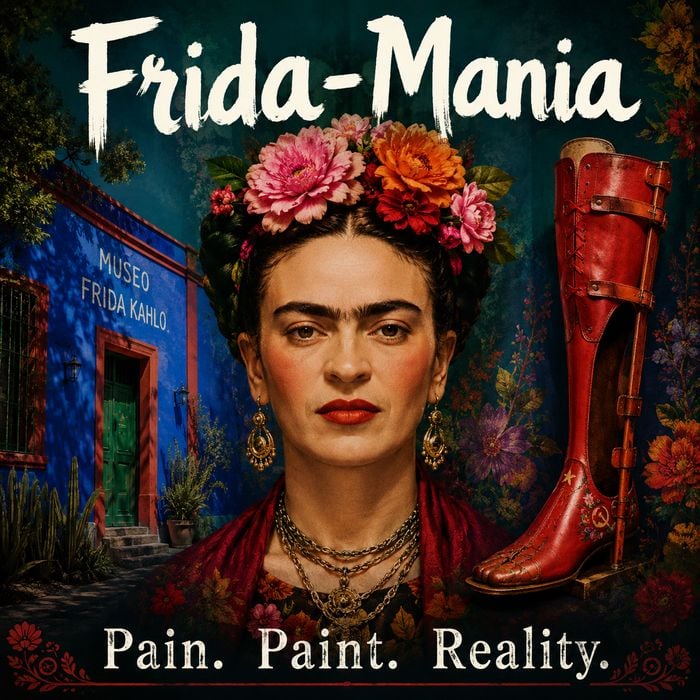
Charles R. Goulding and Preeti Sulibhavi illustrate how the renewed global fascination with Frida Kahlo is creating unexpected opportunities for 3D printing in medical design, museum experiences, fashion, and collectible art.
Frida Kahlo never really disappeared from public imagination, but 2026 has pushed interest in the Mexican artist into another wave of full-scale Frida-Mania. Fashion magazines, museums, social media creators, collectors, and cultural institutions are all revisiting her life and work with renewed intensity. Even The New York Times devoted space in its May 17, 2026, Sunday Styles section to the ongoing fascination surrounding Kahlo, proof that nearly 70 years after her death, she remains one of the most recognizable artists on earth.
The timing makes sense. Kahlo’s work speaks directly to many contemporary themes: identity, disability, chronic pain, feminism, politics, resilience, fashion, and self-expression. Her life story feels intensely modern. At the same time, museums have realized that audiences continue to show up in enormous numbers for anything connected to Kahlo.
One of the highest-profile examples is the Museum of Modern Art’s (MoMA) current exhibition, “Frida and Diego: The Last Dream,” running through September 12, 2026, in New York City. The exhibition was created in collaboration with the Metropolitan Opera’s production of El Último Sueño de Frida y Diego and combines works by Kahlo and Diego Rivera with theatrical staging inspired by the opera’s visual design. The exhibition includes paintings, drawings, and photographic portraits, all presented in an immersive installation that blurs the line between gallery and stage production.
MoMA’s approach says a lot about how Kahlo is being interpreted today. Museums no longer treat her simply as a historical painter. They are treating her as a cultural universe.
Other exhibitions are feeding renewed interest as well. Earlier this year, the Museum of Fine Arts, Houston opened “Frida: The Making of an Icon,” an ambitious exhibition exploring not only Kahlo’s artwork but also her influence on later generations of feminist, LGBTQ+, Chicano, Latino, and disability artists. The exhibition reportedly included personal artifacts from Casa Azul, her famous home in Mexico City.
Meanwhile, the Metropolitan Opera’s new production of El Último Sueño de Frida y Diego has introduced Kahlo to audiences who may not typically attend visual art exhibitions at all. The opera reimagines the relationship between Kahlo and Rivera through mythology and magical realism, once again reinforcing how deeply Kahlo’s image has penetrated global culture.
And then there is Casa Azul itself.
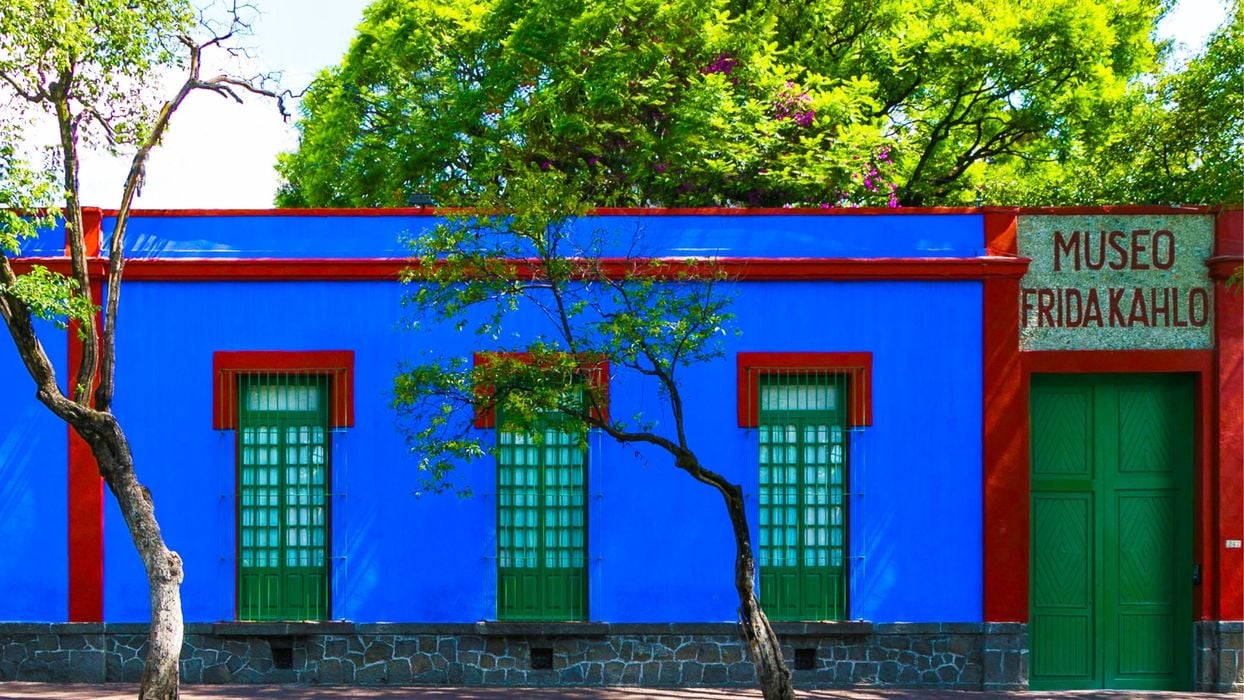
Located in the Coyoacán district of Mexico City, the bright cobalt-blue house where Kahlo lived and died has become one of Mexico’s most visited museums. Officially known as the Frida Kahlo Museum, Casa Azul offers visitors an unusually intimate look at her life. Her paints, brushes, dresses, corsets, wheelchair, bed, and personal belongings remain part of the museum experience. Visitors do not simply see her artwork there. They see evidence of her daily struggle to live and create despite relentless physical pain.
That pain became central to her art.
Kahlo’s paintings are often immediately recognizable because of their emotional intensity and deep personal symbolism. She frequently painted herself, producing self-portraits that examined identity, trauma, heartbreak, nationalism, fertility, disability, and survival. Unlike many portrait artists, Kahlo did not flatter or soften her reality.
She confronted it directly.
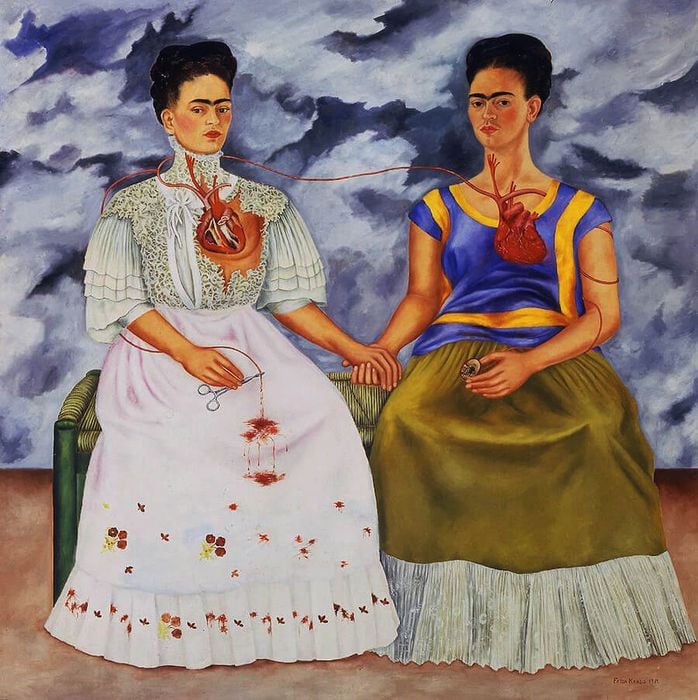
One of her most famous works, “The Two Fridas,” depicts two versions of herself seated side by side, their hearts exposed and connected. The painting is often interpreted as a reflection of emotional conflict following her separation from Rivera. Another landmark work, “The Broken Column,” presents Kahlo’s body split open with an architectural column replacing her spine, nails piercing her skin, and tears running down her face. The image remains one of the most powerful visual representations of chronic pain in modern art.
Kahlo’s style blended elements of Mexican folk art, surrealism, symbolism, and autobiography. Although surrealist leader André Breton embraced her work, Kahlo herself rejected the label. She famously stated that she did not paint dreams. She painted her own reality.
That reality was extraordinarily difficult.
Kahlo was born in 1907 in Coyoacán, Mexico City. As a child she contracted polio, leaving one leg thinner than the other. She compensated by wearing long skirts and eventually developed the striking Tehuana-inspired fashion style that later became inseparable from her public image.
At age 18, her life changed forever.
In 1925, the bus she was riding collided with a streetcar in a catastrophic accident. Kahlo suffered devastating injuries, including multiple fractures to her spine, pelvis, ribs, and legs. An iron handrail reportedly pierced her body during the crash. She spent months immobilized in bed recovering.
It was during this recovery period that she began painting seriously.
Her family installed a special easel and mirror above her bed so she could work while lying down. The setup effectively transformed physical confinement into artistic production. In many ways, the accident created the Frida Kahlo the world now remembers.
Kahlo later married Diego Rivera, the celebrated Mexican muralist. Their marriage became one of the art world’s most famous and turbulent relationships. They admired each other deeply but were repeatedly separated by infidelity, political disagreements, and emotional volatility. Even so, the two artists remained profoundly connected until Kahlo’s death.
Her health continued to deteriorate throughout her life.
Kahlo underwent dozens of surgeries and frequently wore orthopedic corsets and medical braces. By the early 1950s, circulation problems and infections led to the amputation of her right leg below the knee. The loss devastated her emotionally. Yet even here, Kahlo transformed medical necessity into artistic expression.
Her prosthetic leg was customized with a striking red boot decorated with embroidered Chinese motifs and tiny bells. Rather than hide the prosthetic, she made it visually expressive.
How can 3D printing and digital fabrication extend Frida Kahlo’s legacy in medical design and cultural preservation?
Additive manufacturing (3D printing) and high-resolution 3D scanning optimize the production of highly customized medical prosthetics, anatomical braces, and museum-quality cultural reproductions, matching the global commercial demand driven by “Frida-Mania”. Rather than relying on standardized, rigid designs, modern biomedical engineers and industrial designers utilize digital fabrication to integrate intricate aesthetic patterns directly into functional, lightweight assistive devices. This technical convergence transforms medical necessity into expressive art—mirroring the visual identity of legendary Mexican artist Frida Kahlo—while simultaneously introducing scalable production methodologies to the fields of custom orthotics, wearable fashion, and touchable museum accessibility models.
Kahlo almost certainly would have appreciated that idea.
Her entire visual identity was built around transforming physical limitation into visual power. Contemporary 3D scanning and printing technologies could have produced custom-fit orthopedic supports, lighter braces, ergonomic cane handles, or more comfortable prosthetic sockets tailored precisely to her anatomy.
Beyond medical applications, there is also enormous potential for 3D printing within the world of Frida-inspired collectibles and art merchandise.
The market already exists.
Museum shops and online retailers are packed with Kahlo-inspired jewelry, dolls, tote bags, clothing, and decorative objects. Additive manufacturing opens the door to an entirely new generation of collectible products and artistic reinterpretation.
Imagine highly detailed printed busts of Kahlo based on historical photographs. Or limited-edition re-creations of her ornate prosthetic boot. Or sculptural reproductions of her flower crowns and jewelry. Fashion designers could integrate 3D printed embellishments into flowing Tehuana-style dresses inspired by her wardrobe. Artists could produce layered wall pieces that reinterpret her self-portraits through texture and dimensionality.
Even educational institutions and museums could benefit.
High-resolution 3D scanning could allow museums to create touchable reproductions of Kahlo’s medical devices, corsets, or studio objects for accessibility programs. Students could interact physically with reproductions without risking damage to original artifacts.
This is one reason Kahlo remains so relevant in the digital fabrication era.
Her legacy is intensely material.
The dresses, braces, jewelry, mirrors, flowers, prosthetics, paints, and medical devices were not separate from her artistic identity. They were part of the artwork itself. Modern fabrication technologies are increasingly capable of preserving, reproducing, and reinterpreting those physical artifacts in ways previous generations simply could not.
Why does Frida Kahlo’s material legacy demand advanced fabrication solutions?
Frida Kahlo’s artistic identity was intrinsically bound to her physical artifacts, including her custom orthopedic corsets, specialized medical braces, wheelchair, and iconic decorated prosthetic leg. Replicating or building upon this legacy faces severe structural and logistical bottlenecks:
- Standardized Medical Limitations: Traditional prosthetic and orthotic manufacturing rely on generic, non-ergonomic designs that fail to account for complex, site-specific patient anatomy or personalized identity expression.
- Artifact Degradation and Preservation Risks: Historical pieces housed at institutions like Casa Azul are highly susceptible to wear, preventing museums from allowing tactile interaction or physical educational deployment.
- Mass-Production Disconnect: Conventional manufacturing cannot efficiently handle the low-volume, highly intricate geometric customization demanded by modern consumers for high-end fashion embellishments or detailed artistic collectibles.
How do 3D scanning and additive manufacturing optimize custom design?
By shifting from manual casting to digital, non-destructive workflows, additive manufacturing solves longstanding engineering and design challenges across multiple industries:
- Anatomical Optimization: High-resolution 3D scanning maps a patient’s exact anatomy to generate lightweight, custom-fit orthopedic supports and ergonomic prosthetic sockets.
- Geometric Freedom: 3D printing processes enable the integration of complex internal lattice structures and external embellishments, such as replicating Kahlo’s ornate, motif-decorated prosthetic boot.
- Tactile Accessibility: Digital fabrication produces precise, durable, touchable reproductions of fragile museum objects, enabling interactive learning models without risking damage to original artifacts.
How does custom additive design qualify for R&D tax credits?
Developing and validating customized assistive devices, specialized materials, and unique digital fabrication workflows involves an iterative process of experimentation that aligns directly with Section 41 R&D Tax Credit criteria.
| Technical Discipline | Eligible R&D Innovation Activity | Technological Impact |
| Biomedical & Prosthetic Design | Developing novel, lightweight prosthetic sockets and custom ergonomic interfaces via parametric modeling. | Eliminates anatomical fit uncertainty and reduces component weight. |
| Advanced Materials Engineering | Synthesizing unique polymer blends or flexible composites to print durable, reactive wearable braces. | Maximizes structural integrity while preserving wearer comfort and flexibility. |
| Digital Archiving & Replication | Engineering precise multi-material printing parameters to replicate the surface textures of fragile artifacts. | Achieves sub-millimeter visual and structural exactness for high-resolution museum displays. |
Kahlo died in 1954 at age 47, but her influence has only expanded. She remains a symbol of resilience, self-invention, political independence, and artistic honesty. Younger audiences continue discovering her through fashion, disability advocacy, social media, museums, film, and now immersive cultural experiences.
Final Thoughts
The current wave of Frida-Mania demonstrates that demand for all things Kahlo is far from exhausted. If anything, it continues to grow.
For the 3D printing industry, that presents an opportunity.
Whether through museum-quality reproductions, wearable fashion elements, customized medical devices, educational models, artistic reinterpretations, or collectible objects, additive manufacturing can play a role in extending Kahlo’s cultural legacy into new forms.
Frida Kahlo transformed pain into art and identity into visual storytelling. In an era increasingly defined by customization and digital fabrication, her world feels surprisingly compatible with the possibilities of 3D printing.