Charles R. Goulding and Preeti Sulibhavi decode how recent updates to L-codes now recognize additively manufactured prosthetics and orthotics, marking a pivotal step toward mainstream reimbursement and broader access to 3D printed healthcare solutions.
Great ideas often fail—not because they lack innovation, but because they don’t fit within the systems that already exist. In healthcare, even the most groundbreaking technology can stall if it doesn’t align with reimbursement structures, billing frameworks, or regulatory codes. For prosthetics and orthotics, that structure is defined by L-codes—the alphanumeric identifiers that translate complex devices into reimbursable healthcare services.
Now, additive manufacturing (AM) has officially found its place within that framework. The recent updates to L-code descriptions have made it clear: 3D printed and additively manufactured prosthetics and orthotics are recognized for coding and reimbursement. It’s a quiet but historic milestone for the industry—one that opens the door for wider adoption, more consistent coverage, and ultimately, better patient outcomes. Thanks to the PDAC (Pricing, Data Analysis, and Coding) department, managed by the Centers for Medicare & Medicaid Services (CMS), which helps determine the correct HCPCS (Healthcare Common Procedure Coding System), these L-codes were approved on September 18, 2025.
From Innovation to Implementation
Until now, additive manufacturing in the prosthetics and orthotics space has often felt like it was running ahead of the system. Engineers and clinicians have been using 3D printing to create lightweight, customized, and patient-specific devices for years—but when it came time to bill for them, there was no clear pathway. Many companies either used traditional codes that didn’t quite fit or had to go through the arduous process of applying for new ones.
That’s no small task. As we discussed in a previous Fabbaloo article, “Built for Extremes: How One Amputee Is Engineering a New Future for Prosthetics,” one manufacturer went as far as developing a proprietary prosthetic design and successfully obtaining a unique L-code. But as we now know from a recent Buzzsprout podcast episode, that level of effort might not be needed in the future.
The latest guidance shows that the existing system was more flexible than many realized. Instead of creating brand-new L-codes, policymakers and industry groups have opted to update current descriptions to explicitly include additively manufactured devices.
That subtle change has massive implications.
Updating the Framework—Not Rebuilding It
Rather than reinventing the wheel, regulators simply widened the lane. Many of the existing L-codes now explicitly cover devices made using additive manufacturing techniques.
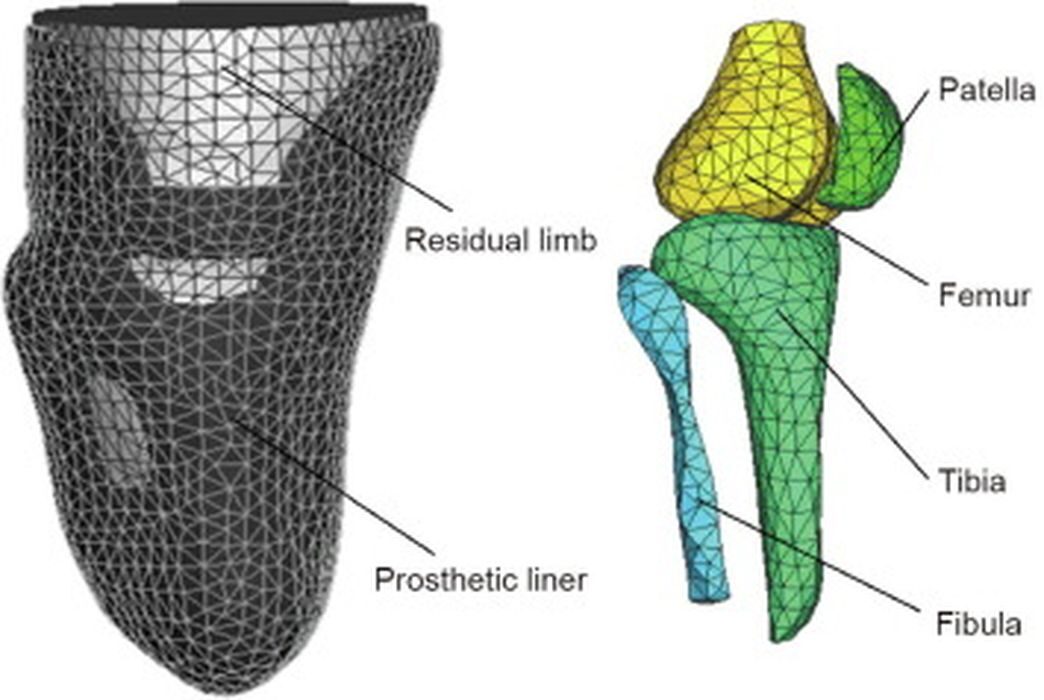
This approach makes sense for two reasons. First, prosthetics and orthotics haven’t changed in purpose—just in production method. A 3D printed transtibial socket still functions as a transtibial socket. What’s different is how it’s made: with precision, repeatability, and digital traceability.
Second, updating the existing framework ensures continuity in reimbursement. Providers and insurers already understand how to interpret these codes. By including additive manufacturing in the existing code language, the Centers for Medicare and Medicaid Services (CMS) and other payers effectively made it possible for clinicians and manufacturers to bill for 3D printed devices using familiar processes.
This move doesn’t create chaos—it creates clarity.
What It Means for Companies
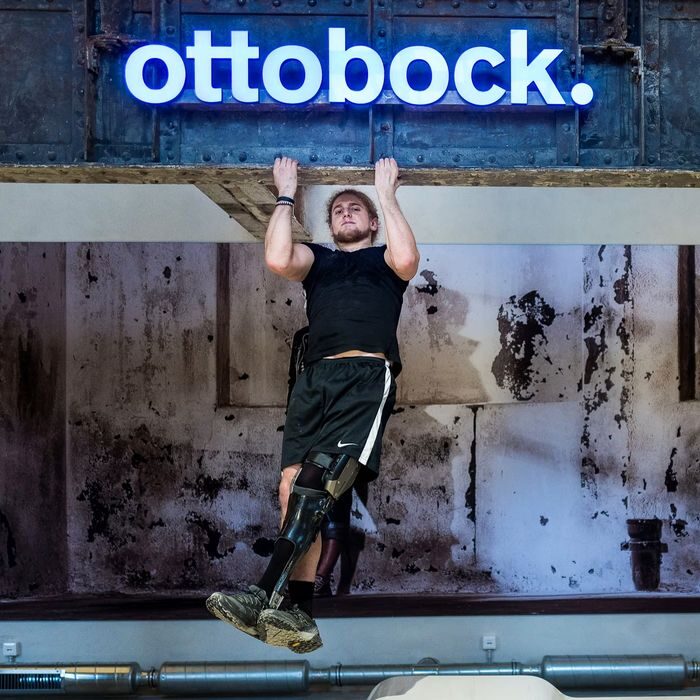
For companies like Johnson & Johnson (J&J) domestically, or Ottobock internationally, this clarification is a game-changer. These global leaders in orthotics and prosthetics manufacturing can now confidently expect reimbursement for their additively manufactured products when they use the appropriate L-codes.
In fact, J&J is spinning out its orthotic and prosthetic unit, DePuy Synthes, which may benefit from understanding the L-code process and its nomenclature.
That opens the door for investment, scalability, and consistency. Large manufacturers that have been experimenting with AM in R&D can now move toward commercialization, knowing there’s a reimbursement path already established. Smaller innovators can compete on a level playing field, provided they follow the same coding and billing rules.
And because additive manufacturing enables mass customization, there’s even room for sub-codes to distinguish between materials and construction types—carbon fiber lattices versus flexible polymers, for instance. These distinctions matter, not only for performance and patient comfort but also for establishing fair and consistent pricing.
The Nuance: L-Codes Don’t Equal Reimbursement
It’s important to note, however, that just because an L-code exists—or has been updated to include additive manufacturing—doesn’t mean automatic reimbursement.
An L-code is essentially a key. It allows you to unlock the possibility of reimbursement, but it doesn’t guarantee payment. Each insurer still evaluates claims individually based on documentation, clinical justification, and alignment between what was billed and what was actually provided.
That’s where accuracy and ethics come in. You must bill for what you code and code for what you bill. If your service description doesn’t match the device you’re providing, that’s not a gray area—it’s fraud. The system is flexible enough to accommodate many 3D printed orthotics and prosthetics, but it relies on honesty. As more manufacturers enter this space, the expectation will be that documentation clearly supports the code used. Providers should describe their services in a way that matches both the clinical intent and the technical reality of what’s being delivered.
The Role of Customization and Sub-Coding
One of the most exciting aspects of this evolution is how the L-code framework now accounts for customization. Additive manufacturing thrives on personalization—no two patients need the same exact prosthesis, and now, the coding system can reflect that reality.
Updated or newly introduced sub-codes can specify differences in materials, configurations, or structural features. For example, a traditional socket might share a base L-code with a 3D printed one, but a sub-code could identify that the AM version uses a lattice structure to optimize weight and flexibility.
Even more interestingly, new codes are already on the horizon—particularly for lattice-based designs and other emerging geometries that are only possible through additive manufacturing. These features aren’t just cosmetic or manufacturing conveniences; they directly impact patient comfort, fatigue resistance, and biomechanical performance.
By capturing those distinctions in code, the system acknowledges that additive manufacturing isn’t just a different production method—it’s a clinically relevant advancement.
A Shift Toward Universal Recognition
One of the most significant effects of this update is what it does for universality.
Before, additive manufacturing was often seen as niche or experimental in the reimbursement world. Now, with definitive L-codes that include AM, it’s officially part of the mainstream vocabulary. Clinicians can enter an L-code into a claim, insurers can recognize it, and reimbursement can proceed through standard channels.
That universality encourages adoption. The more providers and manufacturers who use these updated codes, the more normalized reimbursement for 3D printed devices becomes. Over time, usage builds precedent—and precedent builds policy. The more data insurers see about the safety, cost-effectiveness, and patient outcomes of AM devices, the stronger the case becomes for broad, consistent coverage.
In other words, reimbursement follows participation.
Avoiding the Trap of Code Chasing
For years, many in the prosthetics industry have assumed that innovation required new codes. The logic seemed sound: new technology, new code. But that’s not always true—or necessary.
As the recent podcast revealed, additive manufacturing’s inclusion in existing codes shows that the system already had the flexibility needed to accommodate innovation. Instead of constantly chasing new L-codes, companies should focus on using and interpreting existing ones correctly.
Each L-code is designed to describe a function or purpose, not a manufacturing method. The updated descriptions now make it clear that 3D printed devices fall within those functions. The real challenge isn’t inventing new codes—it’s making sure your innovation aligns with the intent of the old ones.
A Milestone for Additive Manufacturing in Healthcare
In many ways, this change represents more than just a policy update—it’s an inflection point for additive manufacturing as a mature, trusted part of healthcare. For years, the conversation around 3D printed prosthetics has centered on potential: potential for lower cost, better fit, faster delivery. Now, the conversation can move toward scalability and sustainability.
Manufacturers can design with confidence. Clinicians can prescribe with clarity. Patients can receive advanced, customized care with the assurance that their devices are recognized and covered by the same reimbursement systems as traditional ones.
And that’s the true signal of progress.
The Research and Development Tax Credit
The now permanent Research and Development (R&D) Tax Credit is available for companies developing new or improved products, processes, and/or software. 3D printing can help boost a company’s R&D Tax Credits. Wages for technical employees creating, testing, and revising 3D-printed prototypes can be included as a percentage of the eligible time spent on the R&D Tax Credit. Similarly, when used as a method of improving a process, time spent integrating 3D printing hardware and software counts as an eligible activity. Lastly, when used for modeling and preproduction, the costs of filaments consumed during the development process may also be recovered.
Whether it is used for creating and testing prototypes or for final production, 3D printing is a great indicator that R&D Credit-eligible activities are taking place. Companies implementing this technology at any point should consider taking advantage of R&D Tax Credits.
Unlocking the Secret Code
The integration of additive manufacturing into the prosthetics and orthotics L-code system doesn’t just legitimize 3D printing in orthotics and prosthetics—it empowers it. It aligns innovation with infrastructure.
The fact that additively manufactured orthotics and prosthetics are now reimbursable under definitive L-codes is more than a bureaucratic change; it’s a recognition that digital manufacturing has earned its place in the clinical mainstream.
It’s a sign of scalability, credibility, and the growing potential of additive manufacturing to improve patient outcomes across the board. The secret to additive manufacturing’s success may just be its L-codes.