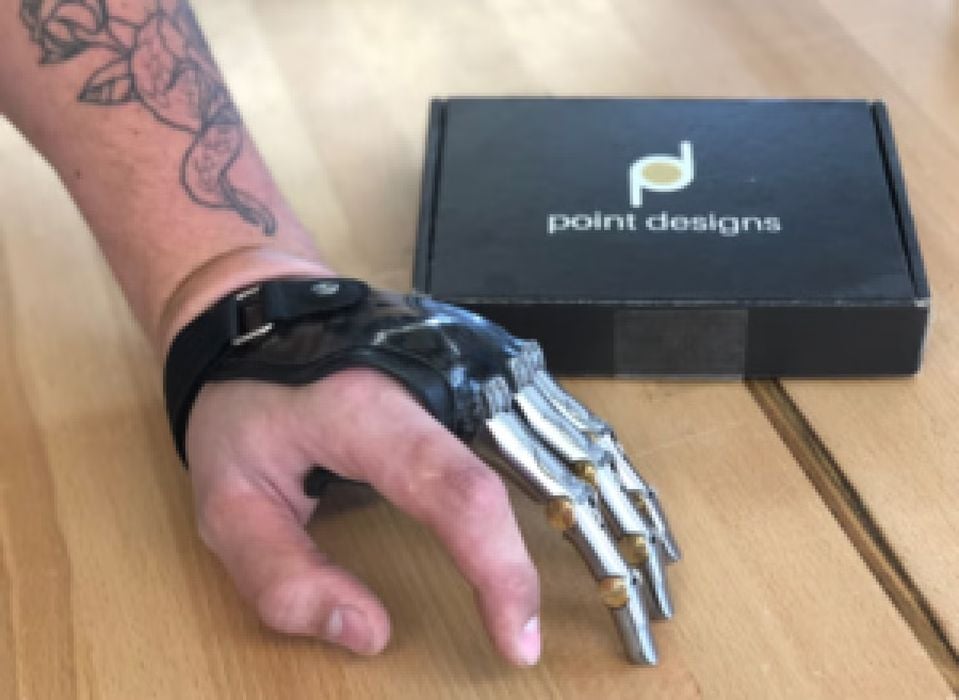
Charles R. Goulding and Preeti Sulibhavi examine Hanger’s 2025 acquisition of Point Designs, tracing its University of Colorado origins, its advanced 3D printed prosthetic finger portfolio, and how improving federal reimbursement trends are accelerating innovation in prosthetics and orthotics.
In a move that underscores the rapid maturation of 3D printing in prosthetic care, Point Designs was acquired by Hanger, Inc. in 2025, bringing one of the most technologically advanced portfolios of prosthetic finger products into the fold of one of the world’s largest orthotics and prosthetics care providers. This deal marks a notable inflection point for additive manufacturing in the medical device sector — one where startup ingenuity meets scaled clinical delivery.
This article takes a closer look at what kind of company Point Designs is, what prosthetic products they’ve developed, how their origins at the University of Colorado helped shape that trajectory, and why the broader environment — from 3D printing research to evolving U.S. reimbursement policy — creates fertile ground for this acquisition to thrive.
From University Lab to Real-World Impact
Point Designs’ story is intimately tied to two branches of the University of Colorado: CU Boulder’s Paul M. Rady Department of Mechanical Engineering and the Weir Biomechatronics Development Laboratory on the CU Anschutz Medical Campus. Founded in 2016 by researchers and alumni from these labs — including Jacob Segil, Levin Sliker, Stephen Huddle, and Richard Weir — the company set out to transform prototypes born in academic research into commercially viable prosthetic devices that restore independence and capability for people with partial hand amputations.
The key idea: use advanced 3D printing to produce durable, mechanically robust, and anatomically functional prosthetic fingers — a category that had long been underserved by traditional prosthetics manufacturing approaches. Their products combined engineering rigor with clinical insight, leveraging precision additive manufacturing to tailor devices in ways that were previously difficult or impossible.
This academic foundation was not superficial. The Weir Biomechatronics Lab itself conducts cutting-edge research in areas from human-machine interfaces and sensory feedback to rapid prototyping and material testing — all with an eye toward next-generation upper limb devices. Its facilities include high-performance 3D prototyping equipment capable of printing dual-material plastics and direct-metal laser sintering in metals like maraging steel, showing how deeply additive manufacturing is embedded in CU’s biomedical research ecosystem.
The Point Designs Product Lineup
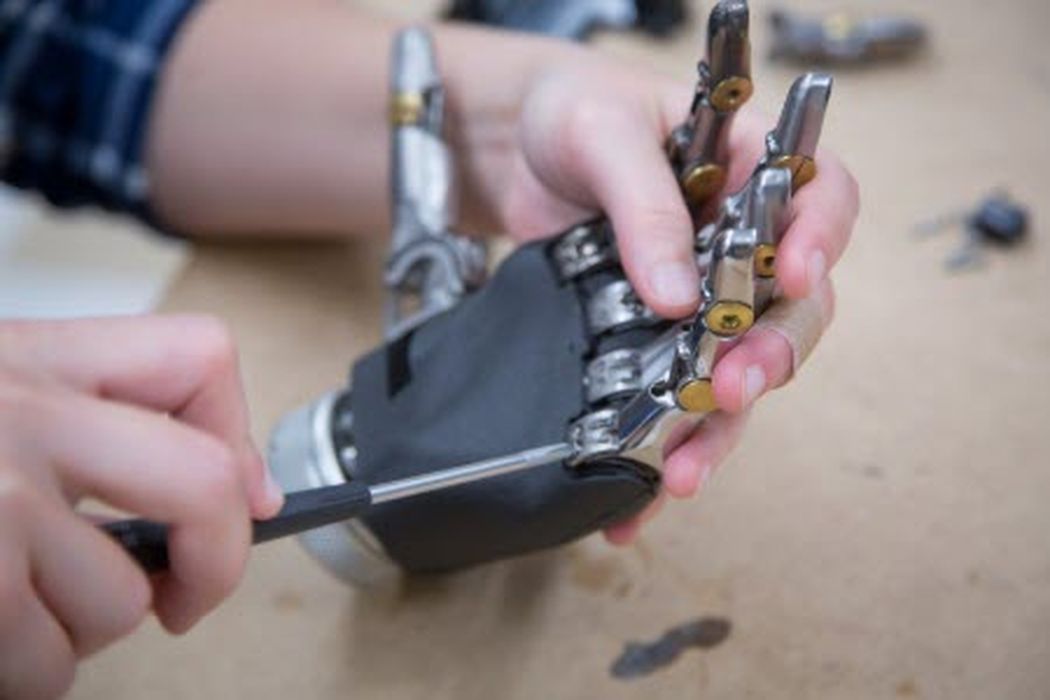
Point Designs’ approach to prosthetic solutions is rooted in modular, high-function mechanical components that can be tailored to a wide range of partial hand amputation scenarios. Their product family includes several standout offerings:
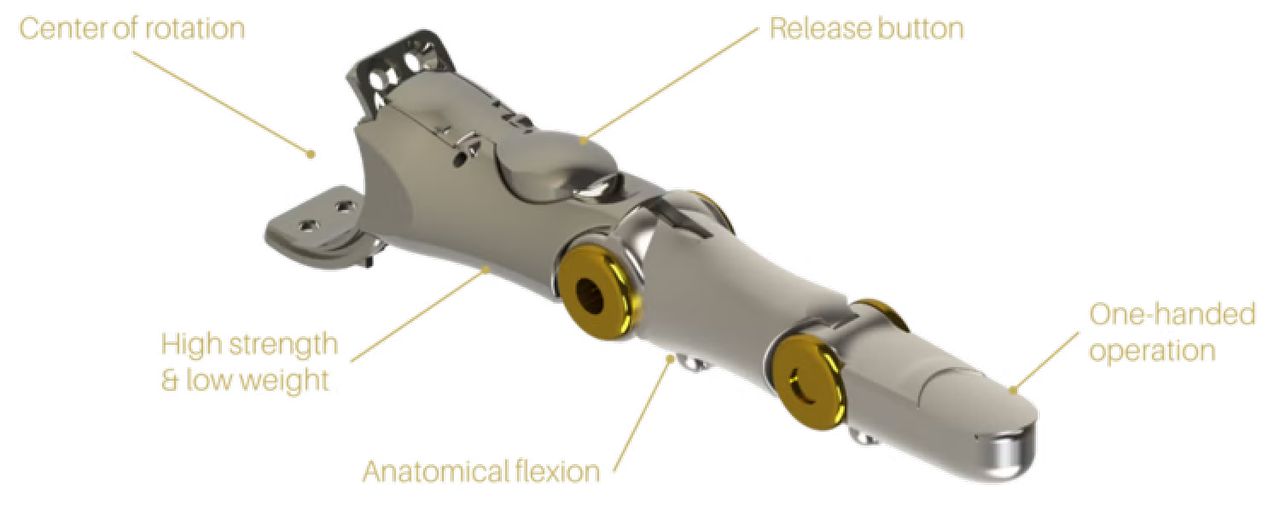
- Point Digit: The flagship 3D printed heavy-duty prosthetic finger designed for near-MCP level amputations. It uses a ratcheting mechanism to achieve robust grip strength while remaining lightweight and adaptable to everyday tasks.
- Point Partial: Engineered for individuals with some remaining finger length, this device fills in lost segments to restore hand function without requiring a full prosthetic.
- Point Thumb: Recognizing that thumb functionality contributes disproportionately to hand dexterity, this offering focuses on restoring opposition and grip strength in partial thumb loss cases.
- Point Pivot+: A more advanced digit option that allows enhanced articulation and load-bearing capability up to approximately 150 pounds — a surprisingly large-capacity range that enables both fine manipulation and heavy-duty tasks.
All these products share common attributes: 3D printed high-strength titanium, anatomically accurate flexion, touchscreen-compatible fingertip pads, and mechanical robustness that enables users to perform a broad range of activities from delicate tasks to heavier work.
Together, this portfolio not only serves individual users directly but also provides clinical services such as fabrication consultations, alignment support, and ongoing product community engagement — helping ensure successful outcomes beyond the device itself.
Why Hanger’s Acquisition Matters
Hanger, Inc. is a recognizable name in prosthetics and orthotic care — one that Fabbaloo has covered previously in depth, where its broad clinical network and commitment to innovation were major themes. (See our earlier article on Hanger for full context.) Hanger’s acquisition of Point Designs isn’t just a bet on a single startup; it’s a strategic play to integrate advanced additive manufacturing capabilities and product sophistication into a global care delivery platform.
The acquisition signals a shift from boutique, research-driven innovation into scaled clinical impact. Point Designs’ engineering talent and product portfolio can now plug into Hanger’s extensive network of clinics, reimbursement infrastructure, and patient care pathways, accelerating access to high-performance prosthetic options for a much broader population.
SharpaWave at CES and the Wider 3D Innovation Ecosystem
While Point Designs represents innovation in medical devices, the broader 3D printing and robotics ecosystem is evolving rapidly as well. Just weeks ago, Fabbaloo published an article about SharpaWave’s robotic hand — a 22-degree-of-freedom dexterous hand platform that drew significant attention at CES 2026 in Las Vegas, highlighting how precision design and advanced sensing are blurring boundaries between prosthetic, robotic, and research applications.
Seeing SharpaWave’s display at CES — and connecting that to trends in both robotic dexterity and additive manufacturing — underscores how additive technologies now deliver not just functional prototypes, but complex systems with high degrees of freedom and multi-axis control. While Sharpa focuses on research and robotics buyers, these advancements often trickle into adjacent areas like prosthetics through shared design techniques, materials, and tooling lessons.
Reimbursement Trends: L Codes and Federal Policy
Another, less visible force reshaping this space is U.S. reimbursement policy, particularly the evolving stance on healthcare coding for 3D printed prosthetics and orthotics. Historically, 3D printed devices often fell into ambiguous billing categories, creating barriers to predictable reimbursement from Medicare and private insurers.
But in the last few years, initiatives to formalize L-code reimbursement for 3D-manufactured O&P products (including specialized codes for additive parts) have gained traction. According to industry discussions and practitioner sources — including The Prosthetics and Orthotics Podcast — these changes are beginning to clarify and expand coverage, shifting 3D printed components from “miscellaneous” coding to explicitly recognized manufacturing categories. That in turn improves payer confidence and speeds adoption by clinics.
For companies like Hanger and Point Designs, this trend is a structural advantage. As reimbursement becomes more favorable and understandable, clinics are incentivized to adopt advanced additive devices because they are more easily billable and more likely to be reimbursed at sustainable payment levels. This not only supports device sales but also strengthens care pathways that integrate 3D printed prosthetics into standard treatment regimens.
The University of Colorado’s Broader 3D Printing Influence
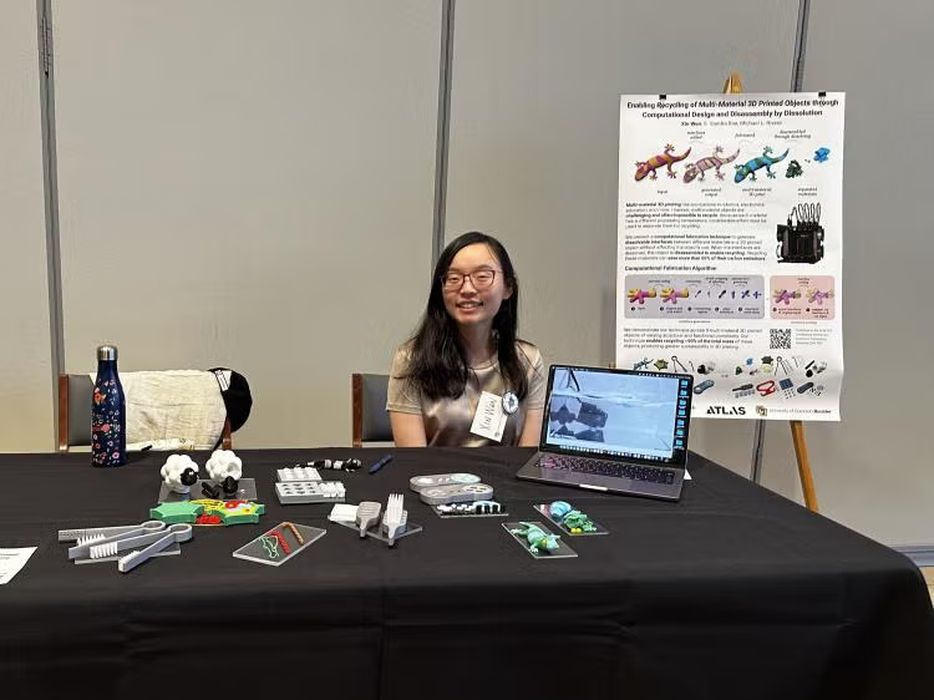
Point Designs is far from the only additive manufacturing story emerging from the University of Colorado system. Across CU Boulder and CU Denver, research labs are exploring 3D printed materials, biomaterials, recycling techniques, and tissue-mimetic structures — proving that the innovation pipeline extends well beyond prosthetics alone. For example, CU Boulder’s ATLAS Institute Utility Research Lab has developed methods for recyclable multi-material 3D printing that significantly reduce waste — an insight with ramifications for sustainability in manufacturing.
At CU Denver, researchers have even printed biological-tissue-mimetic materials — using liquid crystal elastomers in complex lattice structures that mimic cartilage — showing the interdisciplinary potential for hybrid medical and manufacturing innovations.
These efforts highlight how academic research is feeding industrial innovation downstream — and why acquisitions like Hanger’s investment in Point Designs matter not just commercially but as a signpost of where the technology is headed.
The Research & Development Tax Credit
The now permanent Research & Development Tax Credit (R&D) Tax Credit is available for companies developing new or improved products, processes and/or software.
3D printing can help boost a company’s R&D Tax Credits. Wages for technical employees creating, testing and revising 3D printed prototypes can be included as a percentage of eligible time spent for the R&D Tax Credit. Similarly, when used as a method of improving a process, time spent integrating 3D printing hardware and software counts as an eligible activity. Lastly, when used for modeling and preproduction, the costs of filaments consumed during the development process may also be recovered.
Whether it is used for creating and testing prototypes or for final production, 3D printing is a strong indicator that R&D-eligible activities are taking place. Companies implementing this technology at any point should consider taking advantage of R&D Tax Credits.
What’s Next
The acquisition of Point Designs by Hanger represents a key pivot point in the additive manufacturing and prosthetics narrative: researchers are now transitioning into impact at scale, enabled by clinical infrastructure and supportive reimbursement policy. Coupled with parallel trends — from robot hands showcased at CES to cutting-edge 3D materials research — the vision of highly personalized, 3D printed medical devices becoming routine in clinical care feels closer than ever.
For 3D printing advocates and industry watchers, this convergence underscores a larger truth: additive manufacturing is no longer a fringe tool for rapid prototyping — it’s central to the future of personalized medical care.