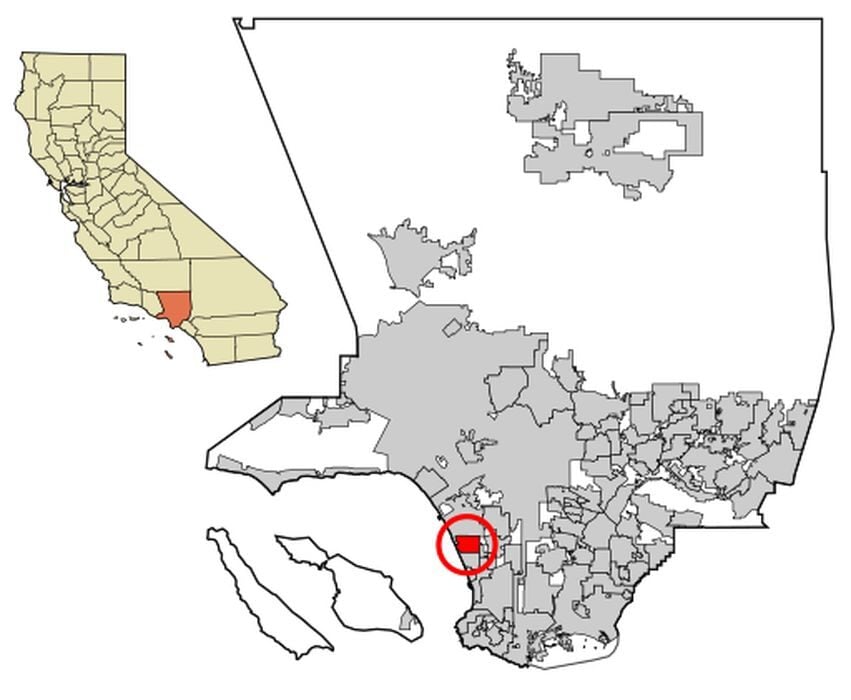
Charles R. Goulding explains how El Segundo is quietly becoming a hardware startup hotspot, where deep aerospace roots, advanced 3D printing, and a surf-and-lift culture are combining to fuel the next generation of serious manufacturing innovation.
Regular travelers to LAX know El Segundo even if they don’t realize it. You see it on freeway signs as you approach the airport, and you feel it when traffic suddenly thickens with work trucks, engineers in polos, and the quiet pulse of industry that never really left. El Segundo sits just south of the Los Angeles International Airport, wedged between the Pacific Ocean and the dense urban sprawl of Los Angeles County.
At first glance, the area is best known for two things: pristine beaches and aerospace. The beaches, especially nearby Manhattan Beach and El Porto, are famous for consistent surf breaks and a laid-back culture that contrasts sharply with the high-precision engineering happening just a few blocks inland. That contrast is not accidental. It has shaped the region’s industrial DNA for nearly a century.
Aerospace Roots That Never Fully Left
From roughly 1932 to 1962, this stretch of Southern California was widely considered the aerospace capital of the world. Douglas Aircraft, Lockheed, Boeing, Northrop, Grumman, and Baker Hughes all had major operations here. The concentration of talent was extraordinary. Engineers, machinists, materials scientists, and program managers flowed between companies, cross-pollinating ideas and building a deep, durable skills base.
Even as some of the big names moved operations elsewhere or consolidated, the expertise never fully disappeared. It fragmented into suppliers, specialty manufacturers, and quietly capable mid-sized firms that continued doing hard things. That matters today.
I became personally familiar with the area when Dover Corporation acquired the Sargent Aerospace business in California from KKR, and I was responsible for handling the integration. The largest business unit was located in nearby Huntington Park and produced core submarine systems for leading submarine builders. This was not flashy work. It was highly regulated, extremely precise, and unforgiving of mistakes. That kind of manufacturing discipline tends to persist in a region.
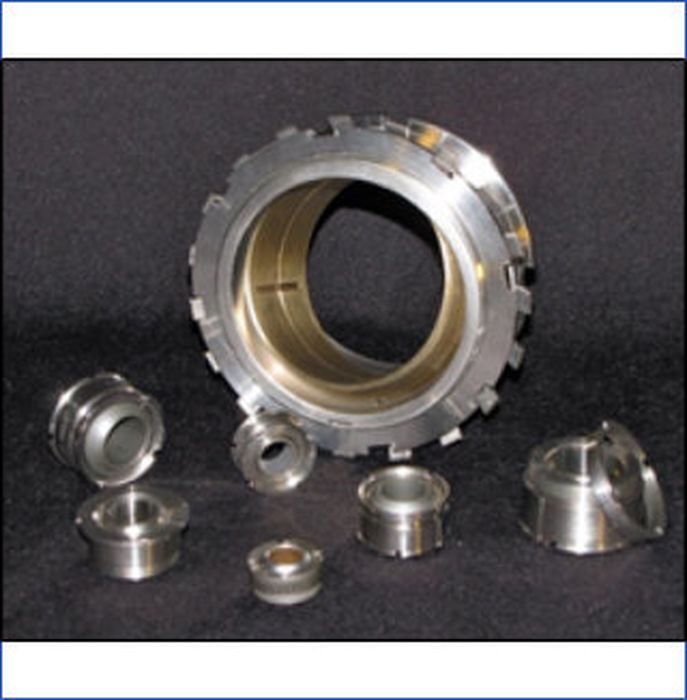
Another standout Sargent Aerospace operation was Kahr Bearings, a manufacturer of aerospace bearings used in demanding applications, including helicopters. Bearings may sound mundane, but anyone who has worked in aerospace knows how difficult it is to design and manufacture components that must perform flawlessly under vibration, heat, and continuous load. These companies quietly reinforced the area’s reputation as a place where real hardware gets built.
A New Wave of Hardware Startups
In its 2025/2026 double holiday issue, The Economist ran an article examining the re-emergence of hardware startups in regions with strong industrial heritage. El Segundo featured prominently. The article made an important point: software talent can move anywhere, but hardware talent tends to cluster where complex physical systems have been built before.
What’s different this time is the tooling. Startups today are not trying to recreate the vertically integrated aerospace giants of the past. Instead, they are blending advanced manufacturing techniques, especially 3D printing, with agile development models. Additive manufacturing allows small teams to iterate quickly on complex parts that once required large capital investments and long lead times. The Economist piece also touched on local culture. Surfing in the morning. Weight lifting in the afternoon. Long hours in the shop or lab in between. That description immediately resonated with me because we have seen the same pattern with one of our most successful startup clients in the area. There is a physicality to hardware work that seems to pair naturally with a culture that values fitness and resilience.
3D Printing as a Force Multiplier
What makes El Segundo particularly interesting today is not just its history, but the nearby presence of companies pushing the boundaries of manufacturing. SpaceX, just up the road in Hawthorne, has redefined what rapid iteration looks like in hardware. Their aggressive use of additive manufacturing for rocket engines and structural components has influenced an entire generation of engineers.
Divergent Technologies, also in the region, has shown how software-driven design combined with large-scale metal 3D printing can radically change how complex structures are produced. Their approach collapses traditional supply chains and enables designs that would be impossible with conventional manufacturing.
Startups in El Segundo can draw from this ecosystem. Engineers who honed their skills on aerospace programs now understand how to design for additive manufacturing, how to qualify printed parts, and how to move from prototype to production without losing control of quality. That knowledge is invaluable, and it is difficult to replicate quickly elsewhere.
In December 2025, Elon Musk summed this shift up succinctly when he said, “Hardware is the end game.” Whether one agrees with Musk on everything or not, the statement reflects a broader reality. Software alone does not launch rockets, power aircraft, or build infrastructure. At some point, atoms matter more than bits.
The Often-Overlooked Role of R&D Tax Credits
One practical advantage for hardware startups in California is the availability of meaningful R&D tax incentives. Beyond the federal R&D credit that most founders are familiar with, California offers a particularly lucrative state R&D credit that can materially reduce cash burn.
For early-stage companies, the California R&D credit can be combined with the federal startup payroll tax offset, allowing qualified companies to apply credits against payroll taxes rather than income taxes. For hardware startups, which often have high engineering payroll costs well before revenue ramps, this can make a real difference.
Too often, founders see tax credits as an afterthought. In reality, when properly documented, they can extend runway and support more aggressive development schedules. In a region like El Segundo, where engineering talent is strong but expensive, that matters.
The Research & Development Tax Credit
The now permanent Research & Development Tax Credit (R&D) Tax Credit is available for companies developing new or improved products, processes and/or software.
3D printing can help boost a company’s R&D Tax Credits. Wages for technical employees creating, testing and revising 3D printed prototypes can be included as a percentage of eligible time spent for the R&D Tax Credit. Similarly, when used as a method of improving a process, time spent integrating 3D printing hardware and software counts as an eligible activity. Lastly, when used for modeling and preproduction, the costs of filaments consumed during the development process may also be recovered.
Whether it is used for creating and testing prototypes or for final production, 3D printing is a great indicator that R&D Credit-eligible activities are taking place. Companies implementing this technology at any point should consider taking advantage of R&D Tax Credits
Why This Mix Works
After spending 30 years with two Fortune 500 industrial manufacturers, followed by 20 years advising manufacturers, shipbuilders, and construction companies, I will admit to a bias in favor of hardware providers. Physical products impose discipline. They force teams to confront reality early. Parts either fit or they don’t. Systems either work or they fail.
Living in Oyster Bay, New York, I also subscribe to Theodore Roosevelt’s belief that you cannot have a strong mind without a strong body. Hardware work is demanding. It rewards persistence, physical energy, and a willingness to fail publicly and fix things quickly.
The El Segundo startup culture, with its blend of surfing, weight lifting, and serious engineering, feels like a modern expression of that philosophy. It combines historical industrial strength with modern tools like 3D printing and a culture that values both mental and physical toughness.
For those watching the future of hardware and additive manufacturing, El Segundo is not just a place you pass on the way to the airport. It is once again a place where hard things are being built—and this time, they may move even faster than before.