
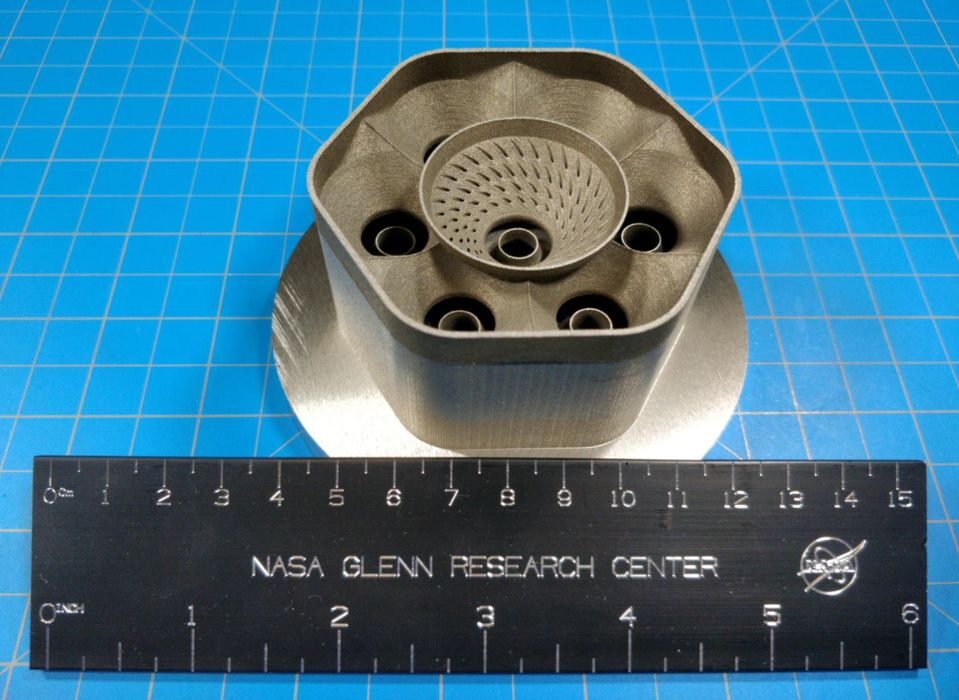
NASA developed a unique 3D printable metal alloy that has incredible performance.
The material, called GRX-810, has another unique property: it was designed specifically for additive manufacturing, rather than being an existing material adapted for AM.
They used a NiCoCr alloy because of its good engineering properties and investigated how it could be made into a more suitable material for AM. This was done with CALPHAD modelling.
CALPHAD is a computational materials science method used to predict how alloys behave under different compositions and temperatures. They investigated more than 50 different compositions and eventually came up with one that provided the necessary properties. Their simulations predicted:
- A stable single-phase solid solution
- No harmful intermetallic grain boundary phases
- Good compatibility with Laser Powder Bed Fusion
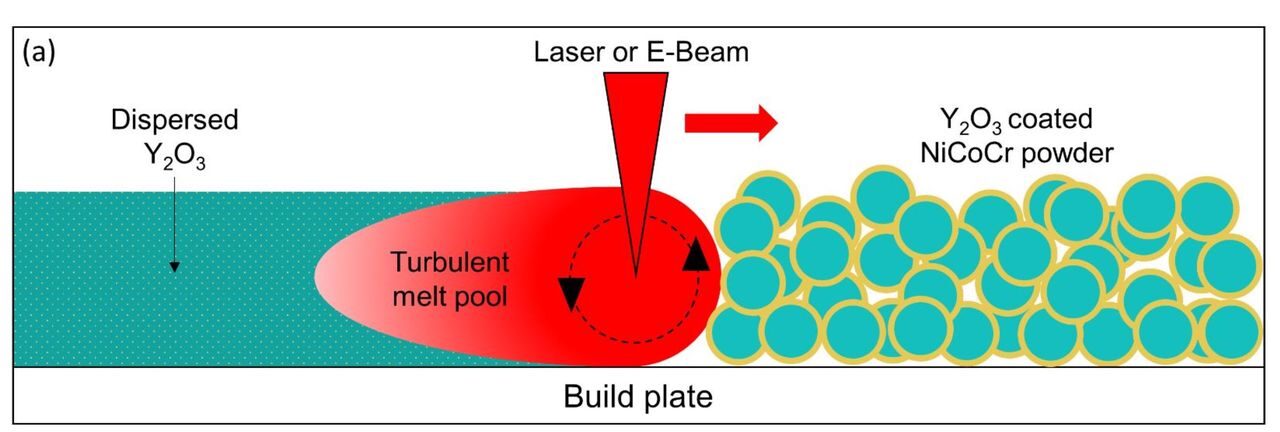
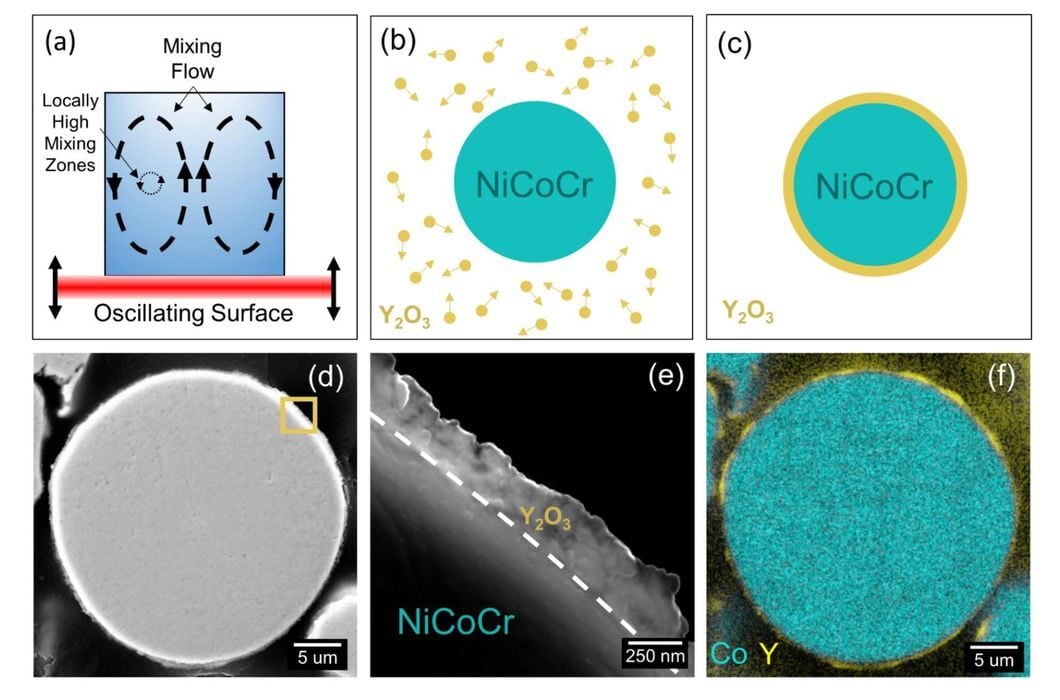
One of the most interesting aspects of GRX-810 is that it uses a special Y2O2 coating to reduce oxidation at high temperatures. No, this was not applied after parts were printed. Instead, the metal particles of the input powder were coated before printing. This preparatory step ensured that the Y2O2 was uniformly distributed within the printed parts.
They printed a number of test samples on an EOS M-280 metal 3D printer and found some surprising results:
- Residual stresses were largely eliminated via hot isostatic pressing (HIP)
- Higher tensile strength than baseline alloys while retaining ductility
- Nearly 2X ductility and 2X tensile strength at high temperatures
- 2000X improvement in creep rupture life over AM NiCoCr near 1100C
- Significantly improved oxidation performance at 1100–1200C
- Powder coating approach is scalable
In addition, they found that printing GRX-810 on the EOS device could be done up to 5X faster than the base material.
There are some interesting implications of this research. First, instead of just adapting existing alloys for AM, this shows the power of designing alloys specifically for AM processes.
That opens up opportunities for industries (aerospace, energy, defense) to develop new materials unattainable by casting or forging.
The 2000X creep improvement implies that parts might have vastly longer useful lifetimes, and that could substantially reduce operational costs and promote reusability.
There’s always room for more 3D print materials, and it appears that NASA has found not only a new and highly useful material, but shown a path to find a great deal more.
Via NASA (PDF)
