
Charles R. Goulding and Kate Esposito explore how Indonesia’s bold downstreaming policy and trade deal with the U.S. are accelerating its transformation into a global hub for nickel, copper, and 3D printing innovation.
Introduction: Trade Deals and Downstreaming to Further Indonesia’s Growth
On July 16th, 2025, President Donald Trump reached a trade deal with Indonesia. As part of the deal, a 19% tariff has been placed on Indonesia, a reduction from an initial 32%, while the United States will have full access into the southeast Asian country. Furthermore, Indonesia has agreed to purchase 50 Boeing jets, US$15 billion in American energy supplies, and US$4.5 billion in American agricultural products. This agreement comes in the midst of Indonesia’s plan to completely transform its economy by implementing a downstreaming policy with a focus on nickel and copper mining ventures. Both of these metals can be used for 3D printing. Although they are mined in Indonesia, the country only sells them as commodities and fails to capture the higher margins from providing refined and processed goods. Metal 3D printing is a lucrative, revolutionary technology, and Indonesia is making progress towards unlocking its full potential.
The Shift From Raw Materials to Refined Goods
Indonesia has an abundance of natural resources, including valuable minerals such as nickel and copper. As a result, the country is one of the leading exporters of these raw goods. However, the Indonesian government is looking to revolutionize the economy and has introduced a new downstreaming policy to enact this change. The policy bans the export of raw materials and focuses on processing and refining them domestically to capitalize on the value of selling cultivated metals instead of ore. By prohibiting the sale of raw goods overseas, the government aims to create jobs, increase export value, attract foreign investors, and enhance competitiveness in the global market. Estimates suggest this policy will attract US$545 billion in investment opportunities and create over 3 million jobs by 2040. Since implementing downstreaming in 2020, Indonesia has made significant progress. From 2020 to 2024, total investments in downstreaming reached US$79 billion, highlighting the effectiveness of this approach and the government’s strong commitment to economic transformation.
Nickel is emerging as a crucial component in electric vehicle (EV) batteries, causing a boom in demand and increasing reliance on nickel stores in Indonesia. In the past, the country only distributed raw nickel ore because it did not have the smelters necessary to process and refine the metal. However, in 2009, Indonesia introduced a Mining Law requiring companies to process ore locally before shipping abroad, and in 2014 it prohibited the export of nickel ore entirely. Though the ban was relaxed in 2017, it was fully reinstated in 2020 to preserve Indonesia’s mineral resources and promote investment in downstream production facilities. Since then, nickel mining and refinement activities have steadily increased, driven by global demand and investments in smelting and processing facilities across the country. There are now 44 nickel smelters operating in Indonesia, with 19 under construction and another seven facilities under feasibility study, drawing the total to 70 smelter plants nationwide. In 2023, 54% of mined nickel supply came from Indonesia, and by 2028 the country is forecast to represent more than 60% of the global supply.
Nickel’s use in EV batteries makes it extremely valuable, with demand expected to triple by 2030. Because Michigan’s Eagle Mine is the only nickel mine in the U.S., American automotive companies such as Tesla and Ford have partnered with nickel projects in Indonesia to create EV batteries. In 2022, Tesla struck a US$5 billion deal to source refined nickel from Indonesia. Agreements like this are exactly what Indonesia is looking to cultivate in order to help transform its economy.
Indonesia is also a major mining source of copper and was the world’s seventh largest producer of the metal in 2023. In addition to creating more nickel smelters to aid in the downstreaming plan, Indonesia launched two copper smelters in 2024. These operations are expected to positively impact both the local and national economies, in part by creating job opportunities and increasing the gross regional domestic product of the regions where the smelters are located.
Advantages and Applications of 3D Printed Metal Components
There are many benefits to metal 3D printing that have made it attractive across the world. It is cheaper and faster than most conventional manufacturing methods and makes it easier to create items with complex shapes. There is also much less material wastage, in part because multiple components can be combined into one unit while printing. Several metals can be 3D printed, but nickel, copper, and their respective alloys are known to produce some of the best results.
Nickel 3D Printing
Nickel is highly versatile and is able to mix with most other metals, creating alloys with unique characteristics. These alloys are frequently used in 3D printing because of their excellent mechanical properties, resistance to corrosion, and strength at high temperatures. One such compound, a nickel-chromium-based superalloy known as Inconel, is extremely popular because of its superior performance qualities in both low and high temperatures where other materials would fail and its resistance to corrosion cracking, pitting, and crevice formation. 3D printed nickel components are commonly used in gas turbines, propeller blades, jet engine components, propulsion motors, and automotive and aerospace parts, and can help with both rapid prototyping and finished production. The most efficient method of 3D printing nickel is using Direct Metal Laser Sintering (DMLS), which melts fine nickel powder with a laser to fuse particles together and form a solid mass. Once the design is printed, any support structures are removed, and finishing is completed.
Copper 3D Printing
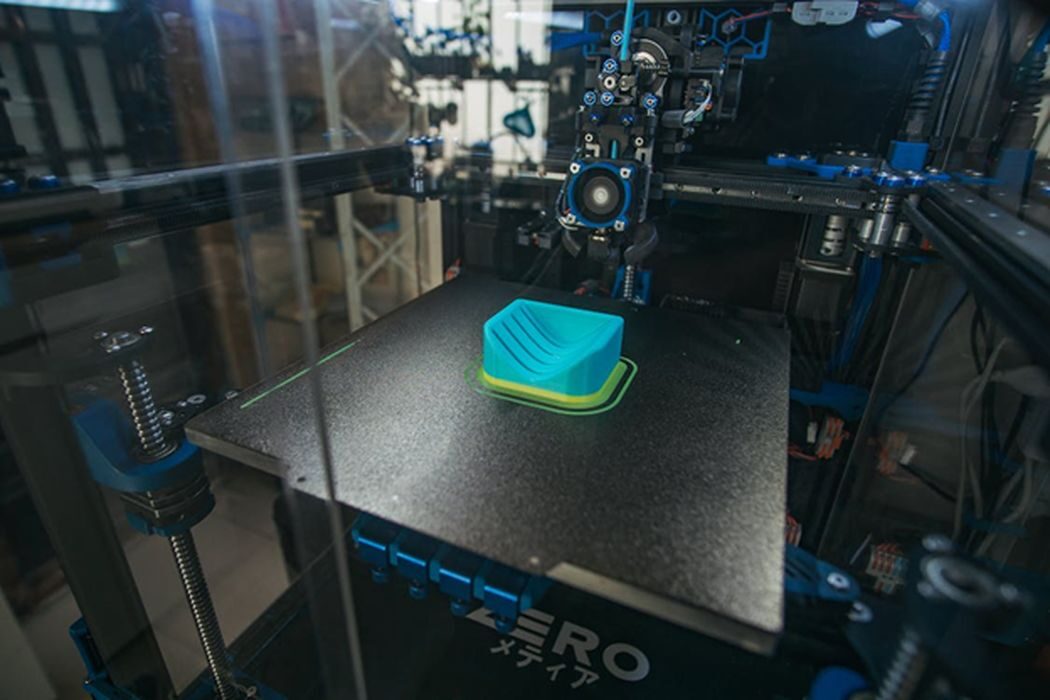
Copper 3D printing is one of the newest and fastest-growing areas of additive manufacturing. Until recently, it was extremely difficult to print 3D components with copper because of its high thermal conductivity and metal reflectivity. Now, researchers have developed ways to implement copper 3D printing, and it is widely used in the production of electronic devices, electric vehicles, renewable energy technologies, aerospace components, and infrastructure development. 3D printed copper parts are extremely advantageous because of their great thermal and antibacterial properties, excellent electrical conductivity, and high malleability.
How Indonesia Has Further Capitalized on Additive Manufacturing
Additive manufacturing startups have gained traction in Indonesia with the rise of companies specializing in 3D printing across many fields, including aerospace, healthcare, and fashion. One such startup, Anugrah Cipta Mould Indonesia (ACMI), has established a new additive manufacturing center for the development of footwear molds. Established in 1995, ACMI has become one of Indonesia’s leading footwear manufacturers, supplying some of the world’s top shoe brands. After several years of using metal 3D printing, ACMI made the strategic decision to open their own additive manufacturing center. This ties in to the rise of additive manufacturing in fashion around the world, as many clothing brands have begun using 3D printing to create prototypes, models, and products to further their manufacturing capabilities. While this article was being drafted, the New York Times published a front page business section article on Indonesia’s use of Chinese apparel materials. Indonesian apparel makers will need to pay careful attention to the U.S. Customs’ scrutiny of Chinese transshipments.
The Research and Development Tax Credit
The now permanent Research & Development (R&D) Tax Credit is available for companies developing new or improved products, processes, and/or software.
3D printing can help boost a company’s R&D Tax Credits. Wages for technical employees creating, testing, and revising 3D printed prototypes can be included as a percentage of the eligible time spent on the R&D Tax Credit. Similarly, when used as a method of improving a process, time spent integrating 3D printing hardware and software counts as an eligible activity. Lastly, when used for modeling and preproduction, the costs of filaments consumed during the development process may also be recovered.
Whether it is used for creating and testing prototypes or for final production, 3D printing is a great indicator that R&D Credit eligible activities are taking place. Companies implementing this technology at any point should consider taking advantage of R&D Tax Credits.
Conclusion: Downstreaming and 3D Printing Ushering in a New Age
Indonesia’s commitment to downstreaming and its embrace of metal 3D printing are helping to transform the country’s economy. By shifting from exports of raw materials to processed and refined goods, Indonesia is positioning itself as a global leader in rising technologies like EV batteries and additive manufacturing. As nickel and copper continue to drive demand, Indonesia’s policies offer a compelling model for economic development in the 21st century.