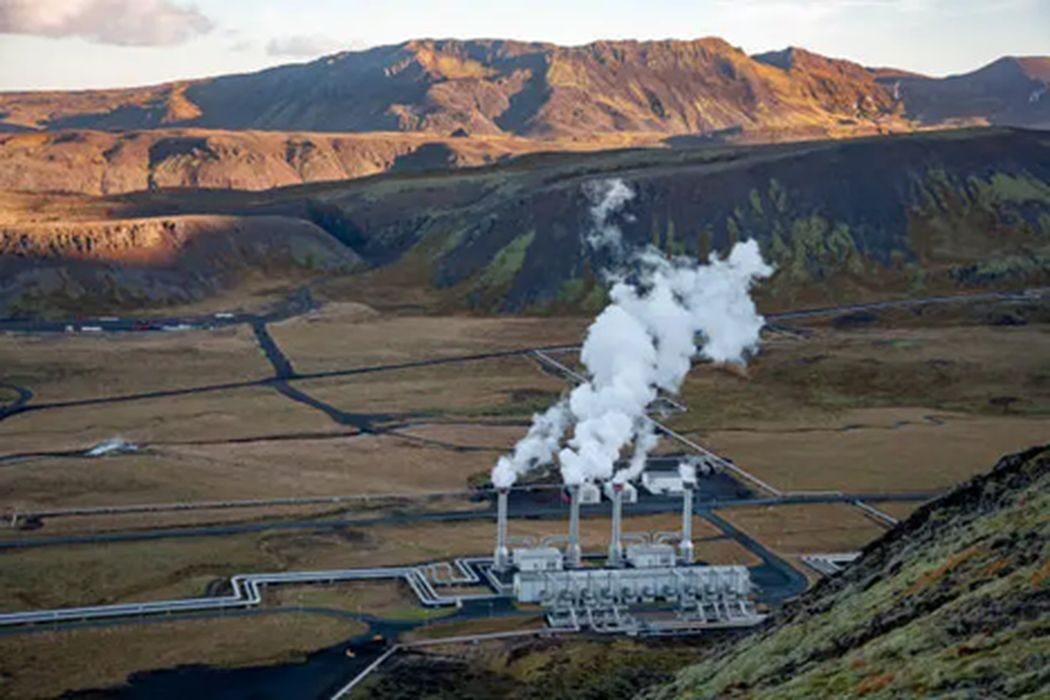
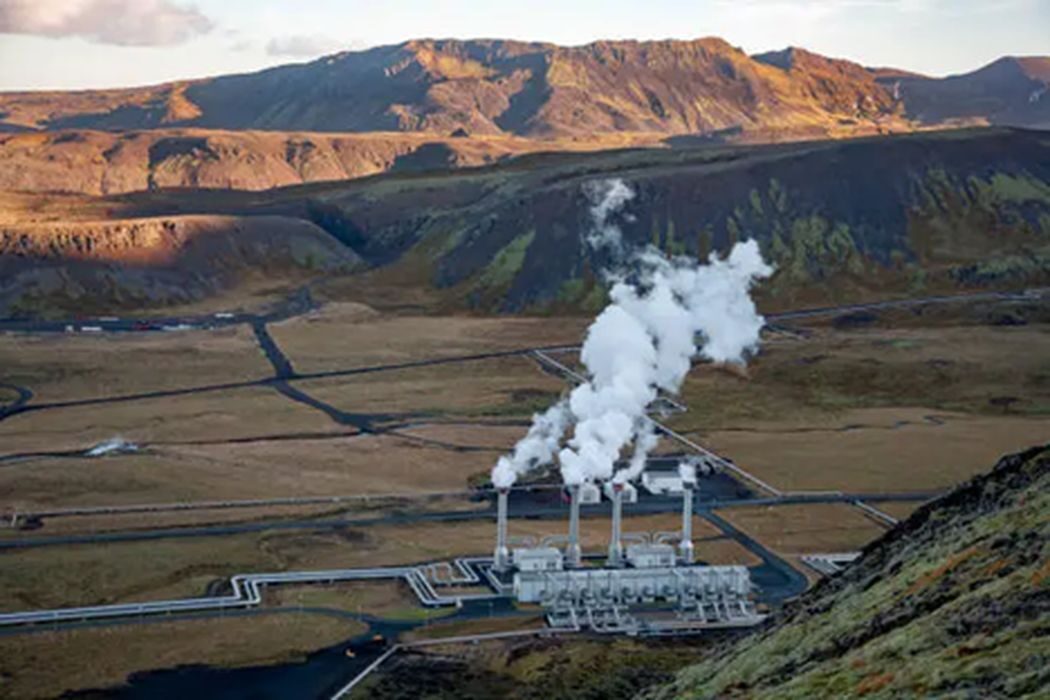
In this article, Anthony Palumbo and Charles Goulding show how oil-and-gas skills and supply chains accelerate next-gen geothermal, explain that the “Big Beautiful Bill” preserves key tax credits, and spotlight additive manufacturing, from packer components and armored PDC bits to compact heat exchangers, in projects by Fervo, Eavor, and CTR–Baker Hughes.
Why Now: Oil & Gas Surplus Meets AI-Driven Power Demand
Oil market commentary through late summer 2025 keeps circling the same theme: supply growth is outpacing demand, pointing to mounting surpluses into 2026. That backdrop supports softer prices even as geopolitics stay noisy. On the power side, AI-driven data centers are straining grids that need round-the-clock, clean megawatts (MW). Geothermal is still a sliver of U.S. generation, about 0.4% in 2023, but it’s dispatchable and carbon-free. Globally, installed geothermal power reached ~16,873 MW at year-end 2024, a small base with room to scale.
The resource and ambition exist. U.S. Department of Energy’s (DOE’s) Enhanced Geothermal Shot targets ~$45/MWh by 2035 for enhanced geothermal systems (EGS). The International Energy Agency’s (IEA’s) Future of Geothermal report outlines a path to ~800 GW of next-gen geothermal capacity worldwide by 2050 in low-cost scenarios. Closer to home, new USGS work estimates on the order of ~135 GW of EGS potential in the Great Basin alone—roughly 10% of today’s U.S. electricity if current technologies scale. Put together: surplus oilfield capacity plus firm-power demand opens a window for geothermal, and advanced manufacturing can move the needle.
Geothermal 101: From Reservoir Heat to Grid Power
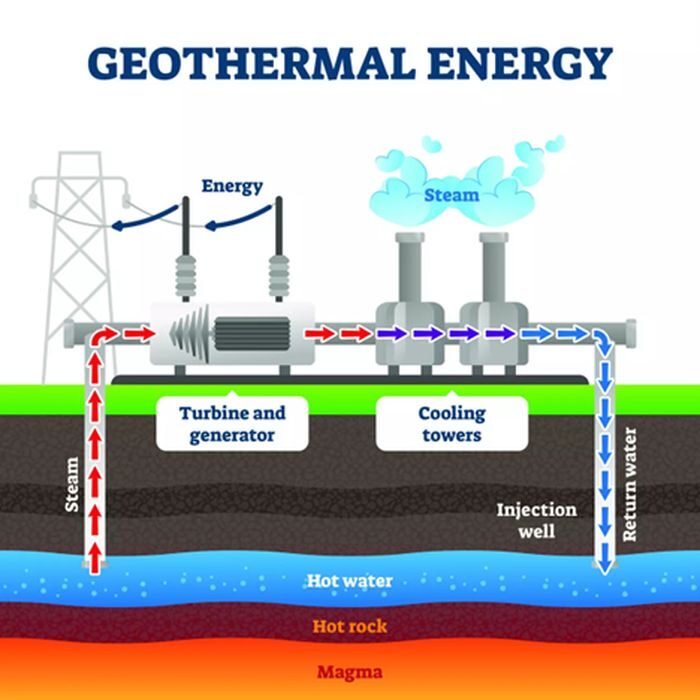
At its core, geothermal generation is a heat-to-power problem: move heat from the subsurface into a thermodynamic cycle that spins a generator, then re-inject the cooled fluid to sustain the reservoir.
- Finding and making the resource
Conventional hydrothermal projects tap naturally permeable, hot reservoirs. EGS creates or improves permeability in hot, tight rock using stimulation techniques, then connects injection and production wells (often as multilateral laterals). Closed-loop designs circulate a working fluid in sealed wellbores without contacting formation fluids; heat transfers through the wellbore walls.
- Drilling and completions
High-temperature drilling, directional control, and precise well intersections matter. Completions provide zonal isolation (packers, liners, cementing) that must tolerate large thermal cycles, high salinity, and solids. Reliability under heat and abrasion is the name of the game.
- Bringing heat to the surface
Produced fluid may be dry steam, two-phase (steam+brine), or hot brine. Surface separators, throttling valves, and wellhead control gear condition the stream before it enters the power block.
- Converting heat to electricity
- Dry-steam plants route steam straight to a turbine
- Flash-steam plants “flash” pressurized hot brine (typically ~180–240 °C) to steam in one or two stages, then drive a turbine.
- Binary (ORC) plants pass moderate-temperature brine (~100–180 °C) through heat exchangers to vaporize a low-boiling working fluid (e.g., isobutane, pentane), which drives a compact turbine. The brine never contacts the turbine hardware.
- Cooling, re-injecting, and balance-of-plant
Condensers and cooling systems (air-cooled or water-cooled) reject waste heat. Re-injection wells return cooled brine to maintain reservoir pressure and close the loop. Operators manage non-condensable gases and H₂S abatement where present, and fight scaling/corrosion with chemistry control, coatings, and smart hydraulics. Parasitic loads, such as pumps, cooling fans, compressors, are minimized by design.
Every step is equipment-heavy and temperature-limited. Downhole tools (packers, bits, sensors), surface valves and manifolds, and especially heat exchangers benefit from geometries that improve flow distribution, heat transfer, and wear resistance. That’s the sweet spot for AM, where the workflows (directional drilling, completions, stimulation, reservoir monitoring) map tightly to oil & gas (O&G) experience.
U.S. Policy & Permitting: 48E/45Y Tax Credits and Fast-Track Approvals
The 2025 One Big Beautiful Bill Act (H.R. 1) pares back or accelerates phase-outs for several IRA-era incentives (especially for wind and solar) but preserves a durable runway for non-wind/solar technologies via the tech-neutral 48E ITC and 45Y PTC. Legal analyses converge on the same practical takeaway: projects that begin construction by the end of 2033 can still capture full credit values, with phase-downs in 2034–2035, and transferability remains (with some refinements). For developers, that’s clearer bankability than many assumed in early 2025.
Separately, the Department of the Interior (DOI) has fast-tracked geothermal permitting, using emergency procedures that compress reviews that once took months or years into ~14–28 days for certain actions. DOI and Bureau of Land Management (BLM) have also rescinded a raft of “obsolete” rules to speed routine decisions. These moves are already touching live projects in the U.S. West, even as early legal challenges percolate in Nevada.
Oil & Gas-to-Geothermal Skill Map: Drilling, Completions, Reservoir, Facilities
A striking share of oil & gas skills port directly into geothermal. The DOE’s GEODE initiative, run by Project InnerSpace with the Society of Petroleum Engineers and Geothermal Rising, exists to harness O&G experience for geothermal. NREL’s workforce resources say it plainly: many O&G occupations are directly transferable to geothermal with targeted upskilling.
Translatable Skill Map:
- Drilling Engineering & Directional Drilling – Multilateral EGS laterals, magnetic ranging for precise well intersections, high-temperature BHA design, bit/cutter selection for abrasive formations, lost-circulation mitigation in fractured granites.
- MWD/LWD & Wellbore Surveying – High-temp-rated tool deployment, ranging and collision-avoidance for closed-loop connections, downhole telemetry in hostile thermal environments.
- Completions Engineering – Zonal isolation with high-expansion/metallic packers, thermal-cycle-tolerant cement systems, liner hanger and tie-back design for repeated heat-up/cool-down.
- Reservoir Engineering & Geomechanics – Thermal reservoir simulation (heat and mass transfer), fracture-network modeling for EGS, injectivity testing (step-rate, DFIT), induced-seismicity hazard analysis and monitoring.
- Production Chemistry & Flow Assurance – Silica and carbonate scaling prediction/control, corrosion inhibition in high-salinity brines, acidizing for injectivity restoration, solids handling and filtration.
- Facilities/Process Engineering – Two-phase separation, pressure-letdown control, H₂S abatement trains, heat-and-mass balance for ORC/flash cycles, piping/vessel design to ASME in high-chloride service.
- Electrical, Controls & SCADA – Plantwide instrumentation, VFD control of production/re-injection pumps, grid interconnection and protection, cyber-secure remote operations.
- Materials & Metallurgy – Alloy selection for hot brines (Ni-based alloys, duplex SS, Ti, etc.), weld procedures and post-weld heat treatment, hardfacing and wear-armor strategy for erosive service.
- Data Science & Real-Time Operations – Drilling analytics, predictive maintenance, well test analysis; adapted to fiber-optic DTS/DAS, tracer studies, and plant-level performance monitoring.
- HSE/Environmental & Permitting – Risk management, PSM/HAZOP, water management plans, community engagement; adapted to BLM/state geothermal frameworks and induced-seismicity protocols.
- Project Management, EPC & Supply Chain – Stage-gate execution, QA/QC, vendor qualification, and logistics for high-spec equipment under long lead times; directly applicable to geothermal EPC delivery.
- Turbomachinery & Rotating Equipment – Compressor/turbine know-how in O&G translates to ORC turbine-generator packages, cooling fans, and balance-of-plant rotating equipment.
Directional drilling, MWD/LWD, and magnetic ranging translate into precise multilateral EGS laterals and closed-loop well connections, where Eavor’s Active Magnetic Ranging in Germany is a live example. Completions teams apply high-expansion packers, zonal isolation, and thermal-cycling design under higher-temperature constraints. Reservoir and geomechanics experts shift from hydrocarbon flow to heat-flow and fracture modeling for EGS stimulation, with familiar induced-seismicity monitoring. Production chemistry and plant operators bring silica-scaling management, corrosion control, and materials selection for wells, heat exchangers, and pumps. GEODE and allied programs are standing up short courses, mentorships, and datathons to pull O&G professionals over with minimal friction.
Case Studies: Fervo, Eavor, and CTR-Baker Hughes
Fervo Energy (EGS, U.S.) – Cape Station in Utah is now fully contracted at ~500 MW, with counterparties including Southern California Edison (SCE), Clean Power Alliance, and Shell Energy North America (31 MW). Fervo has indicated its first 100 MW will deliver in 2026. In parallel, Nevada regulators approved Google/NV Energy’s 115 MW “clean transition tariff” structure to source Fervo geothermal for data centers.
Eavor (Closed-Loop, Germany) – At Geretsried, Eavor’s Active Magnetic Ranging cut the time to connect laterals, which is classic directional-drilling muscle repurposed for closed-loop geothermal. The project aims to co-produce power and district heat, showcasing O&G techniques in a geothermal context.
CTR + Baker Hughes (Salton Sea, U.S.) – The Hell’s Kitchen development targets ~500 MW of baseload power alongside lithium recovery, with Baker Hughes bringing high-temperature drilling and project delivery capability to the table. Recent announcements underscore momentum to supply 24/7 power for data-center and industrial loads.
Where 3D Printing Adds Value in Geothermal Hardware
Geothermal’s hardware lives in hot, abrasive, corrosive environments. Volumes are modest, geometries are specialized, and development is iterative; all of which are within prime AM territory.
Downhole & completions
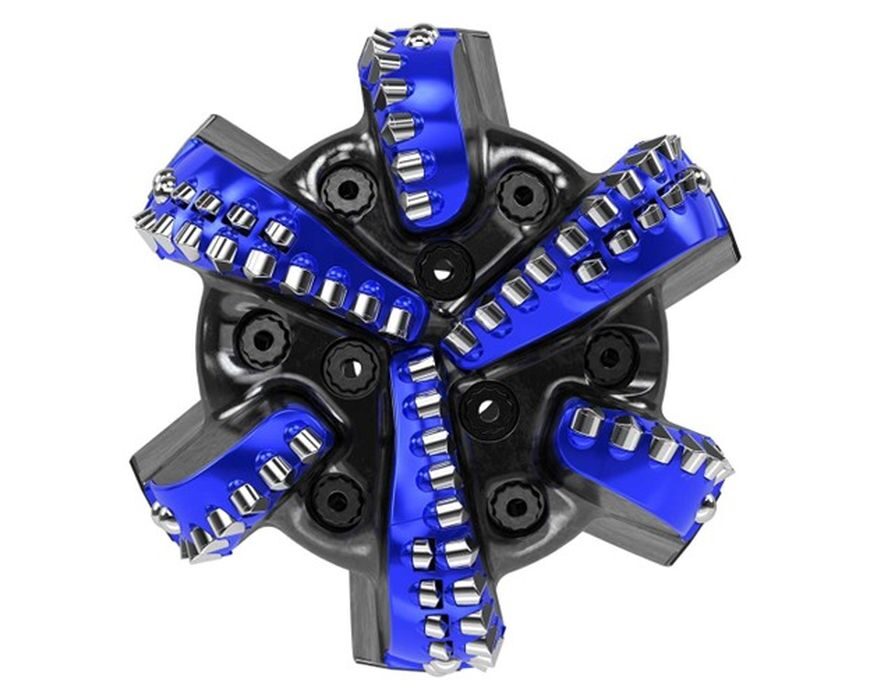
Baker Hughes’ additively manufactured RockLock™ backup ring enables expansion ranges not achievable with conventional machining, improving zonal isolation, which is directly relevant to EGS completions. SLB’s Aegis™ 3D-printed and electron beam-processed armor replaces traditional hardfacing. The company reports ~400% higher erosion resistance and ~40% greater strength versus matrix materials, boosting ROP and durability in high-flow, abrasive regimes. Furethermore, Downhole Emerging Technologies’ all-metal, DMLS-printed geothermal packer (with Protolabs) demonstrates how O&G tool families can be redesigned for high-temperature, corrosive brines without elastomers.
High-intensity heat exchangers
The biggest AM prize topside is compact, high-temperature heat exchangers (HXs). ARPA-E’s HITEMMP program funded GE and partners to demonstrate sub-scale printed HXs operating near ~900 °C and high pressure, exploring similar gyroid and triply periodic minimal surface (TPMS) internals that raise UA/volume and enable integrated manifolding. These design spaces are ones that simply can’t be machined. ORNL and collaborators have fabricated AM cores with novel flow paths, and a growing literature is quantifying performance gains and pressure-drop tradeoffs for additively manufactured lattices.
Materials & corrosion
Qualifying printed alloys and surfaces for brines is as much a materials problem as a geometry one. PNNL has surveyed corrosion-testing methodologies for AM materials that can inform geothermal protocols, and open literature continues to refine brine-specific corrosion and scaling test regimes.
Execution Playbook for Geothermal Projects
- BOM triage: Flag parts that chronically fail in heat/corrosion, carry long lead times, or would benefit from internal channels or lattices. These are your primary AM candidates.
- Choose partners with field pedigree: Shops and OEMs that already certify O&G parts (Baker Hughes, SLB, etc.) bring relevant QA/QC and metallurgy for geothermal.
- Qualify, then scale: Start with INL/PNNL-type corrosion protocols and coupon tests in synthetic/site brines before scaling to submodules (like HX cores), then full skids. Capture data lenders and insurers will accept.
- Design for serviceability: Where silica scaling is likely, design AM channels for accessible cleaning. Apply finishes/coatings validated in geothermal corrosion literature.
Risks, Constraints, and Mitigations
- Exploration & resource risk — Still dominate early projects; EGS repeatability is improving but not guaranteed. (USGS notes results are contingent on tech scaling.)
- Environmental review & community impacts — Can challenge fast-tracked projects; early court fights are already emerging in Nevada.
- Materials & electronics — Are still hard at super-hot conditions; AM solves geometry, not metallurgy by itself, where qualification remains critical.
The Research & Development Tax Credit
The now permanent Research and Development (R&D) Tax Credit is available for companies developing new or improved products, processes, and/or software. 3D printing can help boost a company’s R&D Tax Credits. Wages for technical employees creating, evaluating, and revising 3D printed prototypes are typically eligible expenses toward the R&D Tax Credit. Similarly, when used as a method of improving a process, time spent integrating 3D printing hardware and software can also be an eligible R&D expense. Lastly, when used for modeling and preproduction, the costs of filaments consumed during the development process may also be recovered.
Whether it is used for creating and testing prototypes or for final production, 3D printing is a great indicator that R&D Credit-eligible activities are taking place. Companies implementing this technology at any point should consider taking advantage of R&D Tax Credits.
Conclusion: The Subsurface Workforce Advantage
Oil & gas didn’t just leave behind wells; it built a workforce, supply chain, and toolset that map naturally to geothermal. With a clearer tax-credit runway and accelerated federal permitting, the bottleneck is increasingly hardware and execution. That’s where additive shines: faster design cycles for packers and bits, compact heat-exchanger cores you can’t machine, and materials strategies tailored to hostile brines. For engineers and drillers ready to pivot, geothermal isn’t a detour; it’s the next chapter of subsurface engineering.