
Charles R. Goulding and Aaron Rofe highlight how Tulsa’s focused approach to tech development, workforce strategy, and industrial investment is challenging coastal dominance.
The story of American innovation has long been written on the coasts – in the venture-backed corridors on San Francisco, the biotech hubs, of Boston, the tech campuses of Seattle. But a compelling new chapter is being drafted in an unlikely place: Tulsa, Oklahoma, a Midwestern city perched on the edge of the Ozarks, where southern warmth meets Western grit. In his 2025 book Reinventing the Heartland, Nicholas Lalla, founder of the Tulsa Innovation Lab, lays out how his team raised over US$200 million and built an economic development engine that other mid-size cities are not studying as a model.
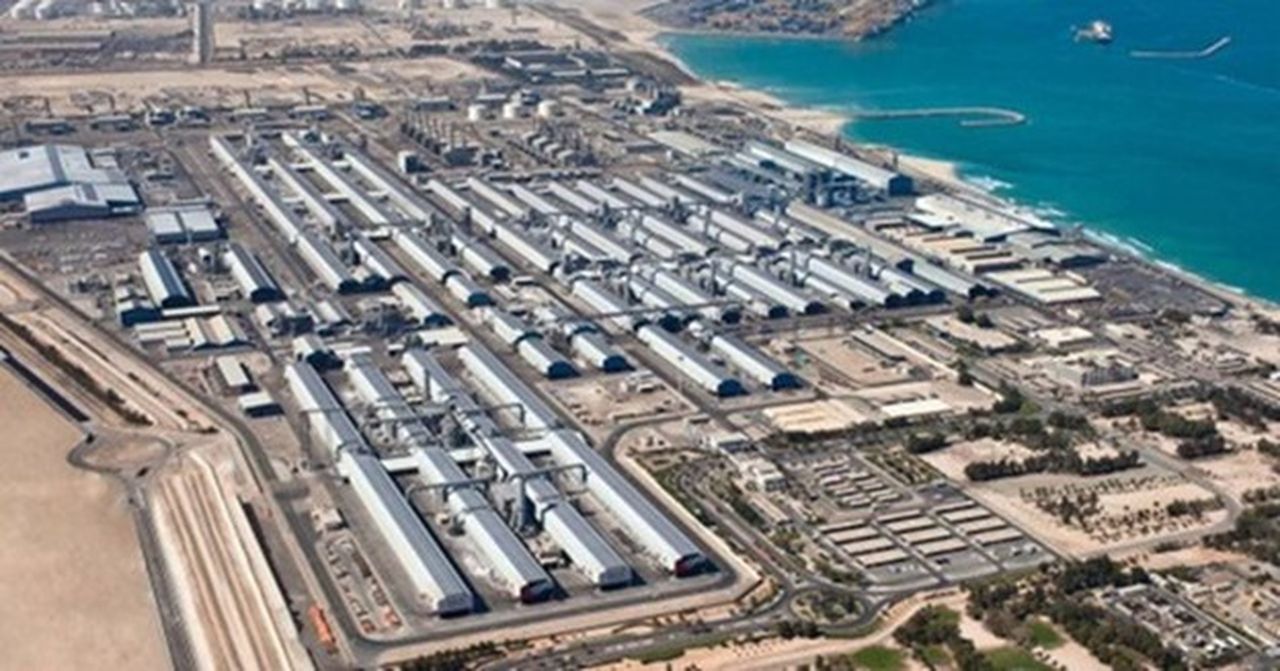
The book is part memoir, part playbook, and it arrives at a moment when Tulsa is already making national headlines. The city recently secured a major new aluminum smelter funded by Century Aluminum and Emirates Global Aluminum, the first greenfield aluminum production facility built in the US since 1980. The facility is expected to produce 750,000 tons of aluminum each year, more than doubling current US primary production, while creating 1,000 permanent jobs and additional 4,000 during construction.
Emirates Global Aluminum has since been thrust into international headlines following Iran’s March 2026 missile and drone strikes on EGA’s Al Taweelah Smelter in Abu Dhabi, which caused significant damage and is expected to take up to a year to repair, raising questions about the timeline for the Oklahoma joint venture.
Lalla is a transplanted urbanist. Before Tulsa, he led Cyber NYC for the New York City Economic Development Corporation. He understood that innovation ecosystems don’t emerge by accident – they’re engineered. But he also understood that a mid-size city can’t be all things to all people. Rather than chasing whatever technology sector happened to be trending. Lalla took a whiteboard approach, using cluster analysis to identify sectors where Tulsa had genuine underlying strengths.
The result was a focused portfolio of five technology clusters: Virtual Health Care, Energy, Advanced Air Mobility, Cyber, and Analytics. Each one maps directly to something already embedded in the region’s DNA. Virtual health care addressed the needs of a sprawling rural population that includes major tribal nations. Energy has been the backbone of Oklahoma’s economy for over a century. Aviation and drones have a long-standing presence in the Tulsa area, providing a natural platform for vertical transportation – the emerging class of electric vertical takeoff and landing aircraft and urban air mobility systems that represent one of the most highly anticipated frontiers in aerospace.
Cyber and Analytics serve as cross-cutting skill sets relevant to every cluster, while also functioning as a fast-track labor training vehicle for an area with fewer STEM and four-year college graduates than some coastal competitors. The discipline of that selection process – knowing what not to purse – may be Lalla’s most transferable insight.
Reinventing the Heartland offers detailed comparative analysis of two other mid-size city success stories: Pittsburgh’s reinvention around robotics and Austin’s emergence as a broad-based tech hub fueled by a deep engineering talent pool. The Pittsburgh comparison is particularly instructive – and increasingly complicated. Lalla references the demise of the steel industry that once defined the city, a narrative that may itself be shifting.
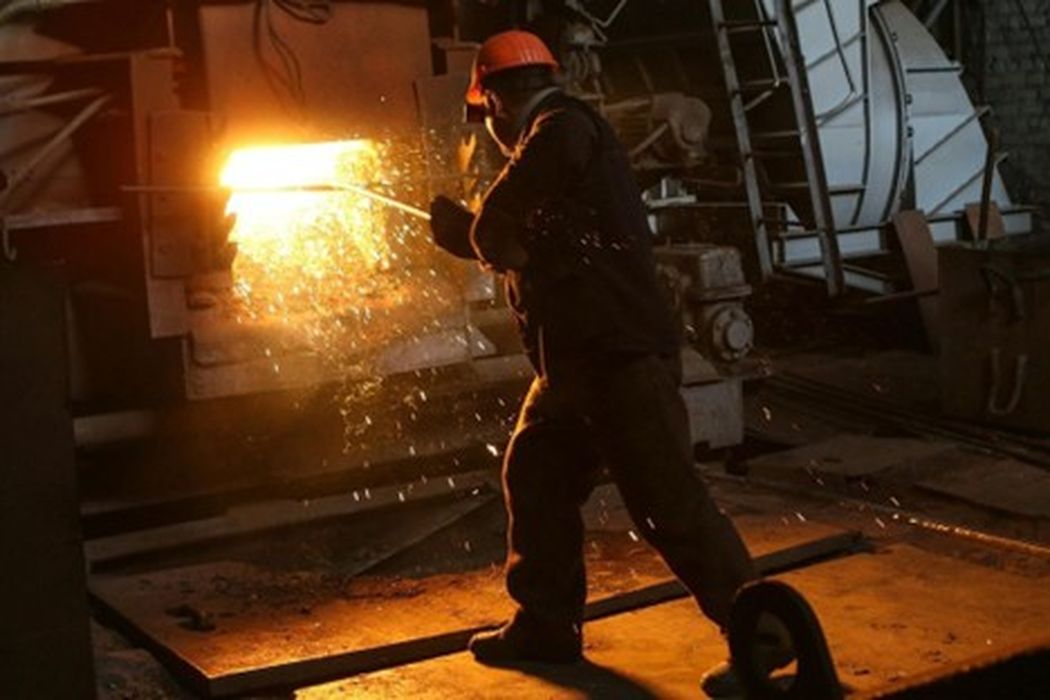
The Nippon Steel Acquisition of US Steel, a US$14.9 billion deal announced in late 2023, pairs Nippon’s world-leading steelmaking technology with US Steel’s domestic operations and signals renewed confidence in American steelmaking at a time when demand for aluminum and steel is accelerating across renewable energy, electric vehicles, aerospace, and defense.
And the revival isn’t confined to Pittsburgh. Birmingham, Alabama is experiencing its own steel resurgence, anchored by over US$1.5 billion in steel-related capital investment over the past decade. That includes Nippon/US Steel’s US$75 million expansion at its Fairfield Tubular Operations and the American Cast Iron Pipe Company’s nearly US$790 million modernization initiative, which will replace existing furnaces with greener induction technology and is expected to reduce emissions by more than 90 percent.
Also in the South, US Forged Rings announced an US$875 million investment in Hertford County, North Carolina, co-locating alongside Nucor Steel operations to build a domestically integrated supply chain for critical forged steel components serving power generation, defense, aerospace, and offshore infrastructure. These investments collectively suggest that the steel industry Lalla treated as a cautionary tale may be entering an entirely new chapter.
Meanwhile, Pittsburgh’s prized robotics sector may be facing a competitive challenge of its own. As Teddy Haggerty’s work distributing Chinese-made Unitree humanoid robots into the US market illustrates, Chinese manufacturers are aggressively commercializing humanoid platforms at competitive price points. Unitree, which is reportedly preparing for an IPO at the Hong Kong Exchange after a Series C round valuing the company at US$1.7 billion, made headlines when its G1 humanoid rang the opening bell at Nasdaq in May 2025.
For Pittsburgh, which has built much of its post-steel identity around robotics and autonomous systems, the rapid emergence of well-funded Chinese competitors represents a serious strategic consideration — one that underscores Lalla’s broader point that no single-sector strategy is permanently secure.
One of the Tulsa Innovation Lab’s most publicized initiatives is its remote worker inventive programs, which offers US$12,000 per successful applicant to relocating tech professionals. Lalla goes into considerable detail about the program’s mechanics, and the results challenge easy assumptions.
Tulsa is highly selective in issuing these awards, drawing from a large and competitive applicant pool, with beneficiaries including remote employees of Adobe, Airbnb, Amazon, Apple, Dell, and Microsoft. But the real payoff goes beyond the initial relocation. Many of these remote workers end up taking full-time positions with existing Tulsa companies within a relatively short period, injecting high-value talent directly into the local economy.
The approach represents a fundamentally different model from traditional economic development, where jurisdictions would incur substantial outlays to attract employers by funding large brick-and-mortar facilities and equipment. With remote worker programs, the economic outlay is typically much less and focuses on highly skilled workers who want to be part of the community. The program isn’t just a recruitment tool — it’s a talent conversion pipeline.
Lalla also uses the University of Tulsa as a case study. Facing operating losses and declining enrollment, the university undertook a dramatic restructuring — shrinking its Arts and Sciences division from 25 departments and 68 degree programs down to 3 divisions with 36 programs. His broader argument is that all universities need to work in concert with local and regional economic development strategies. But Lalla is no philistine about this.
He emphasizes that the traditional liberal arts skills — written and oral communication, problem solving, and critical thinking — must be preserved and may in fact be more important than ever. The challenge isn’t to discard the liberal arts but to embed them within curricula that also connect students to the economic realities of their regions.
The Research & Development Tax Credit
The now-permanent Research & Development Tax Credit (R&D) is available for companies developing new or improved products, processes and/or software.
3D printing can help boost a company’s R&D Tax Credits. Wages for technical employees creating, testing and revising 3D printed prototypes can be included as a percentage of eligible time spent for the R&D Tax Credit. Similarly, when used as a method of improving a process, time spent integrating 3D printing hardware and software counts as an eligible activity. Lastly, when used for modeling and preproduction, the costs of filaments consumed during the development process may also be recovered.
Whether it is used for creating and testing prototypes or for final production, 3D printing is a strong indicator that R&D-eligible activities are taking place. Companies implementing this technology at any point should consider claiming R&D Tax Credits.
Conclusion
The success of the Tulsa Innovation Lab is, at its core, the result of honest self-assessment — and strategic partnership. No account of the Lab is complete without acknowledging the George Kaiser Family Foundation, which has maintained a long-term, multifaceted commitment to Tulsa’s economic development. The Foundation’s support was instrumental in getting the Lab off the ground and scaling its ambitions, and it demonstrates how aligning with a committed anchor sponsor can be the difference between a white paper and a US$200 million initiative.
Lalla and his team didn’t pretend Tulsa was something it wasn’t. They studied the city’s genuine strengths, acknowledged its gaps, chose their battles wisely, and built an ecosystem that plays to the region’s distinctive advantages. As innovation increasingly decentralizes — pushed by remote work, rising coastal costs, and shifting federal investment patterns — the Tulsa model offers something valuable: proof that a mid-size city with the right strategy, the right leadership, and the right institutional backing can compete for the industries of the future without trying to become the next Silicon Valley.