
NanoVoxel has patented a clever method for producing highly detailed metal microcomponents using polymer micro 3D printing as a temporary mold.
The Austrian company’s patent, WO2026162647A2, describes a process for microstructured metal components for watches, jewelry and other applications requiring tiny, intricate geometry.
The basic idea avoids directly 3D printing the metal.
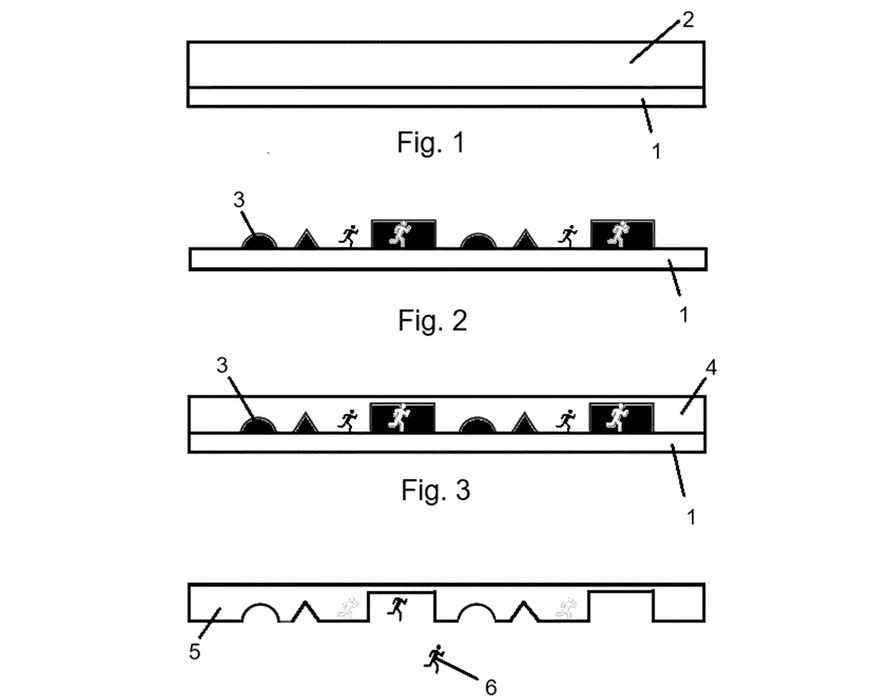
Instead, NanoVoxel proposes first producing a three dimensional negative mold using a high resolution micro 3D printing process. Two Photon Polymerization (2PP) is the preferred technology, although the patent also mentions micro DLP and micro SLA.
The negative mold is then filled with metal through electroplating. Finally, the polymer mold is removed, exposing the finished metal structure.
In other words, the 3D printer provides the geometric freedom, while electroforming provides the metal properties. This is very similar to larger-scale processes that use 3D printing to create a mold that is later discarded. Except here it’s all happening at microscale.
Escaping Flat Lithography
NanoVoxel matches their process against conventional lithographic manufacturing methods such as LIGA, which can produce extremely precise metal microstructures but generally favor essentially two dimensional or 2.5D geometry.
That becomes a problem when designers want curves, undercuts, cavities or intertwined three dimensional structures.
2PP can generate those shapes directly inside a photopolymer volume. NanoVoxel specifically describes molds with layer thicknesses below 20 microns and structural resolution below 20 microns. It also discusses 2PP structures with aspect ratios greater than ten, along with potentially submicron resolution.
Once created, the mold is electroplated with materials including gold, silver, platinum, nickel or copper. Multiple plating operations could even create different metal layers within the same component.
The patent says that room temperature electroplating also avoids some of the thermal distortion and residual stresses associated with higher temperature metal processes.
For jewelry and watches, there is an obvious connection for small parts. Decorative structures could combine extremely fine surface detail with precious metals, while functional parts could take advantage of conductivity, wear resistance or mechanical strength.
NanoVoxel also suggests the resulting surface quality could sometimes eliminate subsequent finishing. That would be particularly valuable at this scale, where polishing a microscopic feature may be difficult or impossible.
The Electroplating Challenge
I have one big question: how well does the metal deposition actually work inside increasingly complicated molds?
Conformal electroplating around fine features sounds attractive, but deep cavities, narrow passages and highly convoluted geometry can make uniform deposition increasingly difficult.
Mold removal could also become interesting when the geometry contains enclosed or nearly enclosed regions. The whole process depends on reliably removing the printed sacrificial structure without damaging extremely delicate metal features. Perhaps they will use some type of soluble material that can dissolve?
Nevertheless, the approach offers an interesting alternative to direct metal micro 3D printing. Rather than trying to achieve extreme resolution with a metal 3D printer, NanoVoxel uses already mature photopolymer microfabrication to create the geometry and transforms that geometry into metal later.
Via Espacenet
