
You might want to turn off your 3D printer’s camera.
Researchers have been able to steal a 3D model simply by analyzing a video of the printing process.
The concept is to reverse-engineer the observed motions into practical GCODE that can then be printed to replicate the original object. Bad actors could literally reconstruct 3D intellectual property from webcam footage of a 3D printer in operation.
How does this work? The researchers were able to track the motion of the toolhead using computer vision techniques. They then were able to infer extrusion and feed rates using neural nets.

To determine whether this worked, they developed a “GCODE equivalence checker”, which could compare the original GCODE and the reconstructed GCODE, ignoring orientation and other irrelevant factors.
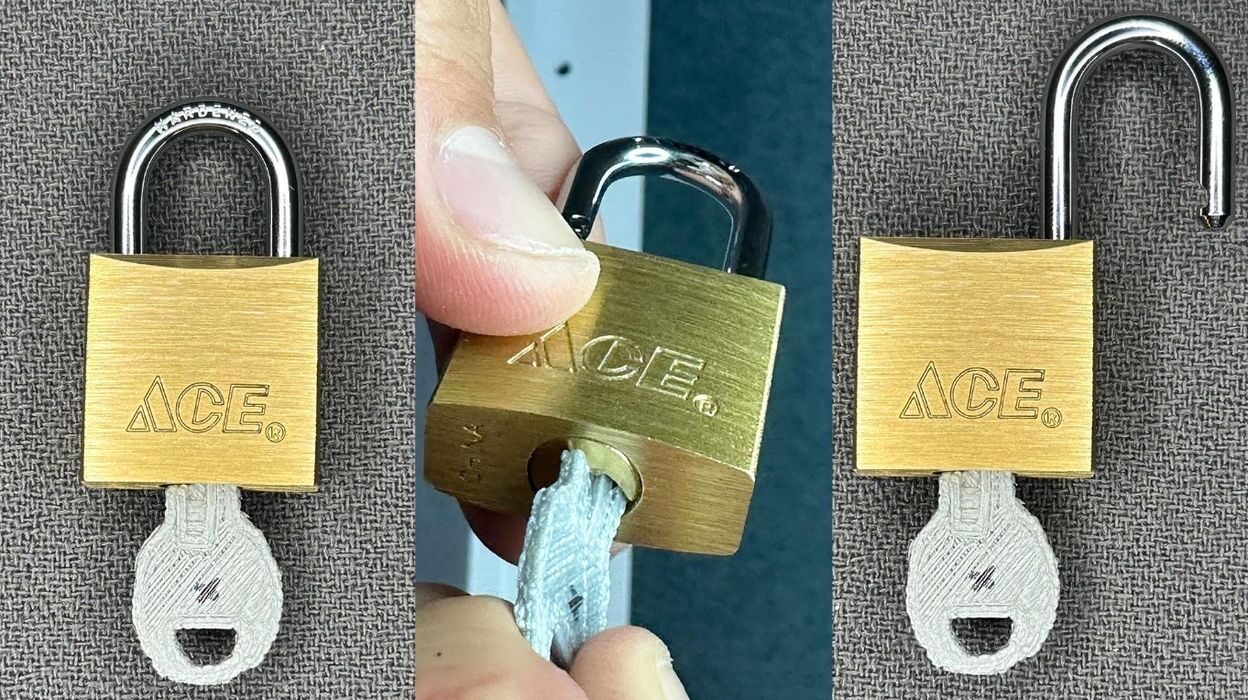
Astonishingly, they were able to achieve 91% similarity to the original GCODE by using this reverse engineering technique. They were able to fabricate replicas of the original objects, including a padlock key and a gear, with only the original video as input.
They also found this technique continues to work in a number of different camera angles, and also works across several 3D printer platforms. In other words, this seems to be a general capability.
This seems to be the first time video to GCODE has been achieved.
The study used only onboard video monitoring footage, similar to that used for typical remote monitoring in cloud systems. However, there is other research that suggests the possibility that this technique might also be able to use standard factory video monitoring camera footage.
It seems that basic video (e.g. 480p) at only 30fps is sufficient for the technique to work. Normal lighting is adequate, but a dark room would not. They do require a full view of the build plate, however.
Many current 3D printers now include high-resolution onboard camera systems that would be more than enough for this technique.
This development is somewhat concerning because many 3D printers include video monitoring features, and often those video feeds are shown through cloud systems.
Should a bad actor break into one of the cloud systems or directly to a 3D printer, they could then capture the video feed. After capture, that video could then be analyzed to reconstruct the GCODE for that print job.
3D printer manufacturers might take note of this. It might be possible to put in new video features to sabotage the video feed, at least for this purpose. It would be relatively easy to inject some trash data into the video feed or chop out small segments, which are likely enough to make the reverse engineering fail.
If you’re printing secret objects, you might reconsider having your 3D printer’s camera on all the time.
Via ArXiv
