
Researchers have developed a method of 3D printing blood vessels, and that’s quite important.
Korean and Chinese researchers recently completed a project where they 3D printed narrowed brain blood vessels. Their goal was to use this structure to study endothelial inflammation, which can cause diseases like atherosclerosis and strokes.
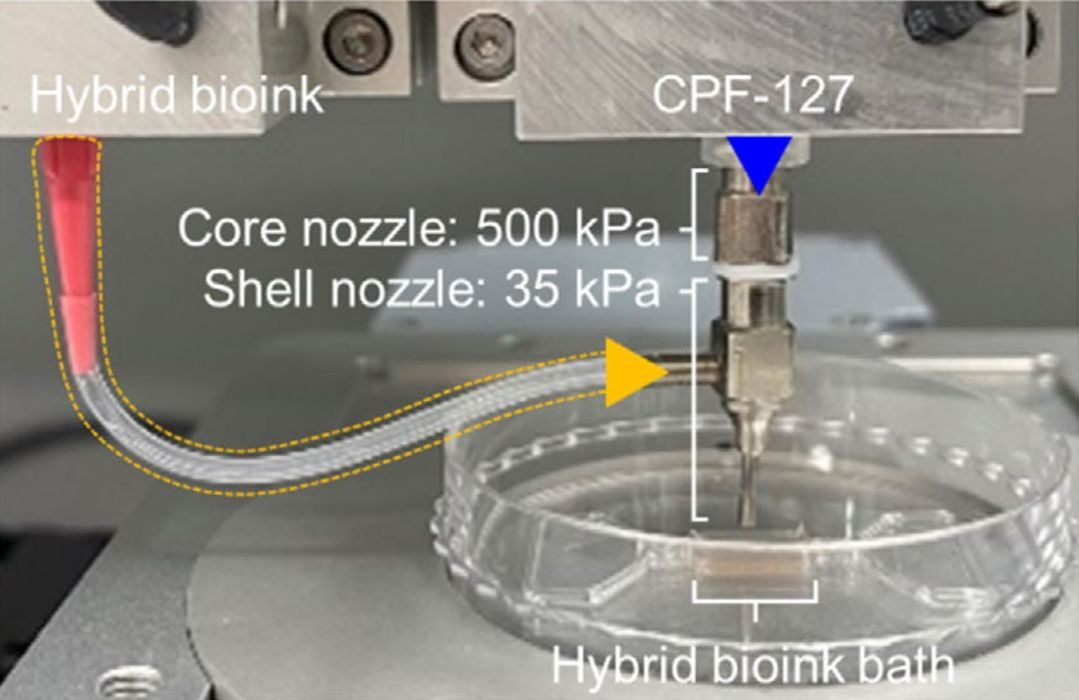
Their technique was quite interesting. They used a coaxial extruder to extrude the vessels in a bath of support material. The material used was a specialized bioink made from pig vascular tissue and collagen.
They found that they could easily vary the diameters of the 3D printed blood vessels between 0.250 and 0.500 mm, and that continuous cell growth occurred after printing, with 97% viability. In other words, they successfully 3D printed blood vessels.
Why is this important? It’s because of limitations in bioprinting. Normally printed tissue is placed in a nutrient solution, where the nutrients can seep into the tissue. However, the nutrients can only reach so far, limiting the size of the printed tissue.
That’s why most bioprinting involves relatively simple structures, like skin. The ability to create larger structures opens up many possibilities.
With the introduction of blood vessels, it would be possible to bioprint larger tissue structures, ultimately whole organs. That’s been a long-term goal of bio printing, but we’re nowhere near that stage yet.
But the ability to bioprint blood vessels is a big step along the way.
