
Charles R. Goulding and Preeti Sulibhavi reveal how Norway’s $13.5 billion frigate purchase from BAE Systems underscores the nation’s central role in NATO’s maritime defense while highlighting how 3D printing is transforming shipbuilding and strengthening allied naval capabilities.
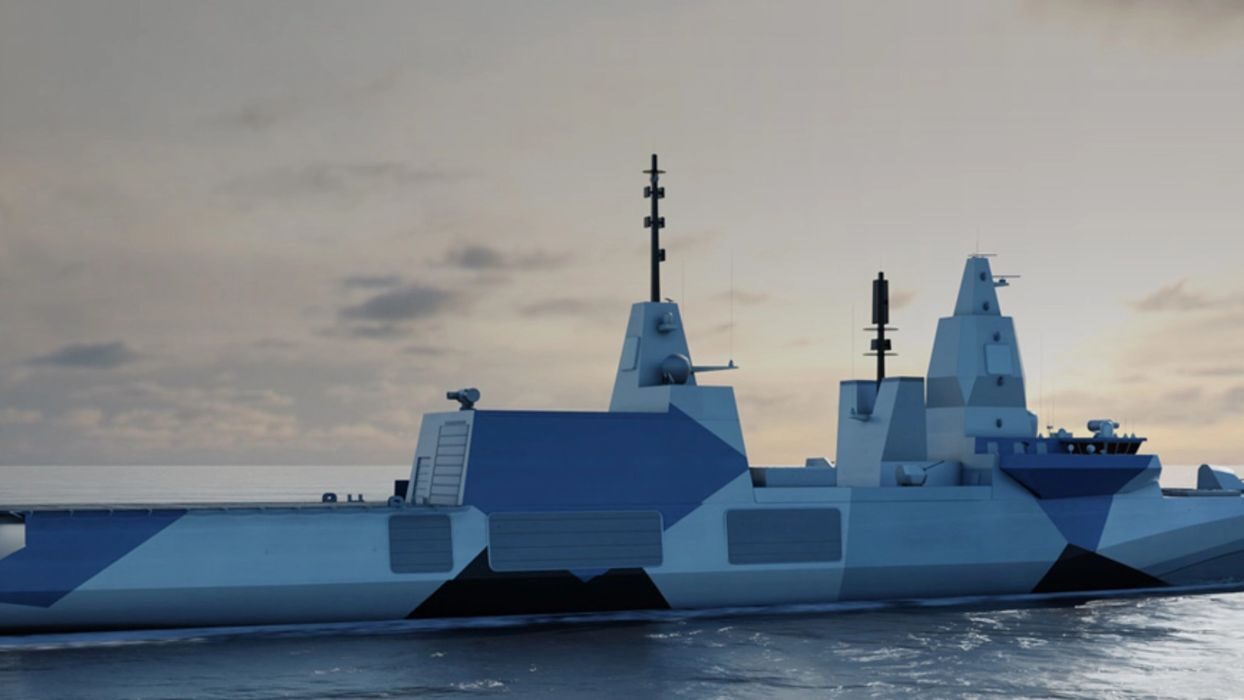
Norway recently announced a landmark US$13.5 billion frigate purchase from BAE Systems, the U.K.-headquartered multinational defense and aerospace company. This decision reflects not only Norway’s critical geographic position in NATO’s security structure but also the increasing reliance on advanced shipbuilding technologies—including 3D printing—to strengthen defense capabilities in an era of heightened global maritime tensions.
At 63,000 miles, Norway’s jagged coastline is Europe’s longest and, after Canada, the second longest in the world. This geography places Norway in a uniquely strategic position. It acts as NATO’s ocean sentry, monitoring Russian submarine activity originating from the Kola Peninsula, a heavily fortified Arctic naval base located just across its northern border. The Kola base remains one of Russia’s most important submarine strongholds, housing a significant portion of its nuclear-powered fleet. In this context, the modernization of Norway’s navy is not simply a matter of national defense—it is central to NATO’s collective deterrence strategy.
The Strategic Importance of Frigates
Frigates, smaller and faster than destroyers, are versatile naval vessels designed for multi-role missions. They combine speed with agility and can carry sophisticated monitoring systems as well as offensive weapons such as missiles. For Norway, the new fleet will provide an indispensable tool for anti-submarine warfare (ASW) in the North Atlantic, a region where Russian submarines frequently transit between the Arctic and the broader Atlantic Ocean.
The Norwegian frigate program will also have significant economic ripple effects. In the U.K., the initiative is expected to support 4,000 shipyard jobs, with half of those located in Scotland. This collaboration further cements defense-industrial ties between the two NATO allies. When combined with Britain’s own naval expansion, the purchase will result in a formidable flotilla of 13 anti-submarine frigates—eight British and five Norwegian—patrolling critical North Atlantic waters.
As former NATO Secretary General Jens Stoltenberg noted in a 2023 interview, “The security of our seas is the security of our alliance. Investments in maritime defense strengthen not only the nations that make them but NATO as a whole.”
A Resurgent Global Shipbuilding Industry
The Norwegian purchase comes amid a broader resurgence in global shipbuilding, not only for military purposes but also in commercial shipping. With increased trade volumes, new naval threats, and heightened demand for greener vessels, shipbuilding is experiencing a wave of technological renewal.
At the center of this renewal lies 3D printing (additive manufacturing). The technology is increasingly used to prototype, produce, and even repair ship components more quickly and cost-effectively than traditional manufacturing methods allow. The ability to produce complex, lightweight, and durable parts on demand has made 3D printing particularly appealing for both naval and commercial shipbuilders.
BAE Systems’ 3D Printing Expertise
BAE Systems, with 2024 sales nearing US$34 billion and a global workforce of 107,000 employees, has already positioned itself at the forefront of 3D printing in the defense industry. The company operates major shipyards at Govan and Scotstoun on the River Clyde in Scotland, where 3D printing technologies are being integrated into the design and production of complex naval vessels.
These shipyards are vital hubs for U.K. naval shipbuilding, producing everything from advanced frigates to aircraft carrier components. BAE has adopted additive manufacturing across multiple stages of production:
- Prototyping: Engineers use 3D printing to rapidly produce scale models and design iterations, drastically reducing lead times.
- Component Production: Certain non-critical ship parts are now produced directly through additive methods, lowering costs while enhancing customization.
- Complex Parts: For geometrically challenging components that are difficult to machine traditionally, 3D printing offers superior flexibility.
BAE executives have been vocal about the benefits. A company spokesperson recently emphasized, “Additive manufacturing allows us to accelerate innovation, reduce waste, and deliver capabilities to our customers faster. It is a game-changer for modern shipbuilding.”
Beyond the U.K., BAE Systems Maritime Australia has partnered with AML3D, an Australian additive manufacturing company, to print a metal frigate prototype for Hunter-class submarines. This collaboration underscores BAE’s global adoption of 3D printing not just for efficiency, but also for fostering innovation ecosystems in allied nations.

Scotland’s Role in Shipbuilding Innovation
Scotland is increasingly becoming a focal point for maritime 3D printing initiatives. Marin Marine Consultants, headquartered in Glasgow, has demonstrated the potential for large-scale 3D printed shipbuilding components. Working with partners such as the National Manufacturing Institute Scotland (NMIS), BAE Systems, and Lloyd’s Register, Marin Marine is exploring how additive manufacturing can enhance the design and structural integrity of modern vessels.
Dr. Robert Stewart of NMIS explained in a recent report, “The maritime industry has always relied on heavy engineering, but additive manufacturing opens doors to new design approaches and rapid response solutions. It is not just an incremental change—it is transformational.”
These projects are particularly important for ensuring that the next generation of naval vessels remains both technologically advanced and cost-effective. By combining Scotland’s long-standing shipbuilding tradition with cutting-edge 3D printing research, the region is establishing itself as a global leader in maritime innovation.
U.S. Advances in Naval 3D Printing
While Norway and the U.K. are advancing their frigate programs, similar 3D printing efforts are underway in the United States. The U.S. Navy has been a strong proponent of additive manufacturing, incorporating it into the maintenance and repair of ships and submarines.
For example:
- Naval Sea Systems Command (NAVSEA) has tested 3D printed metal parts for submarine applications.
- The USS George Washington (CVN-73), a Nimitz-class aircraft carrier, has incorporated 3D printed components during its refueling and overhaul process.
- U.S. shipyards are actively exploring the use of large-scale additive manufacturing to produce hull structures and piping systems.
A senior U.S. Navy engineer commented at a 2024 defense technology conference: “In the future, every shipyard will have additive manufacturing capability on site. The ability to produce parts in real time is critical for operational readiness.”
These innovations mirror those being explored in the U.K. and Australia, indicating a shared trend among NATO members toward embedding 3D printing into the future of naval defense.
Broader NATO Defense Trends
Norway’s frigate deal is not an isolated development. Across Northern Europe, nations are bolstering their defenses in response to Russia’s actions in Ukraine and its increasingly assertive posture in the Arctic.
- Finland, which formally joined NATO in 2023, has ramped up its defense spending, acquiring advanced fighter jets and naval systems.
- Denmark has also announced substantial increases to its defense budget, with a focus on modernizing naval assets and enhancing cyber defense.
Together with Norway and the U.K., these nations form a robust eastern defense bloc that presents Russia with a strong deterrent along its western flank. In this environment, 3D printing is more than a tool for efficiency—it is a critical enabler of rapid technological adaptation and resilience in military supply chains.
The Future of 3D Printing in Naval Defense
As naval vessels become more sophisticated, the need for advanced manufacturing will only grow. 3D printing provides several strategic advantages for naval defense:
- Reduced Lead Times: Critical parts can be manufactured on-site, shortening repair and maintenance cycles.
- Cost Savings: Additive processes reduce material waste and the costs of specialized tooling.
- Customization: Designs can be easily modified to adapt to mission-specific requirements.
- Resilience: In contested environments, where supply chains may be disrupted, local 3D printing ensures continued operational readiness.
For NATO’s northern allies, integrating these advantages into frigate and submarine programs could prove decisive in maintaining technological superiority over adversaries.
The Research and Development Tax Credit
The now permanent Research and Development (R&D) Tax Credit is available for companies developing new or improved products, processes, and/or software. 3D printing can help boost a company’s R&D Tax Credits. Wages for technical employees creating, testing, and revising 3D-printed prototypes can be included as a percentage of the eligible time spent for the R&D Tax Credit. Similarly, when used as a method of improving a process, time spent integrating 3D printing hardware and software counts as an eligible activity. Lastly, when used for modeling and preproduction, the costs of filaments consumed during the development process may also be recovered.
Whether it is used for creating and testing prototypes or for final production, 3D printing is a great indicator that R&D Credit-eligible activities are taking place. Companies implementing this technology at any point should consider taking advantage of R&D Tax Credits.
Conclusion
Norway’s US$13.5 billion frigate purchase from BAE Systems is a significant step in reinforcing NATO’s maritime defenses in the North Atlantic. With a combined force of 13 anti-submarine frigates between Norway and the U.K., NATO will be better positioned to monitor and deter Russian submarine activity in the Arctic and beyond.
But beyond the hardware itself, the program highlights the growing role of 3D printing in naval defense strategy. From Scotland’s pioneering shipyard projects to BAE Systems’ global initiatives and the U.S. Navy’s additive manufacturing trials, the technology is transforming how modern navies design, build, and maintain their fleets.
When combined with Finland’s NATO accession and Denmark’s expanded defense budget, the Norwegian-UK frigate deal signals the emergence of a strong eastern defense bloc. And in this new era of maritime security, the 3D printing industry will play a pivotal role in ensuring speed, flexibility, and resilience for allied naval forces.