
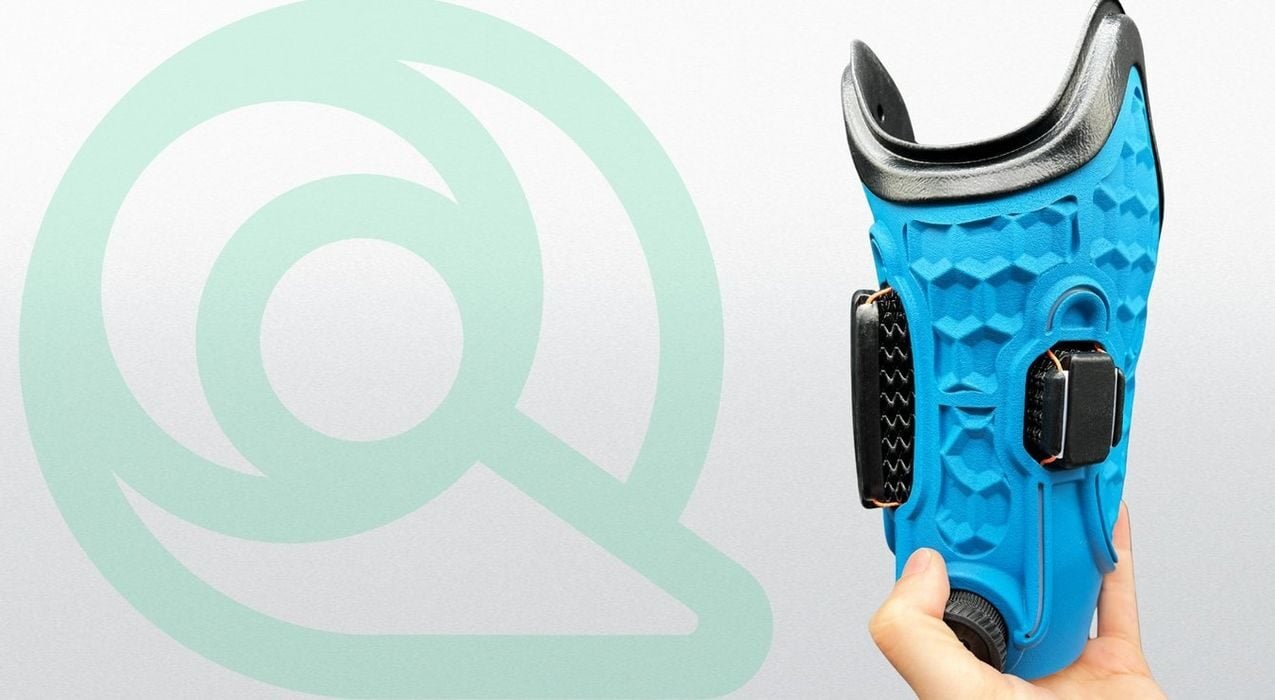
An article on IEEE Spectrum explores reasons why 3D printed prosthetics have yet to catch on.
3D printed prosthetics, at first glance, would seem to be the ideal application: each customer benefits from custom-made parts, printed locally. One customer segment, children, would benefit even more because natural human growth requires replacement of out-grown prosthetics periodically.
The thought at the time was straightforward: create an adjustable design and print off prosthetic parts as required. You could even print them at home yourself, or so the theory went.
But that really hasn’t happened. By and large prosthetics are still quite expensive, in spite of countless 3D print projects that have taken place.
The lengthy article, by Britt H Young, looked at a number of factors that have been barriers to the widespread adoption of 3D printed prosthetics.
One of them was simply comfort. Imagine wearing a 3D printed rigid part all day long. Young writes:
“Those LEGO-style hands getting media attention didn’t have the strength needed for a wearable device, the prints themselves had too many inaccuracies, and the designs were—as you may imagine an entirely plastic object to be—deeply uncomfortable.”
The solution was to mix in rigid and soft components, which were challenging to properly produce on the same 3D printing equipment. This created one of several barriers to adoption.
Another was paperwork. For a long period 3D printed prosthetic components were not certified to be purchased by insurance companies. This effectively blocked use of these parts for the better part of a decade. Now we are slowly seeing this barrier being removed as certifications begin to appear. One even happened a couple of months ago.
Another problem is cost. Young reported on Quorum Prosthetics, a Colorado-based operation that produces prosthetic components using 3D printing. It turns out they use expensive HP equipment to produce their parts, which is likely required for insurance purposes. Evidently the cost of labor is reduced by use of 3D print tech, but the cost of that tech is much more expensive. Combining the cost of machine, materials and environment, they report the cost of a single part is still US$1000. On the other hand, these parts are high end designs that are not required by every patient.
Other designs that are less fancy still cost far more than individuals are typically able to afford, showing that there is a long way to go yet.
Young reports that in spite of issues with the technology breaking through into traditional markets, there has been benefits elsewhere in places that have traditionally had poor access to prosthetics. Shared designs enable anyone to cheaply print molds that can be used to cast silicone liners, for example.
That and similar approaches are lowering costs and broadening access in many regions. But this might be a case of “anything is better than nothing”.
What was once believed to be a wonderful opportunity for 3D print technology has gotten mired in the details. Nevertheless, progress in technology and insurance continues, and it’s possible a breakthrough may occur in the future.
Via IEEE Spectrum
