
A new Taiwanese patent details a 3D printed concrete mix that substitutes reservoir silt to lower cement and aggregate demand.
Construction additive manufacturing has move from demonstrations to job sites, yet the binder is often the same high-carbon recipe. Most extrusion systems from players like COBOD and ICON rely on cement-rich mortars tailored for pumpability and fast buildability. The next frontier is driving down embodied carbon without wrecking rheology, layer adhesion, or early strength.
Enter a utility model from Taiwan (TWM676956U) that pushes precisely on that lever: swap a portion of virgin fines and binders with processed reservoir silt, then tune the rest of the matrix to remain extrudable and stack-stable. The authors measure it against Taiwan’s green concrete labels, aiming to qualify mixes that both recycle waste material and reduce clinker content.
From Dredged Silt To Printable Mix
The patent proposes reusing dredged silt — specifically characterized material from the Zengwen Reservoir — blended with water, natural fine sand, Portland cement, ground granulated blast furnace slag (described as water-quenched blast furnace stone powder), and chemical admixtures. In its base description, the printable filament comprises roughly 8–12 parts water, 29–44 parts fine sand, 8–12 parts cement, 7–15 parts slag, 7–11 parts silt, and 0.2–0.4 parts admixture by weight. Target water-binder ratios are 0.33–0.35, with binder-to-sand volume ratios adjusted to balance pumpability against shape retention.
Print trials focused on classic extrusion metrics: all five tested formulations achieved tilt angles under two degrees and height deformation under five percent, indicating acceptable extrudability and buildability. The mix design also maps to Taiwan’s green building material categories: G mixes substitute supplementary cementitious materials for at least forty percent of binder, while R mixes replace at least twenty percent of total aggregate with recycled material — here, reservoir silt.
Mechanical targets are set by direction, acknowledging anisotropy in layered builds: minimum compressive strengths of 210, 280, and 350 kgf/cm2 in the X, Y, and Z directions at twenty-eight days (approximately 21, 28, and 35 MPa). Seven-day tests showed all but one Y-direction dataset already meeting the lowest threshold, suggesting maturation to the stated targets with hydration.
Promising Data, Clear Tradeoffs
There is real nuance in the data. Adding silt and slag reduces yield stress, which improves extrudability but can hurt buildability if overdone — a familiar tradeoff. Silt-heavy mixes showed greater early shrinkage, which the team mitigated by raising slag content; prior results cited a 21 percent reduction in drying shrinkage when replacing thirty percent of cement with slag. Unit weight fell and water absorption rose with added silt unless slag content increased enough to densify the microstructure via additional C-S-H formation.
Chemical durability followed the same logic. The most silt-rich mix suffered the greatest mass loss in sodium sulfate and sulfuric acid immersion, while a silted mix with the highest slag performed best against 3 percent sulfuric acid. All mixes posted RCPT values under 2000 coulombs, meeting local green concrete requirements, and reported carbon emission coefficients of 256–364 kg CO2e per cubic meter — a meaningful step down from cement-forward mortars.
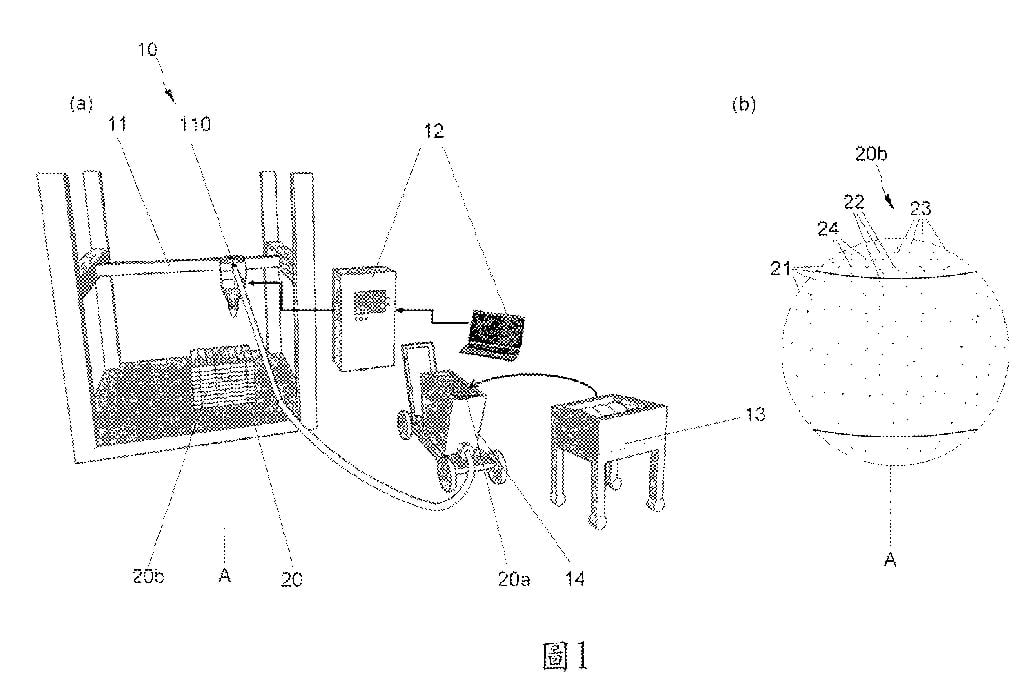
The system design is standard for on-site extrusion: a mixing unit, pump, and an extrusion nozzle governed by a print control unit. Proposed applications span walls, precast elements, culverts, weirs, breakwaters, and even artificial reefs — all plausible use cases where anisotropy and durability can be engineered into the geometry and deposition path.
What remains unknown are the real-world boundaries. Silt varies by reservoir, season, and dredging process; the patent’s silt is CL-class soil with about 71 percent SiO2 and modest plasticity, which may not generalize. Throughput claims are absent, as are nozzle sizes, layer heights, and validated building-scale demonstrations. Cost impacts look favorable from material substitution, but processing silt to stable gradations and moisture could add overhead.
For adoption, look for full mix qualification across multiple silt sources, long-term shrinkage and creep data, freeze-thaw and sulfate exposures to building code standards, and multi-week print trials that demonstrate consistent layer bonding in Y and Z. If those boxes get checked, service providers and public works agencies could gain a lower-carbon material stream that turns dredging waste into infrastructure.
If silt can pull double duty as an ecological cleanup and a printable feedstock, construction AM might turn reservoir maintenance into a materials supply chain.
Via Google Patents
