
Prusa has come up with a tidy answer to a messy 3D printing problem: make the nozzle pass through a small cleaning station that cuts, scrubs, and parks it.
The proposal appears in their recent patent application WO2026209067. It is, of course, for FFF machines, where hot polymer has the annoying problem of oozing after extrusion stops.
That ooze can harden on the nozzle tip or stick to the outside of the hotend. The result might be a clogged nozzle, a dirty print, or a blob dragged across the build. Anyone who has watched a printer move from one part of a job to another has seen some version of this problem.
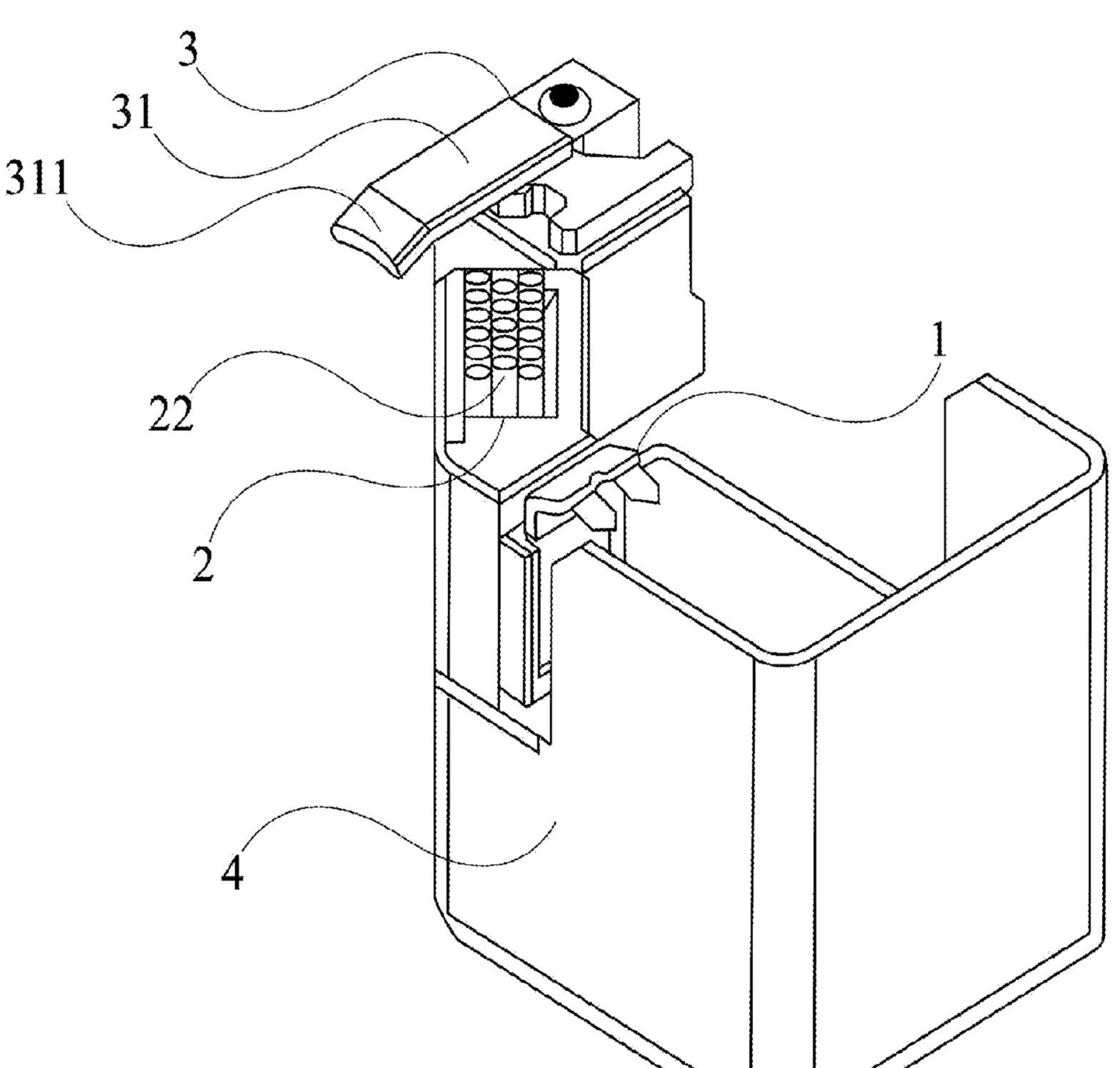
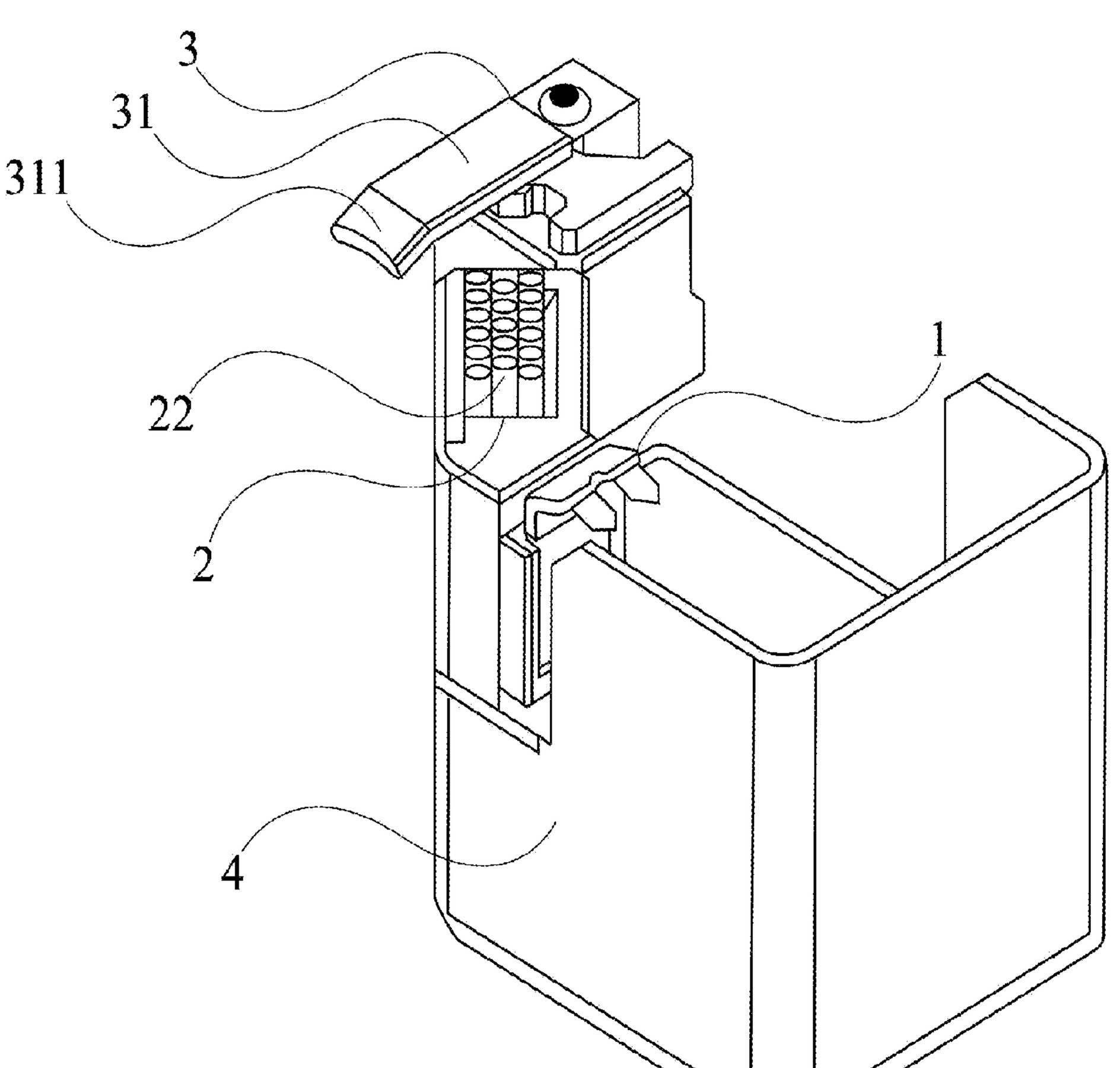
Prusa’s proposed solution is set up as a sequence. The printhead moves at a steady height through a cutter, then a brush, and finally onto a parking platform. A waste container can sit below the first two operations.
The cutter is the most interesting part. It is a rigid plate with two projecting fingers that guide the nozzle into position. Between them is a tapered V-shaped cutout. As the nozzle passes through, the cutout slices away excess filament hanging from the tip.
The cutter geometry is doing two jobs. The fingers stabilize the nozzle sideways, while the angled cutting edge removes the filament without requiring the nozzle to press hard against a broad scraper. The cutting edge is covered with a flexible polymer, such as silicone, to reduce abrasion and keep softened plastic from sticking to the cutter.
After the dangling material is removed, the nozzle enters a brush. This isn’t a typical brush with a few widely spaced bristles. The application describes alternating round and square bristles, with shorter bristles around the perimeter and longer ones in the center.
That arrangement is apparently intended to reduce empty space between the bristles while reaching both the nozzle tip area and the wider outer surface. The flexible polymer bristles bend as the nozzle passes through, rubbing away residue without flinging it around the printer. A rigid wire brush would clean aggressively, but could damage the nozzle or leave debris behind. This would probably work a lot better.
Then comes the parking platform. Its sloped leading edge guides the nozzle onto a resting area coated with flexible polymer. The platform can block the nozzle opening after printing, which should prevent ooze from dripping while the printhead waits for the next activation.
I like the sequence because it treats nozzle cleaning as a material-handling problem rather than just wiping. A brush alone may smear a large blob. A cutter alone leaves residue on the nozzle body. Combining the two gives each component a narrower job, and the container gives the removed filament somewhere to go.
There is an obvious tradeoff here. The printer needs enough repeatable motion and clearance to drive the nozzle through all three stations, and that takes up time and space. The silicone parts will also eventually wear or become coated with material, particularly if the machine runs abrasive or heavily filled filament.
This is a terrific method of printer automation, at least for one aspect of FFF printing. Instead of requiring us 3D printer operators to inspect nozzles or accept that ooze will land somewhere badly, the machine makes a short maintenance pass as part of its normal motion.
We’ll likely see some form of this method appear on an upcoming Prusa machine.
Via Espacenet