

Prusa has introduced a lightweight filament, but the strange part is that it’s still PLA.
Lightweight foaming filaments are not new, and anyone following aircraft models or cosplay has likely seen them before. They are specially designed to form bubbles when heated (as in when they are extruded from the hot end), and when the material solidifies, these bubbles are frozen in place, creating a lightweight material.
What Prusa appears to be doing is packaging the idea in a way that should be easy for newbie 3D printer operators.
The material is called Prusament PLA Lightweight, and Prusa says parts can be up to 65 percent lighter than regular PLA.
This has a couple of consequences right away.
First, if you are printing something where mass really matters — RC aircraft parts are the obvious example — then shaving weight without redesigning the entire part is a great benefit. Second, because the filament expands during extrusion, a spool effectively goes farther than a standard spool of PLA. Prusa says a one kilogram spool can behave more like 2.5 to 3 kg of ordinary filament, depending on settings, if you’re measuring the volume of the resulting parts.
That’s a pretty big operational benefit if it works consistently. You’re not just buying material by weight anymore; you’re buying printable volume.
But the part I find more interesting is Prusa’s decision to keep the material inside the PLA family. An alternative foaming filament, colorFabb’s Varishore, is based on flexible TPU, not PLA. And TPU is hard to print, no matter what kind you use.
Operators who are comfy with PLA often stay there for good reasons: easy bed adhesion, low print temperatures, limited or no warping, and generally less surprises. Once you move into more exotic engineering materials, like TPU, ABS, etc., you often need an enclosure, a way to drying and store the material, handle shrinkage, and a lot bit more parameter fiddling.
Prusa seems to know that many people want better part characteristics, but don’t necessarily want a new workflow that would come with an exotic (non-PLA) material. So their new material offers a new property — low density — without requiring the operator to mentally cross into “advanced filament territory.”
There is, however, a catch. Foaming filaments change behavior (bubble size, frequency) depending on temperature, speed, and flow. Prusa explicitly suggests tuning the extrusion multiplier and the temperature to control expansion and therefore final weight of the part. In other words, this weird PLA material is easy only up to a point. If you want the absolute best strength to weight ratio, you’ll certainly be doing some calibration.
Higher temperatures mean more foaming, wider extruded lines, lower density, and likely different surface finish and precision. If you are just printing a decorative prop, that might be OK. If you are printing a fitted aerodynamic part, it would likely require some tuning to get it right.
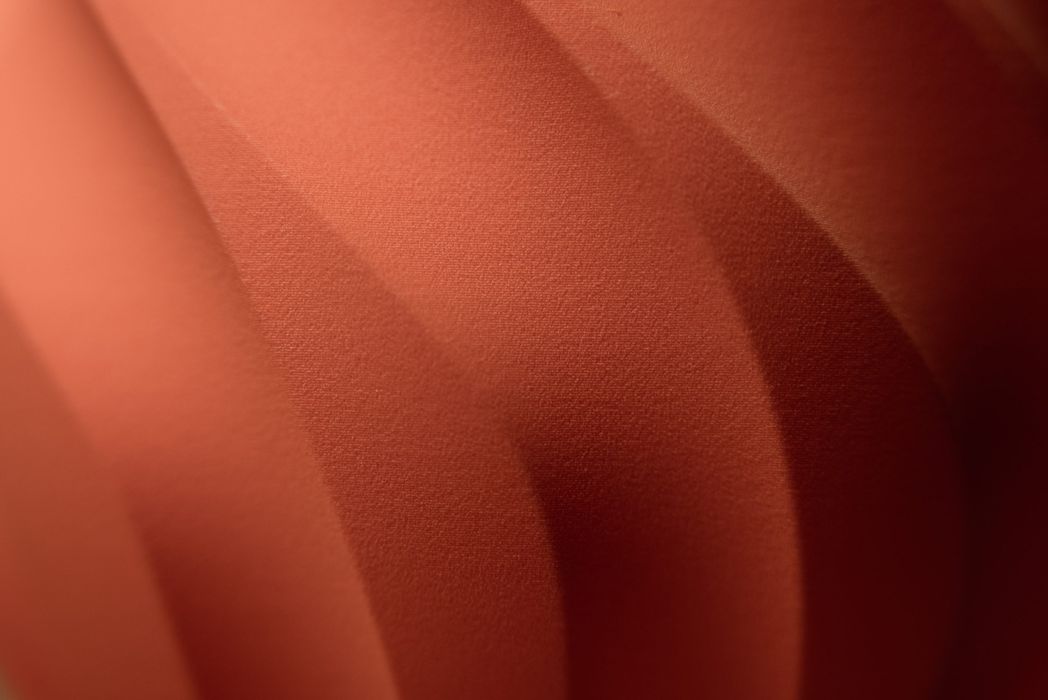
Prusa also notes improved layer hiding and a matte surface for this material. Foamed extrusions tend to blur the appearance of layer lines. That alone could make this material pretty desirable for cosplay pieces, even when part weight isn’t a requirement.
It’s also interesting to consider not just parts that move in a machine. Thing about parts that you might be frequently picking up and moving around. If you can reduce the weight of jigs, fixtures, ducts, covers, or robot end effectors, that can make a difference beyond just “this part uses less plastic”. They are easier to carry around.
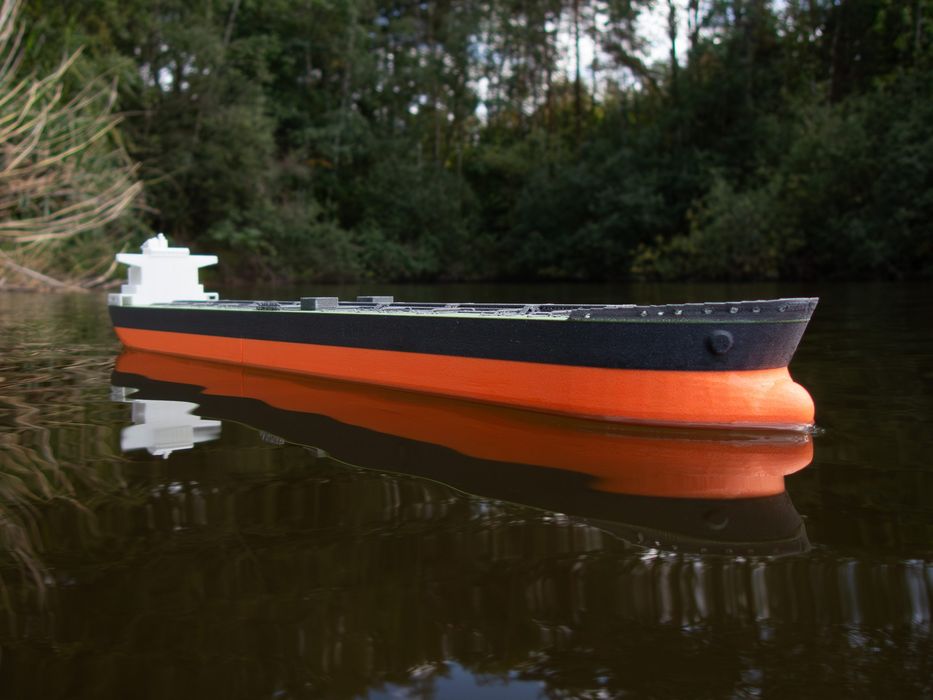
Finally, there’s one obvious application I should mention: you can make parts that float! The embedded bubbles can make a part sufficiently light that it can float, and in the above example, hold up non-foamed PLA components, too.
So yes, this is another PLA. But it’s also a very interesting product strategy. Prusa is offering 3D printer operators one engineering advantage from a material they already trust, and that may turn out to be more effective than launching yet another “high performance” filament that a portion of their customers would shy away from.
