
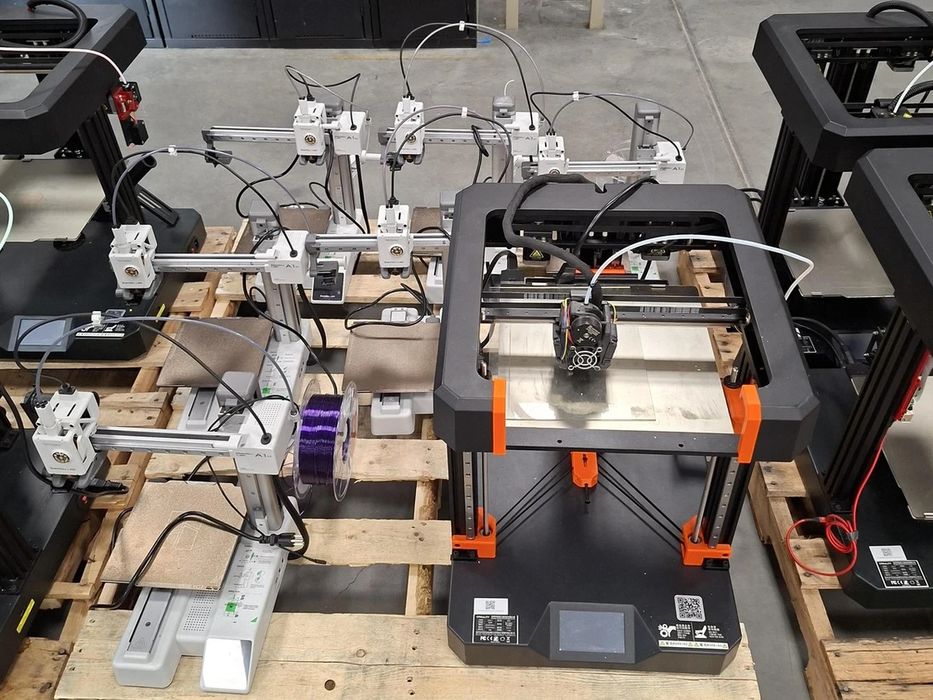
Someone stole a batch of 3D printers in Calgary, Canada.
That’s not exactly a major development in 3D printing technology, but there may be an industry signal buried in that story.
According to the Calgary Herald, police charged a man following an investigation into the attempted online sale of several stolen 3D printers. The machines were reportedly worth around US$20,000. From the image we can see both Prusa and Bambu Lab equipment.
What caught my attention was simply this: somebody thought 3D printers were worth stealing.
Not just one machine sitting conveniently near a door, either. This was apparently a batch of equipment valuable enough to be worth trying to resell.
That probably wouldn’t have made much sense ten years ago.
Back then, many desktop 3D printers were rather peculiar pieces of equipment. They were valuable if you knew what you were doing, but the pool of people interested in buying a used one was fairly small. A second-hand machine might need repairs, calibration, firmware work or a pile of replacement parts before it became useful.
Perps would only steal items they believe would be very easy to sell, and years ago a 3D printer was something most people had never heard of, let alone want to buy. Neither the perp nor the buyer would have even understood the value of a 3D printer then.
That’s not ideal merchandise for a thief.
Today things are quite different.
Modern desktop and prosumer machines are often mostly assembled, automatically calibrate themselves and can produce good results almost immediately. There are also far more people who understand what these machines are and what they’re worth.
Schools use them. Small businesses use them. Engineering shops use them. Print farms may have dozens or hundreds. Plenty of individuals now operate machines for side businesses.
That means a 3D printer has become a much more valuable piece of equipment in the public’s eye.
It’s still specialized, but not nearly as mysterious. A decent 3D printer is becoming a bit like a high-end bicycle, camera or power tool: there’s a recognizable product, a known retail price and a ready supply of potential buyers.
That may explain why the Calgary machines were apparently being offered online.
The used market for 3D printers is considerably larger than it once was, particularly for popular consumer and prosumer models. Someone browsing local listings may see a nearly new machine at a substantial discount and simply assume the seller wants it gone quickly.
Unfortunately, that also makes stolen equipment easier to move.
There’s another negative side effect of all the work 3D printer manufacturers have done to make 3D printers easier to use: they’re probably easier to fence, too.
Years ago, a prospective buyer might have wanted to know whether the components were still good in the machine. Now the seller may only have to turn on the machine and run a quick print to demonstrate that it works properly.
That’s quite a change.
It also suggests that owners of larger printer collections should probably think about their equipment somewhat differently. Serial numbers should be recorded. Purchase records should be kept. Machines should be photographed, particularly if they have specific modifications. And if you run a print farm containing tens of thousands of dollars of hardware, physical security probably deserves as much thought as network security and backups.
Buyers should be cautious as well. A nearly new machine offered locally online for an suspiciously low price deserves a few questions about where it came from.
None of this means there’s suddenly a crime wave involving 3D printers, but it is an sign of how far desktop 3D printing has come.
For years, the industry has worked to make these machines faster, easier to operate and useful to a much wider audience.
And now it turns out that one of the consequences is that thieves may now understand their value, too.
Via Calgary Herald
