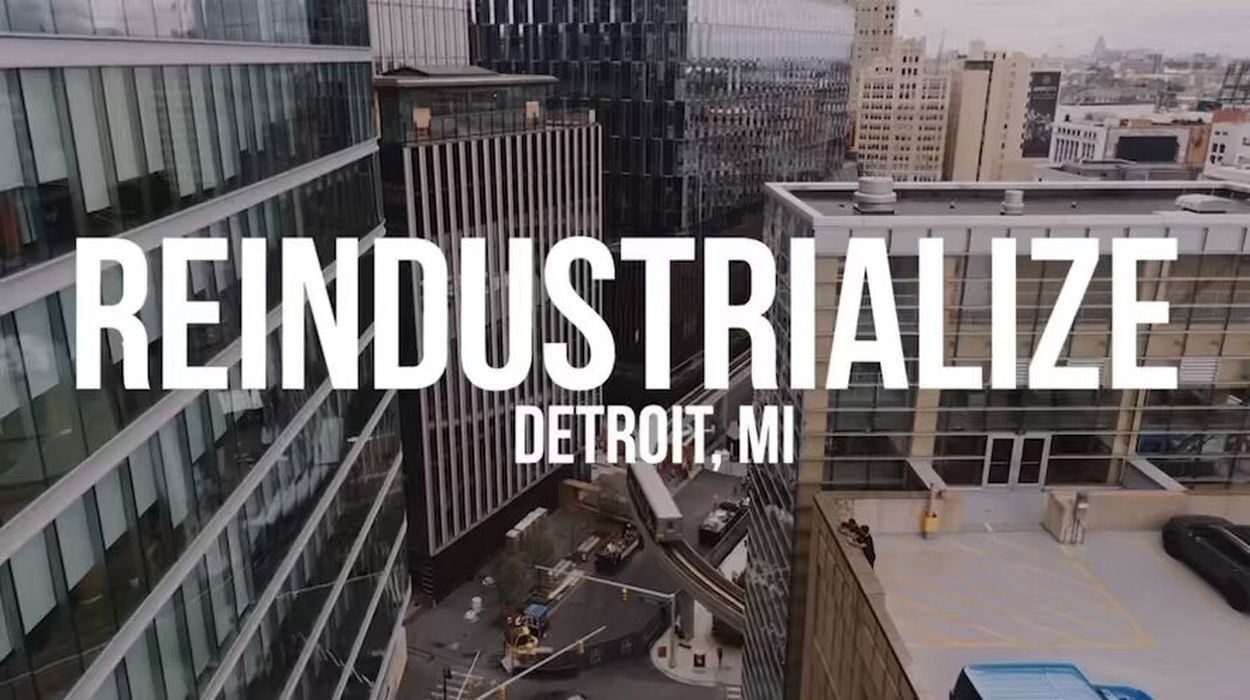
Charles R. Goulding and Jacob T. Nolan report on Detroit’s gritty Reindustrialize Summit, where 3D printing, AI, and automation are powering a no-excuses revival of American manufacturing.
Inside a raw, unfinished skyscraper in downtown Detroit, the Reindustrialize Summit delivered more than hype. It delivered a mission. Dozens of startups, builders, engineers, and investors came together to spark what they’re calling a new American industrial revolution. Led by Hadrian CEO Chris Power, the event wasn’t just about pitching. It was about buildings. It was about putting machines to work. It was about reshoring manufacturing, rebuilding industrial capacity, and using technologies like 3D printing, AI, and automation to make America a manufacturing powerhouse again.
Chris Power’s Call to Arms and Hadrian’s Big Moment
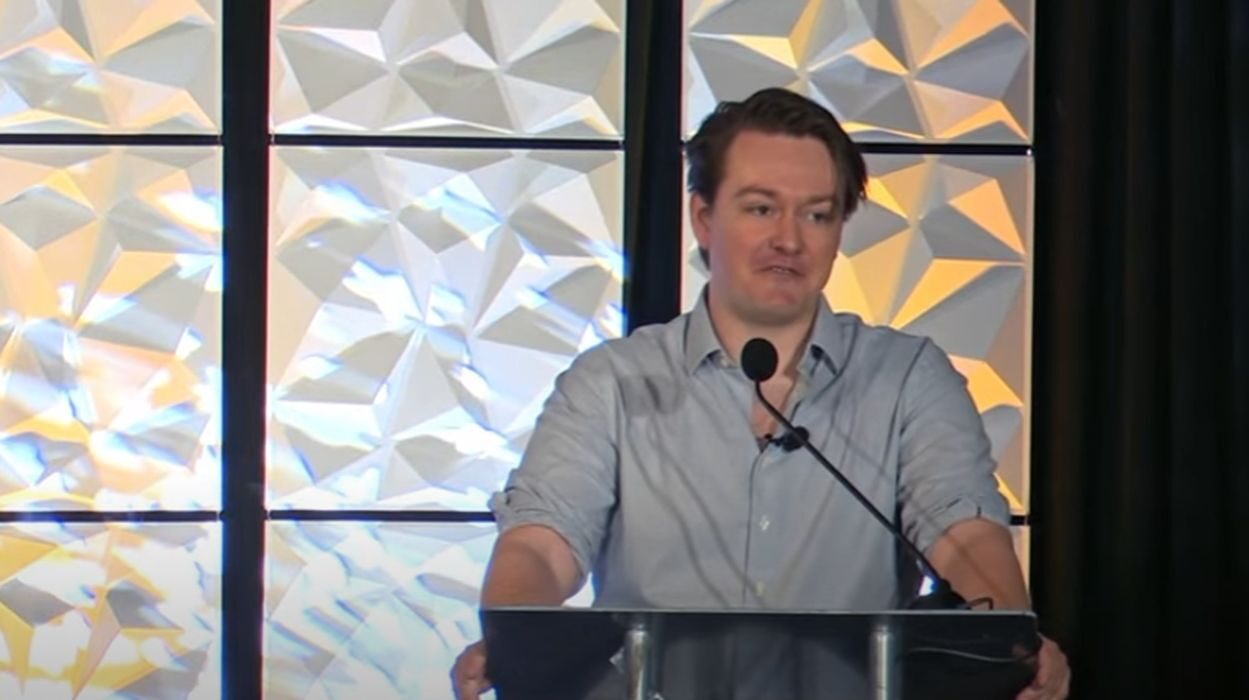
Chris Power opened the conference with a speech that sounded more like a war cry than a keynote. He made it personal, direct, and urgent. His framing of the US industrial gap as a generational grudge match with China hit hard. Standing under exposed beams, Power declared that America needed to start making things again, fast. He backed that up by announcing Hadrian’s US$260 million Series C round, led by top firms like Founders Fund and Lux Capital. The round values Hadrian at US$1.2 billion and will be used to expand its factory network across the U.S., including the development of a third facility.
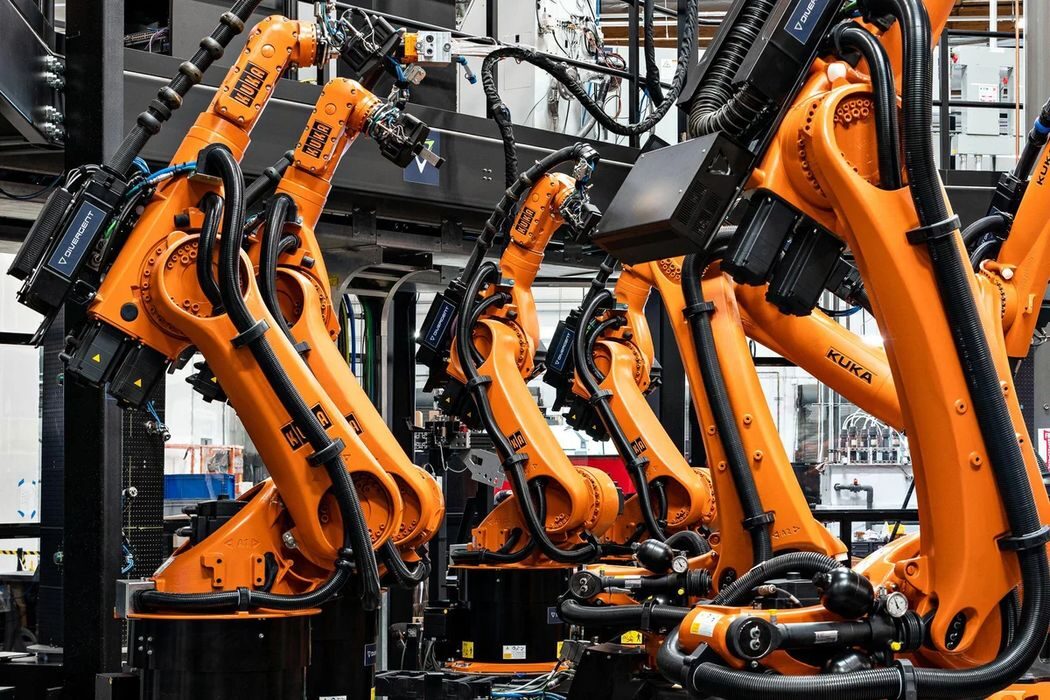
This investment also allows Hadrian to scale its workforce, with plans to grow from 170 to more than 350 employees by the end of the year. Hadrian builds automated factories that supply precision parts to the aerospace and defense industries. These are not vaporware concepts. They are already shipping parts, running CNC machines, and training machinists. And increasingly, they’re relying on 3D printing for both prototyping and short-run production.
The Role of 3D Printing in the New Industrial Stack
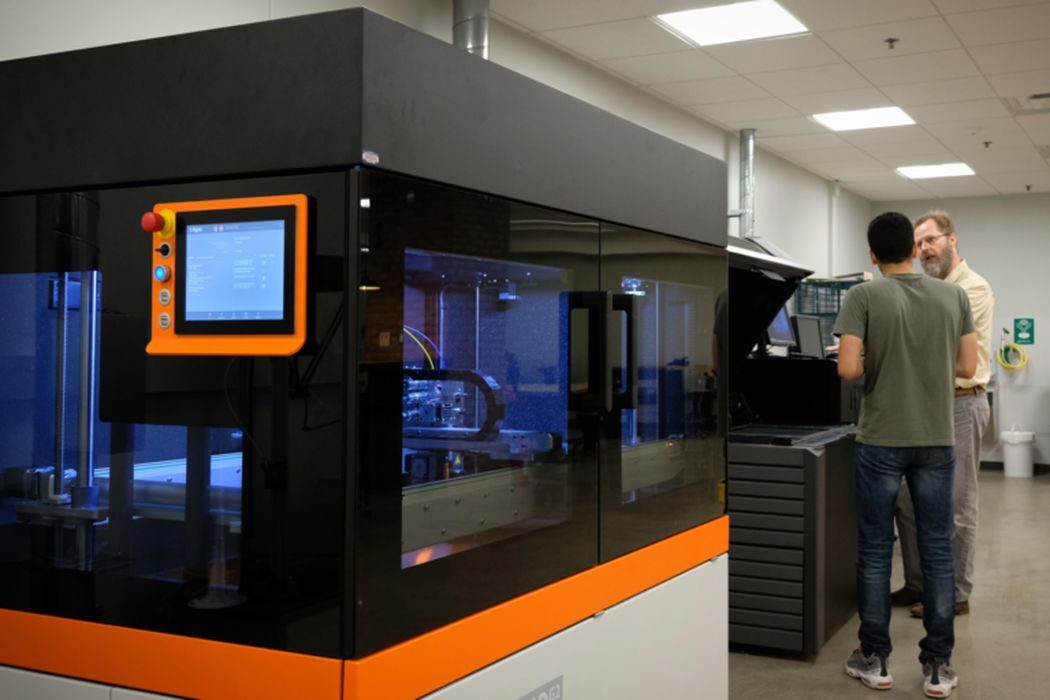
Throughout the summit, 3D printing was treated as a foundational technology, not a side tool. In conversations, panels, and floor tours, speakers discussed how additive manufacturing is shortening lead times, enabling faster iteration, and unlocking low-volume, high-mix production that traditional machining simply cannot handle. In defense manufacturing, where parts often need to be customized, qualified, and delivered quickly, 3D printing helps companies stay agile and responsive. Several companies at the event showcased how they’re integrating additive into broader industrial workflows that also include robotics, CNC, and AI-driven quality assurance.
Hadrian, for example, uses 3D printing to rapidly develop and test part geometries before committing to full-scale machining. This hybrid approach speeds up development cycles and de-risks production, especially for aerospace parts with tight tolerances. Rather than replacing traditional processes, 3D printing complements them, forming a new, faster production stack.
Atomic Industries: Rebuilding the Tooling Industry with AI and Additive
While Hadrian built the hype, Atomic Industries quietly stole the show for anyone paying attention to tooling and die design, the backbone of all manufacturing. Based in Warren, Michigan, Atomic is using AI and additive manufacturing to rethink how molds, dies, and industrial tooling are designed, validated, and produced. At the conference, co-founder Aaron Slodov emphasized that most modern factories still rely on outdated tooling systems that take too long to build and break too easily. Atomic’s AI-driven software platform allows engineers to input design constraints and automatically generate optimized tooling geometry. From there, they leverage both subtractive and additive manufacturing to produce real, production-grade tools.
In multiple breakout sessions, Slodov highlighted that many of the molds and dies produced at Atomic are made using metal 3D printing, often with geometries that would be impossible or too expensive using conventional methods. Their customers include electric vehicle manufacturers, aerospace suppliers, and even companies making consumer goods who need to go from design to mold in days, not months. Slodov also helped organize much of the conference itself, acting not just as a participant but as one of the visionaries behind the event.
Dual-Use Startups Leading the Way
Many of the companies in attendance are developing dual-use technologies, tools that can serve both commercial and defense markets. Anduril showed off surveillance and targeting systems. Regent talked about high-speed marine vehicles. Chariot Defense discussed battlefield energy infrastructure. What ties them all together is their reliance on flexible, responsive manufacturing, the kind enabled by additive. When companies need parts fast, at small scale, and with complex geometry, 3D printing is no longer just useful. It’s essential.
These startups are building supply chains that don’t rely on shipping components from halfway across the world. Instead, they are printing, machining, and assembling domestically, often in the same facility. This radically speeds up timelines and allows them to stay mission ready. The summit made it clear that dual use doesn’t just mean building for both markets. It means building differently, with newer tools and newer processes.
The Builders, Not the Talkers
Unlike most tech events, the Reindustrialize Summit wasn’t full of people talking about what they want to build someday. These were people already building. There were no crypto booths or virtual metaverse demos. Instead, there were factory tours, live machining demos, and physical prototypes on every table. Engineers swapped strategies on spindle uptime. Investors talked about mill specs. There was a real sense that this was more than a conference. It was a movement.
The venue itself, gritty, exposed, and half-built, felt intentional. It symbolized the unfinished work of rebuilding American industry. The vibe was raw but optimistic. People weren’t afraid to admit how hard it is to make things. But they were proud to be doing it anyway.
Policy Makers and VC Heavyweights Rally Behind the Mission
The summit also drew serious institutional support. Policy leaders from the Department of Defense, the Navy, and major congressional offices spoke with startup founders about reducing red tape and unlocking faster paths to government contracts. At the same time, firms like Andreessen Horowitz, Lux Capital, and Founders Fund emphasized their commitment to funding hard tech, including companies that rely on or build additive tools. Everyone in the room seemed aligned on one point. If America wants to compete, it needs to build. And that means capital, talent, and policy all need to move in the same direction.
The Research & Development Tax Credit
The now permanent Research & Development Tax Credit (R&D) Tax Credit is available for companies developing new or improved products, processes and/or software.
3D printing can help boost a company’s R&D Tax Credits. Wages for technical employees creating, testing and revising 3D printed prototypes can be included as a percentage of the eligible time spent on the R&D Tax Credit. Similarly, when used as a method of improving a process, time spent integrating 3D printing hardware and software counts as an eligible activity. Lastly, when used for modeling and preproduction, the costs of filaments consumed during the development process may also be recovered.
Whether it is used for creating and testing prototypes or for final production, 3D printing is a great indicator that R&D Credit eligible activities are taking place. Companies implementing this technology at any point should consider taking advantage of R&D Tax Credits.
Conclusion: 3D Printing is Not the Future. It’s the Foundation.
The Reindustrialize Summit didn’t treat 3D printing like some future fantasy. It treated it like what it already is, a critical tool in the new American manufacturing stack. Companies like Hadrian and Atomic Industries are using it right now to build real parts, real tools, and real infrastructure. The summit showed that additive manufacturing isn’t a gimmick. It’s essential. From prototyping to production, from aerospace to consumer goods, 3D printing is speeding things up, lowering costs, and making it possible to build on American soil again. In Detroit, the message was clear. The machines are here. The software is ready. And the builders are not waiting anymore.