

Stratasys released its fourth annual ESG report.
The company is one of the very few 3D print companies to issue this type of report, and it’s certainly one of, if not the most comprehensive in the industry. The report shows the company’s work towards achieving more sustainable operations, along with providing social and governance progress.
As this is their fourth report, it’s possible to compare results from prior years. Stratasys said this is the first time they’ve been able to report trending in their Scope 3 GHG emissions data, as last year was the first time they reported this statistic.
Scope 3 refers to highly indirect generative sources of GHG emissions. For example, this category would include upstream products and services, such as the GHG emissions produced by purchased items.
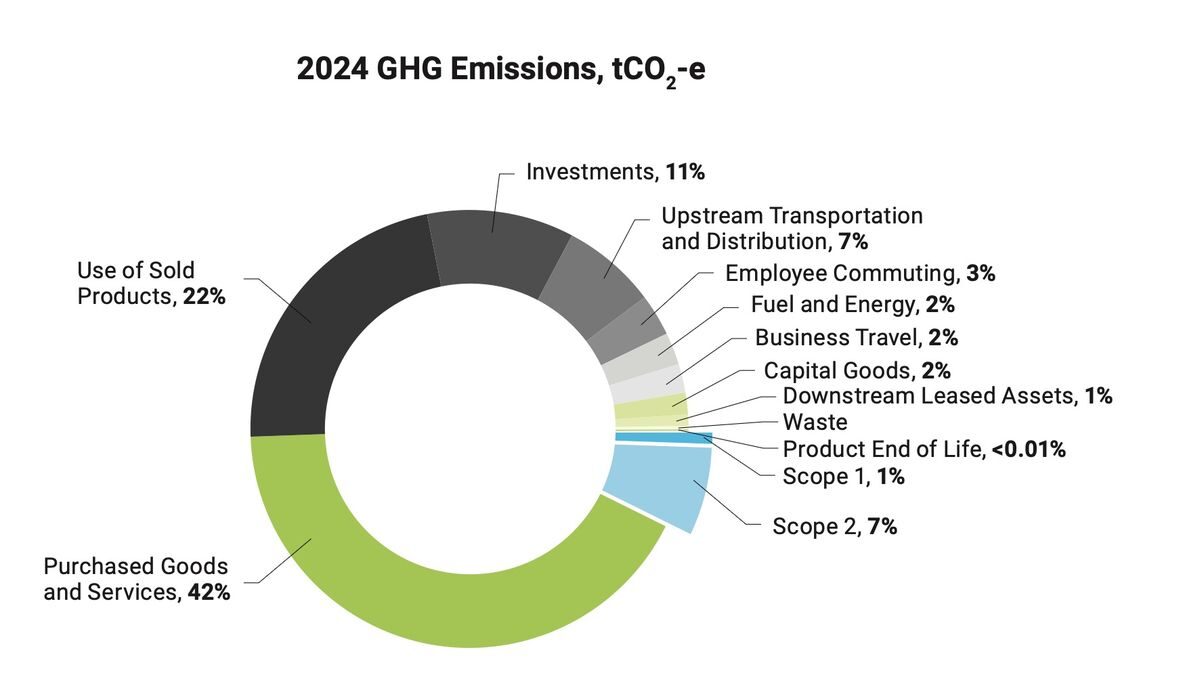
Interestingly, Stratasys reported that their Scope 3 GHG emissions accounted for an astounding 92% of their total emissions. This shows the critical importance of tracking Scope 3 emissions, and something other companies might consider.
In all, their Scope 1, 2 and 3 emissions total fell by a healthy 23.1% between 2023 and 2024 (the current report refers to year 2024). A key element of their success in this area is continued expansion of their use of renewable energy for operations. Another area they’ve developed is the use of electric fleet vehicles, now up to ten percent.
An interesting twist in their report is their focus on more sustainable products.
One product is their recently announced SAF ReLife, a material for customers that provides additional reuse capabilities. Another is a new feature in their GrabCAD software, which provides a way for customers to properly estimate the carbon footprint of printed parts.
The company has made notable efforts in quite a number of areas across the company, not only in technical aspects, but also in governance and culture. All of this is detailed in the lengthy 99-page report.
Stratasys has made the effort to not only report on their ESG activities in detail, but is acting on them to improve their company’s sustainability and social profiles. This is vastly more effort than is done by other large 3D print companies, each of which should ask themselves why they are not doing the same.
If they don’t ask themselves, I suspect their customers are going to be asking them in coming years.
Via Stratasys
